7CTW | pdb_00007ctw

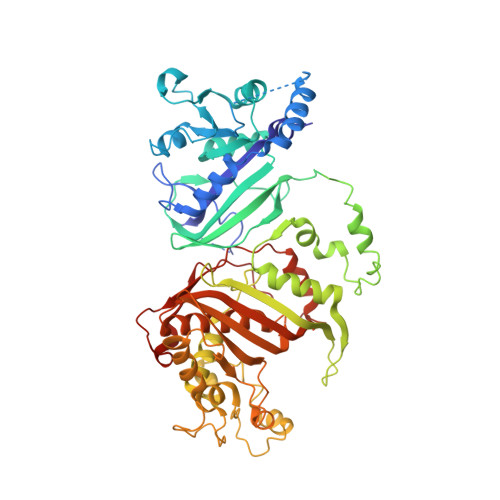
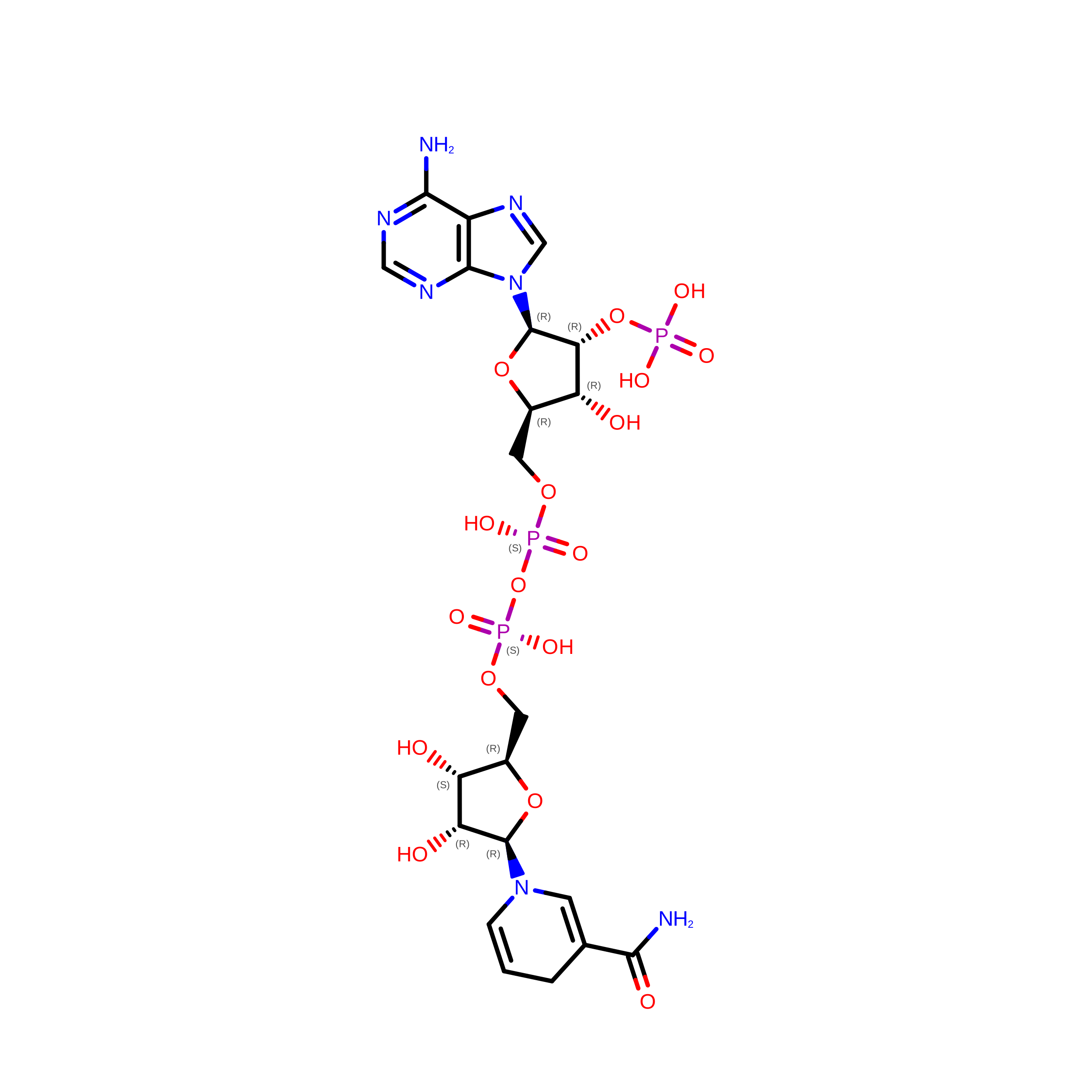
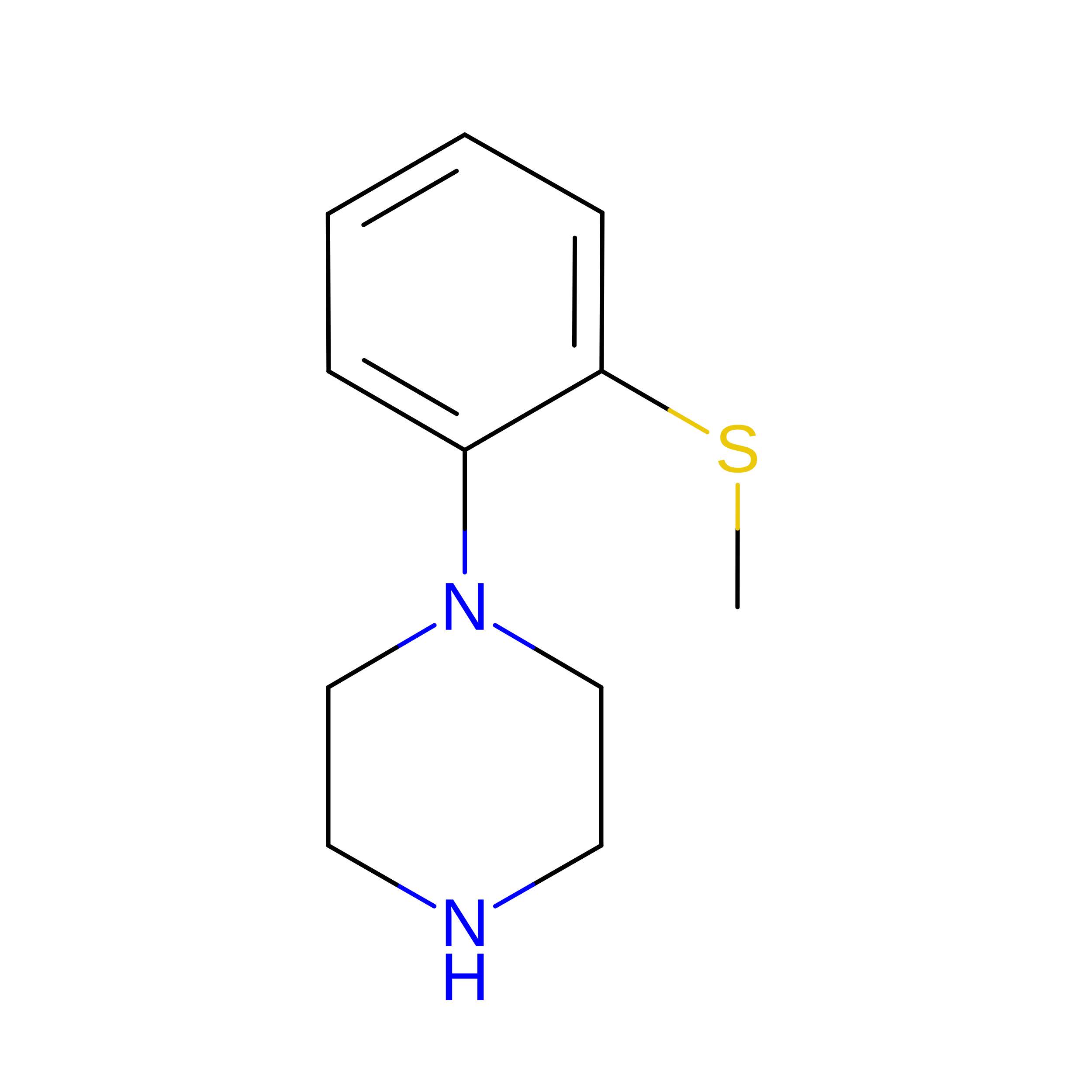
Wild-type Plasmodium falciparum dihydrofolate reductase-thymidylate synthase (PfDHFR-TS) complexed with fragment 820, NADPH, dUMP


Experimental Data Snapshot

  • Method: X-RAY DIFFRACTION
  • Resolution: 2.51 Å
  • R-Value Free: 
    0.295 (Depositor), 0.278 (DCC) 
  • R-Value Work: 
    0.221 (Depositor), 0.204 (DCC) 

Starting Model: experimental
View more details

wwPDB Validation 3D Report Full Report

Validation slider image for 7CTW

Ligand Structure Quality Assessment 


This is version 1.2 of the entry. See complete history

Literature

Discovery of new non-pyrimidine scaffolds as Plasmodium falciparum DHFR inhibitors by fragment-based screening.

Hoarau, M.Vanichtanankul, J.Srimongkolpithak, N.Vitsupakorn, D.Yuthavong, Y.Kamchonwongpaisan, S.

(2021) J Enzyme Inhib Med Chem 36: 198-206

  • DOI: https://doi.org/10.1080/14756366.2020.1854244
  • Primary Citation Related Structures: 
    7CTW, 7CTY, 7CTZ

  • PubMed Abstract: 

    In various malaria-endemic regions, the appearance of resistance has precluded the use of pyrimidine-based antifolate drugs. Here, a three-step fragment screening was used to identify new non-pyrimidine Plasmodium falciparum dihydrofolate reductase ( Pf DHFR) inhibitors. Starting from a 1163-fragment commercial library, a two-step differential scanning fluorimetry screen identified 75 primary fragment hits. Subsequent enzyme inhibition assay identified 11 fragments displaying IC 50 in the 28-695 μM range and selectivity for Pf DHFR. In addition to the known pyrimidine, three new anti- Pf DHFR chemotypes were identified. Fragments from each chemotype were successfully co-crystallized with Pf DHFR, revealing a binding in the active site, in the vicinity of catalytic residues, which was confirmed by molecular docking on all fragment hits. Finally, comparison with similar non-hit fragments provides preliminary input on available growth vectors for future drug development.


  • Organizational Affiliation
    • National Center for Genetic Engineering and Biotechnology (BIOTEC), National Science and Technology Development Agency, Pathumthani, Thailand.

Macromolecule Content 

  • Total Structure Weight: 145.45 kDa 
  • Atom Count: 8,977 
  • Modeled Residue Count: 1,057 
  • Deposited Residue Count: 1,216 
  • Unique protein chains: 1

Macromolecules

Find similar proteins by:|  3D Structure
Entity ID: 1
MoleculeChains  Sequence LengthOrganismDetailsImage
Bifunctional dihydrofolate reductase-thymidylate synthase
A, B
608Plasmodium falciparumMutation(s): 0 
Gene Names: DHFR-TSdhfr-ts
EC: 2.1.1.45 (UniProt), 1.5.1.3 (UniProt)
UniProt
Find proteins for P13922 (Plasmodium falciparum (isolate K1 / Thailand))
Explore P13922 
Go to UniProtKB:  P13922
Entity Groups
Sequence Clusters30% Identity50% Identity70% Identity90% Identity95% Identity100% Identity
UniProt GroupP13922
Sequence Annotations
Expand
Reference Sequence

Experimental Data & Validation

Experimental Data

  • Method: X-RAY DIFFRACTION
  • Resolution: 2.51 Å
  • R-Value Free:  0.295 (Depositor), 0.278 (DCC) 
  • R-Value Work:  0.221 (Depositor), 0.204 (DCC) 
Space Group: P 21 21 21
Unit Cell:
Length ( Å )Angle ( ˚ )
a = 56.185α = 90
b = 154.73β = 90
c = 163.816γ = 90
Software Package:
Software NamePurpose
REFMACrefinement
PROTEUM PLUSdata reduction
PROTEUM PLUSdata scaling
Cootmodel building

Structure Validation

View Full Validation Report


Ligand Structure Quality Assessment 


Entry History 

& Funding Information

Deposition Data


Funding OrganizationLocationGrant Number
National Center for Genetic Engineering and Biotechnology (Thailand)ThailandP1850116

Revision History  (Full details and data files)

  • Version 1.0: 2021-04-28
    Type: Initial release
  • Version 1.1: 2021-07-07
    Changes: Data collection
  • Version 1.2: 2023-11-29
    Changes: Data collection, Database references, Derived calculations, Refinement description