6YUA | pdb_00006yua

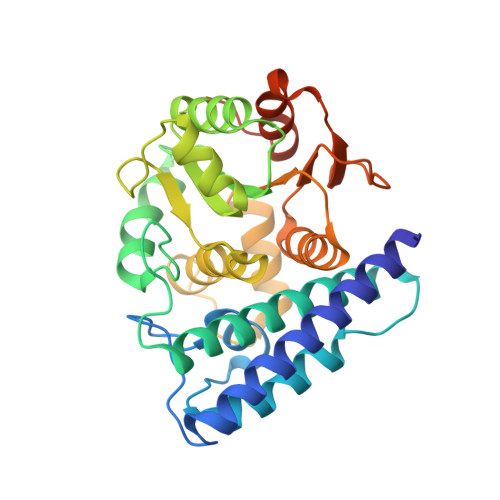
CO-dehydrogenase coupled to the N-terminal domain of the Acetyl-CoA synthase from Clostridium autoethanogenum isolated after tryptic digestion.


Experimental Data Snapshot

  • Method: X-RAY DIFFRACTION
  • Resolution: 3.16 Å
  • R-Value Free: 
    0.252 (Depositor), 0.260 (DCC) 
  • R-Value Work: 
    0.224 (Depositor), 0.234 (DCC) 
  • R-Value Observed: 
    0.225 (Depositor) 

Starting Model: experimental
View more details

wwPDB Validation 3D Report Full Report

Validation slider image for 6YUA

This is version 1.2 of the entry. See complete history

Literature

Gas channel rerouting in a primordial enzyme: Structural insights of the carbon-monoxide dehydrogenase/acetyl-CoA synthase complex from the acetogen Clostridium autoethanogenum.

Lemaire, O.N.Wagner, T.

(2020) Biochim Biophys Acta Bioenerg 1862: 148330-148330

  • DOI: https://doi.org/10.1016/j.bbabio.2020.148330
  • Primary Citation Related Structures: 
    6YTT, 6YU9, 6YUA

  • PubMed Abstract: 

    Clostridium autoethanogenum, the bacterial model for biological conversion of waste gases into biofuels, grows under extreme carbon-monoxide (CO) concentrations. The strictly anaerobic bacterium derives its entire cellular energy and carbon from this poisonous gas, therefore requiring efficient molecular machineries for CO-conversion. Here, we structurally and biochemically characterized the key enzyme of the CO-converting metabolism: the CO-dehydrogenase/Acetyl-CoA synthase (CODH/ACS). We obtained crystal structures of natively isolated complexes from fructose-grown and CO-grown C. autoethanogenum cultures. Both contain the same isoforms and if the overall structure adopts the classic α 2 β 2 architecture, comparable to the model enzyme from Moorella thermoacetica, the ACS binds a different position on the CODH core. The structural characterization of a proteolyzed complex and the conservation of the binding interface in close homologs rejected the possibility of a crystallization artefact. Therefore, the internal CO-channeling system, critical to transfer CO generated at the C-cluster to the ACS active site, drastically differs in the complex from C. autoethanogenum. The 1.9-Å structure of the CODH alone provides an accurate picture of the new CO-routes, leading to the ACS core and reaching the surface. Increased gas accessibility would allow the simultaneous CO-oxidation and acetyl-CoA production. Biochemical experiments showed higher flexibility of the ACS subunit from C. autoethanogenum compared to M. thermoacetica, albeit monitoring similar CO-oxidation and formation rates. These results show a reshuffling of internal CO-tunnels during evolution of these Firmicutes, putatively leading to a bidirectional complex that ensure a high flux of CO-conversion toward energy conservation, acting as the main cellular powerplant.


  • Organizational Affiliation
    • Max Planck Institute for Marine Microbiology, Celsiusstraße 1, 28359 Bremen, Germany.

Macromolecule Content 

  • Total Structure Weight: 203.63 kDa 
  • Atom Count: 13,872 
  • Modeled Residue Count: 1,848 
  • Deposited Residue Count: 1,880 
  • Unique protein chains: 2

Macromolecules

Find similar proteins by:|  3D Structure
Entity ID: 1
MoleculeChains  Sequence LengthOrganismDetailsImage
CO dehydrogenase/acetyl-CoA synthase complex, beta subunit
A, D
309Clostridium autoethanogenum DSM 10061Mutation(s): 0 
EC: 2.3.1.169
Find similar proteins by:|  3D Structure
Entity ID: 2
MoleculeChains  Sequence LengthOrganismDetailsImage
Carbon-monoxide dehydrogenase (Acceptor),CO-dehydrogenase from Clostridium autoethanogenum DSM 10061
B, C
631Clostridium autoethanogenum DSM 10061Mutation(s): 0 
EC: 1.2.99.2 (PDB Primary Data), 1.2.7.4 (PDB Primary Data)

Small Molecules

Ligands 5 Unique
IDChains Name / Formula / InChI Key2D Diagram3D Interactions
XCC
(Subject of Investigation/LOI)

Query on XCC


Download:Ideal Coordinates CCD File
H [auth B],
M [auth C]
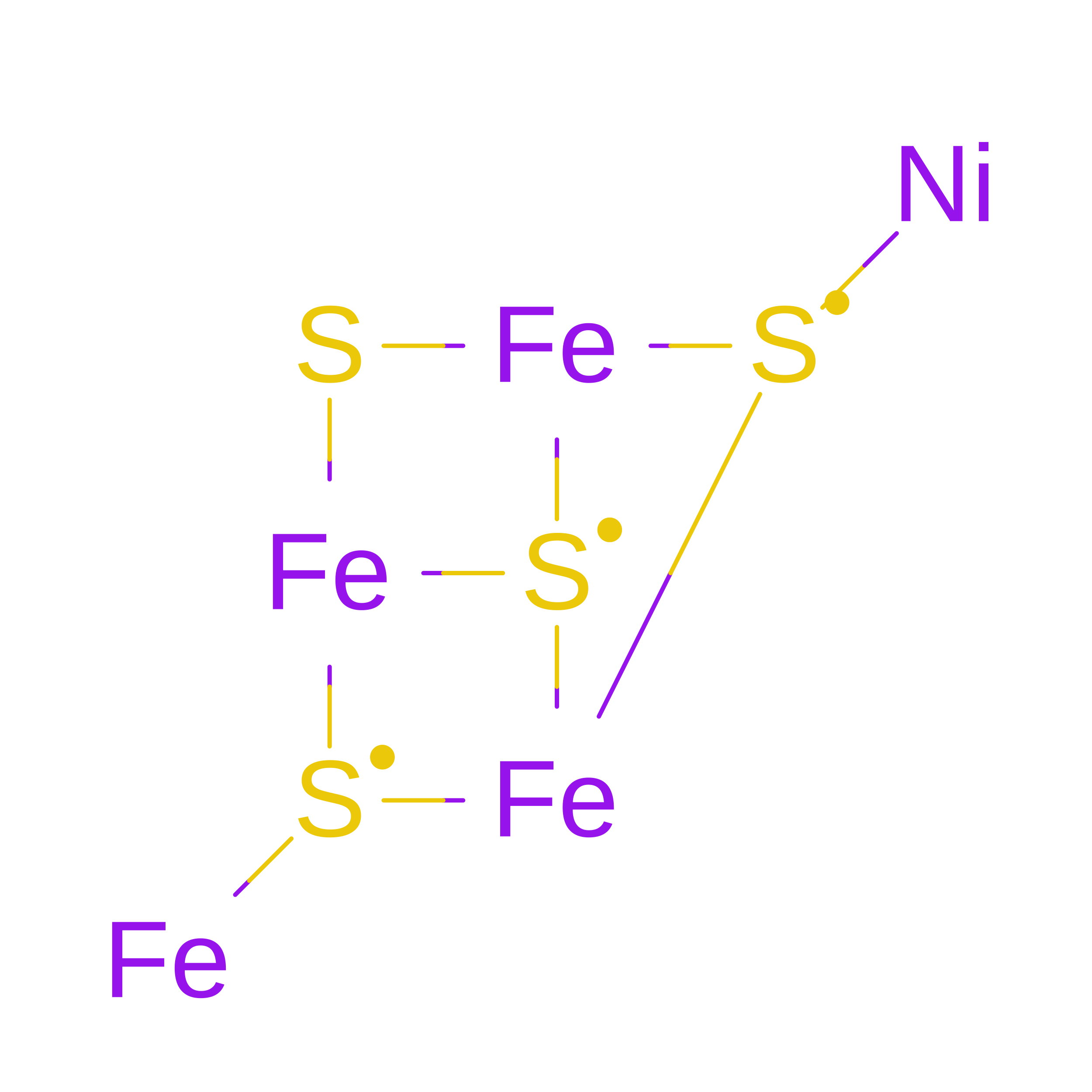
FE(4)-NI(1)-S(4) CLUSTER
Fe4 Ni S4
QGLWBXDZIHZONR-UHFFFAOYSA-N
SF4
(Subject of Investigation/LOI)

Query on SF4


Download:Ideal Coordinates CCD File
F [auth B],
G [auth B],
L [auth C]
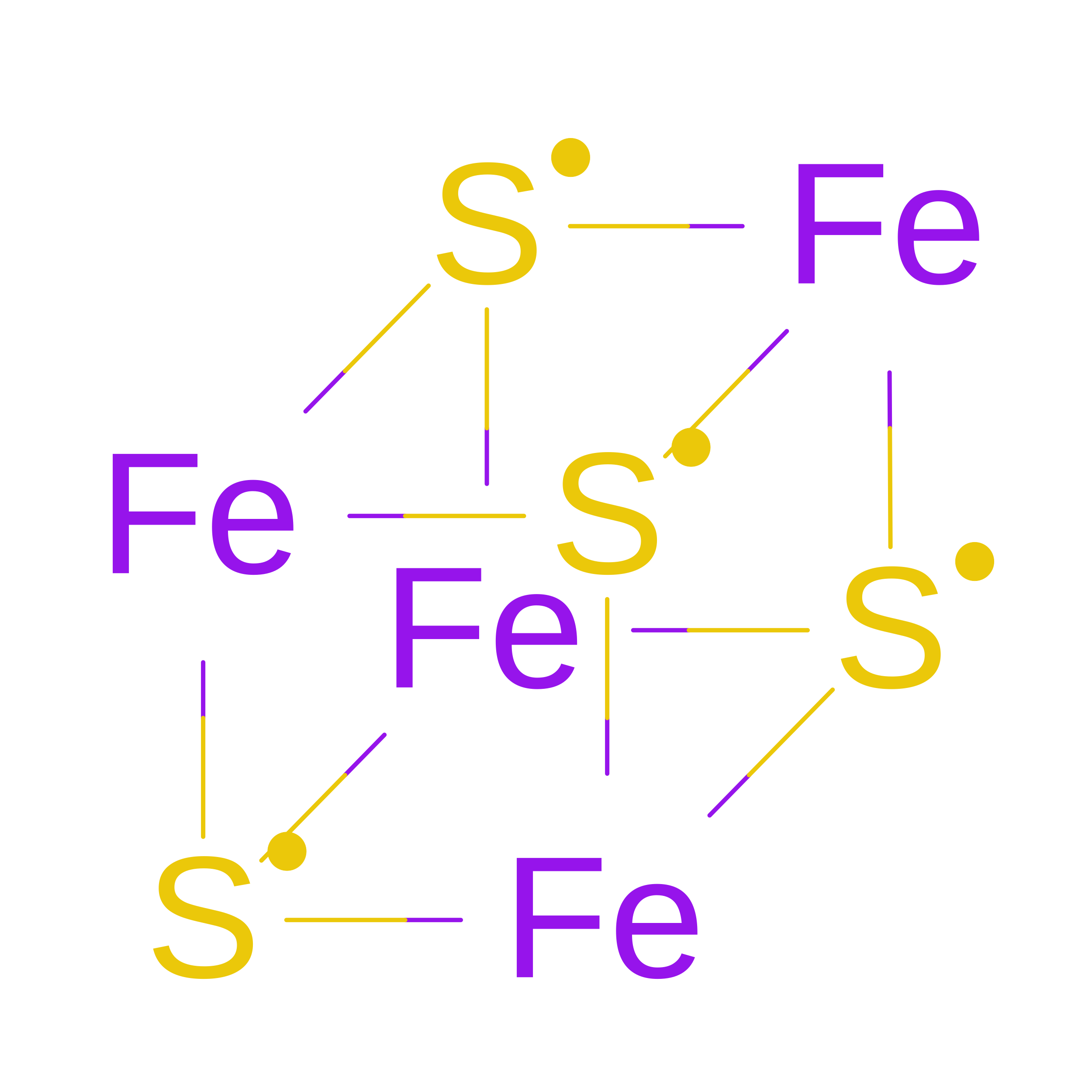
IRON/SULFUR CLUSTER
Fe4 S4
LJBDFODJNLIPKO-UHFFFAOYSA-N
GOL

Query on GOL


Download:Ideal Coordinates CCD File
J [auth C],
K [auth C]
GLYCEROL
C3 H8 O3
PEDCQBHIVMGVHV-UHFFFAOYSA-N
EDO

Query on EDO


Download:Ideal Coordinates CCD File
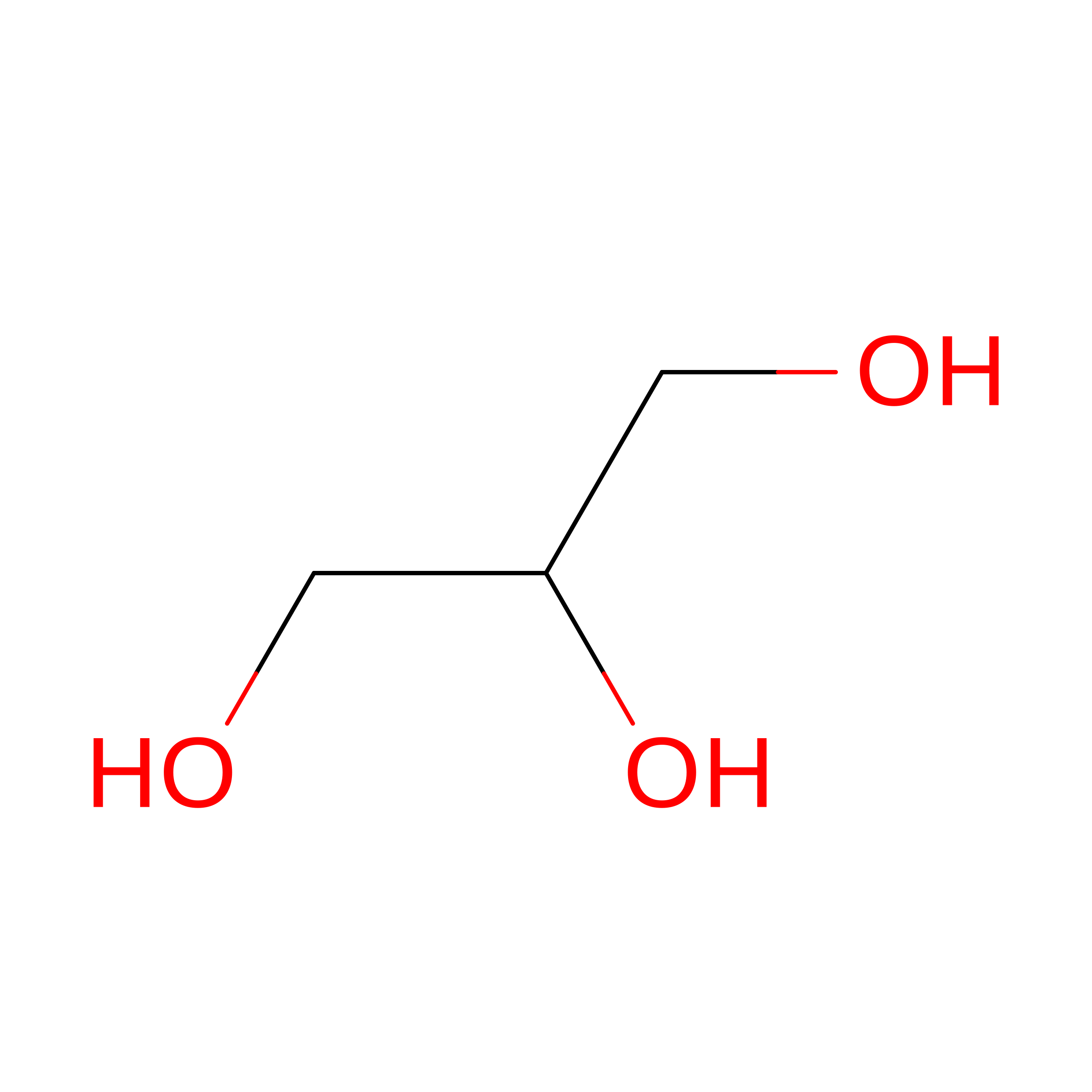
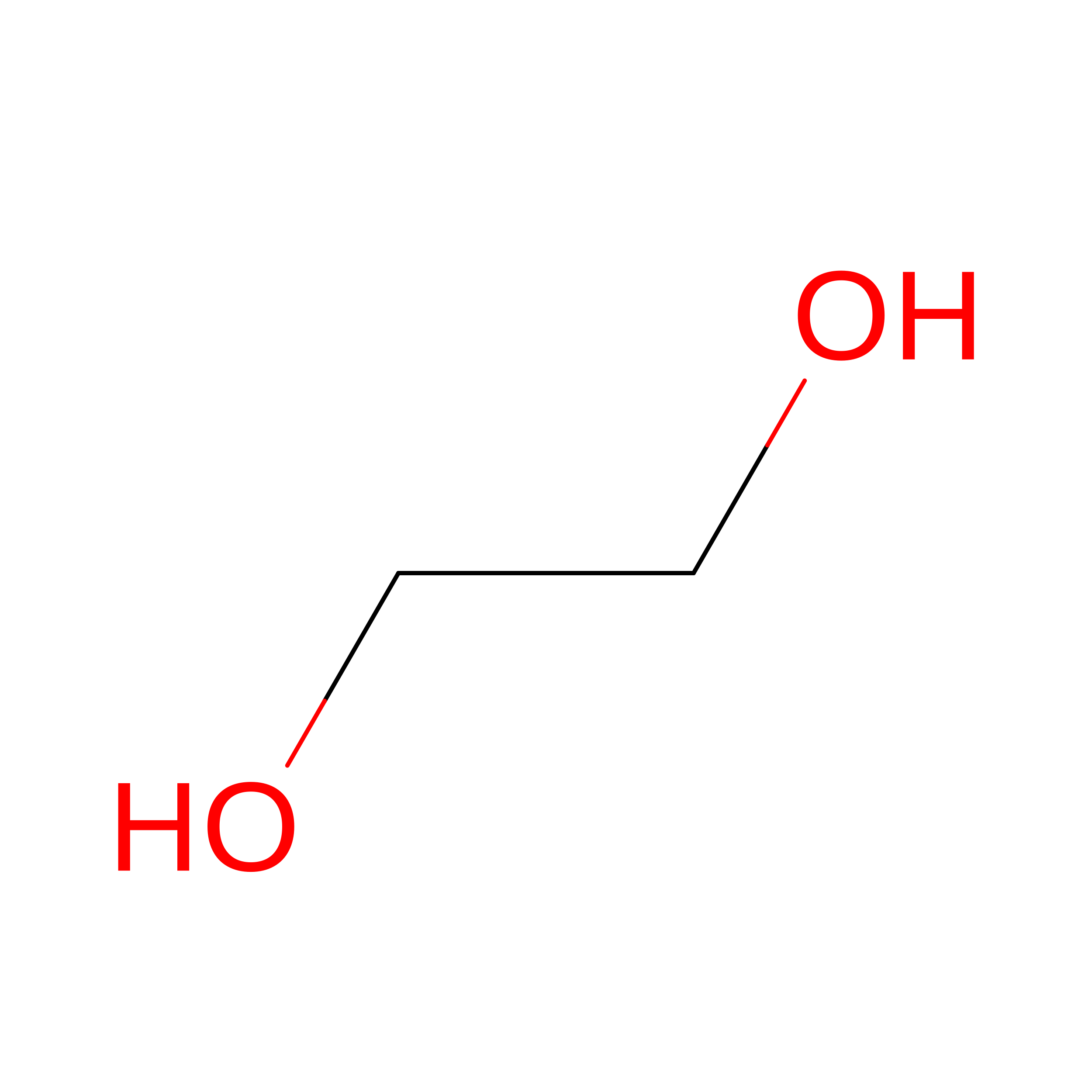
P [auth D]1,2-ETHANEDIOL
C2 H6 O2
LYCAIKOWRPUZTN-UHFFFAOYSA-N
MG

Query on MG


Download:Ideal Coordinates CCD File
E [auth A],
I [auth B],
N [auth C],
O [auth C]
MAGNESIUM ION
Mg
JLVVSXFLKOJNIY-UHFFFAOYSA-N

Experimental Data & Validation

Experimental Data

  • Method: X-RAY DIFFRACTION
  • Resolution: 3.16 Å
  • R-Value Free:  0.252 (Depositor), 0.260 (DCC) 
  • R-Value Work:  0.224 (Depositor), 0.234 (DCC) 
  • R-Value Observed: 0.225 (Depositor) 
Space Group: P 41 21 2
Unit Cell:
Length ( Å )Angle ( ˚ )
a = 89.333α = 90
b = 89.333β = 90
c = 527.13γ = 90
Software Package:
Software NamePurpose
PHENIXrefinement
PDB_EXTRACTdata extraction
XDSdata reduction
STARANISOdata scaling
MOLREPphasing

Structure Validation

View Full Validation Report


Entry History 

& Funding Information

Deposition Data


Funding OrganizationLocationGrant Number
Max Planck SocietyGermany--
German Research Foundation (DFG)GermanyDFG-SPP 1927 WA 4053/1-1

Revision History  (Full details and data files)

  • Version 1.0: 2020-11-04
    Type: Initial release
  • Version 1.1: 2020-11-11
    Changes: Database references
  • Version 1.2: 2024-01-24
    Changes: Data collection, Database references, Refinement description