6UDC | pdb_00006udc

Spectroscopic and structural characterization of a genetically encoded direct sensor for protein-ligand interactions


Experimental Data Snapshot

  • Method: X-RAY DIFFRACTION
  • Resolution: 2.10 Å
  • R-Value Free: 
    0.256 (Depositor), 0.258 (DCC) 
  • R-Value Work: 
    0.194 (Depositor), 0.202 (DCC) 
  • R-Value Observed: 
    0.199 (Depositor) 

wwPDB Validation 3D Report Full Report

Validation slider image for 6UDC

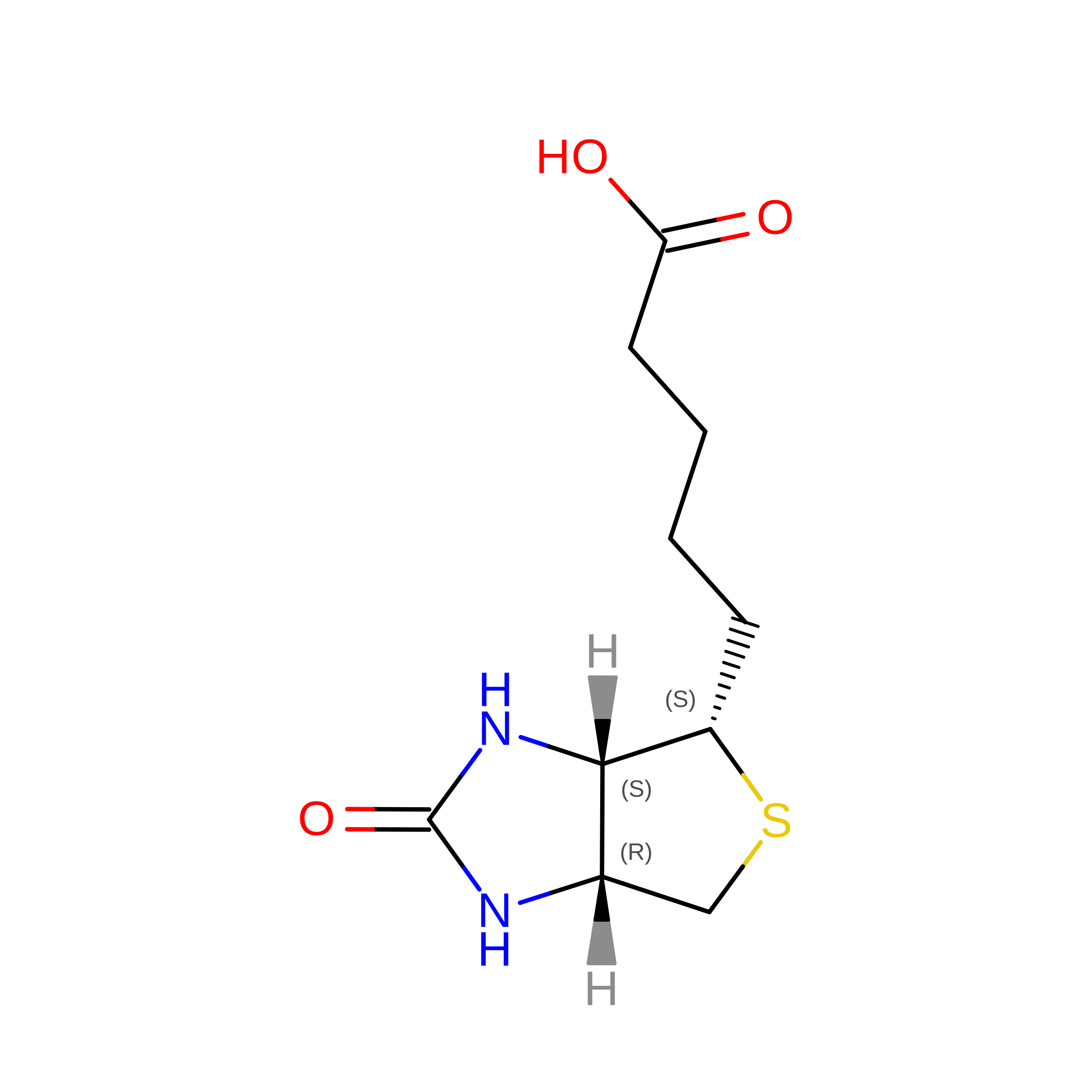
Ligand Structure Quality Assessment 


This is version 1.2 of the entry. See complete history

Literature

Structural Origins of Altered Spectroscopic Properties upon Ligand Binding in Proteins Containing a Fluorescent Noncanonical Amino Acid.

Gleason, P.R.Kolbaba-Kartchner, B.Henderson, J.N.Stahl, E.P.Simmons, C.R.Mills, J.H.

(2021) Biochemistry 60: 2577-2585

  • DOI: https://doi.org/10.1021/acs.biochem.1c00291
  • Primary Citation Related Structures: 
    6UC3, 6UD1, 6UD6, 6UDB, 6UDC

  • PubMed Abstract: 

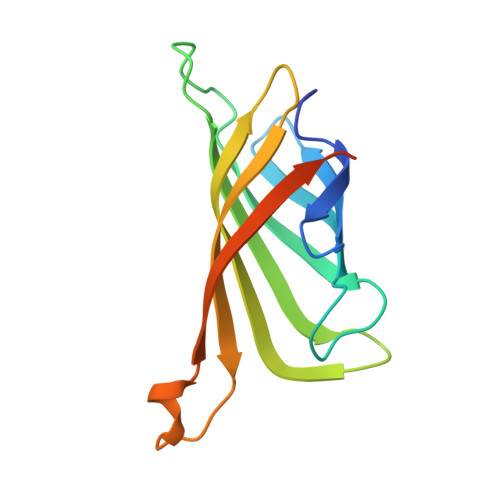
    Fluorescent noncanonical amino acids (fNCAAs) could serve as starting points for the rational design of protein-based fluorescent sensors of biological activity. However, efforts toward this goal are likely hampered by a lack of atomic-level characterization of fNCAAs within proteins. Here, we describe the spectroscopic and structural characterization of five streptavidin mutants that contain the fNCAA l-(7-hydroxycoumarin-4-yl)ethylglycine (7-HCAA) at sites proximal to the binding site of its substrate, biotin. Many of the mutants exhibited altered fluorescence spectra in response to biotin binding, which included both increases and decreases in fluorescence intensity as well as red- or blue-shifted emission maxima. Structural data were also obtained for three of the five mutants. The crystal structures shed light on interactions between 7-HCAA and functional groups, contributed either by the protein or by the substrate, that may be responsible for the observed changes in the 7-HCAA spectra. These data could be used in future studies aimed at the rational design of fluorescent, protein-based sensors of small molecule binding or dissociation.

Macromolecule Content 

  • Total Structure Weight: 59.44 kDa 
  • Atom Count: 3,754 
  • Modeled Residue Count: 481 
  • Deposited Residue Count: 544 
  • Unique protein chains: 1

Macromolecules

Find similar proteins by:|  3D Structure
Entity ID: 1
MoleculeChains  Sequence LengthOrganismDetailsImage
Streptavidin
A, B, C, D
136Streptomyces avidiniiMutation(s): 0 
UniProt
Find proteins for P22629 (Streptomyces avidinii)
Explore P22629 
Go to UniProtKB:  P22629
Entity Groups
Sequence Clusters30% Identity50% Identity70% Identity90% Identity95% Identity100% Identity
UniProt GroupP22629
Sequence Annotations
Expand
Reference Sequence

Experimental Data & Validation

Experimental Data

  • Method: X-RAY DIFFRACTION
  • Resolution: 2.10 Å
  • R-Value Free:  0.256 (Depositor), 0.258 (DCC) 
  • R-Value Work:  0.194 (Depositor), 0.202 (DCC) 
  • R-Value Observed: 0.199 (Depositor) 
Space Group: P 1 21 1
Unit Cell:
Length ( Å )Angle ( ˚ )
a = 50.812α = 90
b = 98.281β = 112.26
c = 52.647γ = 90
Software Package:
Software NamePurpose
REFMACrefinement
PDB_EXTRACTdata extraction
HKL-3000data reduction
HKL-3000data scaling
PHASERphasing

Structure Validation

View Full Validation Report


Ligand Structure Quality Assessment 


Entry History 

Deposition Data

Revision History  (Full details and data files)

  • Version 1.0: 2020-09-23
    Type: Initial release
  • Version 1.1: 2021-10-13
    Changes: Database references
  • Version 1.2: 2024-11-13
    Changes: Data collection, Derived calculations, Structure summary