6UHZ | pdb_00006uhz

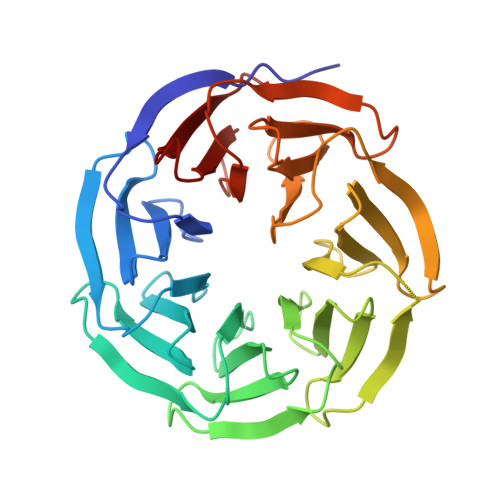
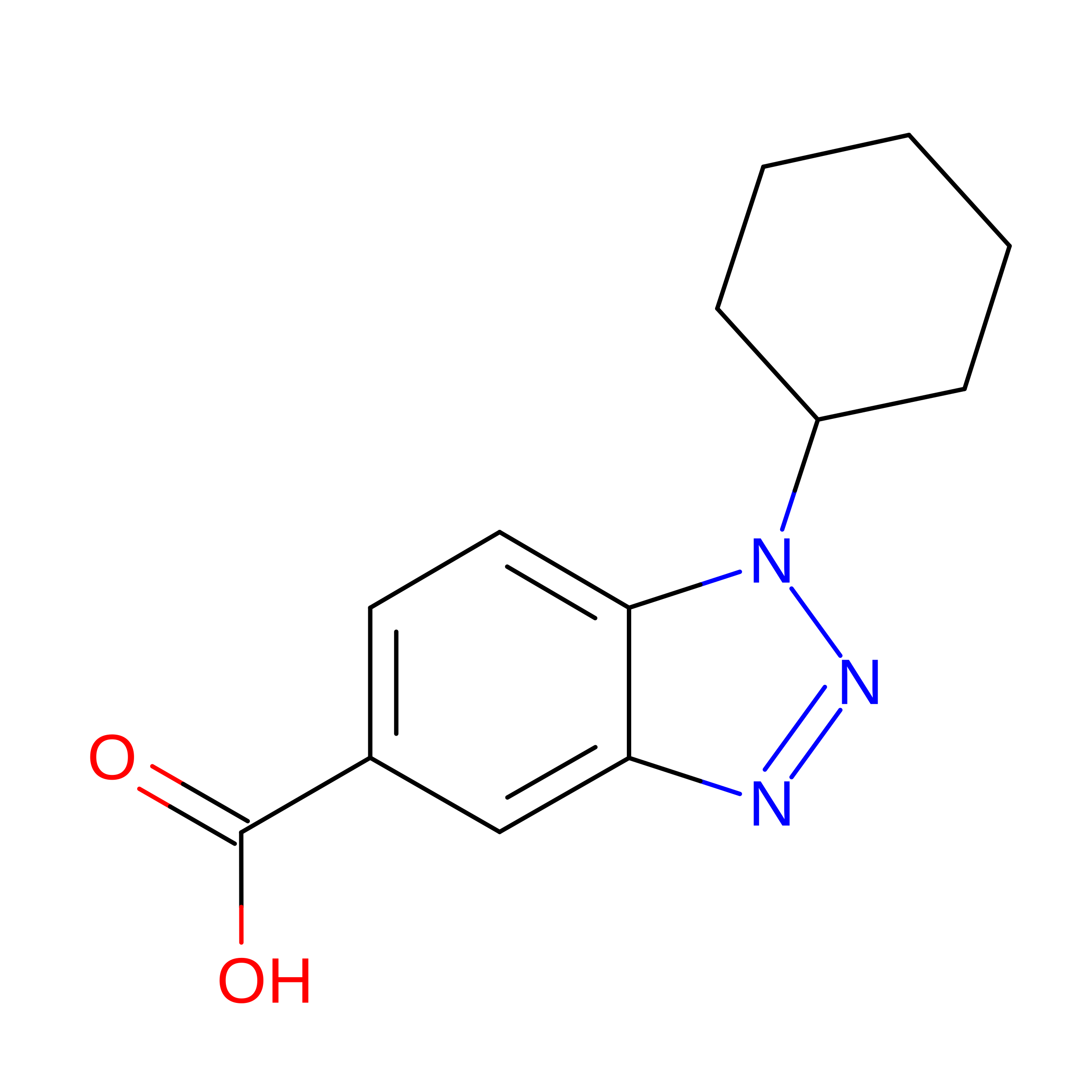
WDR5 in complex with Myc site fragment inhibitor


Experimental Data Snapshot

  • Method: X-RAY DIFFRACTION
  • Resolution: 1.26 Å
  • R-Value Free: 
    0.176 (Depositor), 0.175 (DCC) 
  • R-Value Work: 
    0.152 (Depositor), 0.153 (DCC) 
  • R-Value Observed: 
    0.153 (Depositor) 

wwPDB Validation 3D Report Full Report

Validation slider image for 6UHZ

Ligand Structure Quality Assessment 


This is version 1.2 of the entry. See complete history

Literature

Discovery of WD Repeat-Containing Protein 5 (WDR5)-MYC Inhibitors Using Fragment-Based Methods and Structure-Based Design.

Chacon Simon, S.Wang, F.Thomas, L.R.Phan, J.Zhao, B.Olejniczak, E.T.Macdonald, J.D.Shaw, J.G.Schlund, C.Payne, W.Creighton, J.Stauffer, S.R.Waterson, A.G.Tansey, W.P.Fesik, S.W.

(2020) J Med Chem 63: 4315-4333

  • DOI: https://doi.org/10.1021/acs.jmedchem.0c00224
  • Primary Citation Related Structures: 
    6UHY, 6UHZ, 6UIF, 6UIK, 6UJ4, 6UJH, 6UJJ, 6UJL, 6UOZ

  • PubMed Abstract: 

    The frequent deregulation of MYC and its elevated expression via multiple mechanisms drives cells to a tumorigenic state. Indeed, MYC is overexpressed in up to ∼50% of human cancers and is considered a highly validated anticancer target. Recently, we discovered that WD repeat-containing protein 5 (WDR5) binds to MYC and is a critical cofactor required for the recruitment of MYC to its target genes and reported the first small molecule inhibitors of the WDR5-MYC interaction using structure-based design. These compounds display high binding affinity, but have poor physicochemical properties and are hence not suitable for in vivo studies. Herein, we conducted an NMR-based fragment screening to identify additional chemical matter and, using a structure-based approach, we merged a fragment hit with the previously reported sulfonamide series. Compounds in this series can disrupt the WDR5-MYC interaction in cells, and as a consequence, we observed a reduction of MYC localization to chromatin.


  • Organizational Affiliation
    • Department of Chemistry, Vanderbilt University, Nashville, Tennessee 37232, United States.

Macromolecule Content 

  • Total Structure Weight: 67.47 kDa 
  • Atom Count: 5,438 
  • Modeled Residue Count: 603 
  • Deposited Residue Count: 608 
  • Unique protein chains: 1

Macromolecules

Find similar proteins by:|  3D Structure
Entity ID: 1
MoleculeChains  Sequence LengthOrganismDetailsImage
WDR5
A, B
304Homo sapiensMutation(s): 0 
UniProt & NIH Common Fund Data Resources
Find proteins for P61964 (Homo sapiens)
Explore P61964 
Go to UniProtKB:  P61964
PHAROS:  P61964
GTEx:  ENSG00000196363 
Entity Groups
Sequence Clusters30% Identity50% Identity70% Identity90% Identity95% Identity100% Identity
UniProt GroupP61964
Sequence Annotations
Expand
Reference Sequence

Experimental Data & Validation

Experimental Data

  • Method: X-RAY DIFFRACTION
  • Resolution: 1.26 Å
  • R-Value Free:  0.176 (Depositor), 0.175 (DCC) 
  • R-Value Work:  0.152 (Depositor), 0.153 (DCC) 
  • R-Value Observed: 0.153 (Depositor) 
Space Group: C 1 2 1
Unit Cell:
Length ( Å )Angle ( ˚ )
a = 134.374α = 90
b = 46.903β = 117.61
c = 112.462γ = 90
Software Package:
Software NamePurpose
HKL-2000data scaling
PHENIXrefinement
PDB_EXTRACTdata extraction
HKL-2000data reduction
PHASERphasing

Structure Validation

View Full Validation Report


Ligand Structure Quality Assessment 


Entry History 

& Funding Information

Deposition Data


Funding OrganizationLocationGrant Number
Department of Energy (DOE, United States)United StatesDE-AC02-06CH11357

Revision History  (Full details and data files)

  • Version 1.0: 2020-04-15
    Type: Initial release
  • Version 1.1: 2020-05-06
    Changes: Database references
  • Version 1.2: 2024-03-13
    Changes: Data collection, Database references