6SGP | pdb_00006sgp

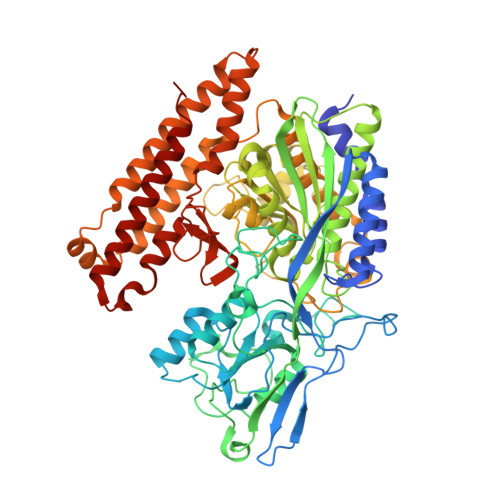
X-ray structure of human glutamate carboxypeptidase II (GCPII) - the E424M inactive mutant, in complex with a sulfamide inhibitor GluGlu


Experimental Data Snapshot

  • Method: X-RAY DIFFRACTION
  • Resolution: 1.58 Å
  • R-Value Free: 
    0.201 (Depositor), 0.186 (DCC) 
  • R-Value Work: 
    0.180 (Depositor), 0.188 (DCC) 
  • R-Value Observed: 
    0.181 (Depositor) 

Starting Model: experimental
View more details

wwPDB Validation 3D Report Full Report

Validation slider image for 6SGP

Ligand Structure Quality Assessment 


This is version 1.3 of the entry. See complete history

Literature

Structural, Biochemical, and Computational Characterization of Sulfamides as Bimetallic Peptidase Inhibitors.

Novakova, Z.Tehrani, Z.A.Jurok, R.Motlova, L.Kutil, Z.Pavlicek, J.Shukla, S.Choy, C.J.Havlinova, B.Baranova, P.Berkman, C.E.Kuchar, M.Cerny, J.Barinka, C.

(2024) J Chem Inf Model 

  • DOI: https://doi.org/10.1021/acs.jcim.3c01542
  • Primary Citation Related Structures: 
    4W9Y, 6SGP, 6SKH

  • PubMed Abstract: 

    The sulfonamide function is used extensively as a general building block in various inhibitory scaffolds and, more specifically, as a zinc-binding group (ZBG) of metalloenzyme inhibitors. Here, we provide biochemical, structural, and computational characterization of a metallopeptidase in complex with inhibitors, where the mono- and bisubstituted sulfamide functions are designed to directly engage zinc ions of a bimetallic enzyme site. Structural data showed that while monosubstituted sulfamides coordinate active-site zinc ions via the free negatively charged amino group in a canonical manner, their bisubstituted counterparts adopt an atypical binding pattern divergent from expected positioning of corresponding tetrahedral reaction intermediates. Accompanying quantum mechanics calculations revealed that electroneutrality of the sulfamide function is a major factor contributing to the markedly lower potency of bisubstituted compounds by considerably lowering their interaction energy with the enzyme. Overall, while bisubstituted uncharged sulfamide functions can bolster favorable pharmacological properties of a given inhibitor, their use as ZBGs in metalloenzyme inhibitors might be less advantageous due to their suboptimal metal-ligand properties.


  • Organizational Affiliation
    • Institute of Biotechnology of the Czech Academy of Sciences, BIOCEV, Prumyslova 595, 252 50 Vestec, Czech Republic.

Macromolecule Content 

  • Total Structure Weight: 84.14 kDa 
  • Atom Count: 6,561 
  • Modeled Residue Count: 692 
  • Deposited Residue Count: 707 
  • Unique protein chains: 1

Macromolecules

Find similar proteins by:|  3D Structure
Entity ID: 1
MoleculeChains  Sequence LengthOrganismDetailsImage
Glutamate carboxypeptidase 2707Homo sapiensMutation(s): 1 
Gene Names: FOLH1FOLHNAALAD1PSMPSMAGIG27
EC: 3.4.17.21
UniProt & NIH Common Fund Data Resources
Find proteins for Q04609 (Homo sapiens)
Explore Q04609 
Go to UniProtKB:  Q04609
PHAROS:  Q04609
GTEx:  ENSG00000086205 
Entity Groups
Sequence Clusters30% Identity50% Identity70% Identity90% Identity95% Identity100% Identity
UniProt GroupQ04609
Glycosylation
Glycosylation Sites: 7Go to GlyGen: Q04609-1
Sequence Annotations
Expand
Reference Sequence

Oligosaccharides

Help  
Entity ID: 2
MoleculeChains Length2D Diagram GlycosylationD Interactions
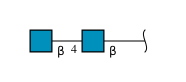
2-acetamido-2-deoxy-beta-D-glucopyranose-(1-4)-2-acetamido-2-deoxy-beta-D-glucopyranose
B, C, D, E
2N-Glycosylation
Glycosylation Resources
GlyTouCan: G42666HT
GlyCosmos: G42666HT
GlyGen: G42666HT
Entity ID: 3
MoleculeChains Length2D Diagram GlycosylationD Interactions
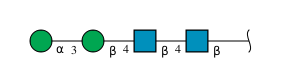
alpha-D-mannopyranose-(1-3)-beta-D-mannopyranose-(1-4)-2-acetamido-2-deoxy-beta-D-glucopyranose-(1-4)-2-acetamido-2-deoxy-beta-D-glucopyranose
F
4N-Glycosylation
Glycosylation Resources
GlyTouCan: G81315DD
GlyCosmos: G81315DD
GlyGen: G81315DD
Entity ID: 4
MoleculeChains Length2D Diagram GlycosylationD Interactions
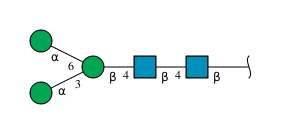
alpha-D-mannopyranose-(1-3)-[alpha-D-mannopyranose-(1-6)]beta-D-mannopyranose-(1-4)-2-acetamido-2-deoxy-beta-D-glucopyranose-(1-4)-2-acetamido-2-deoxy-beta-D-glucopyranose
G
5N-Glycosylation
Glycosylation Resources
GlyTouCan: G22768VO
GlyCosmos: G22768VO
GlyGen: G22768VO

Small Molecules

Ligands 8 Unique
IDChains Name / Formula / InChI Key2D Diagram3D Interactions
LDK
(Subject of Investigation/LOI)

Query on LDK


Download:Ideal Coordinates CCD File
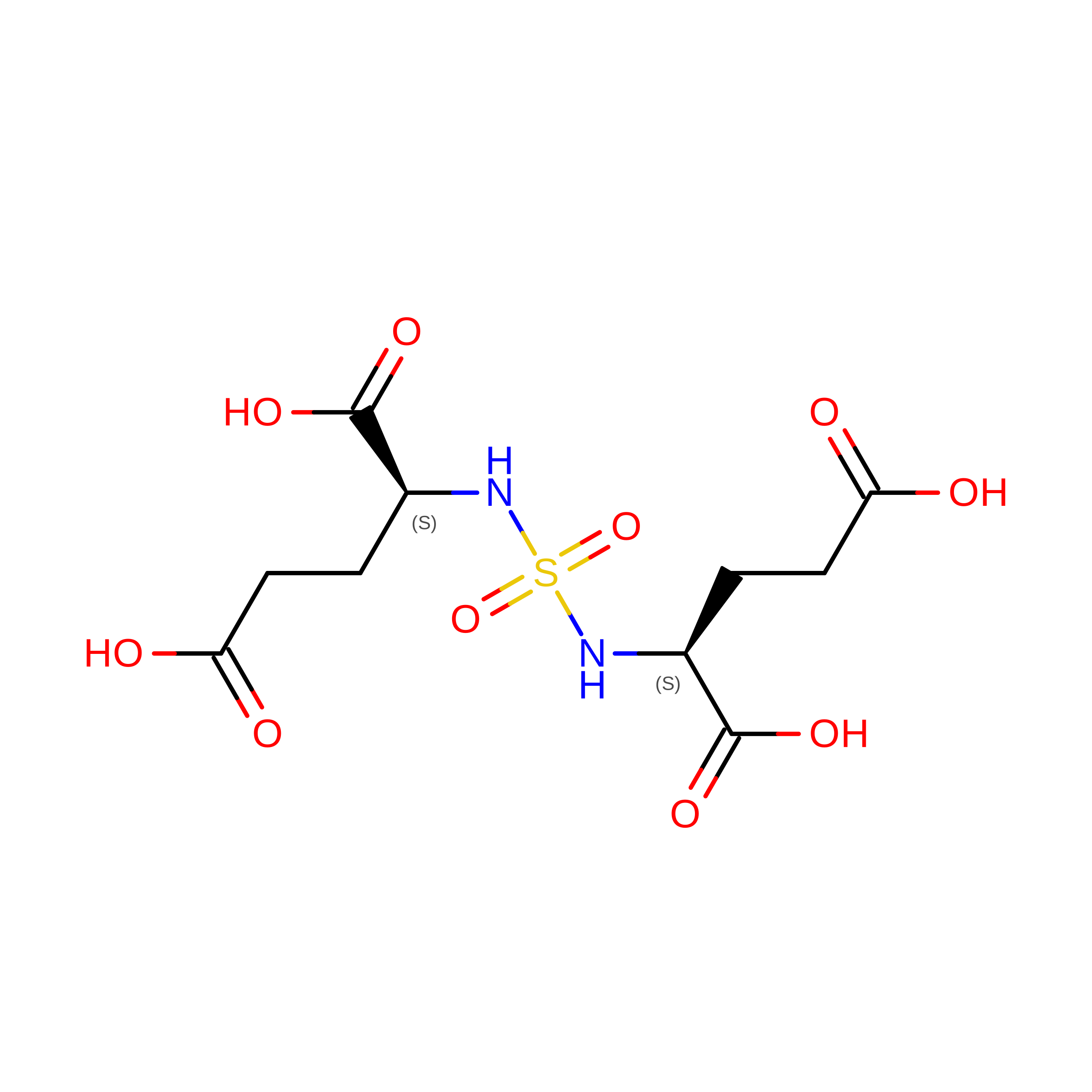
P [auth A](2~{S})-2-[[(2~{S})-1,5-bis(oxidanyl)-1,5-bis(oxidanylidene)pentan-2-yl]sulfamoylamino]pentanedioic acid
C10 H16 N2 O10 S
VLYWUCXOEFVQPS-WDSKDSINSA-N
NAG

Query on NAG


Download:Ideal Coordinates CCD File
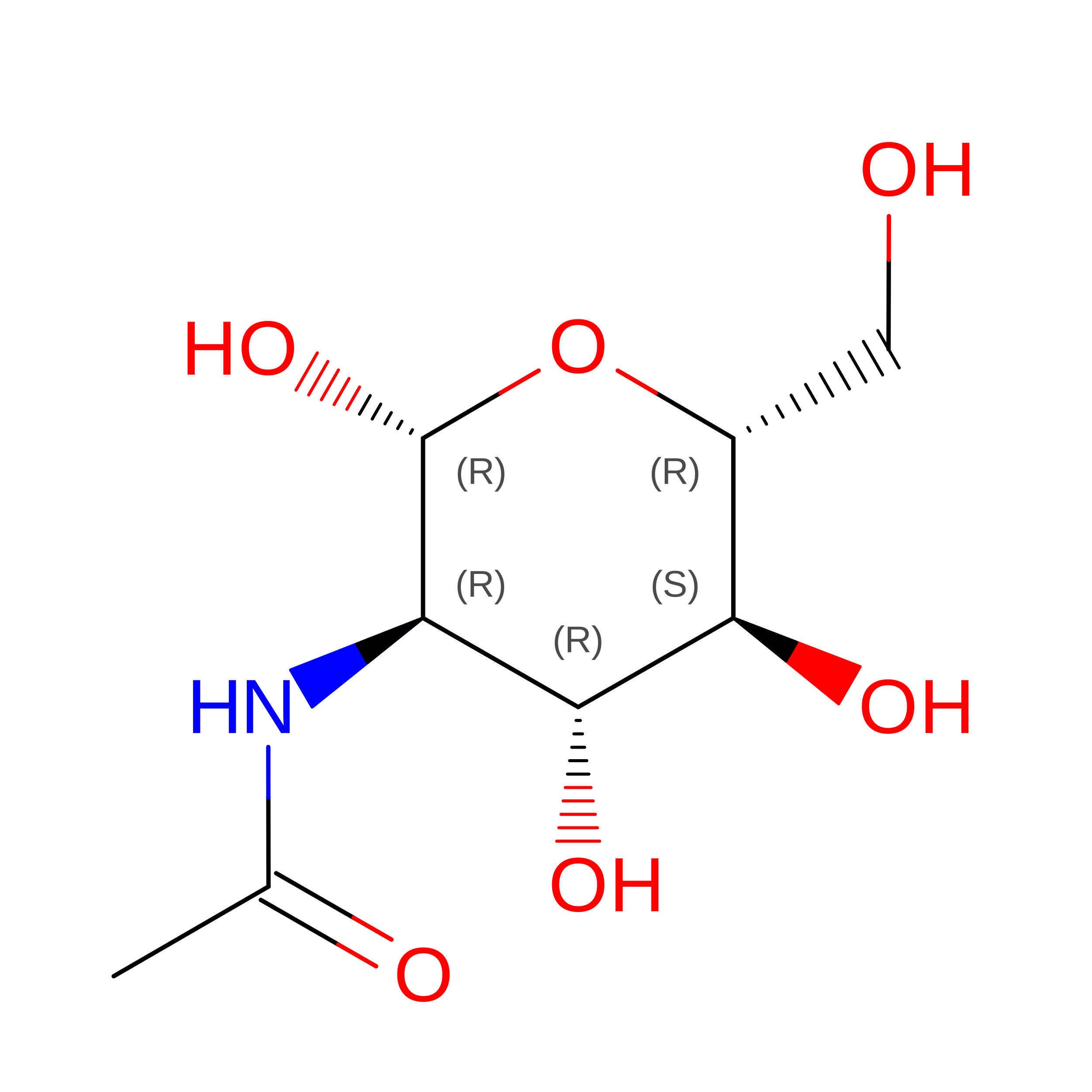
H [auth A]2-acetamido-2-deoxy-beta-D-glucopyranose
C8 H15 N O6
OVRNDRQMDRJTHS-FMDGEEDCSA-N
PGE

Query on PGE


Download:Ideal Coordinates CCD File
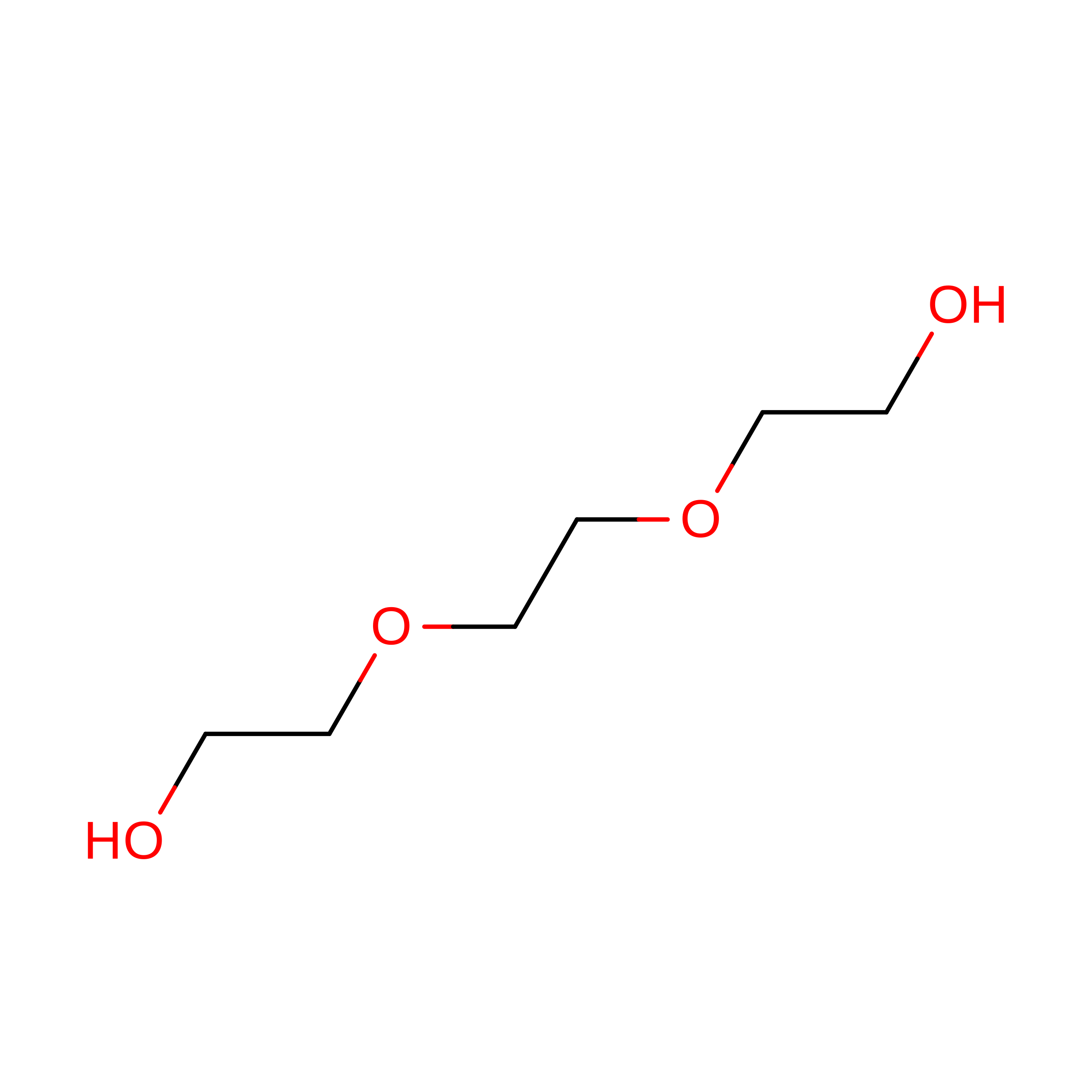
M [auth A]TRIETHYLENE GLYCOL
C6 H14 O4
ZIBGPFATKBEMQZ-UHFFFAOYSA-N
PEG

Query on PEG


Download:Ideal Coordinates CCD File
N [auth A],
O [auth A]
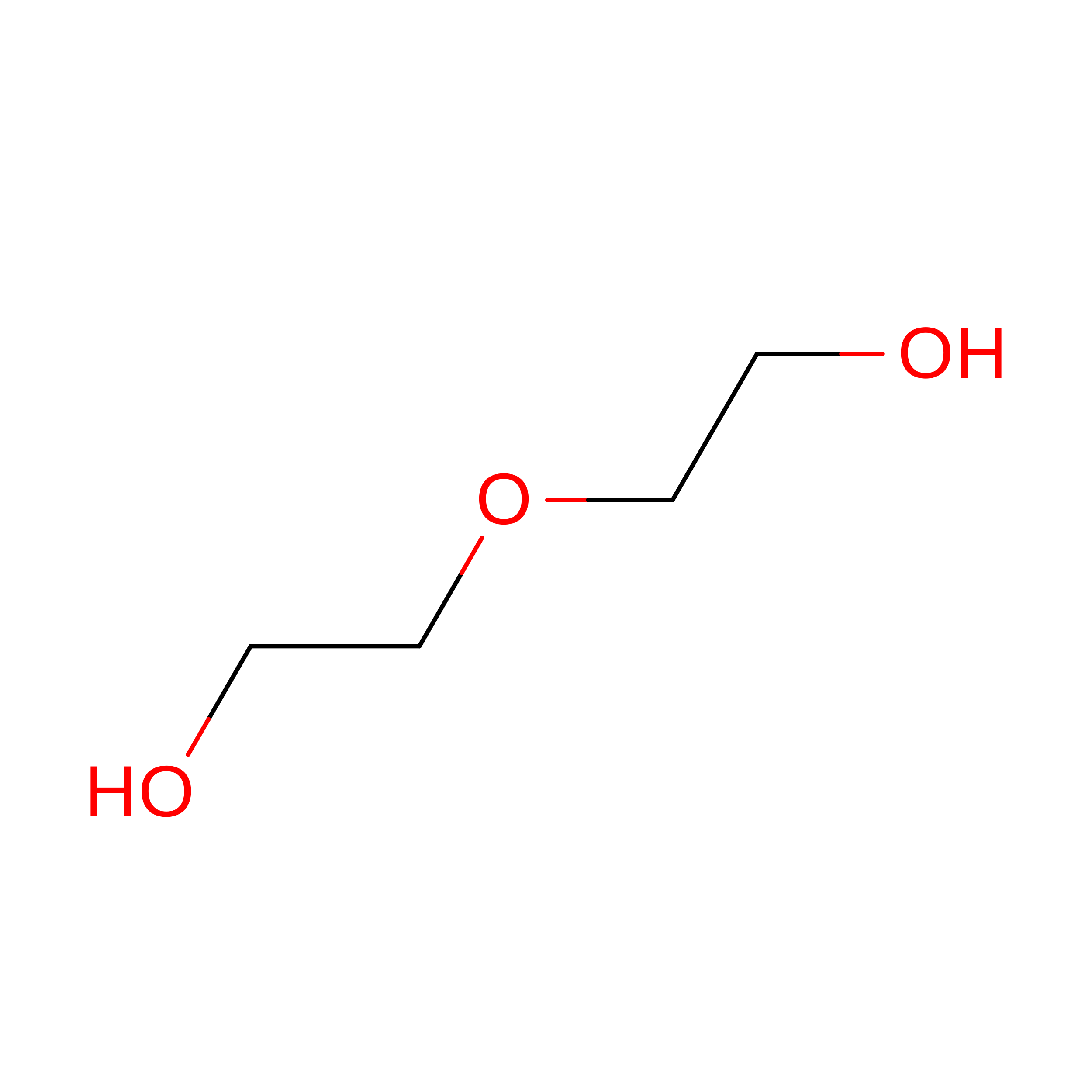
DI(HYDROXYETHYL)ETHER
C4 H10 O3
MTHSVFCYNBDYFN-UHFFFAOYSA-N
ZN

Query on ZN


Download:Ideal Coordinates CCD File
I [auth A],
J [auth A]
ZINC ION
Zn
PTFCDOFLOPIGGS-UHFFFAOYSA-N
CA

Query on CA


Download:Ideal Coordinates CCD File
K [auth A]CALCIUM ION
Ca
BHPQYMZQTOCNFJ-UHFFFAOYSA-N
CL

Query on CL


Download:Ideal Coordinates CCD File
L [auth A]CHLORIDE ION
Cl
VEXZGXHMUGYJMC-UHFFFAOYSA-M
NA

Query on NA


Download:Ideal Coordinates CCD File
Q [auth A]SODIUM ION
Na
FKNQFGJONOIPTF-UHFFFAOYSA-N

Experimental Data & Validation

Experimental Data

  • Method: X-RAY DIFFRACTION
  • Resolution: 1.58 Å
  • R-Value Free:  0.201 (Depositor), 0.186 (DCC) 
  • R-Value Work:  0.180 (Depositor), 0.188 (DCC) 
  • R-Value Observed: 0.181 (Depositor) 
Space Group: I 2 2 2
Unit Cell:
Length ( Å )Angle ( ˚ )
a = 101.349α = 90
b = 130.394β = 90
c = 158.538γ = 90
Software Package:
Software NamePurpose
REFMACrefinement
PDB_EXTRACTdata extraction
Aimlessdata scaling
REFMACphasing
Cootmodel building
XDSdata reduction

Structure Validation

View Full Validation Report


Ligand Structure Quality Assessment 


Entry History 

Deposition Data

Revision History  (Full details and data files)

  • Version 1.0: 2020-08-26
    Type: Initial release
  • Version 1.1: 2024-01-24
    Changes: Data collection, Database references, Refinement description
  • Version 1.2: 2024-01-31
    Changes: Database references
  • Version 1.3: 2024-11-13
    Changes: Structure summary