6PYP | pdb_00006pyp

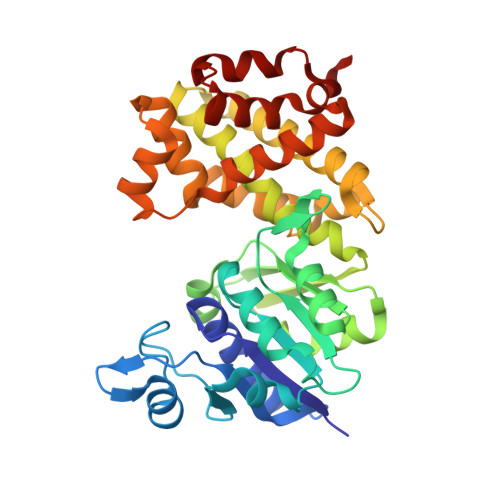
Binary Complex of Human Glycerol 3-Phosphate Dehydrogenase, R269A mutant


Experimental Data Snapshot

  • Method: X-RAY DIFFRACTION
  • Resolution: 1.95 Å
  • R-Value Free: 
    0.190 (Depositor), 0.220 (DCC) 
  • R-Value Work: 
    0.167 (Depositor), 0.168 (DCC) 

Starting Model: other
View more details

wwPDB Validation 3D Report Full Report

Validation slider image for 6PYP

Ligand Structure Quality Assessment 


This is version 1.3 of the entry. See complete history

Literature

Modeling the Role of a Flexible Loop and Active Site Side Chains in Hydride Transfer Catalyzed by Glycerol-3-phosphate Dehydrogenase.

Mhashal, A.R.Romero-Rivera, A.Mydy, L.S.Cristobal, J.R.Gulick, A.M.Richard, J.P.Kamerlin, S.C.L.

(2020) ACS Catal 10: 11253-11267

  • DOI: https://doi.org/10.1021/acscatal.0c02757
  • Primary Citation Related Structures: 
    6PYP

  • PubMed Abstract: 

    Glycerol-3-phosphate dehydrogenase is a biomedically important enzyme that plays a crucial role in lipid biosynthesis. It is activated by a ligand-gated conformational change that is necessary for the enzyme to reach a catalytically competent conformation capable of efficient transition-state stabilization. While the human form ( hl GPDH) has been the subject of extensive structural and biochemical studies, corresponding computational studies to support and extend experimental observations have been lacking. We perform here detailed empirical valence bond and Hamiltonian replica exchange molecular dynamics simulations of wild-type hl GPDH and its variants, as well as providing a crystal structure of the binary hl GPDH·NAD R269A variant where the enzyme is present in the open conformation. We estimated the activation free energies for the hydride transfer reaction in wild-type and substituted hl GPDH and investigated the effect of mutations on catalysis from a detailed structural study. In particular, the K120A and R269A variants increase both the volume and solvent exposure of the active site, with concomitant loss of catalytic activity. In addition, the R269 side chain interacts with both the Q295 side chain on the catalytic loop, and the substrate phosphodianion. Our structural data and simulations illustrate the critical role of this side chain in facilitating the closure of hl GPDH into a catalytically competent conformation, through modulating the flexibility of a key catalytic loop (292-LNGQKL-297). This, in turn, rationalizes a tremendous 41,000 fold decrease experimentally in the turnover number, k cat , upon truncating this residue, as loop closure is essential for both correct positioning of key catalytic residues in the active site, as well as sequestering the active site from the solvent. Taken together, our data highlight the importance of this ligand-gated conformational change in catalysis, a feature that can be exploited both for protein engineering and for the design of allosteric inhibitors targeting this biomedically important enzyme.


  • Organizational Affiliation
    • Department of Chemistry-BMC, Uppsala University, Box 576, Uppsala SE-751 23, Sweden.

Macromolecule Content 

  • Total Structure Weight: 76.15 kDa 
  • Atom Count: 5,449 
  • Modeled Residue Count: 685 
  • Deposited Residue Count: 698 
  • Unique protein chains: 1

Macromolecules

Find similar proteins by:|  3D Structure
Entity ID: 1
MoleculeChains  Sequence LengthOrganismDetailsImage
Glycerol-3-phosphate dehydrogenase [NAD(+)], cytoplasmic
A, B
349Homo sapiensMutation(s): 1 
Gene Names: GPD1
EC: 1.1.1.8
UniProt & NIH Common Fund Data Resources
Find proteins for P21695 (Homo sapiens)
Explore P21695 
Go to UniProtKB:  P21695
PHAROS:  P21695
GTEx:  ENSG00000167588 
Entity Groups
Sequence Clusters30% Identity50% Identity70% Identity90% Identity95% Identity100% Identity
UniProt GroupP21695
Sequence Annotations
Expand
Reference Sequence

Small Molecules

Ligands 5 Unique
IDChains Name / Formula / InChI Key2D Diagram3D Interactions
NAD
(Subject of Investigation/LOI)

Query on NAD


Download:Ideal Coordinates CCD File
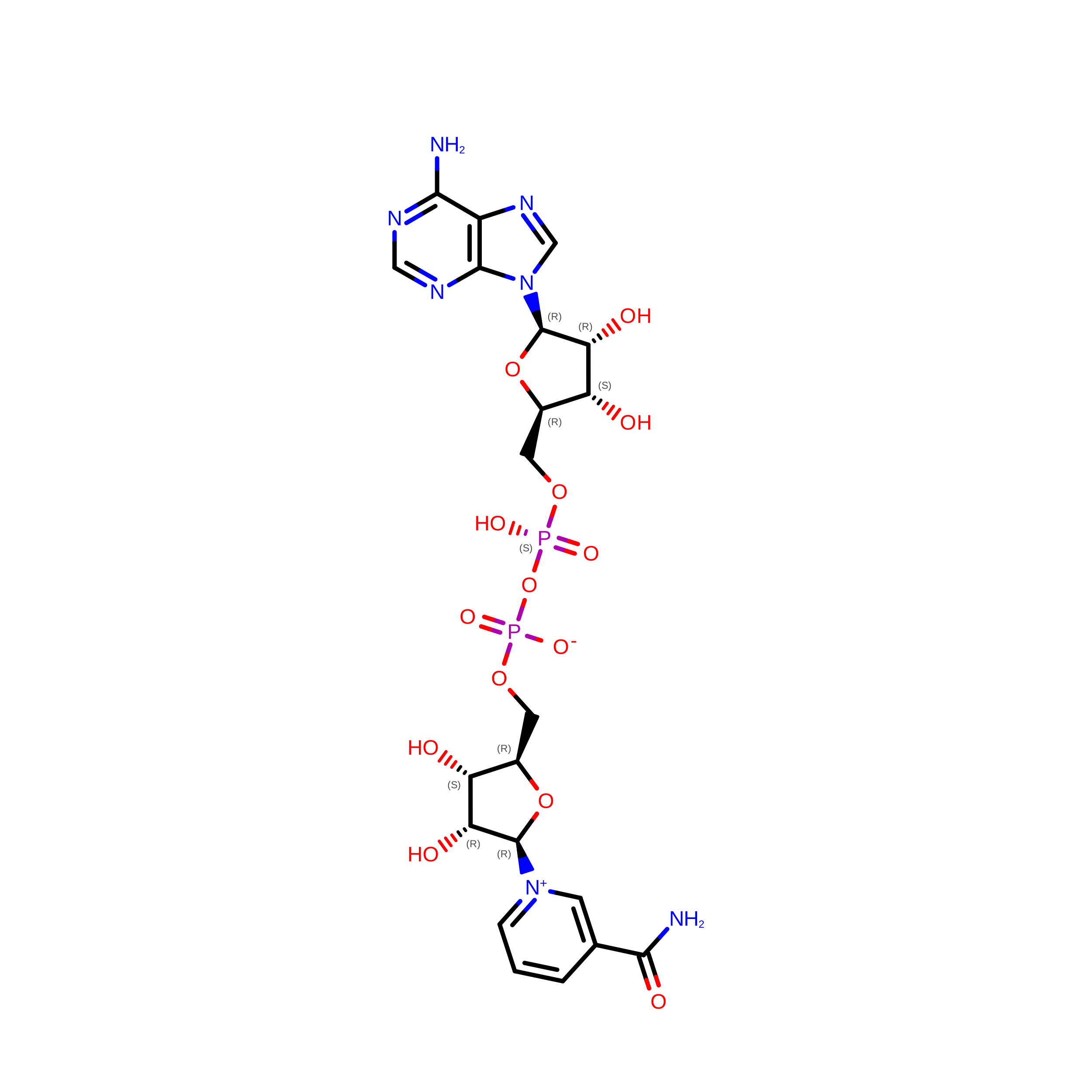
C [auth A]NICOTINAMIDE-ADENINE-DINUCLEOTIDE
C21 H27 N7 O14 P2
BAWFJGJZGIEFAR-NNYOXOHSSA-N
POP

Query on POP


Download:Ideal Coordinates CCD File
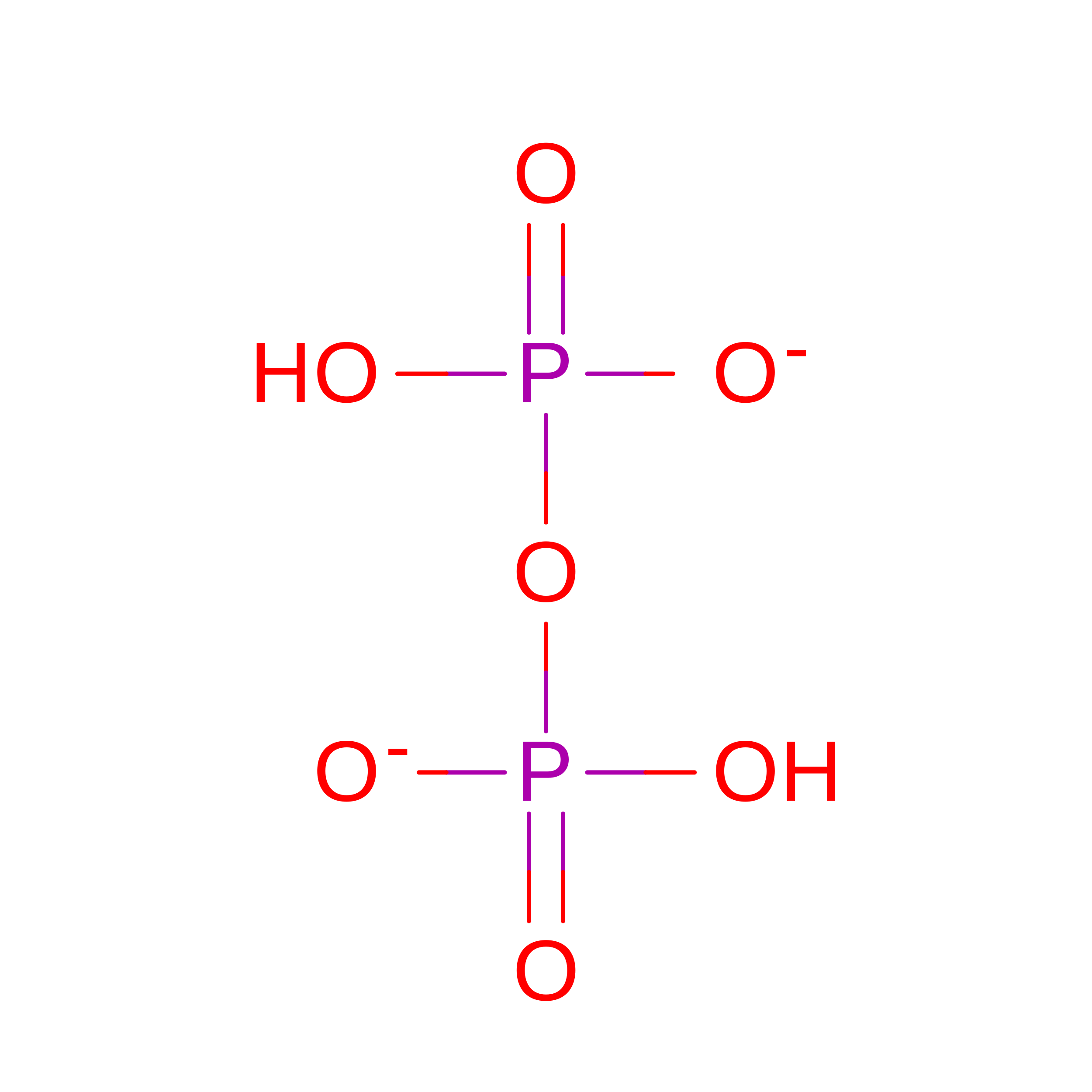
F [auth B]PYROPHOSPHATE 2-
H2 O7 P2
XPPKVPWEQAFLFU-UHFFFAOYSA-L
3SY

Query on 3SY


Download:Ideal Coordinates CCD File
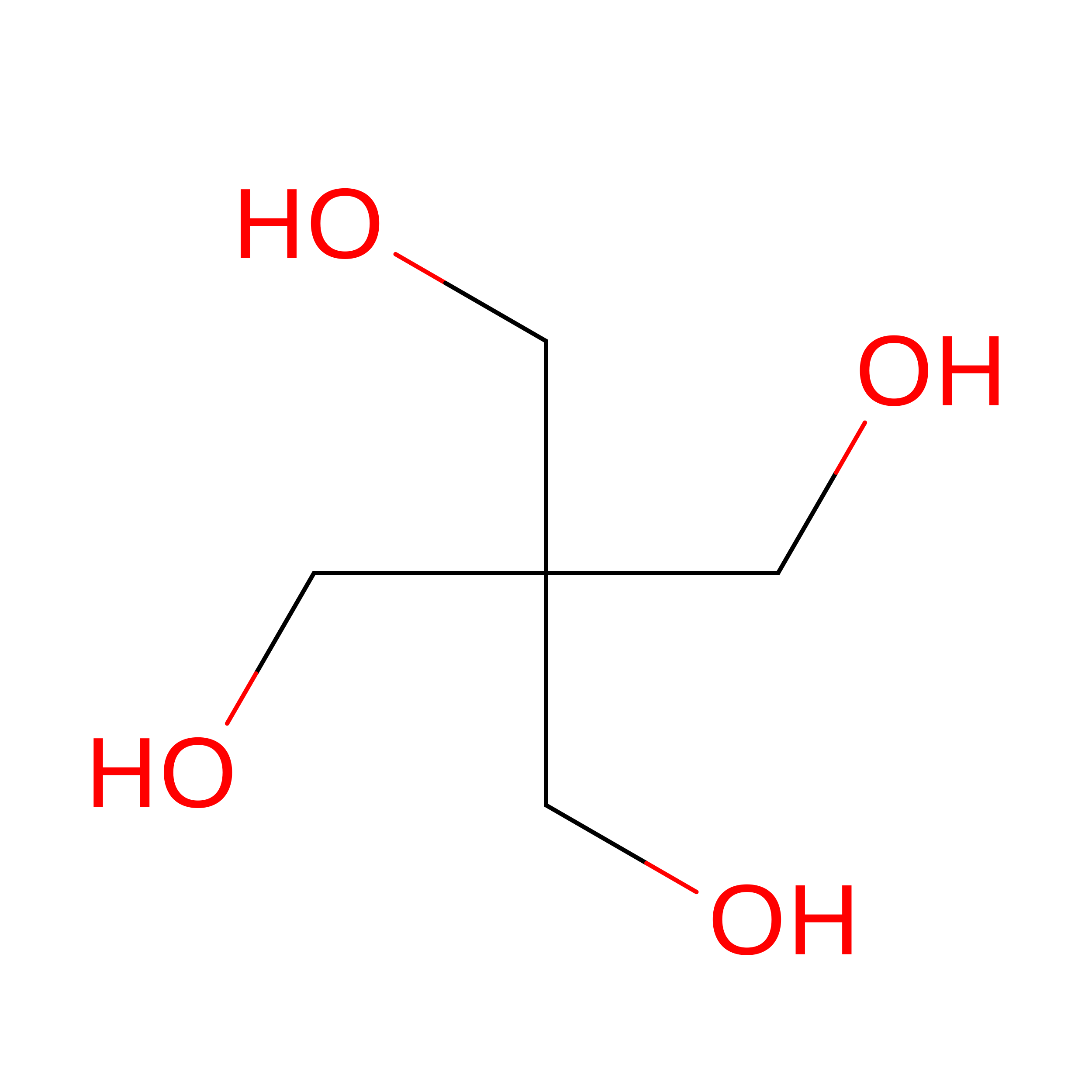
E [auth A]2,2-bis(hydroxymethyl)propane-1,3-diol
C5 H12 O4
WXZMFSXDPGVJKK-UHFFFAOYSA-N
PO4

Query on PO4


Download:Ideal Coordinates CCD File
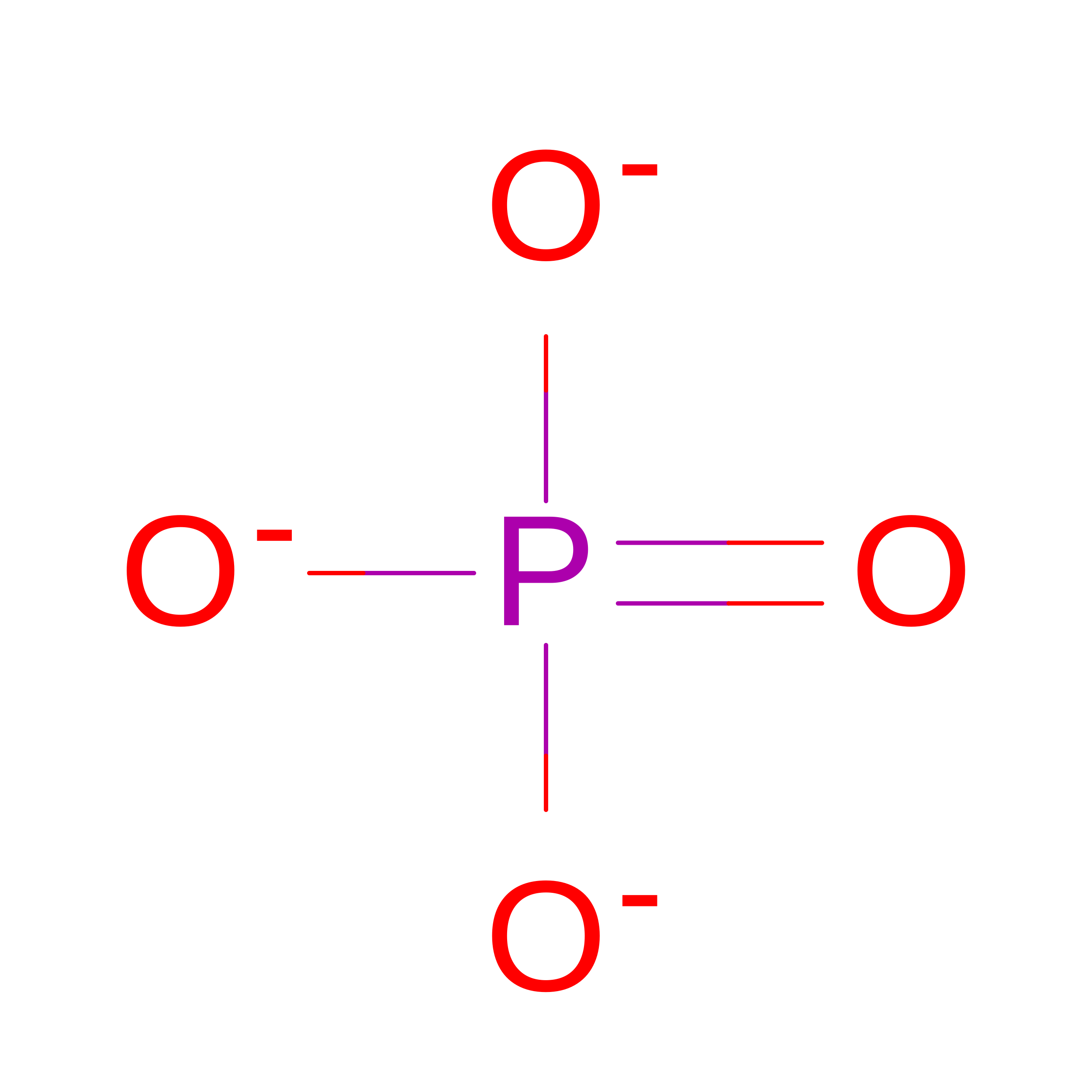
D [auth A]PHOSPHATE ION
O4 P
NBIIXXVUZAFLBC-UHFFFAOYSA-K
K

Query on K


Download:Ideal Coordinates CCD File
G [auth B]POTASSIUM ION
K
NPYPAHLBTDXSSS-UHFFFAOYSA-N

Experimental Data & Validation

Experimental Data

  • Method: X-RAY DIFFRACTION
  • Resolution: 1.95 Å
  • R-Value Free:  0.190 (Depositor), 0.220 (DCC) 
  • R-Value Work:  0.167 (Depositor), 0.168 (DCC) 
Space Group: P 1 21 1
Unit Cell:
Length ( Å )Angle ( ˚ )
a = 63.33α = 90
b = 76.56β = 96.57
c = 64.61γ = 90
Software Package:
Software NamePurpose
PHENIXrefinement
MOSFLMdata reduction
Aimlessdata scaling
PHASERphasing

Structure Validation

View Full Validation Report


Ligand Structure Quality Assessment 


Entry History 

& Funding Information

Deposition Data

  • Released Date: 2020-07-08 
  • Deposition Author(s): Gulick, A.M.

Funding OrganizationLocationGrant Number
National Institutes of Health/National Institute of General Medical Sciences (NIH/NIGMS)United StatesGM116957

Revision History  (Full details and data files)

  • Version 1.0: 2020-07-08
    Type: Initial release
  • Version 1.1: 2020-10-28
    Changes: Database references, Derived calculations
  • Version 1.2: 2024-03-13
    Changes: Data collection, Database references
  • Version 1.3: 2024-04-03
    Changes: Refinement description