Download Mendeley
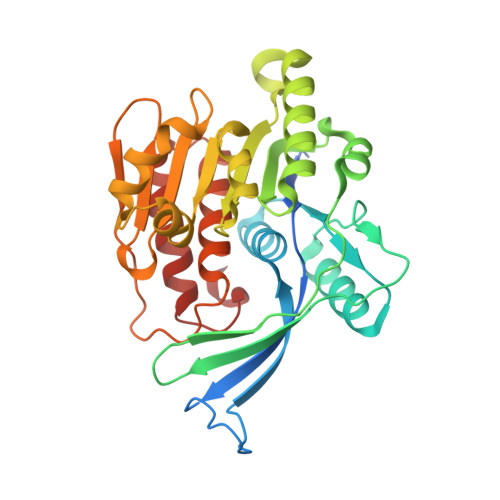
Michaelis-like complex of mouse ketohexokinase isoform C.
Gasper, W.C., Gardner, S., Ross, A., Oppelt, S.A., Allen, K.N., Tolan, D.R.(2024) Acta Crystallogr D Struct Biol 80: 377-385
- PubMed: 38805243 Search on PubMedSearch on PubMed Central
- DOI: https://doi.org/10.1107/S2059798324003723
- Primary Citation Related Structures:
6P2D - PubMed Abstract:
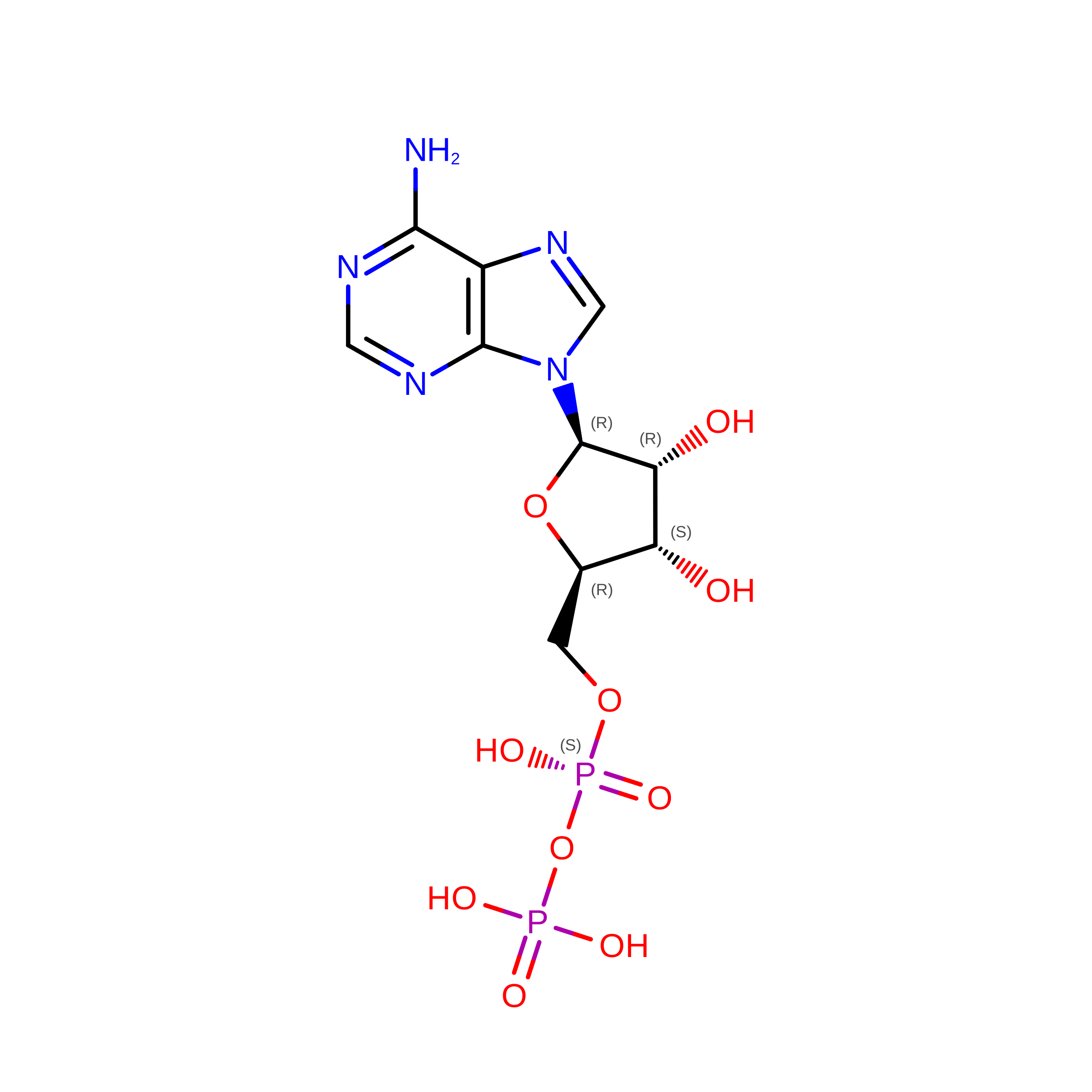
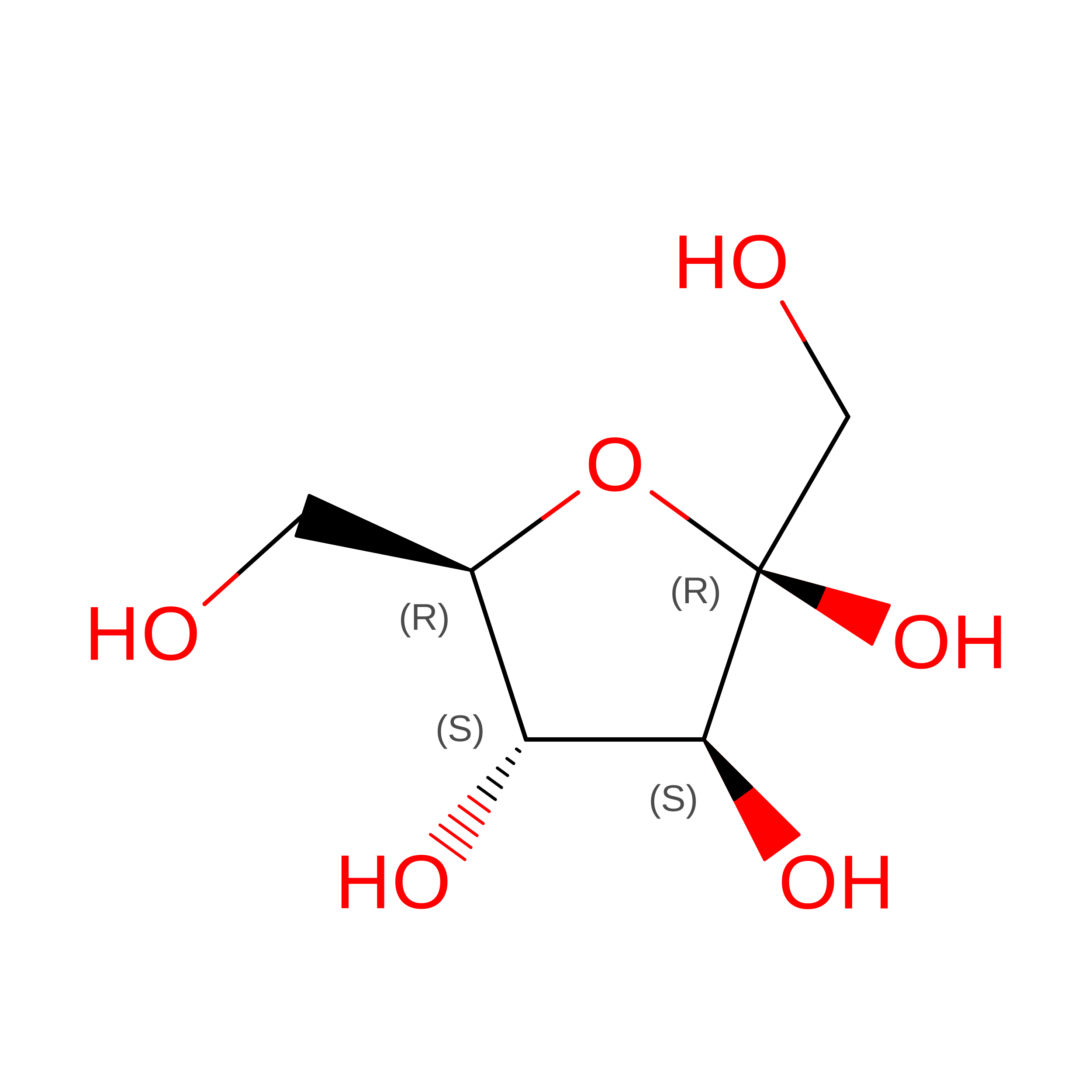
Over the past forty years there has been a drastic increase in fructose-related diseases, including obesity, heart disease and diabetes. Ketohexokinase (KHK), the first enzyme in the liver fructolysis pathway, catalyzes the ATP-dependent phosphorylation of fructose to fructose 1-phosphate. Understanding the role of KHK in disease-related processes is crucial for the management and prevention of this growing epidemic. Molecular insight into the structure-function relationship in ligand binding and catalysis by KHK is needed for the design of therapeutic inhibitory ligands. Ketohexokinase has two isoforms: ketohexokinase A (KHK-A) is produced ubiquitously at low levels, whereas ketohexokinase C (KHK-C) is found at much higher levels, specifically in the liver, kidneys and intestines. Structures of the unliganded and liganded human isoforms KHK-A and KHK-C are known, as well as structures of unliganded and inhibitor-bound mouse KHK-C (mKHK-C), which shares 90% sequence identity with human KHK-C. Here, a high-resolution X-ray crystal structure of mKHK-C refined to 1.79 Å resolution is presented. The structure was determined in a complex with both the substrate fructose and the product of catalysis, ADP, providing a view of the Michaelis-like complex of the mouse ortholog. Comparison to unliganded structures suggests that KHK undergoes a conformational change upon binding of substrates that places the enzyme in a catalytically competent form in which the β-sheet domain from one subunit rotates by 16.2°, acting as a lid for the opposing active site. Similar kinetic parameters were calculated for the mouse and human enzymes and indicate that mice may be a suitable animal model for the study of fructose-related diseases. Knowledge of the similarity between the mouse and human enzymes is important for understanding preclinical efforts towards targeting this enzyme, and this ground-state, Michaelis-like complex suggests that a conformational change plays a role in the catalytic function of KHK-C.
- Program in Biochemistry and Molecular Biology, Boston University, Boston, MA 02215, USA.
Organizational Affiliation: