6N9I

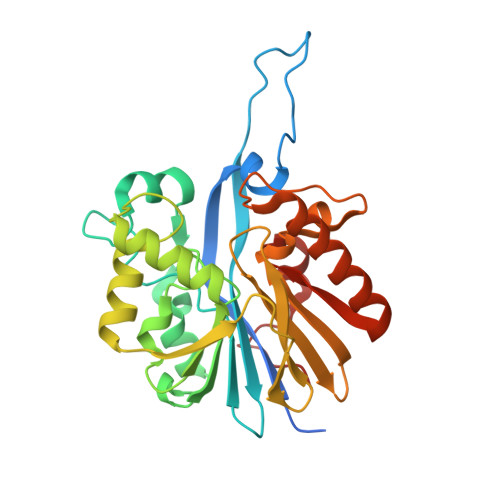
Structure of the Quorum Quenching lactonase from Parageobacillus caldoxylosilyticus - free


Experimental Data Snapshot

  • Method: X-RAY DIFFRACTION
  • Resolution: 1.60 Å
  • R-Value Free: 0.187 
  • R-Value Work: 0.139 
  • R-Value Observed: 0.142 

wwPDB Validation 3D Report Full Report


This is version 1.2 of the entry. See complete history


Literature

The Structural Determinants Accounting for the Broad Substrate Specificity of the Quorum Quenching Lactonase GcL.

Bergonzi, C.Schwab, M.Naik, T.Elias, M.

(2019) Chembiochem 20: 1848-1855

  • DOI: 10.1002/cbic.201900024
  • Structures With Same Primary Citation

  • PubMed Abstract: 
  • Quorum quenching lactonases are enzymes capable of hydrolyzing lactones, including N-acyl homoserine lactones (AHLs). AHLs are molecules known as signals in bacterial communication dubbed quorum sensing. Bacterial signal disruption by lactonases was ...

    Quorum quenching lactonases are enzymes capable of hydrolyzing lactones, including N-acyl homoserine lactones (AHLs). AHLs are molecules known as signals in bacterial communication dubbed quorum sensing. Bacterial signal disruption by lactonases was previously reported to inhibit behavior regulated by quorum sensing, such as the expression of virulence factors and the formation of biofilms. Herein, we report the enzymatic and structural characterization of a novel lactonase representative from the metallo-β-lactamase superfamily, dubbed GcL. GcL is a broad spectrum and highly proficient lactonase, with k cat /K M values in the range of 10 4 to 10 6  m -1  s -1 . Analysis of free GcL structures and in complex with AHL substrates of different acyl chain length, namely, C4-AHL and 3-oxo-C12-AHL, allowed their respective binding modes to be elucidated. Structures reveal three subsites in the binding crevice: 1) the small subsite where chemistry is performed on the lactone ring; 2) a hydrophobic ring that accommodates the amide group of AHLs and small acyl chains; and 3) the outer, hydrophilic subsite that extends to the protein surface. Unexpectedly, the absence of structural accommodation for long substrate acyl chains seems to relate to the broad substrate specificity of the enzyme.


    Organizational Affiliation

    Biochemistry, Molecular Biology and Biophysics Department and, BioTechnology Institute, University of Minnesota, Saint Paul, MN, 55108, USA.


Macromolecules

Find similar proteins by: Sequence  |  Structure

Entity ID: 1
MoleculeChainsSequence LengthOrganismDetails
Putative hydrolase
A, B, C
297Parageobacillus caldoxylosilyticus NBRC 107762Mutation(s): 0 
Gene Names: GCA01S_030_00190
Find proteins for A0A023DFE8 (Parageobacillus caldoxylosilyticus NBRC 107762)
Go to UniProtKB:  A0A023DFE8
Small Molecules
Ligands 7 Unique
IDChainsName / Formula / InChI Key2D Diagram3D Interactions
PGE
Query on PGE

Download CCD File 
A, B, C
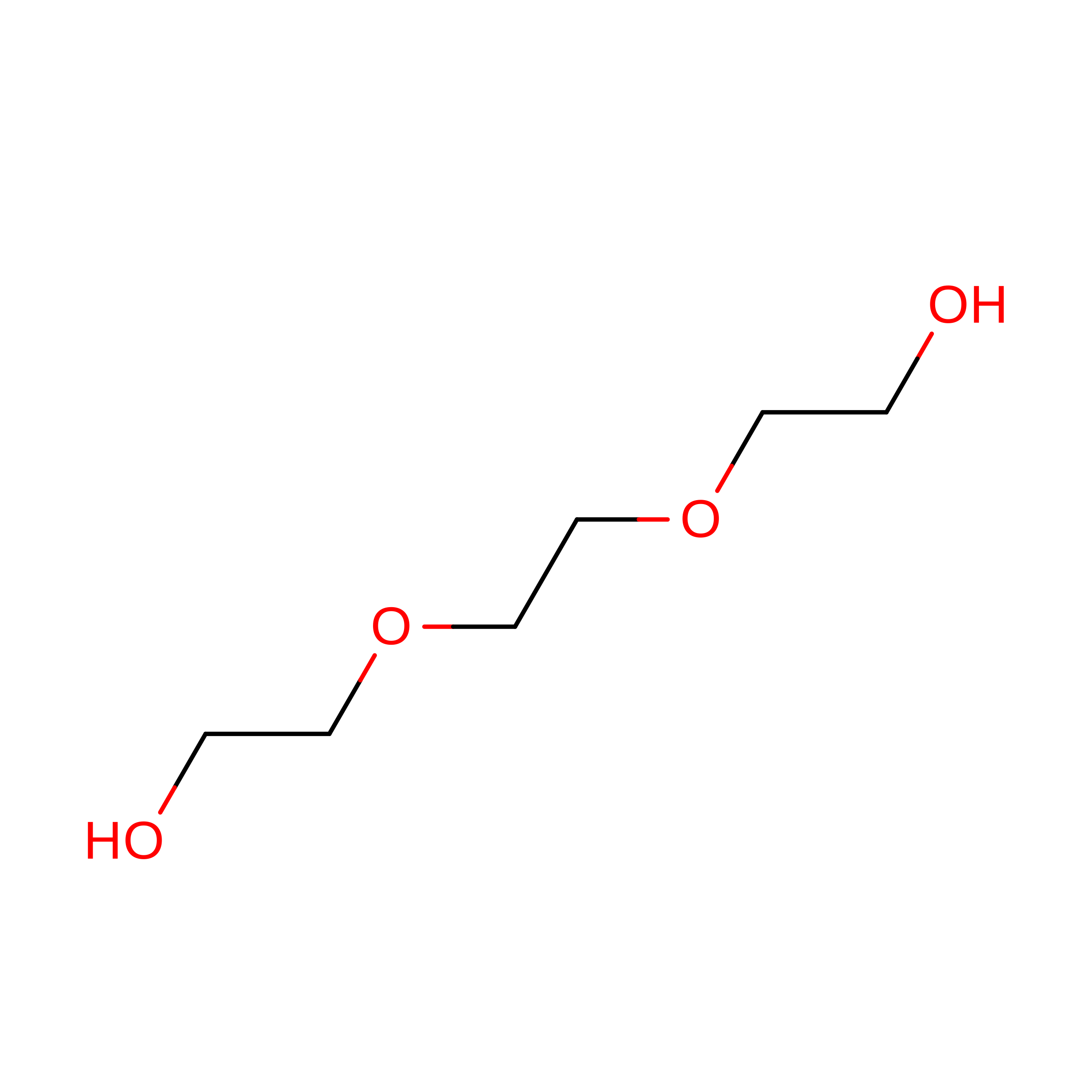
TRIETHYLENE GLYCOL
C6 H14 O4
ZIBGPFATKBEMQZ-UHFFFAOYSA-N
 Ligand Interaction
SO4
Query on SO4

Download CCD File 
A, B, C
SULFATE ION
O4 S
QAOWNCQODCNURD-UHFFFAOYSA-L
 Ligand Interaction
GOL
Query on GOL

Download CCD File 
B, C
GLYCEROL
C3 H8 O3
PEDCQBHIVMGVHV-UHFFFAOYSA-N
 Ligand Interaction
EDO
Query on EDO

Download CCD File 
A, B, C
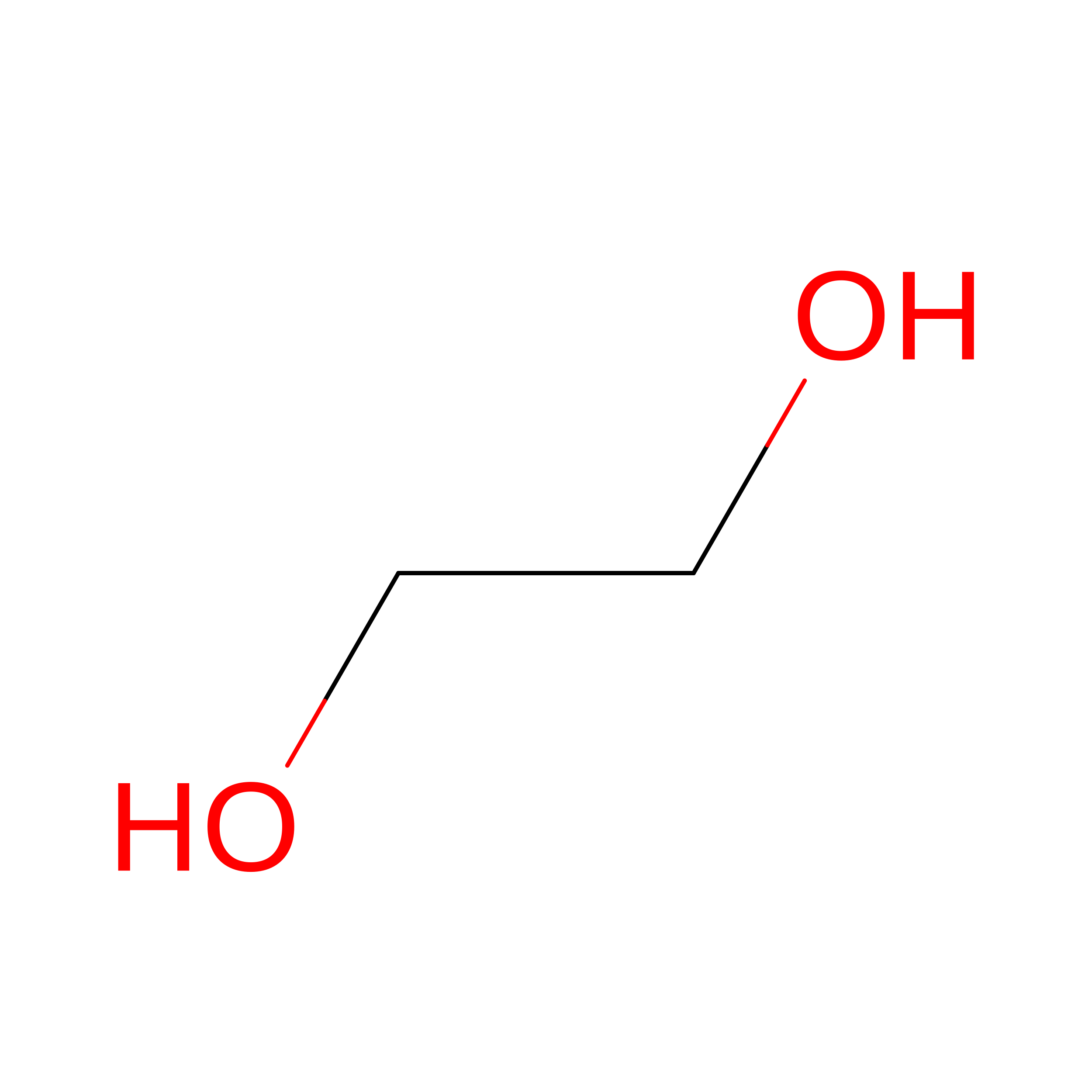
1,2-ETHANEDIOL
C2 H6 O2
LYCAIKOWRPUZTN-UHFFFAOYSA-N
 Ligand Interaction
ACT
Query on ACT

Download CCD File 
A, B, C
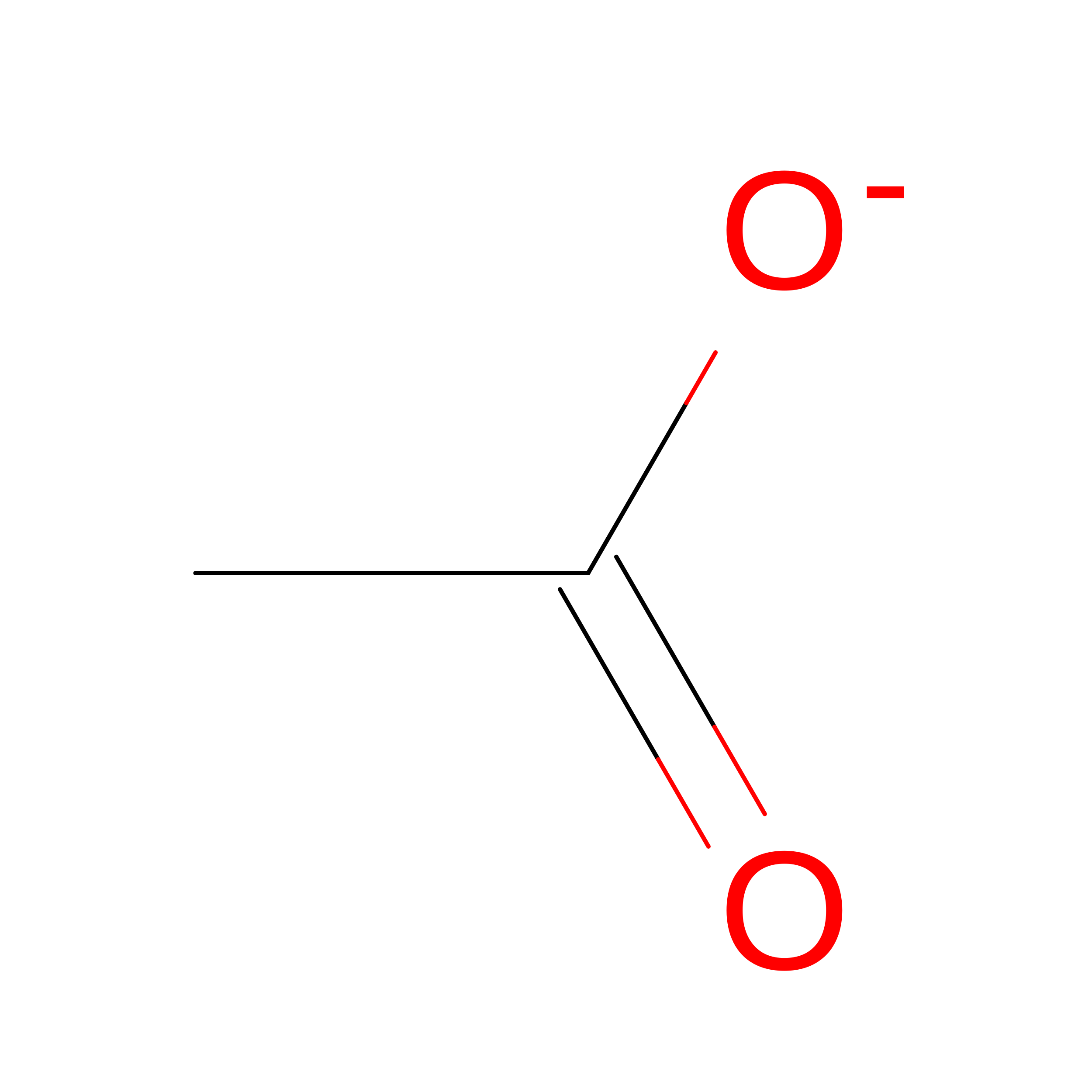
ACETATE ION
C2 H3 O2
QTBSBXVTEAMEQO-UHFFFAOYSA-M
 Ligand Interaction
CO
Query on CO

Download CCD File 
A, B, C
COBALT (II) ION
Co
XLJKHNWPARRRJB-UHFFFAOYSA-N
 Ligand Interaction
FE
Query on FE

Download CCD File 
A, B, C
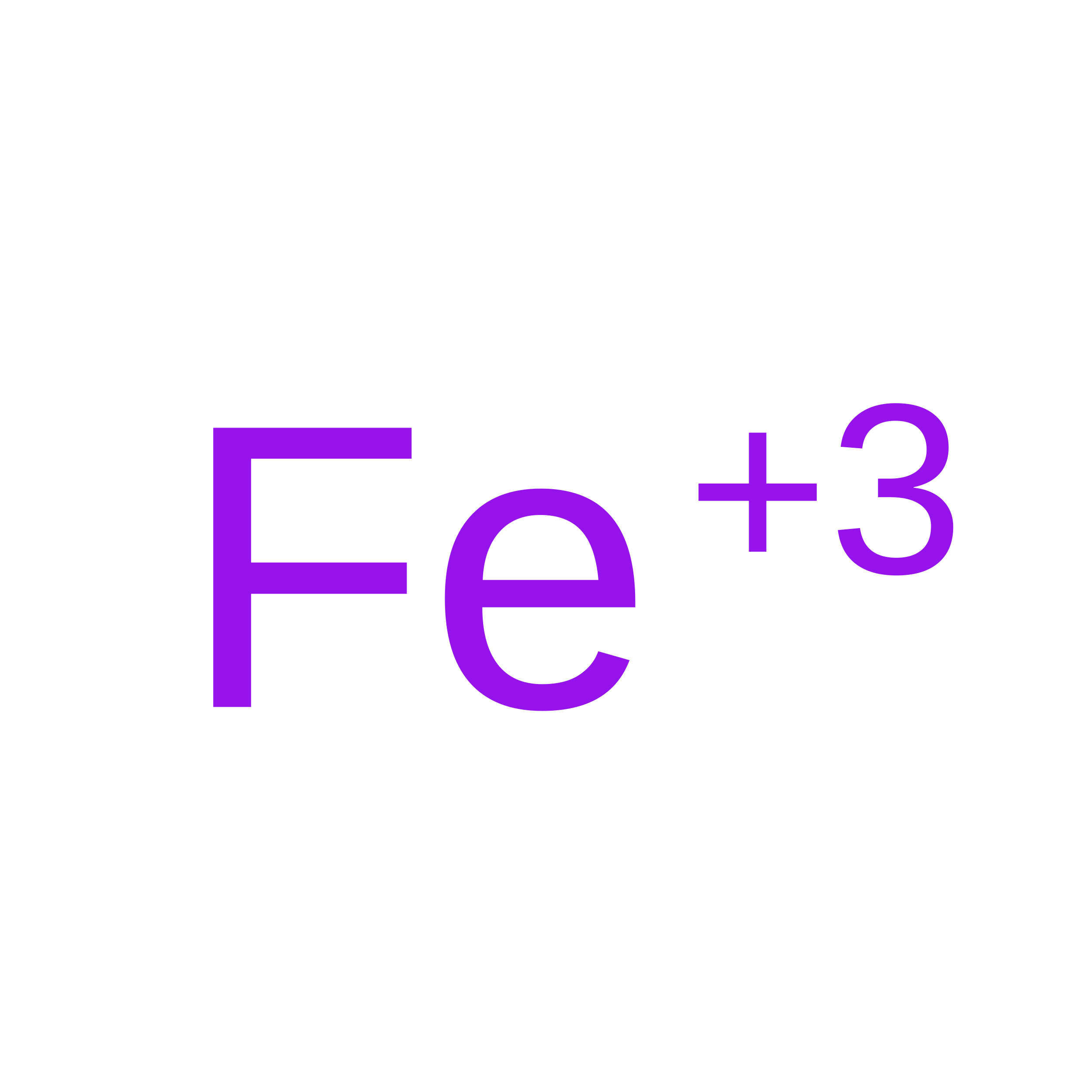
FE (III) ION
Fe
VTLYFUHAOXGGBS-UHFFFAOYSA-N
 Ligand Interaction
Experimental Data & Validation

Experimental Data

  • Method: X-RAY DIFFRACTION
  • Resolution: 1.60 Å
  • R-Value Free: 0.187 
  • R-Value Work: 0.139 
  • R-Value Observed: 0.142 
  • Space Group: C 1 2 1
Unit Cell:
Length ( Å )Angle ( ˚ )
a = 145.42α = 90
b = 108.68β = 115.84
c = 78.74γ = 90
Software Package:
Software NamePurpose
REFMACrefinement
XDSdata reduction
XSCALEdata scaling
MOLREPphasing

Structure Validation

View Full Validation Report


Entry History 

Deposition Data

Revision History 

  • Version 1.0: 2019-04-03
    Type: Initial release
  • Version 1.1: 2019-05-01
    Changes: Data collection, Derived calculations
  • Version 1.2: 2019-08-14
    Changes: Data collection, Database references