Find PDB structures and Computed Structure Models (CSM) by combining queries from tools in this suite: Attribute Search, Sequence Similarity, Sequence Motif, 3D Similarity, and 3D Motif with 'AND' logic.
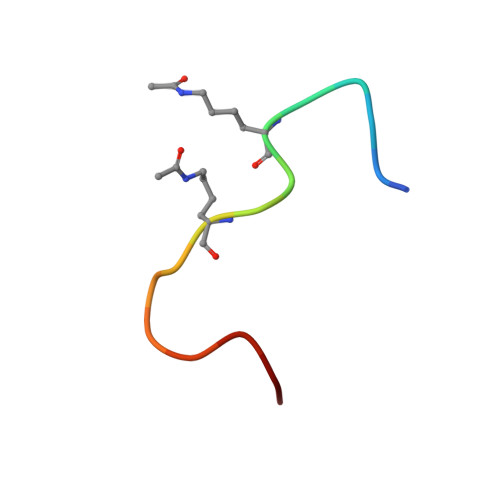
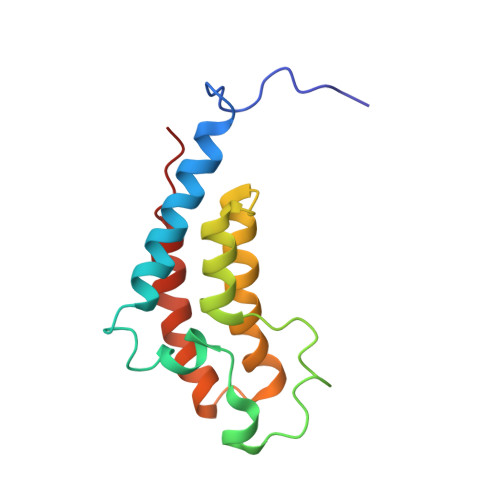
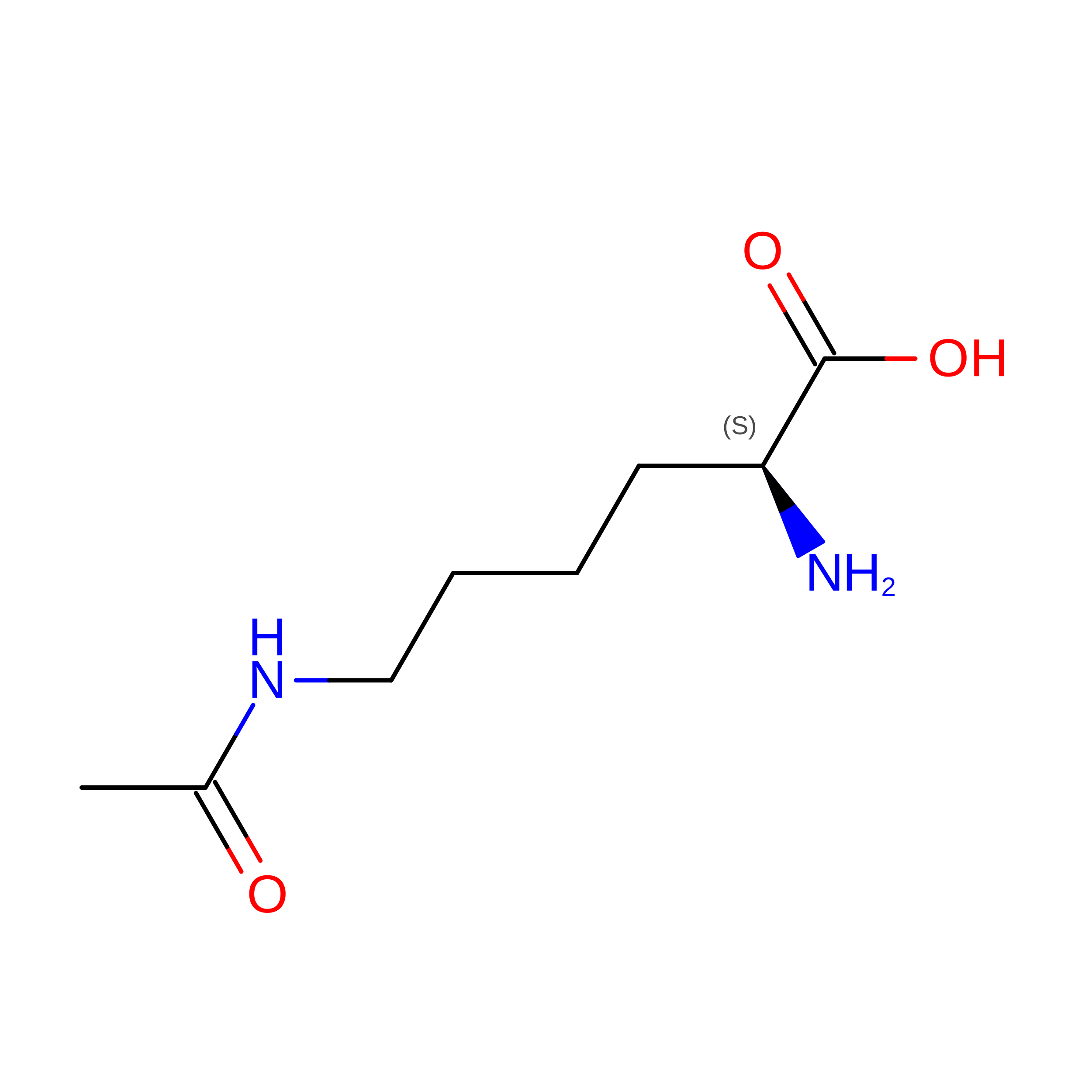
BRD4 assembles transcriptional machinery at gene super-enhancer regions and governs the expression of genes that are critical for cancer progression. However, it remains unclear whether BRD4-mediated gene transcription is required for tumor cells to develop drug resistance. Our data show that prolonged treatment of luminal breast cancer cells with AKT inhibitors induces FOXO3a dephosphorylation, nuclear translocation, and disrupts its association with SirT6, eventually leading to FOXO3a acetylation as well as BRD4 recognition. Acetylated FOXO3a recognizes the BD2 domain of BRD4, recruits the BRD4/RNAPII complex to the CDK6 gene promoter, and induces its transcription. Pharmacological inhibition of either BRD4/FOXO3a association or CDK6 significantly overcomes the resistance of luminal breast cancer cells to AKT inhibitors in vitro and in vivo. Our study reports the involvement of BRD4/FOXO3a/CDK6 axis in AKTi resistance and provides potential therapeutic strategies for treating resistant breast cancer.
Organizational Affiliation:
Department of Molecular and Cellular Biochemistry, University of Kentucky College of Medicine, Lexington, KY, 40506, USA.
Markey Cancer Center, University of Kentucky College of Medicine, Lexington, KY, 40506, USA.
Center for Cancer Research, National Cancer Institute-Frederick, Frederick, MD, 21702, USA.
Department of Pharmacological Sciences, Icahn School of Medicine at Mount Sinai, New York, NY, 10029, USA.
Bethune Institute of Epigenetic Medicine, The First Hospital, Jilin University, Changchun, Jilin, 130021, China.
Department of Molecular and Biomedical Pharmacology, University of Kentucky College of Medicine, Lexington, KY, 40506, USA.
Department of Pathology, School of Basic Medical Sciences, Southern Medical University, Guangzhou, Guangdong, 510515, China.
Department of Pathology, Nanfang Hospital, Southern Medical University, Guangzhou, Guangdong, 510515, China.
Guangdong Provincial Key Laboratory of Molecular Tumor Pathology, Southern Medical University, Guangzhou, Guangdong, 510515, China.
Key Laboratory of Cell Differentiation and Apoptosis of Chinese Ministry of Education, Shanghai Jiao Tong University School of Medicine, Shanghai, 200025, China.
Department of Developmental and Regenerative Biology, Icahn School of Medicine at Mount Sinai, New York, NY, 10029, USA.
Department of Surgery, University of Kentucky College of Medicine, Lexington, KY, 40506, USA.
Key Laboratory of Breast Cancer in Shanghai, Department of Breast Surgery, Cancer Institute, Fudan University Shanghai Cancer Center, Shanghai, 200032, China. suling@fudan.edu.cn.
Department of Pharmacological Sciences, Icahn School of Medicine at Mount Sinai, New York, NY, 10029, USA. ming-ming.zhou@mssm.edu.
Department of Molecular and Cellular Biochemistry, University of Kentucky College of Medicine, Lexington, KY, 40506, USA. peter.zhou@uky.edu.
Markey Cancer Center, University of Kentucky College of Medicine, Lexington, KY, 40506, USA. peter.zhou@uky.edu.
Department of Molecular and Cellular Biochemistry, University of Kentucky College of Medicine, Lexington, KY, 40506, USA. jianshi@smu.edu.cn.
Markey Cancer Center, University of Kentucky College of Medicine, Lexington, KY, 40506, USA. jianshi@smu.edu.cn.
Department of Pathology, School of Basic Medical Sciences, Southern Medical University, Guangzhou, Guangdong, 510515, China. jianshi@smu.edu.cn.
Department of Pathology, Nanfang Hospital, Southern Medical University, Guangzhou, Guangdong, 510515, China. jianshi@smu.edu.cn.
Guangdong Provincial Key Laboratory of Molecular Tumor Pathology, Southern Medical University, Guangzhou, Guangdong, 510515, China. jianshi@smu.edu.cn.

 Download Mendeley