6KUN | pdb_00006kun

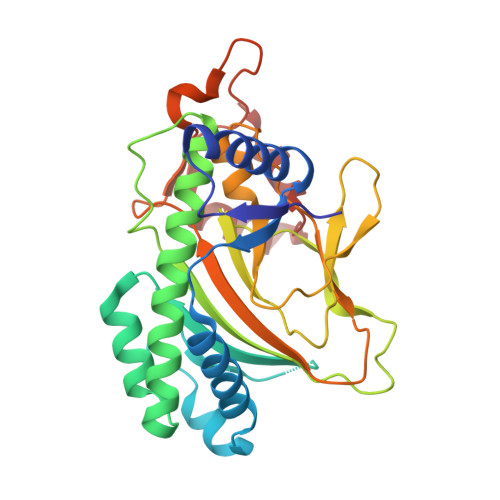
Crystal structure of dioxygenase for auxin oxidation (DAO) in rice


Experimental Data Snapshot

  • Method: X-RAY DIFFRACTION
  • Resolution: 2.00 Å
  • R-Value Free: 
    0.243 (Depositor), 0.254 (DCC) 
  • R-Value Work: 
    0.188 (Depositor), 0.205 (DCC) 
  • R-Value Observed: 
    0.191 (Depositor) 

Starting Model: experimental
View more details

wwPDB Validation 3D Report Full Report

Validation slider image for 6KUN

Ligand Structure Quality Assessment 


This is version 1.2 of the entry. See complete history. 

Literature

A common allosteric mechanism regulates homeostatic inactivation of auxin and gibberellin.

Takehara, S., Sakuraba, S., Mikami, B., Yoshida, H., Yoshimura, H., Itoh, A., Endo, M., Watanabe, N., Nagae, T., Matsuoka, M., Ueguchi-Tanaka, M.

(2020) Nat Commun 11: 2143-2143

  • DOI: https://doi.org/10.1038/s41467-020-16068-0
  • Primary Citation Related Structures: 
    6KU3, 6KUN

  • PubMed Abstract: 

    Allosteric regulation is protein activation by effector binding at a site other than the active site. Here, we show via X-ray structural analysis of gibberellin 2-oxidase 3 (GA2ox3), and auxin dioxygenase (DAO), that such a mechanism maintains hormonal homeostasis in plants. Both enzymes form multimers by interacting via GA 4 and indole-3-acetic acid (IAA) at their binding interface. Via further functional analyses we reveal that multimerization of these enzymes gradually proceeds with increasing GA 4 and IAA concentrations; multimerized enzymes have higher specific activities than monomer forms, a system that should favour the maintenance of homeostasis for these phytohormones. Molecular dynamic analysis suggests a possible mechanism underlying increased GA2ox3 activity by multimerization-GA 4 in the interface of oligomerized GA2ox3s may be able to enter the active site with a low energy barrier. In summary, homeostatic systems for maintaining GA and IAA levels, based on a common allosteric mechanism, appear to have developed independently.


  • Organizational Affiliation: 
    • Bioscience and Biotechnology Centre, Nagoya University, Nagoya, 464-8601, Japan.

Macromolecule Content 

  • Total Structure Weight: 65.29 kDa 
  • Atom Count: 4,839 
  • Modeled Residue Count: 588 
  • Deposited Residue Count: 600 
  • Unique protein chains: 1

Macromolecules

Find similar proteins by:|  3D Structure
Entity ID: 1
MoleculeChains  Sequence LengthOrganismDetailsImage
2-oxoglutarate-dependent dioxygenase DAO
A, B
300Oryza sativa Indica GroupMutation(s): 0 
Gene Names: DAO, OsI_16300, OSIGBa0106G07.8
EC: 1.14.11
UniProt
Find proteins for Q01IX6 (Oryza sativa subsp. indica)
Explore Q01IX6 
Go to UniProtKB:  Q01IX6
Entity Groups
Sequence Clusters30% Identity50% Identity70% Identity90% Identity95% Identity100% Identity
UniProt GroupQ01IX6
Sequence Annotations
Expand
Reference Sequence

Small Molecules

Ligands 3 Unique
IDChains Name / Formula / InChI Key2D Diagram3D Interactions
IAC
(Subject of Investigation/LOI)

Query on IAC


Download:Ideal Coordinates CCD File
D [auth A],
H [auth B]
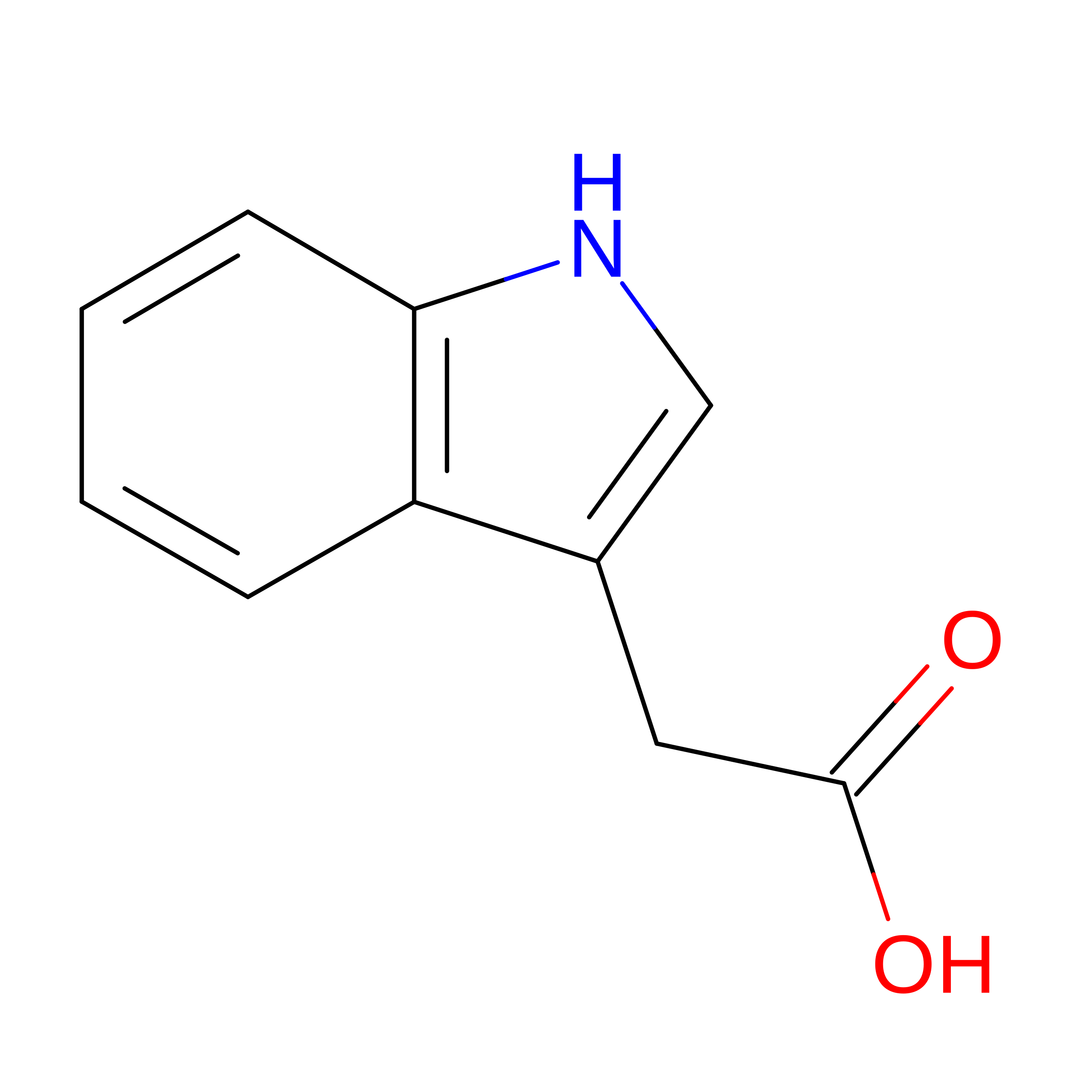
1H-INDOL-3-YLACETIC ACID
C10 H9 N O2
SEOVTRFCIGRIMH-UHFFFAOYSA-N
AKG

Query on AKG


Download:Ideal Coordinates CCD File
C [auth A],
G [auth B]
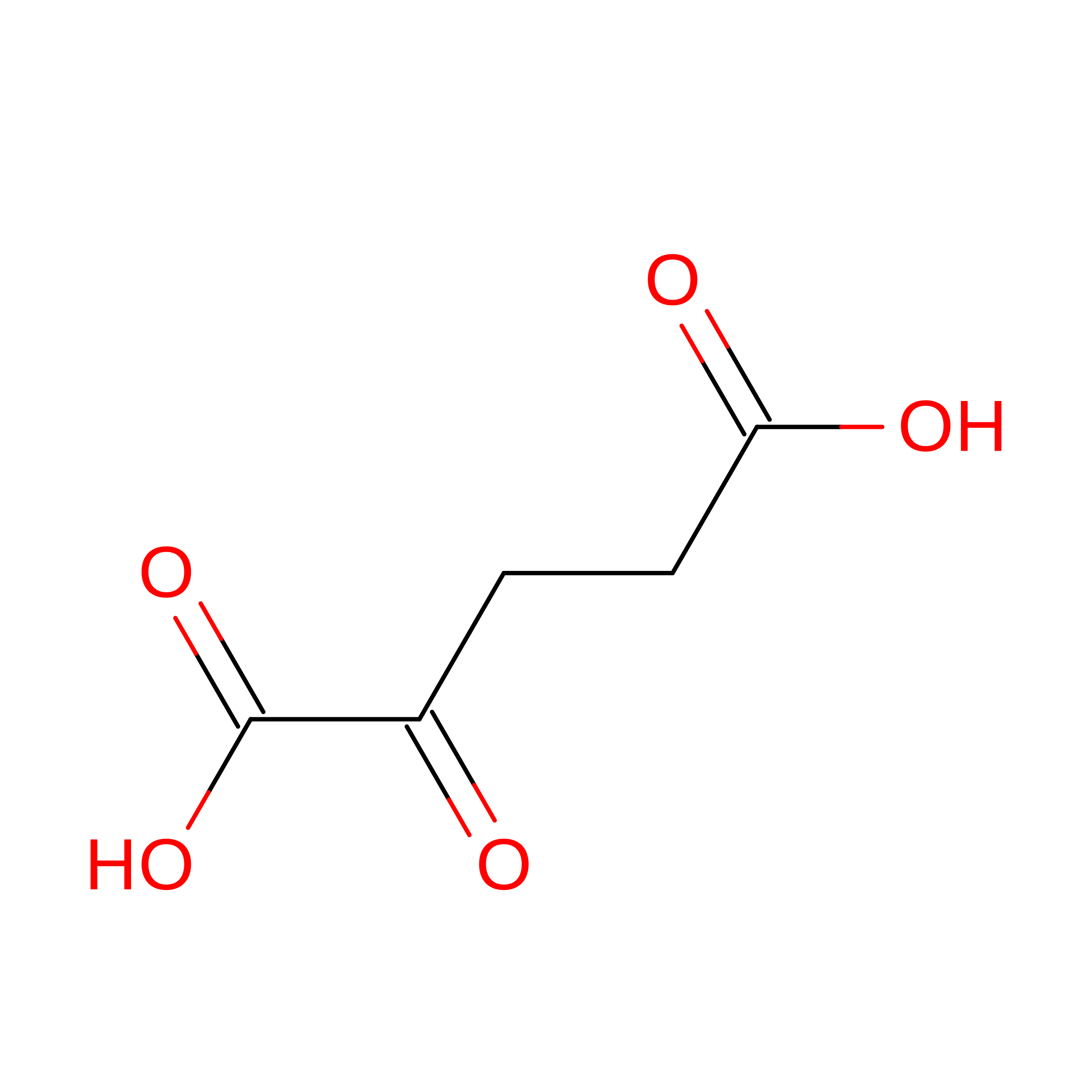
2-OXOGLUTARIC ACID
C5 H6 O5
KPGXRSRHYNQIFN-UHFFFAOYSA-N
GOL

Query on GOL


Download:Ideal Coordinates CCD File
E [auth A],
F [auth A],
I [auth B],
J [auth B]
GLYCEROL
C3 H8 O3
PEDCQBHIVMGVHV-UHFFFAOYSA-N

Experimental Data & Validation

Experimental Data

  • Method: X-RAY DIFFRACTION
  • Resolution: 2.00 Å
  • R-Value Free:  0.243 (Depositor), 0.254 (DCC) 
  • R-Value Work:  0.188 (Depositor), 0.205 (DCC) 
  • R-Value Observed: 0.191 (Depositor) 
Space Group: P 21 21 21
Unit Cell:
Length ( Å )Angle ( ˚ )
a = 75.247α = 90
b = 78.304β = 90
c = 94.003γ = 90
Software Package:
Software NamePurpose
PHENIXrefinement
Cootmodel building
HKL-2000data reduction
HKL-2000data scaling
MOLREPphasing

Structure Validation

View Full Validation Report


Ligand Structure Quality Assessment 


Entry History 

& Funding Information

Deposition Data


Funding OrganizationLocationGrant Number
Japan Society for the Promotion of Science (JSPS)Japan16H06468
Japan Society for the Promotion of Science (JSPS)Japan16H06464

Revision History  (Full details and data files)

  • Version 1.0: 2020-05-13
    Type: Initial release
  • Version 1.1: 2023-11-22
    Changes: Data collection, Database references, Refinement description
  • Version 1.2: 2024-10-23
    Changes: Structure summary