6GJG | pdb_00006gjg

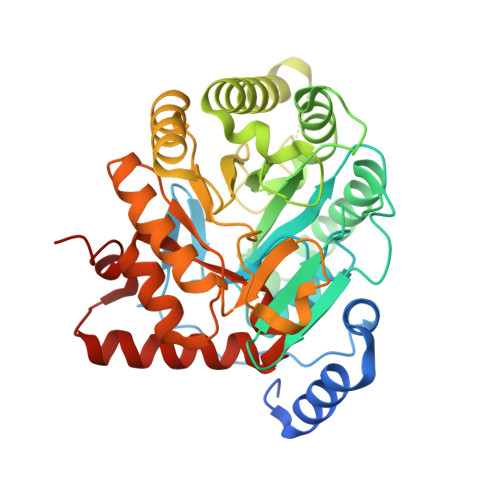
Plasmodium falciparum dihydroorotate dehydrogenase DHODH in complex with 3,6-dimethyl-N-(4-(trifluoromethyl)phenyl)-(1,2)oxazolo(5,4-d)pyrimidin-4-amine


Experimental Data Snapshot

  • Method: X-RAY DIFFRACTION
  • Resolution: 1.99 Å
  • R-Value Free: 
    0.206 (Depositor), 0.171 (DCC) 
  • R-Value Work: 
    0.163 (Depositor), 0.174 (DCC) 
  • R-Value Observed: 
    0.165 (Depositor) 

wwPDB Validation 3D Report Full Report

Validation slider image for 6GJG

Ligand Structure Quality Assessment 


This is version 1.1 of the entry. See complete history

Literature

Isoxazolopyrimidine-Based Inhibitors ofPlasmodium falciparumDihydroorotate Dehydrogenase with Antimalarial Activity.

Kokkonda, S.El Mazouni, F.White, K.L.White, J.Shackleford, D.M.Lafuente-Monasterio, M.J.Rowland, P.Manjalanagara, K.Joseph, J.T.Garcia-Perez, A.Fernandez, J.Gamo, F.J.Waterson, D.Burrows, J.N.Palmer, M.J.Charman, S.A.Rathod, P.K.Phillips, M.A.

(2018) ACS Omega 3: 9227-9240

  • DOI: https://doi.org/10.1021/acsomega.8b01573
  • Primary Citation Related Structures: 
    6GJG

  • PubMed Abstract: 

    Malaria kills nearly 0.5 million people yearly and impacts the lives of those living in over 90 countries where it is endemic. The current treatment programs are threatened by increasing drug resistance. Dihydroorotate dehydrogenase (DHODH) is now clinically validated as a target for antimalarial drug discovery as a triazolopyrimidine class inhibitor ( DSM265 ) is currently undergoing clinical development. We discovered a related isoxazolopyrimidine series in a phenotypic screen, later determining that it targeted DHODH. To determine if the isoxazolopyrimidines could yield a drug candidate, we initiated hit-to-lead medicinal chemistry. Several potent analogues were identified, including a compound that showed in vivo antimalarial activity. The isoxazolopyrimidines were more rapidly metabolized than their triazolopyrimidine counterparts, and the pharmacokinetic data were not consistent with the goal of a single-dose treatment for malaria.


  • Organizational Affiliation
    • Departments of Chemistry and Global Health, University of Washington, Seattle, Washington 98195, United States.

Macromolecule Content 

  • Total Structure Weight: 92.61 kDa 
  • Atom Count: 6,488 
  • Modeled Residue Count: 744 
  • Deposited Residue Count: 802 
  • Unique protein chains: 1

Macromolecules

Find similar proteins by:|  3D Structure
Entity ID: 1
MoleculeChains  Sequence LengthOrganismDetailsImage
Dihydroorotate dehydrogenase (quinone), mitochondrial
A, B
401Plasmodium falciparum 3D7Mutation(s): 0 
Gene Names: PFF0160c
EC: 1.3.5.2
UniProt
Find proteins for Q08210 (Plasmodium falciparum (isolate 3D7))
Explore Q08210 
Go to UniProtKB:  Q08210
Entity Groups
Sequence Clusters30% Identity50% Identity70% Identity90% Identity95% Identity100% Identity
UniProt GroupQ08210
Sequence Annotations
Expand
Reference Sequence

Small Molecules

Ligands 3 Unique
IDChains Name / Formula / InChI Key2D Diagram3D Interactions
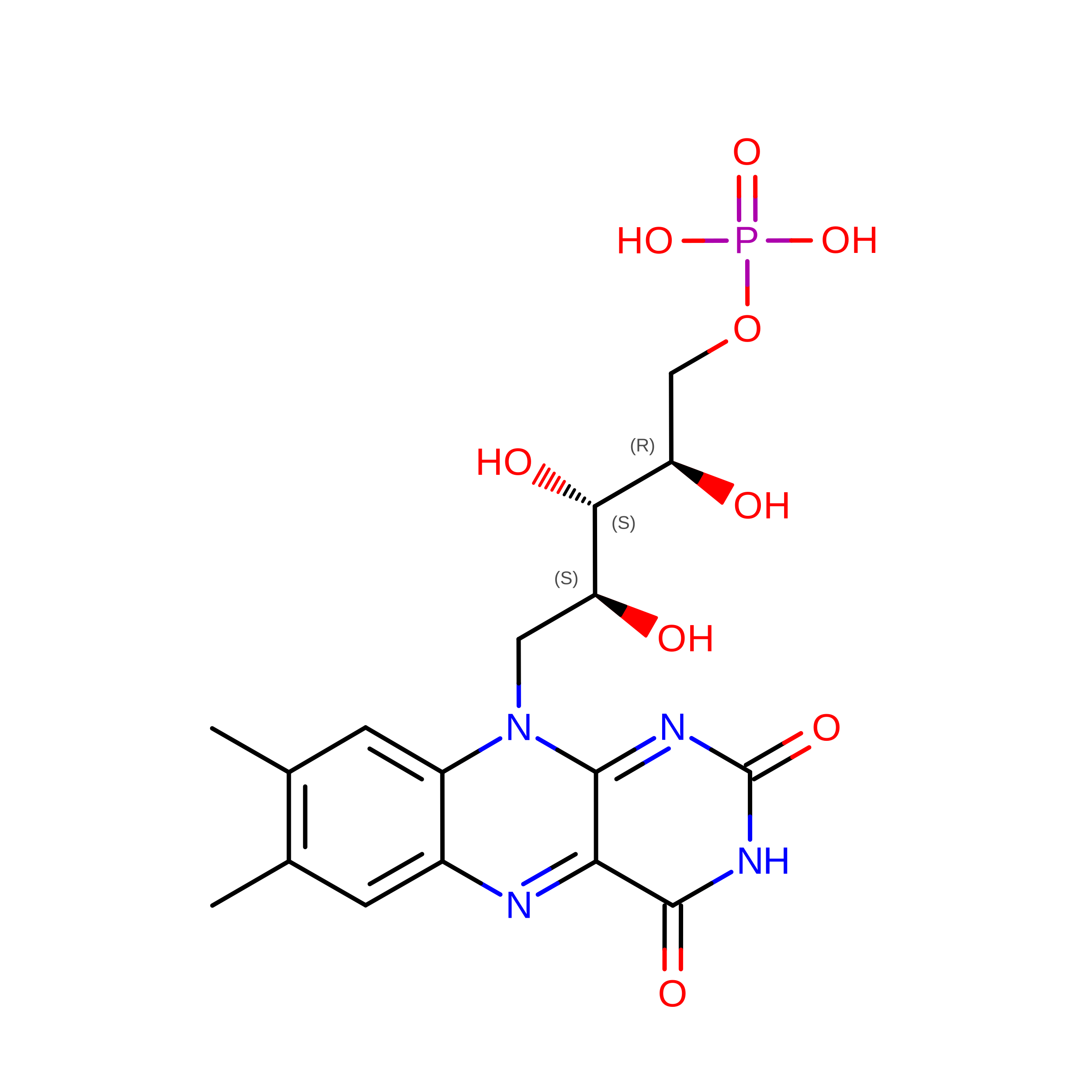
FMN
(Subject of Investigation/LOI)

Query on FMN


Download:Ideal Coordinates CCD File
C [auth A],
F [auth B]
FLAVIN MONONUCLEOTIDE
C17 H21 N4 O9 P
FVTCRASFADXXNN-SCRDCRAPSA-N
F1T
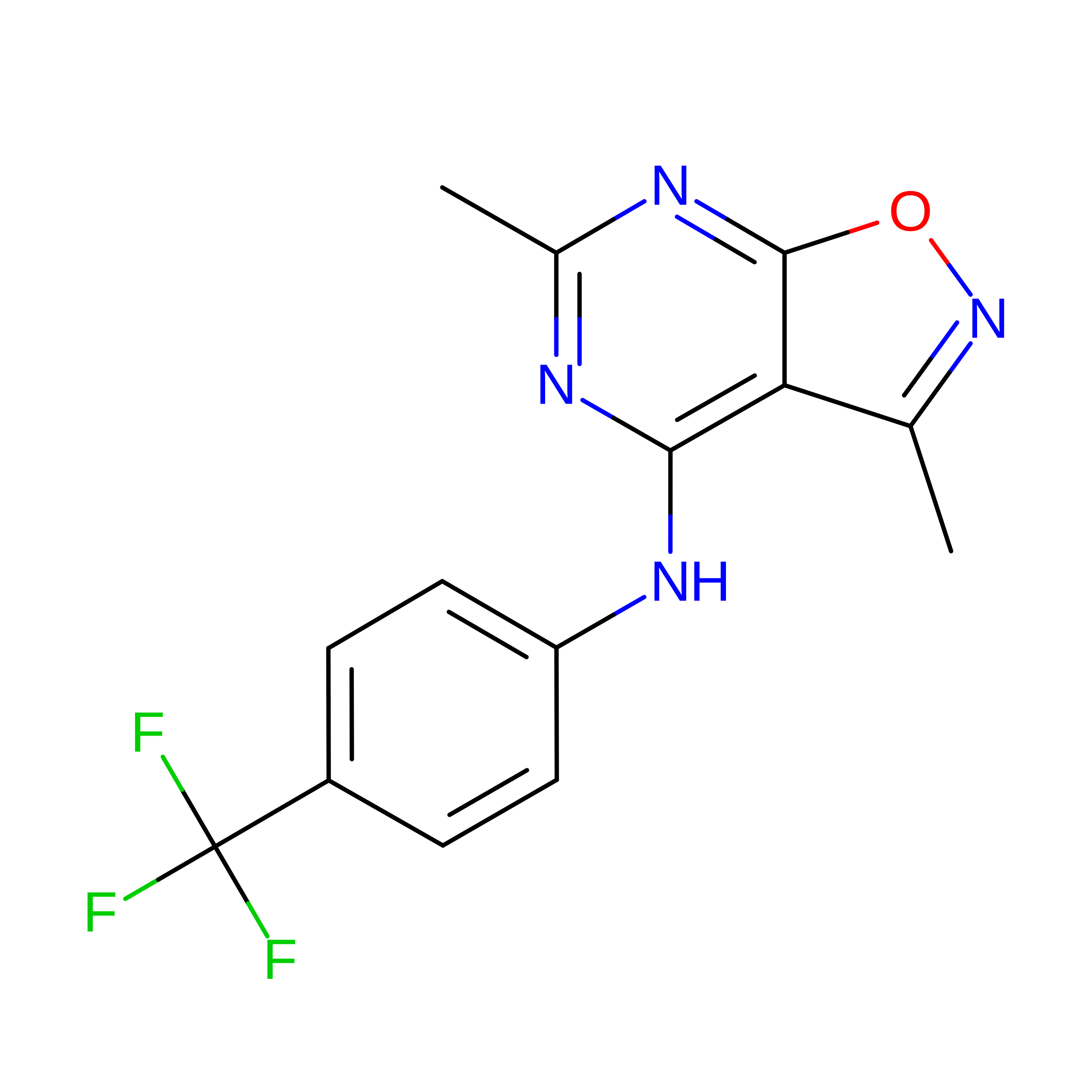
(Subject of Investigation/LOI)

Query on F1T


Download:Ideal Coordinates CCD File
E [auth A],
H [auth B]
3,6-dimethyl-~{N}-[4-(trifluoromethyl)phenyl]-[1,2]oxazolo[5,4-d]pyrimidin-4-amine
C14 H11 F3 N4 O
DICIXXZXANPVKT-UHFFFAOYSA-N
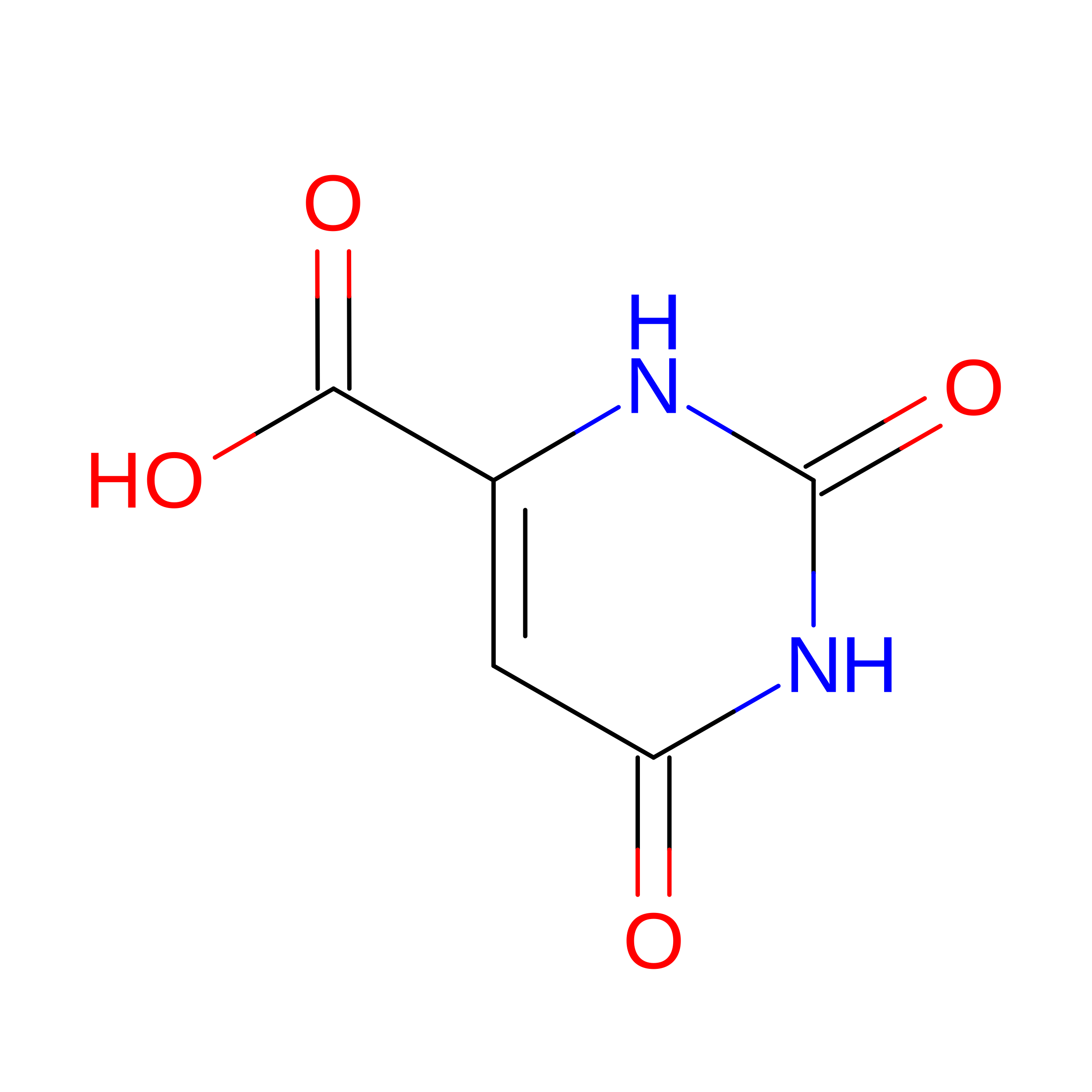
ORO
(Subject of Investigation/LOI)

Query on ORO


Download:Ideal Coordinates CCD File
D [auth A],
G [auth B]
OROTIC ACID
C5 H4 N2 O4
PXQPEWDEAKTCGB-UHFFFAOYSA-N

Experimental Data & Validation

Experimental Data

  • Method: X-RAY DIFFRACTION
  • Resolution: 1.99 Å
  • R-Value Free:  0.206 (Depositor), 0.171 (DCC) 
  • R-Value Work:  0.163 (Depositor), 0.174 (DCC) 
  • R-Value Observed: 0.165 (Depositor) 
Space Group: P 1 21 1
Unit Cell:
Length ( Å )Angle ( ˚ )
a = 58.73α = 90
b = 162.95β = 112.9
c = 64.74γ = 90
Software Package:
Software NamePurpose
BUSTERrefinement
autoPROCdata collection
STARANISOdata scaling
Cootmodel building

Structure Validation

View Full Validation Report


Ligand Structure Quality Assessment 


Entry History 

Deposition Data

  • Released Date: 2018-09-19 
  • Deposition Author(s): Rowland, P.

Revision History  (Full details and data files)

  • Version 1.0: 2018-09-19
    Type: Initial release
  • Version 1.1: 2024-05-15
    Changes: Data collection, Database references, Refinement description