5M45 | pdb_00005m45

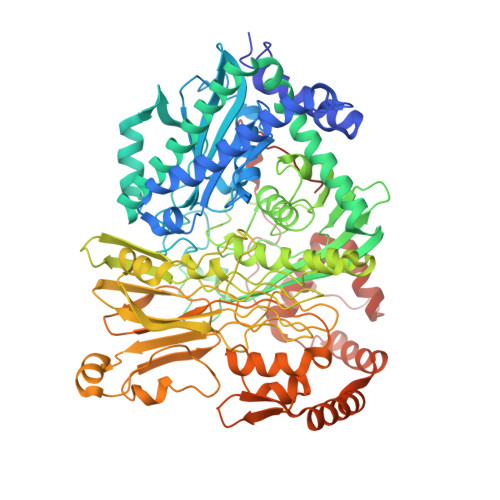
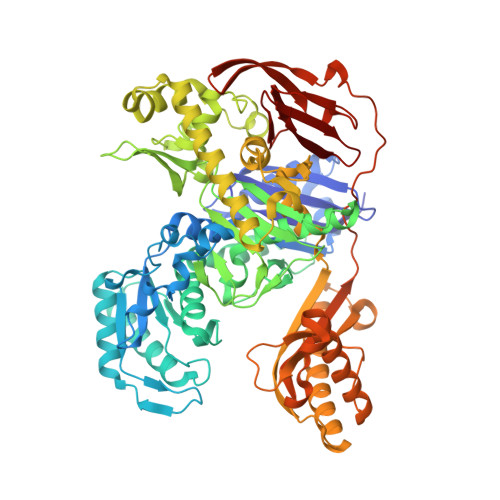
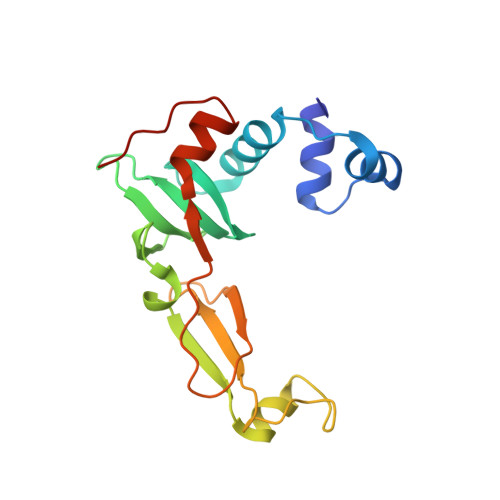
Structure of Acetone Carboxylase purified from Xanthobacter autotrophicus


Experimental Data Snapshot

  • Method: X-RAY DIFFRACTION
  • Resolution: 1.87 Å
  • R-Value Free: 
    0.217 (Depositor), 0.224 (DCC) 
  • R-Value Work: 
    0.192 (Depositor), 0.201 (DCC) 
  • R-Value Observed: 
    0.193 (Depositor) 

Starting Model: experimental
View more details

wwPDB Validation 3D Report Full Report

Validation slider image for 5M45

Ligand Structure Quality Assessment 


This is version 1.2 of the entry. See complete history

Literature

Structural Basis for the Mechanism of ATP-Dependent Acetone Carboxylation.

Mus, F.Eilers, B.J.Alleman, A.B.Kabasakal, B.V.Wells, J.N.Murray, J.W.Nocek, B.P.DuBois, J.L.Peters, J.W.

(2017) Sci Rep 7: 7234-7234

  • DOI: https://doi.org/10.1038/s41598-017-06973-8
  • Primary Citation Related Structures: 
    5M45, 5SVB, 5SVC

  • PubMed Abstract: 

    Microorganisms use carboxylase enzymes to form new carbon-carbon bonds by introducing carbon dioxide gas (CO 2 ) or its hydrated form, bicarbonate (HCO 3 - ), into target molecules. Acetone carboxylases (ACs) catalyze the conversion of substrates acetone and HCO 3 - to form the product acetoacetate. Many bicarbonate-incorporating carboxylases rely on the organic cofactor biotin for the activation of bicarbonate. ACs contain metal ions but not organic cofactors, and use ATP to activate substrates through phosphorylation. How the enzyme coordinates these phosphorylation events and new C-C bond formation in the absence of biotin has remained a mystery since these enzymes were discovered. The first structural rationale for acetone carboxylation is presented here, focusing on the 360 kDa (αβγ) 2 heterohexameric AC from Xanthobacter autotrophicus in the ligand-free, AMP-bound, and acetate coordinated states. These structures suggest successive steps in a catalytic cycle revealing that AC undergoes large conformational changes coupled to substrate activation by ATP to perform C-C bond ligation at a distant Mn center. These results illustrate a new chemical strategy for the conversion of CO 2 into biomass, a process of great significance to the global carbon cycle.


  • Organizational Affiliation
    • Insitutite of Biological Chemistry, Washington State University, Pullman, WA, 99164, USA.

Macromolecule Content 

  • Total Structure Weight: 744.04 kDa 
  • Atom Count: 56,067 
  • Modeled Residue Count: 6,544 
  • Deposited Residue Count: 6,644 
  • Unique protein chains: 3

Macromolecules

Find similar proteins by:|  3D Structure
Entity ID: 1
MoleculeChains  Sequence LengthOrganismDetailsImage
Acetone carboxylase alpha subunit
A, D, G, J
776Xanthobacter versatilisMutation(s): 0 
EC: 6.4.1.6
UniProt
Find proteins for Q8RM03 (Xanthobacter autotrophicus (strain ATCC BAA-1158 / Py2))
Explore Q8RM03 
Go to UniProtKB:  Q8RM03
Entity Groups
Sequence Clusters30% Identity50% Identity70% Identity90% Identity95% Identity100% Identity
UniProt GroupQ8RM03
Sequence Annotations
Expand
Reference Sequence
Find similar proteins by:|  3D Structure
Entity ID: 2
MoleculeChains  Sequence LengthOrganismDetailsImage
Acetone carboxylase beta subunit
B, E, H, K
717Xanthobacter versatilisMutation(s): 0 
EC: 6.4.1.6
UniProt
Find proteins for Q8RM04 (Xanthobacter autotrophicus (strain ATCC BAA-1158 / Py2))
Explore Q8RM04 
Go to UniProtKB:  Q8RM04
Entity Groups
Sequence Clusters30% Identity50% Identity70% Identity90% Identity95% Identity100% Identity
UniProt GroupQ8RM04
Sequence Annotations
Expand
Reference Sequence
Find similar proteins by:|  3D Structure
Entity ID: 3
MoleculeChains  Sequence LengthOrganismDetailsImage
Acetone carboxylase gamma subunit
C, F, I, L
168Xanthobacter versatilisMutation(s): 0 
EC: 6.4.1.6
UniProt
Find proteins for Q8RM02 (Xanthobacter autotrophicus (strain ATCC BAA-1158 / Py2))
Explore Q8RM02 
Go to UniProtKB:  Q8RM02
Entity Groups
Sequence Clusters30% Identity50% Identity70% Identity90% Identity95% Identity100% Identity
UniProt GroupQ8RM02
Sequence Annotations
Expand
Reference Sequence

Small Molecules

Ligands 6 Unique
IDChains Name / Formula / InChI Key2D Diagram3D Interactions
AMP

Query on AMP


Download:Ideal Coordinates CCD File
FA [auth E],
FB [auth K],
S [auth B],
SA [auth H]
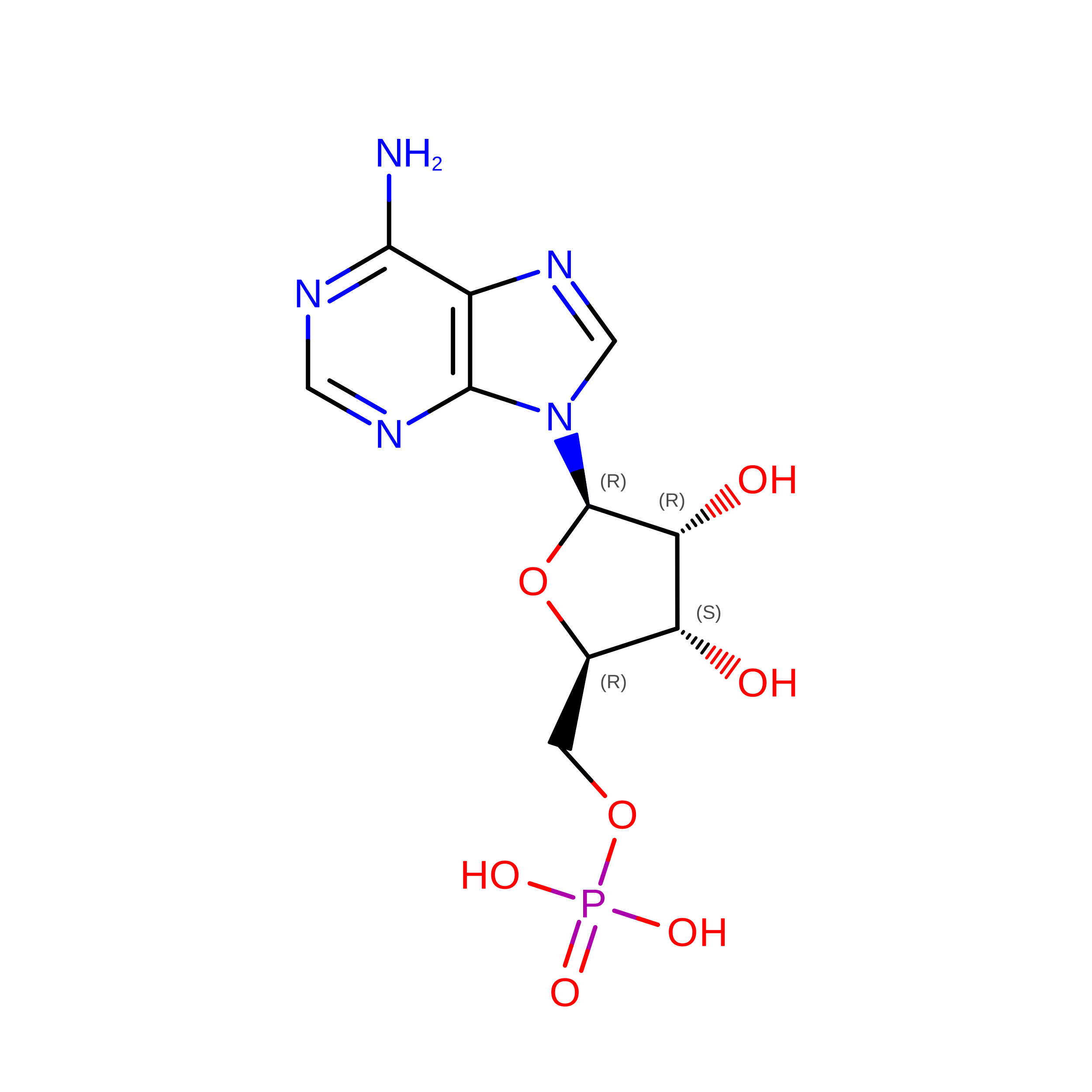
ADENOSINE MONOPHOSPHATE
C10 H14 N5 O7 P
UDMBCSSLTHHNCD-KQYNXXCUSA-N
AE4

Query on AE4


Download:Ideal Coordinates CCD File
CA [auth D],
CB [auth J],
P [auth A],
PA [auth G]
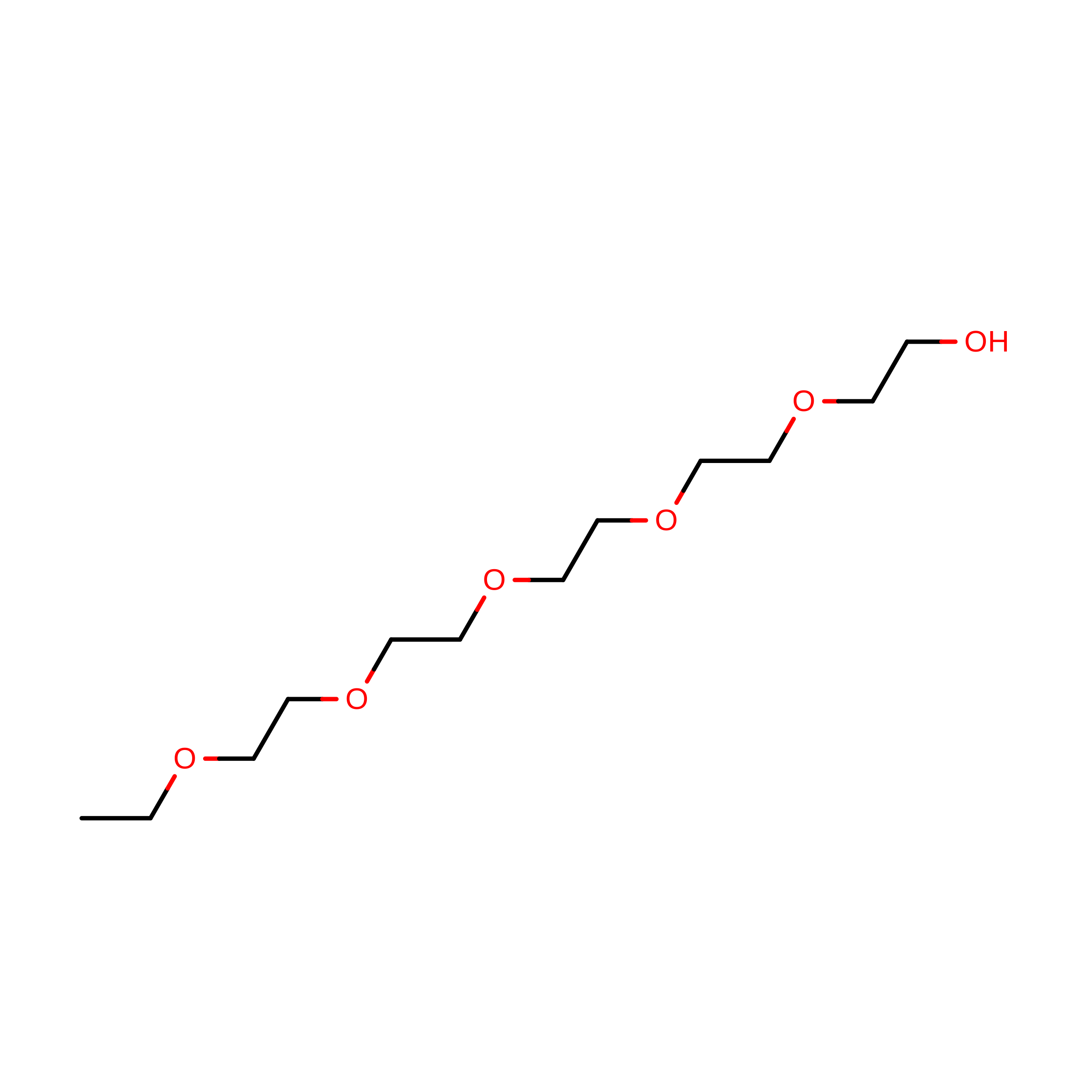
3,6,9,12,15-PENTAOXAHEPTADECAN-1-OL
C12 H26 O6
NJRFAMBTWHGSDE-UHFFFAOYSA-N
ZN

Query on ZN


Download:Ideal Coordinates CCD File
KB [auth L],
LA [auth F],
Y [auth C],
YA [auth I]
ZINC ION
Zn
PTFCDOFLOPIGGS-UHFFFAOYSA-N
ACT

Query on ACT


Download:Ideal Coordinates CCD File
AA [auth D]
AB [auth J]
BA [auth D]
BB [auth J]
JA [auth E]
AA [auth D],
AB [auth J],
BA [auth D],
BB [auth J],
JA [auth E],
JB [auth K],
N [auth A],
NA [auth G],
O [auth A],
OA [auth G],
W [auth B],
XA [auth H]
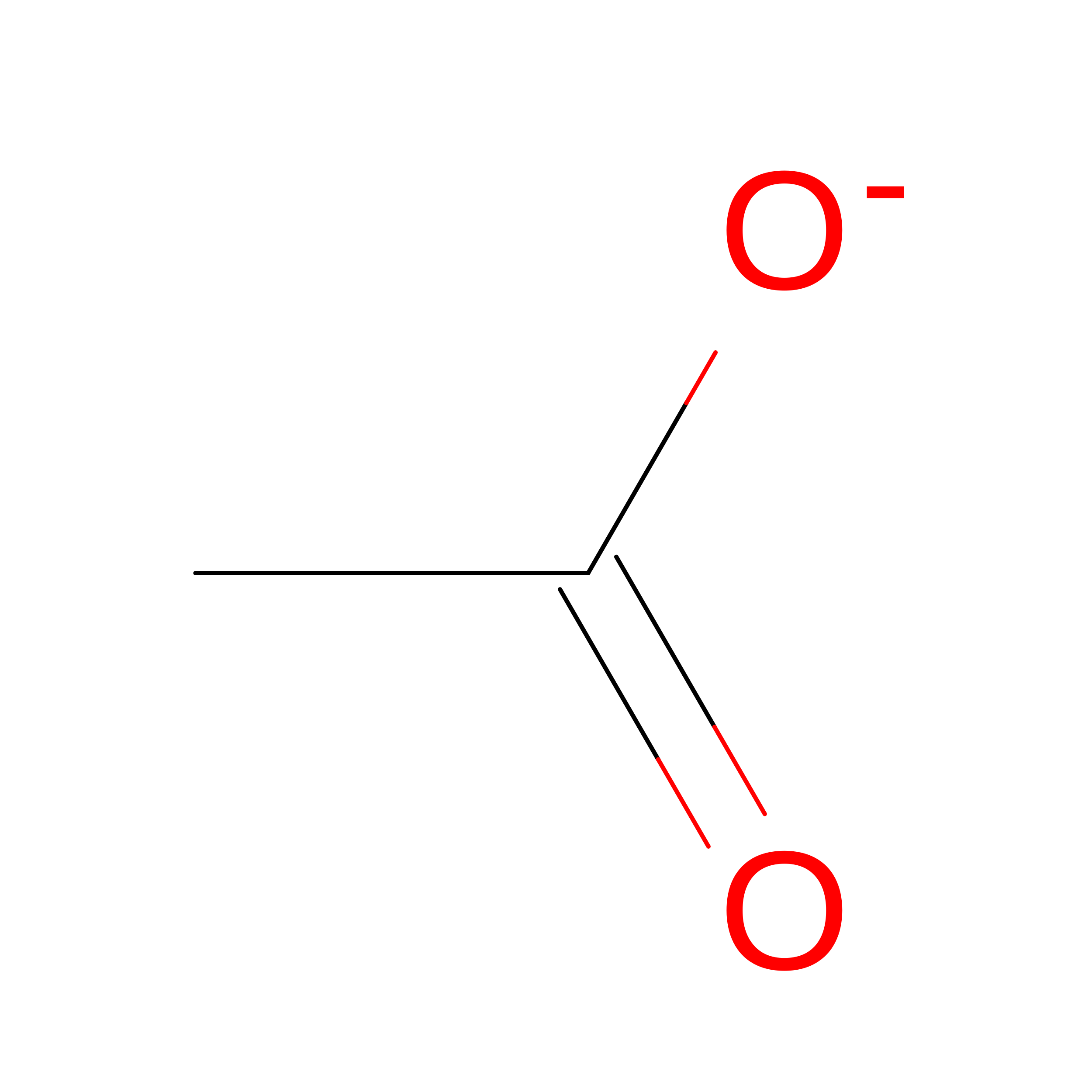
ACETATE ION
C2 H3 O2
QTBSBXVTEAMEQO-UHFFFAOYSA-M
MN

Query on MN


Download:Ideal Coordinates CCD File
M [auth A],
MA [auth G],
Z [auth D],
ZA [auth J]
MANGANESE (II) ION
Mn
WAEMQWOKJMHJLA-UHFFFAOYSA-N
MG

Query on MG


Download:Ideal Coordinates CCD File
DA [auth D]
DB [auth J]
EA [auth D]
EB [auth J]
GA [auth E]
DA [auth D],
DB [auth J],
EA [auth D],
EB [auth J],
GA [auth E],
GB [auth K],
HA [auth E],
HB [auth K],
IA [auth E],
IB [auth K],
KA [auth E],
LB [auth L],
Q [auth A],
QA [auth G],
R [auth A],
RA [auth G],
T [auth B],
TA [auth H],
U [auth B],
UA [auth H],
V [auth B],
VA [auth H],
WA [auth H],
X [auth B]
MAGNESIUM ION
Mg
JLVVSXFLKOJNIY-UHFFFAOYSA-N

Experimental Data & Validation

Experimental Data

  • Method: X-RAY DIFFRACTION
  • Resolution: 1.87 Å
  • R-Value Free:  0.217 (Depositor), 0.224 (DCC) 
  • R-Value Work:  0.192 (Depositor), 0.201 (DCC) 
  • R-Value Observed: 0.193 (Depositor) 
Space Group: P 1
Unit Cell:
Length ( Å )Angle ( ˚ )
a = 86.915α = 65.89
b = 139.733β = 86.54
c = 165.827γ = 88.69
Software Package:
Software NamePurpose
REFMACrefinement
DIALSdata reduction
xia2data scaling
PHASERphasing

Structure Validation

View Full Validation Report


Ligand Structure Quality Assessment 


Entry History 

Deposition Data

Revision History  (Full details and data files)

  • Version 1.0: 2017-08-09
    Type: Initial release
  • Version 1.1: 2017-08-16
    Changes: Database references
  • Version 1.2: 2024-01-17
    Changes: Data collection, Database references, Derived calculations, Refinement description