5W76 | pdb_00005w76

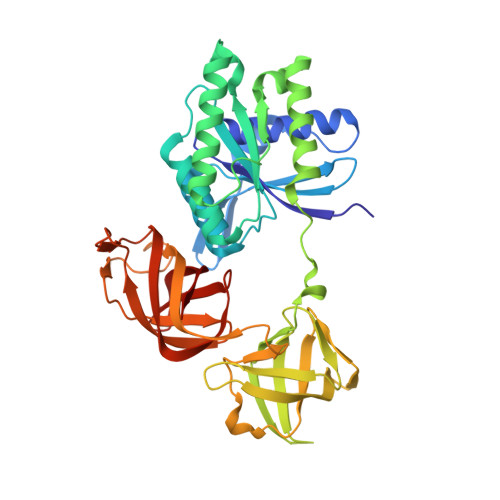
Crystal Structure of Reconstructed Bacterial Elongation Factor Node 168


Experimental Data Snapshot

  • Method: X-RAY DIFFRACTION
  • Resolution: 2.15 Å
  • R-Value Free: 
    0.223 (Depositor), 0.202 (DCC) 
  • R-Value Work: 
    0.190 (Depositor), 0.200 (DCC) 
  • R-Value Observed: 
    0.192 (Depositor) 

wwPDB Validation 3D Report Full Report

Validation slider image for 5W76

Ligand Structure Quality Assessment 


This is version 1.1 of the entry. See complete history

Literature

Structural and Dynamics Comparison of Thermostability in Ancient, Modern, and Consensus Elongation Factor Tus.

Okafor, C.D.Pathak, M.C.Fagan, C.E.Bauer, N.C.Cole, M.F.Gaucher, E.A.Ortlund, E.A.

(2018) Structure 26: 118-129.e3

  • DOI: https://doi.org/10.1016/j.str.2017.11.018
  • Primary Citation Related Structures: 
    5W75, 5W76, 5W7Q

  • PubMed Abstract: 

    Rationally engineering thermostability in proteins would create enzymes and receptors that function under harsh industrial applications. Several sequence-based approaches can generate thermostable variants of mesophilic proteins. To gain insight into the mechanisms by which proteins become more stable, we use structural and dynamic analyses to compare two popular approaches, ancestral sequence reconstruction (ASR) and the consensus method, used to generate thermostable variants of Elongation Factor Thermo-unstable (EF-Tu). We present crystal structures of ancestral and consensus EF-Tus, accompanied by molecular dynamics simulations aimed at probing the strategies employed to enhance thermostability. All proteins adopt crystal structures similar to extant EF-Tus, revealing no difference in average structure between the methods. Molecular dynamics reveals that ASR-generated sequences retain dynamic properties similar to extant, thermostable EF-Tu from Thermus aquaticus, while consensus EF-Tu dynamics differ from evolution-based sequences. This work highlights the advantage of ASR for engineering thermostability while preserving natural motions in multidomain proteins.


  • Organizational Affiliation
    • Department of Biochemistry, Emory University School of Medicine, Atlanta, GA 30322, USA.

Macromolecule Content 

  • Total Structure Weight: 43.28 kDa 
  • Atom Count: 3,135 
  • Modeled Residue Count: 384 
  • Deposited Residue Count: 385 
  • Unique protein chains: 1

Macromolecules

Find similar proteins by:|  3D Structure
Entity ID: 1
MoleculeChains  Sequence LengthOrganismDetailsImage
Ancestral Elogation Factor N153385synthetic constructMutation(s): 0 

Small Molecules

Ligands 5 Unique
IDChains Name / Formula / InChI Key2D Diagram3D Interactions
GDP

Query on GDP


Download:Ideal Coordinates CCD File
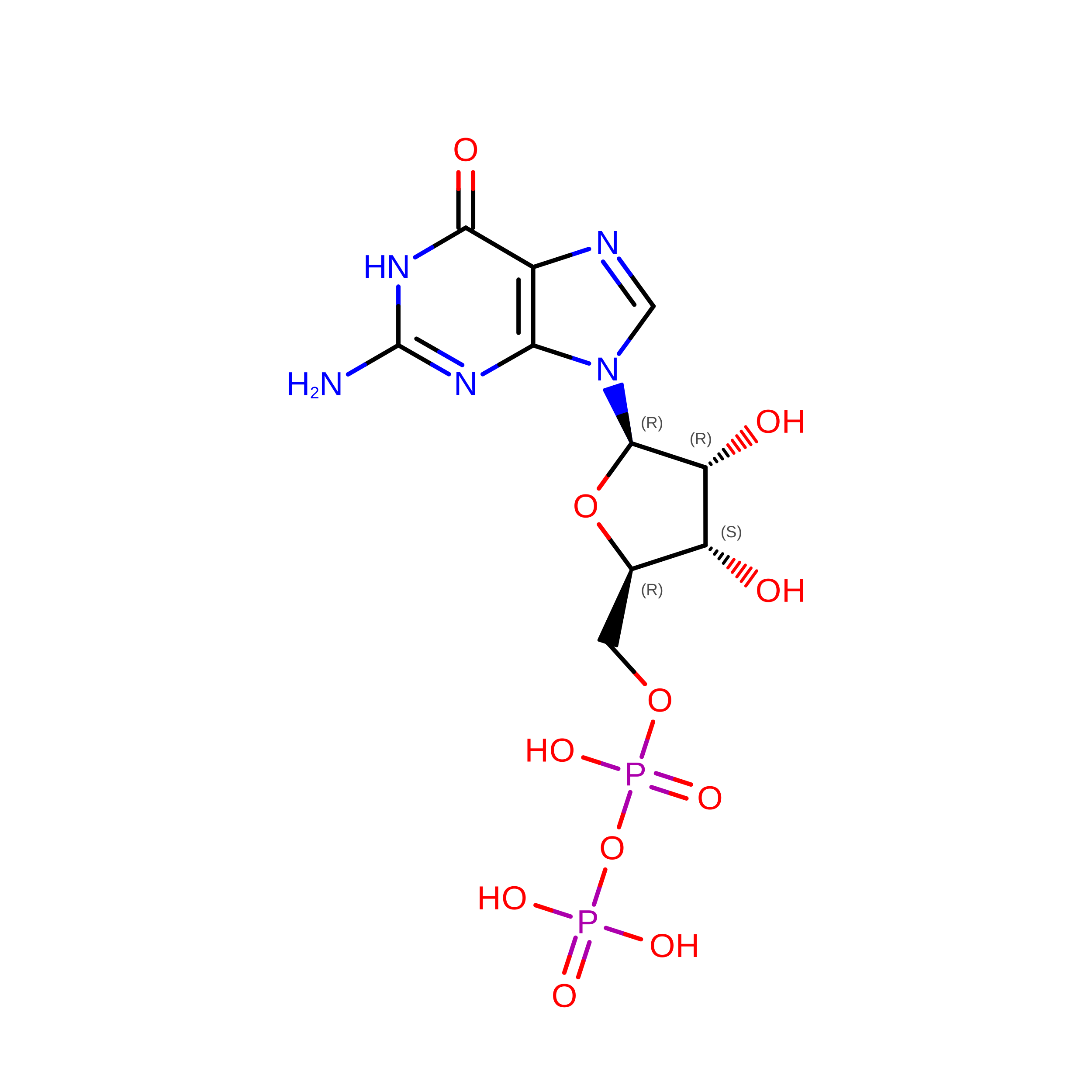
E [auth A]GUANOSINE-5'-DIPHOSPHATE
C10 H15 N5 O11 P2
QGWNDRXFNXRZMB-UUOKFMHZSA-N
PGE

Query on PGE


Download:Ideal Coordinates CCD File
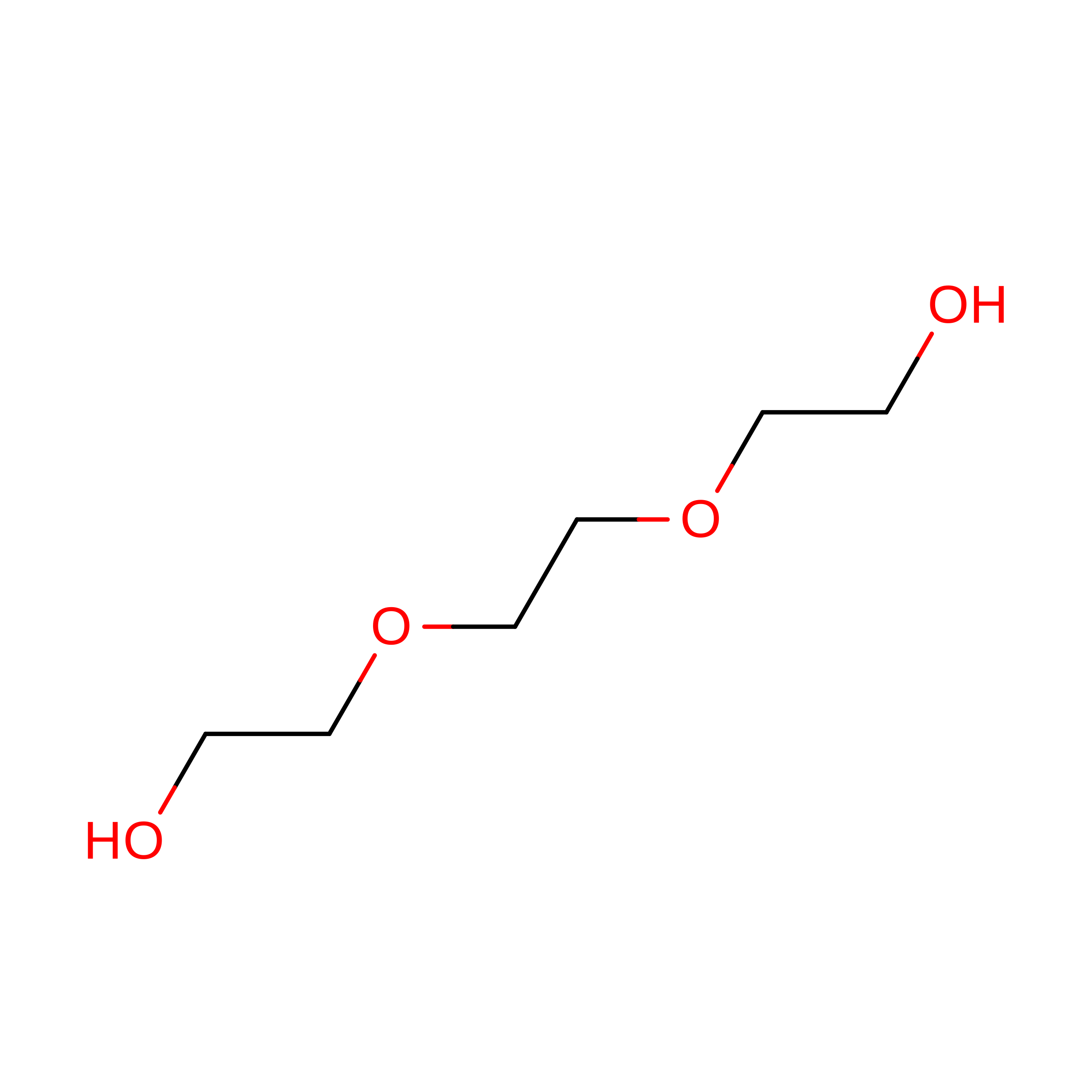
D [auth A]TRIETHYLENE GLYCOL
C6 H14 O4
ZIBGPFATKBEMQZ-UHFFFAOYSA-N
PEG

Query on PEG


Download:Ideal Coordinates CCD File
F [auth A],
G [auth A]
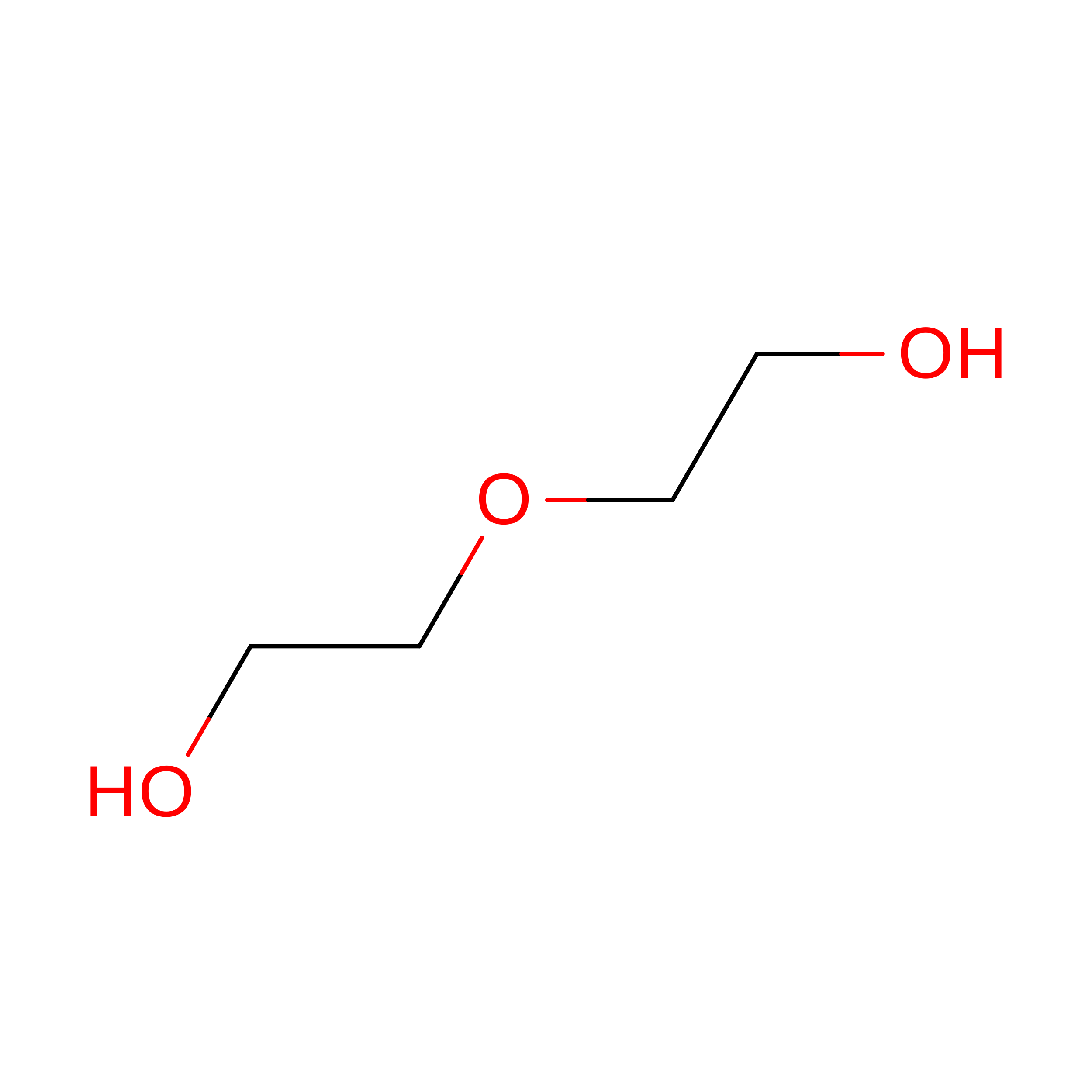
DI(HYDROXYETHYL)ETHER
C4 H10 O3
MTHSVFCYNBDYFN-UHFFFAOYSA-N
SO4

Query on SO4


Download:Ideal Coordinates CCD File
C [auth A]SULFATE ION
O4 S
QAOWNCQODCNURD-UHFFFAOYSA-L
MG

Query on MG


Download:Ideal Coordinates CCD File
B [auth A]MAGNESIUM ION
Mg
JLVVSXFLKOJNIY-UHFFFAOYSA-N

Experimental Data & Validation

Experimental Data

  • Method: X-RAY DIFFRACTION
  • Resolution: 2.15 Å
  • R-Value Free:  0.223 (Depositor), 0.202 (DCC) 
  • R-Value Work:  0.190 (Depositor), 0.200 (DCC) 
  • R-Value Observed: 0.192 (Depositor) 
Space Group: P 21 21 21
Unit Cell:
Length ( Å )Angle ( ˚ )
a = 57.326α = 90
b = 73.357β = 90
c = 114.377γ = 90
Software Package:
Software NamePurpose
HKL-2000data scaling
REFMACrefinement
PDB_EXTRACTdata extraction
HKL-2000data reduction
PHASERphasing

Structure Validation

View Full Validation Report


Ligand Structure Quality Assessment 


Entry History 

Deposition Data

Revision History  (Full details and data files)

  • Version 1.0: 2018-04-25
    Type: Initial release
  • Version 1.1: 2024-03-13
    Changes: Data collection, Database references, Derived calculations