5MUG | pdb_00005mug

Self-assembled alpha-Tocopherol Transfer Protein Nanoparticles Promote Vitamin E Delivery Across an Endothelial Barrier


Experimental Data Snapshot

  • Method: X-RAY DIFFRACTION
  • Resolution: 2.42 Å
  • R-Value Free: 
    0.212 (Depositor), 0.212 (DCC) 
  • R-Value Work: 
    0.191 (Depositor), 0.198 (DCC) 
  • R-Value Observed: 
    0.192 (Depositor) 

Starting Model: experimental
View more details

wwPDB Validation 3D Report Full Report

Validation slider image for 5MUG

Ligand Structure Quality Assessment 


This is version 2.2 of the entry. See complete history

Literature

Self-assembled alpha-Tocopherol Transfer Protein Nanoparticles Promote Vitamin E Delivery Across an Endothelial Barrier.

Aeschimann, W.Staats, S.Kammer, S.Olieric, N.Jeckelmann, J.M.Fotiadis, D.Netscher, T.Rimbach, G.Cascella, M.Stocker, A.

(2017) Sci Rep 7: 4970-4970

  • DOI: https://doi.org/10.1038/s41598-017-05148-9
  • Primary Citation Related Structures: 
    5MUE, 5MUG

  • PubMed Abstract: 

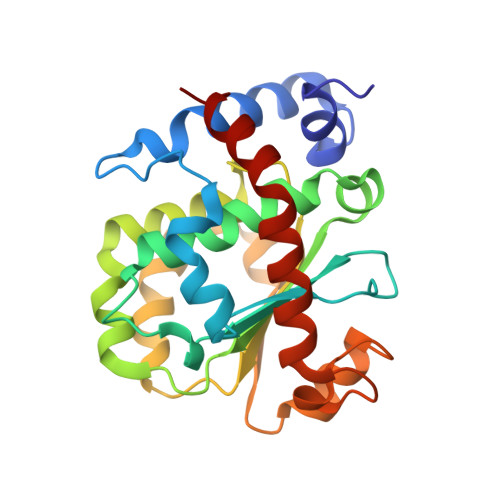
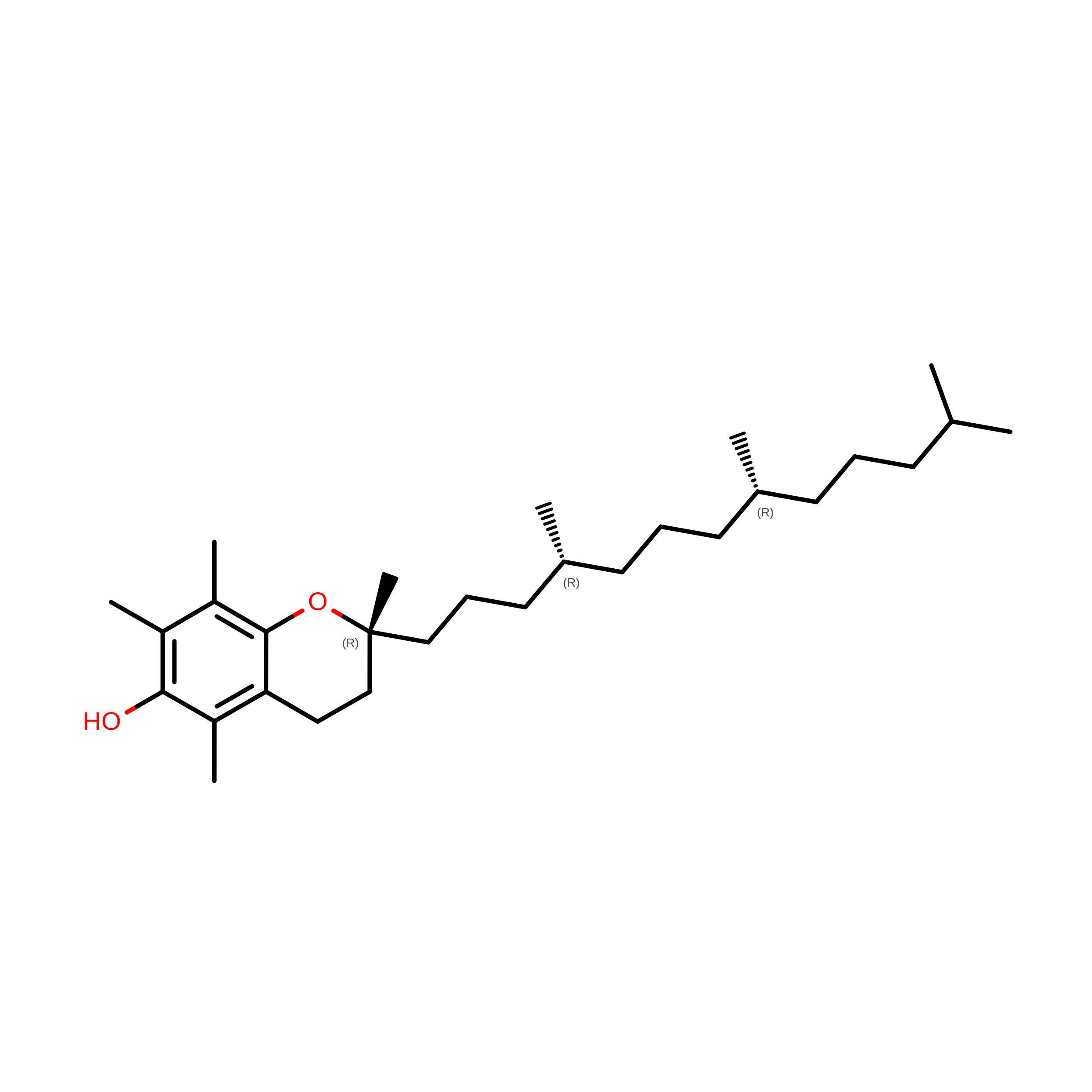
    Vitamin E is one of the most important natural antioxidants, protecting polyunsaturated fatty acids in the membranes of cells. Among different chemical isoforms assimilated from dietary regimes, RRR-α-tocopherol is the only one retained in higher animals. This is possible thanks to α-Tocopherol Transfer Protein (α-TTP), which extracts α-tocopherol from endosomal compartments in liver cells, facilitating its distribution into the body. Here we show that, upon binding to its substrate, α-TTP acquires tendency to aggregation into thermodynamically stable high molecular weight oligomers. Determination of the structure of such aggregates by X-ray crystallography revealed a spheroidal particle formed by 24 protein monomers. Oligomerization is triggered by refolding of the N-terminus. Experiments with cultured cell monolayers demonstrate that the same oligomers are efficiently transported through an endothelial barrier (HUVEC) and not through an epithelial one (Caco-2). Discovery of a human endogenous transport protein with intrinsic capability of crossing endothelial tissues opens to new ways of drug delivery into the brain or other tissues protected by endothelial barriers.


  • Organizational Affiliation
    • University of Bern, Department of Chemistry and Biochemistry, Bern, Switzerland.

Macromolecule Content 

  • Total Structure Weight: 27.56 kDa 
  • Atom Count: 2,027 
  • Modeled Residue Count: 231 
  • Deposited Residue Count: 231 
  • Unique protein chains: 1

Macromolecules

Find similar proteins by:|  3D Structure
Entity ID: 1
MoleculeChains  Sequence LengthOrganismDetailsImage
Alpha-tocopherol transfer protein231Homo sapiensMutation(s): 0 
Gene Names: TTPATPP1
UniProt & NIH Common Fund Data Resources
Find proteins for P49638 (Homo sapiens)
Explore P49638 
Go to UniProtKB:  P49638
PHAROS:  P49638
GTEx:  ENSG00000137561 
Entity Groups
Sequence Clusters30% Identity50% Identity70% Identity90% Identity95% Identity100% Identity
UniProt GroupP49638
Sequence Annotations
Expand
Reference Sequence

Small Molecules

Binding Affinity Annotations 
IDSourceBinding Affinity
VIV BindingDB:  5MUG Kd: 2420 (nM) from 1 assay(s)

Experimental Data & Validation

Experimental Data

  • Method: X-RAY DIFFRACTION
  • Resolution: 2.42 Å
  • R-Value Free:  0.212 (Depositor), 0.212 (DCC) 
  • R-Value Work:  0.191 (Depositor), 0.198 (DCC) 
  • R-Value Observed: 0.192 (Depositor) 
Space Group: I 4 3 2
Unit Cell:
Length ( Å )Angle ( ˚ )
a = 168.259α = 90
b = 168.259β = 90
c = 168.259γ = 90
Software Package:
Software NamePurpose
XSCALEdata scaling
PHASERphasing
PHENIXrefinement
PDB_EXTRACTdata extraction
XDSdata reduction

Structure Validation

View Full Validation Report


Ligand Structure Quality Assessment 


Entry History 

Deposition Data

Revision History  (Full details and data files)

  • Version 1.0: 2017-07-19
    Type: Initial release
  • Version 1.1: 2018-12-05
    Changes: Data collection, Source and taxonomy, Structure summary
  • Version 2.0: 2023-11-15
    Changes: Atomic model, Data collection, Database references
  • Version 2.1: 2024-01-17
    Changes: Refinement description
  • Version 2.2: 2024-10-09
    Changes: Structure summary