Download Mendeley
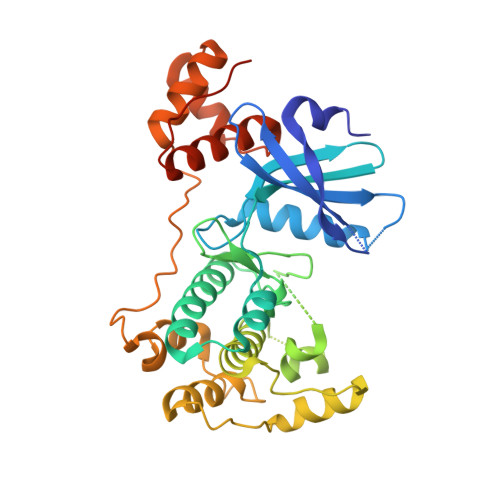
The target landscape of clinical kinase drugs.
Klaeger, S., Heinzlmeir, S., Wilhelm, M., Polzer, H., Vick, B., Koenig, P.A., Reinecke, M., Ruprecht, B., Petzoldt, S., Meng, C., Zecha, J., Reiter, K., Qiao, H., Helm, D., Koch, H., Schoof, M., Canevari, G., Casale, E., Depaolini, S.R., Feuchtinger, A., Wu, Z., Schmidt, T., Rueckert, L., Becker, W., Huenges, J., Garz, A.K., Gohlke, B.O., Zolg, D.P., Kayser, G., Vooder, T., Preissner, R., Hahne, H., Tonisson, N., Kramer, K., Gotze, K., Bassermann, F., Schlegl, J., Ehrlich, H.C., Aiche, S., Walch, A., Greif, P.A., Schneider, S., Felder, E.R., Ruland, J., Medard, G., Jeremias, I., Spiekermann, K., Kuster, B.(2017) Science 358
- PubMed: 29191878 Search on PubMedSearch on PubMed Central
- DOI: https://doi.org/10.1126/science.aan4368
- Primary Citation Related Structures:
5LBW, 5LBY, 5LBZ, 5M5A, 5MAF, 5MAG, 5MAH, 5MAI - PubMed Abstract:
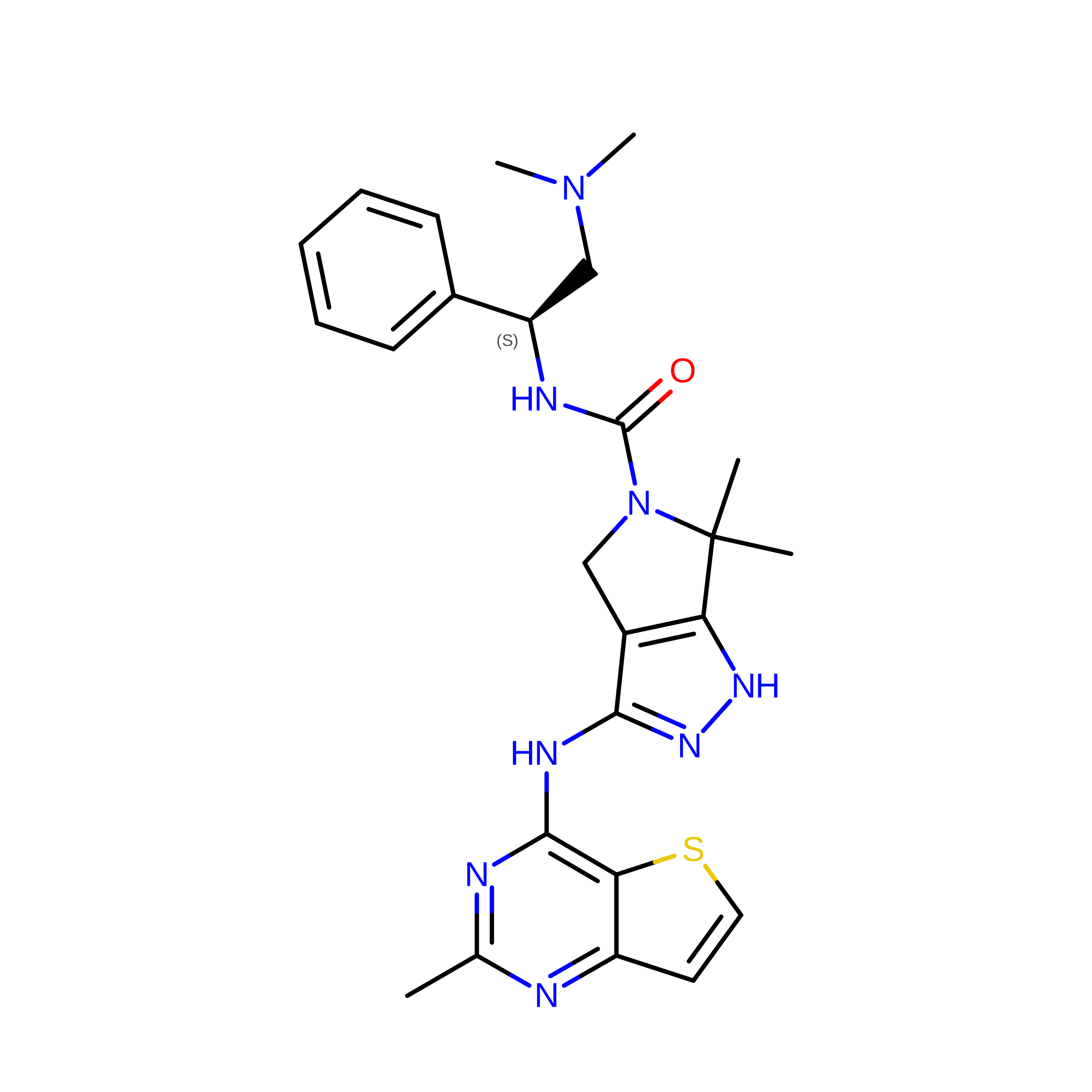
Kinase inhibitors are important cancer therapeutics. Polypharmacology is commonly observed, requiring thorough target deconvolution to understand drug mechanism of action. Using chemical proteomics, we analyzed the target spectrum of 243 clinically evaluated kinase drugs. The data revealed previously unknown targets for established drugs, offered a perspective on the "druggable" kinome, highlighted (non)kinase off-targets, and suggested potential therapeutic applications. Integration of phosphoproteomic data refined drug-affected pathways, identified response markers, and strengthened rationale for combination treatments. We exemplify translational value by discovering SIK2 (salt-inducible kinase 2) inhibitors that modulate cytokine production in primary cells, by identifying drugs against the lung cancer survival marker MELK (maternal embryonic leucine zipper kinase), and by repurposing cabozantinib to treat FLT3-ITD-positive acute myeloid leukemia. This resource, available via the ProteomicsDB database, should facilitate basic, clinical, and drug discovery research and aid clinical decision-making.
- Chair of Proteomics and Bioanalytics, Technical University of Munich (TUM), Freising, Germany.
Organizational Affiliation: