5LP6 | pdb_00005lp6

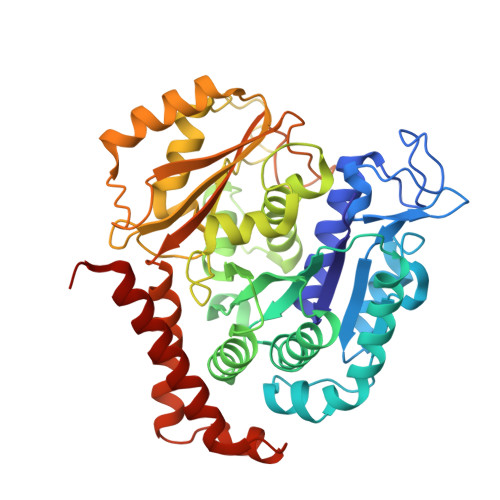
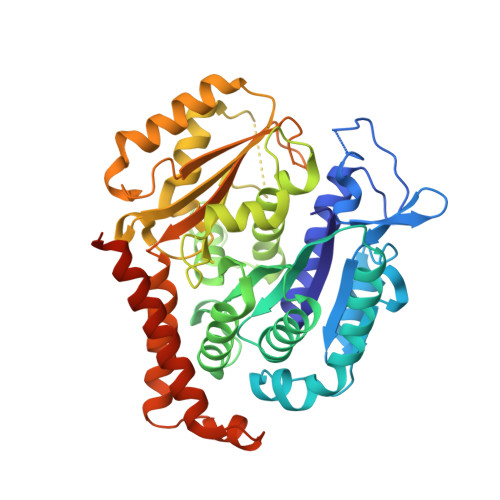
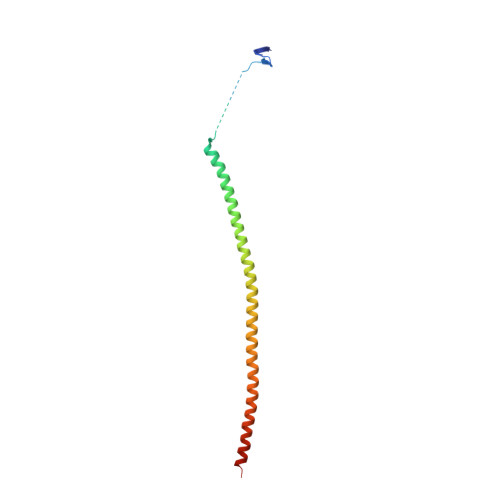
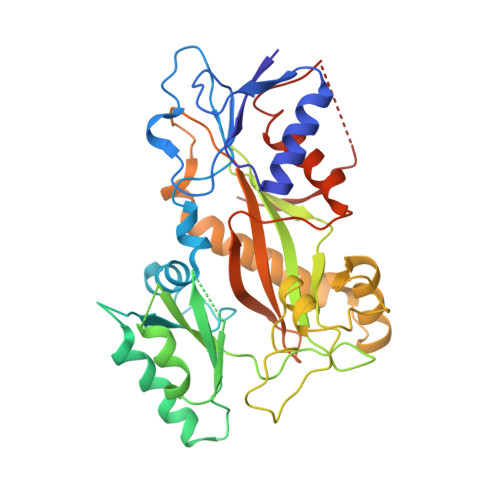
Crystal structure of Tubulin-Stathmin-TTL-Thiocolchicine Complex


Experimental Data Snapshot

  • Method: X-RAY DIFFRACTION
  • Resolution: 2.90 Å
  • R-Value Free: 
    0.305 (Depositor), 0.272 (DCC) 
  • R-Value Work: 
    0.273 (Depositor) 
  • R-Value Observed: 
    0.274 (Depositor) 

Starting Model: experimental
View more details

wwPDB Validation 3D Report Full Report

Validation slider image for 5LP6

Ligand Structure Quality Assessment 


This is version 2.1 of the entry. See complete history

Literature

Tools for the rational design of bivalent microtubule-targeting drugs.

Marangon, J.Christodoulou, M.S.Casagrande, F.V.Tiana, G.Dalla Via, L.Aliverti, A.Passarella, D.Cappelletti, G.Ricagno, S.

(2016) Biochem Biophys Res Commun 479: 48-53

  • DOI: https://doi.org/10.1016/j.bbrc.2016.09.022
  • Primary Citation Related Structures: 
    5LP6

  • PubMed Abstract: 

    Microtubule (MT) dynamic behaviour is an attractive drug target for chemotherapy, whose regulation by MT-stabilizing and destabilizing agents has been fruitfully applied in treating several types of cancers. MT-stabilizing agents are also emerging as potential remedies for neurodegenerative conditions, such as Alzheimer's and Parkinson's disease, although single-target drugs are not expected to fully cure these complex pathologies. Drug combination often displays enhanced efficacy with respect to mono-therapies. In particular, MT-targeting bivalent compounds (MTBCs) represent a promising class of molecules; however, surprisingly, the majority of MTBCs reported so far exhibit equal if not less efficacy than their building monomers. In order to shed light on MTBCs poor performance, we characterised through a set of complementary approaches thiocolchine (TH) and two bivalent TH-homodimers as prototype molecules. First, the binding affinities of these three molecules were assessed, then we obtained the crystallographic structure of a tubulin-TH complex. The binding affinities were interpreted in light of structural data and of molecular dynamics simulations. Finally, their effects on MT cytoskeleton and cell survival were validated on HeLa cells. The ensemble of these data provides chemical and structural considerations on how a successful rational design of MTBCs should be conceived.


  • Organizational Affiliation
    • Dipartimento di Bioscienze, Università degli Studi di Milano, via Celoria 26, 20133 Milano, Italy.

Macromolecule Content 

  • Total Structure Weight: 261.97 kDa 
  • Atom Count: 17,547 
  • Modeled Residue Count: 2,183 
  • Deposited Residue Count: 2,297 
  • Unique protein chains: 4

Macromolecules

Find similar proteins by:|  3D Structure
Entity ID: 1
MoleculeChains  Sequence LengthOrganismDetailsImage
Tubulin alpha-1B chain
A, C
440Bos taurusMutation(s): 0 
EC: 3.6.5
UniProt
Find proteins for P81947 (Bos taurus)
Explore P81947 
Go to UniProtKB:  P81947
Entity Groups
Sequence Clusters30% Identity50% Identity70% Identity90% Identity95% Identity100% Identity
UniProt GroupP81947
Sequence Annotations
Expand
Reference Sequence
Find similar proteins by:|  3D Structure
Entity ID: 2
MoleculeChains  Sequence LengthOrganismDetailsImage
Tubulin beta-2B chain
B, D
445Bos taurusMutation(s): 0 
UniProt
Find proteins for Q6B856 (Bos taurus)
Explore Q6B856 
Go to UniProtKB:  Q6B856
Entity Groups
Sequence Clusters30% Identity50% Identity70% Identity90% Identity95% Identity100% Identity
UniProt GroupQ6B856
Sequence Annotations
Expand
Reference Sequence
Find similar proteins by:|  3D Structure
Entity ID: 3
MoleculeChains  Sequence LengthOrganismDetailsImage
Stathmin-4143Rattus norvegicusMutation(s): 0 
Gene Names: Stmn4
UniProt
Find proteins for P63043 (Rattus norvegicus)
Explore P63043 
Go to UniProtKB:  P63043
Entity Groups
Sequence Clusters30% Identity50% Identity70% Identity90% Identity95% Identity100% Identity
UniProt GroupP63043
Sequence Annotations
Expand
Reference Sequence
Find similar proteins by:|  3D Structure
Entity ID: 4
MoleculeChains  Sequence LengthOrganismDetailsImage
Uncharacterized protein384Gallus gallusMutation(s): 0 
Gene Names: TTL

Small Molecules

Ligands 7 Unique
IDChains Name / Formula / InChI Key2D Diagram3D Interactions
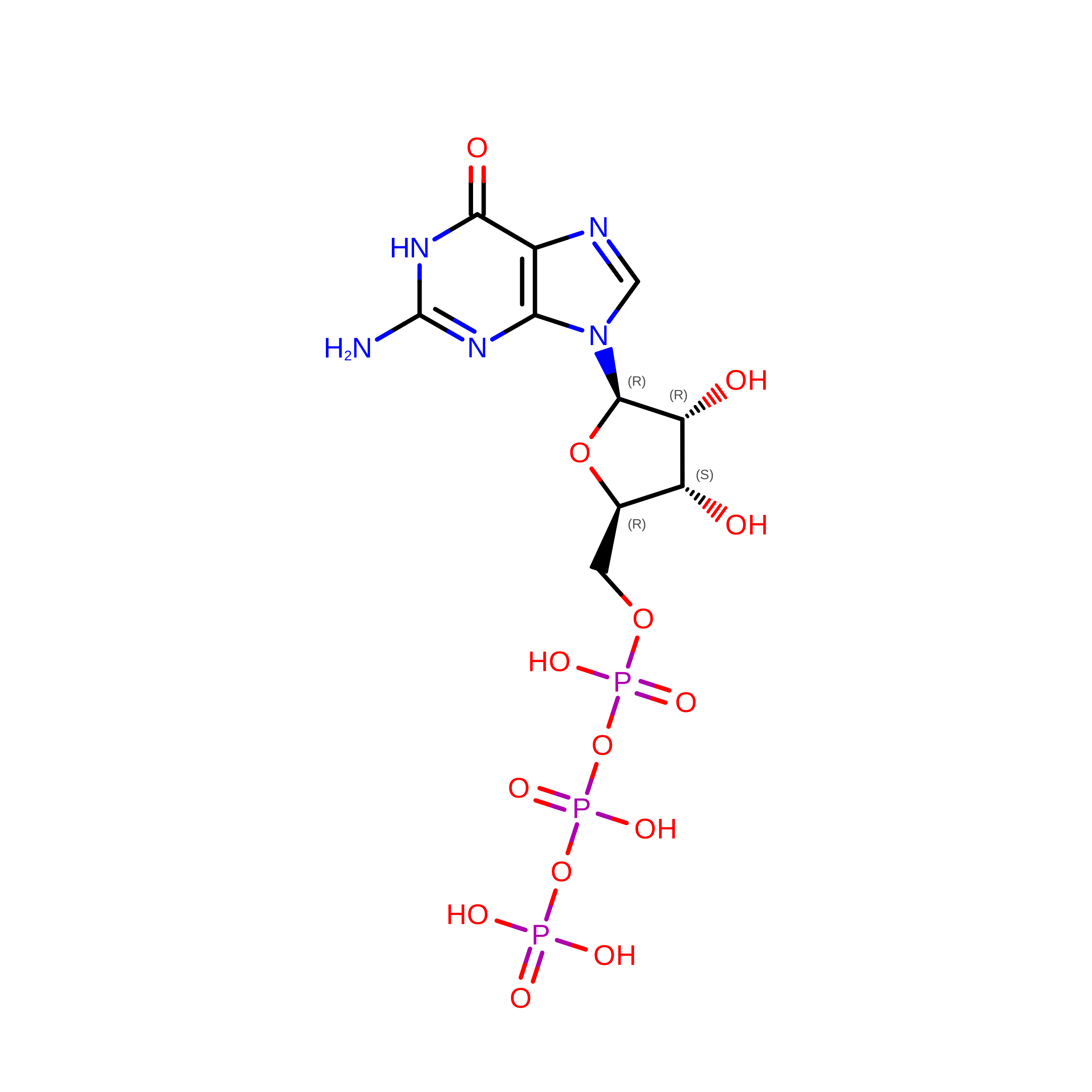
GTP

Query on GTP


Download:Ideal Coordinates CCD File
G [auth A],
S [auth C]
GUANOSINE-5'-TRIPHOSPHATE
C10 H16 N5 O14 P3
XKMLYUALXHKNFT-UUOKFMHZSA-N
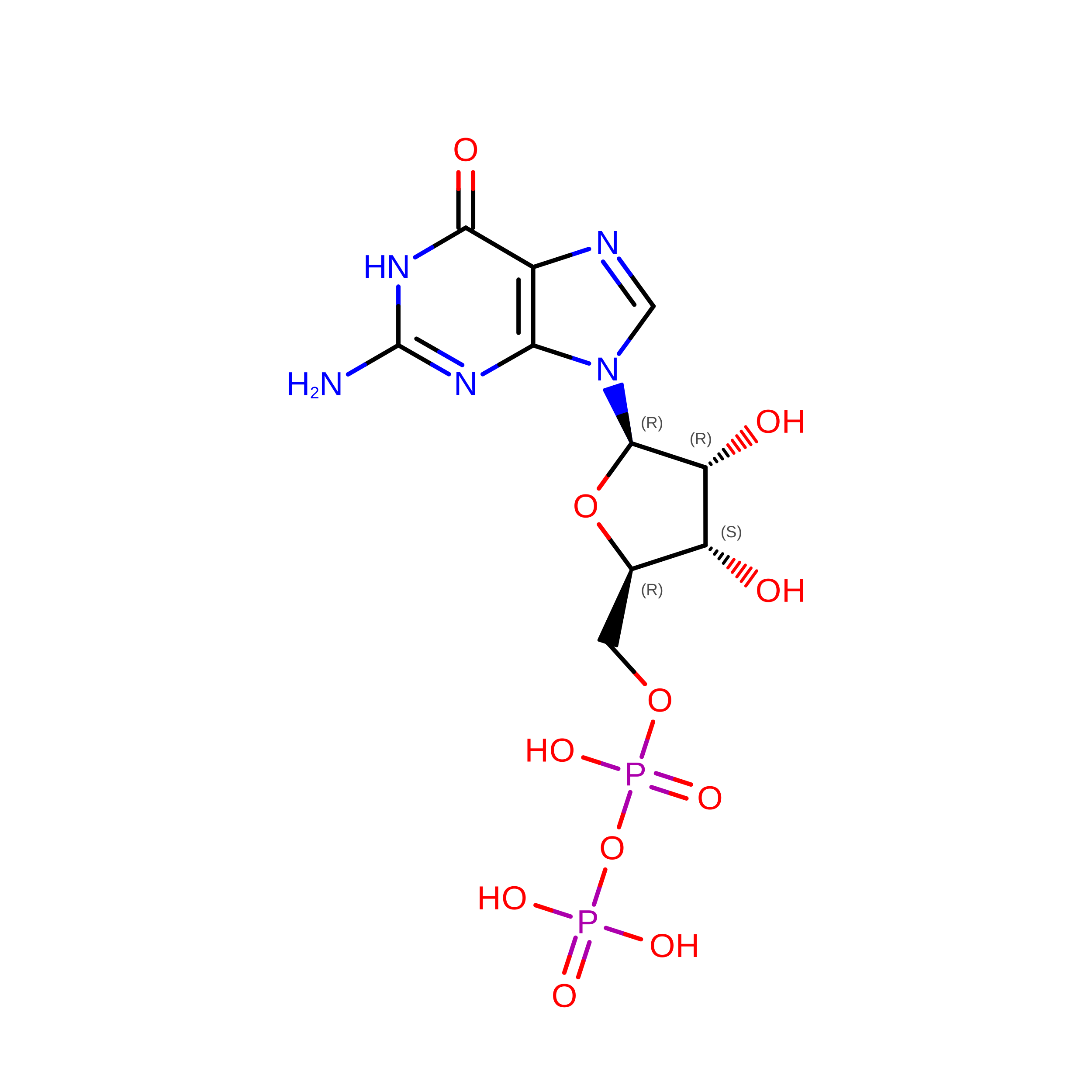
GDP

Query on GDP


Download:Ideal Coordinates CCD File
M [auth B],
V [auth D]
GUANOSINE-5'-DIPHOSPHATE
C10 H15 N5 O11 P2
QGWNDRXFNXRZMB-UUOKFMHZSA-N
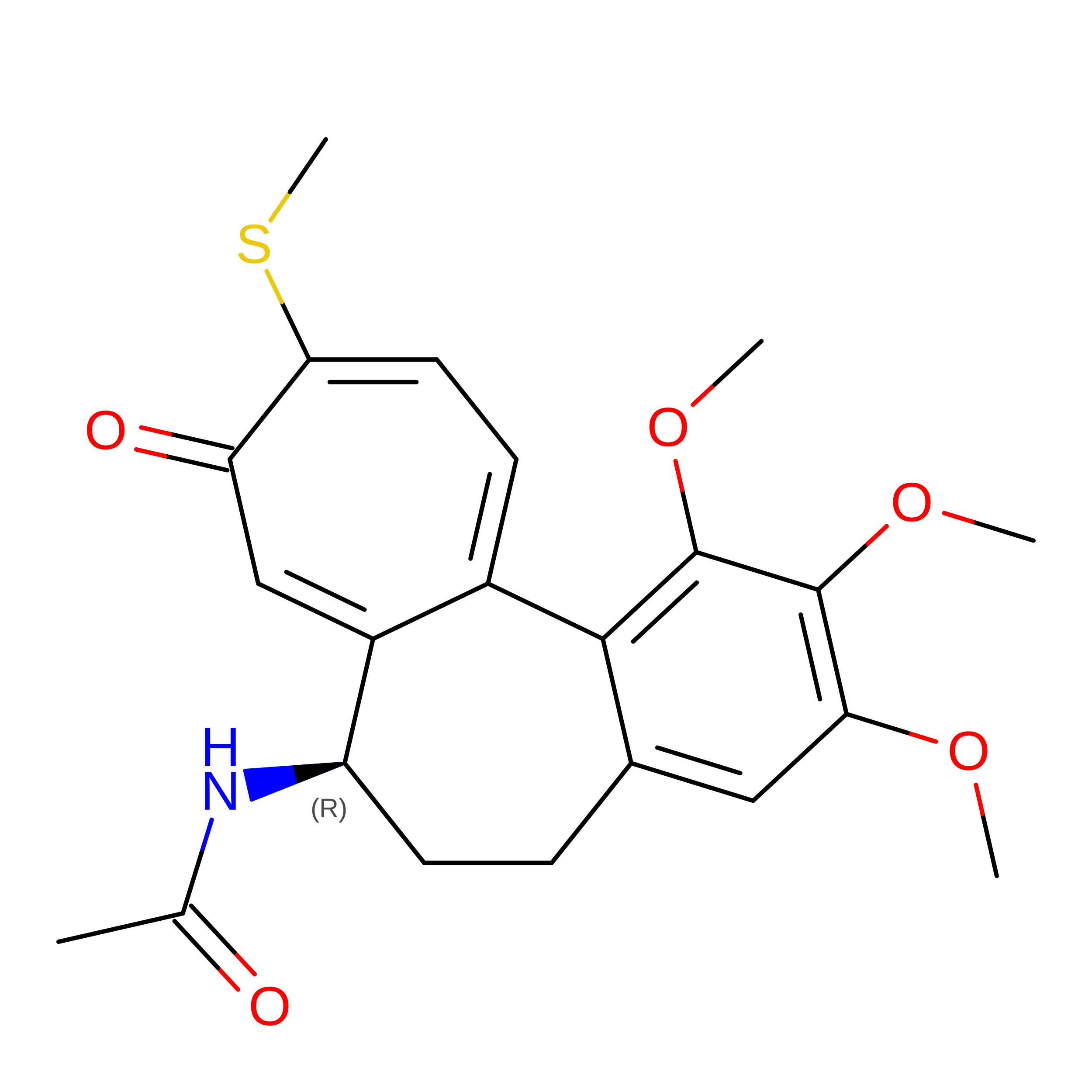
71P

Query on 71P


Download:Ideal Coordinates CCD File
P [auth B]~{N}-[(7~{R})-1,2,3-trimethoxy-10-methylsulfanyl-9-oxidanylidene-6,7-dihydro-5~{H}-benzo[a]heptalen-7-yl]ethanamide
C22 H25 N O5 S
CMEGANPVAXDBPL-MRXNPFEDSA-N
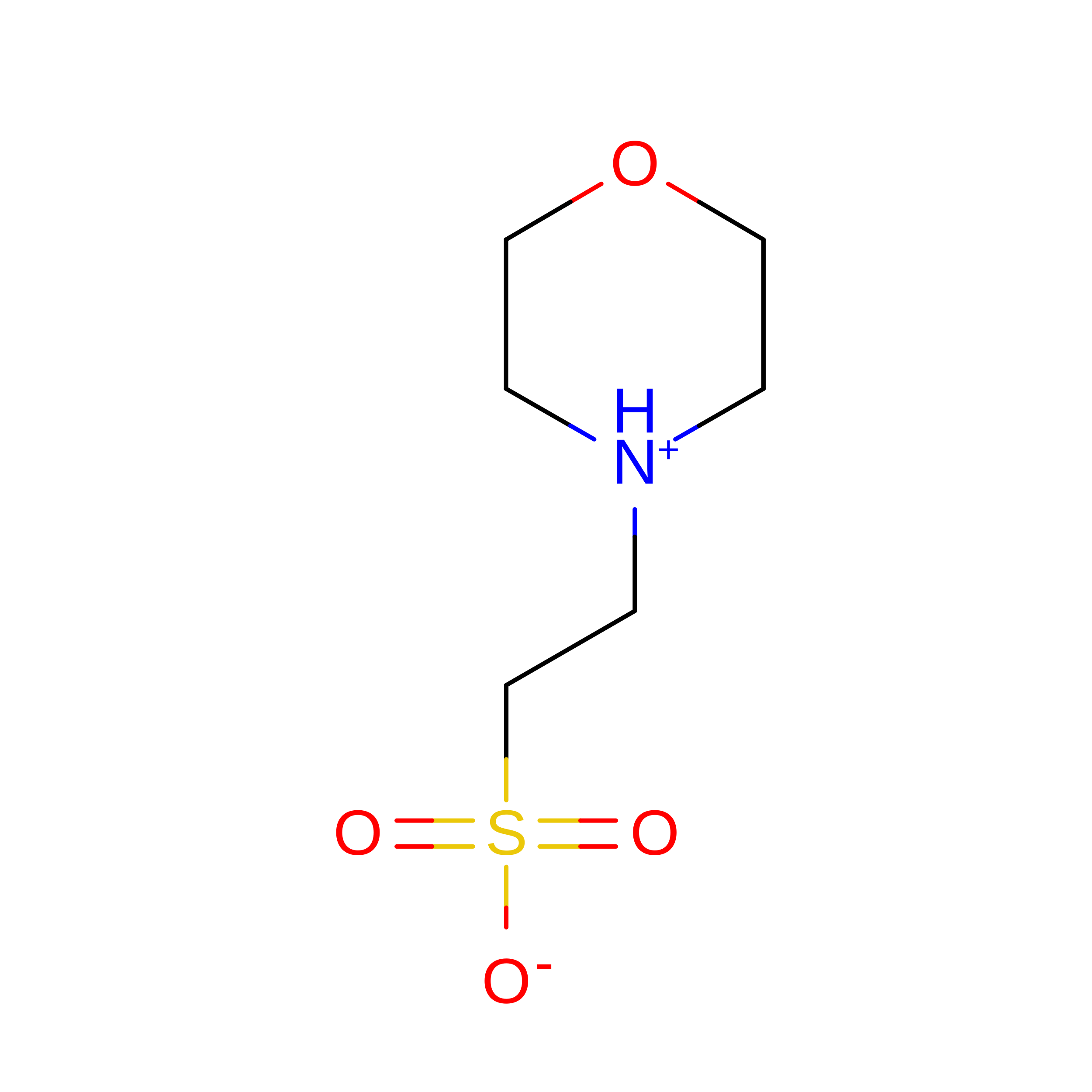
MES

Query on MES


Download:Ideal Coordinates CCD File
O [auth B]2-(N-MORPHOLINO)-ETHANESULFONIC ACID
C6 H13 N O4 S
SXGZJKUKBWWHRA-UHFFFAOYSA-N
CA

Query on CA


Download:Ideal Coordinates CCD File
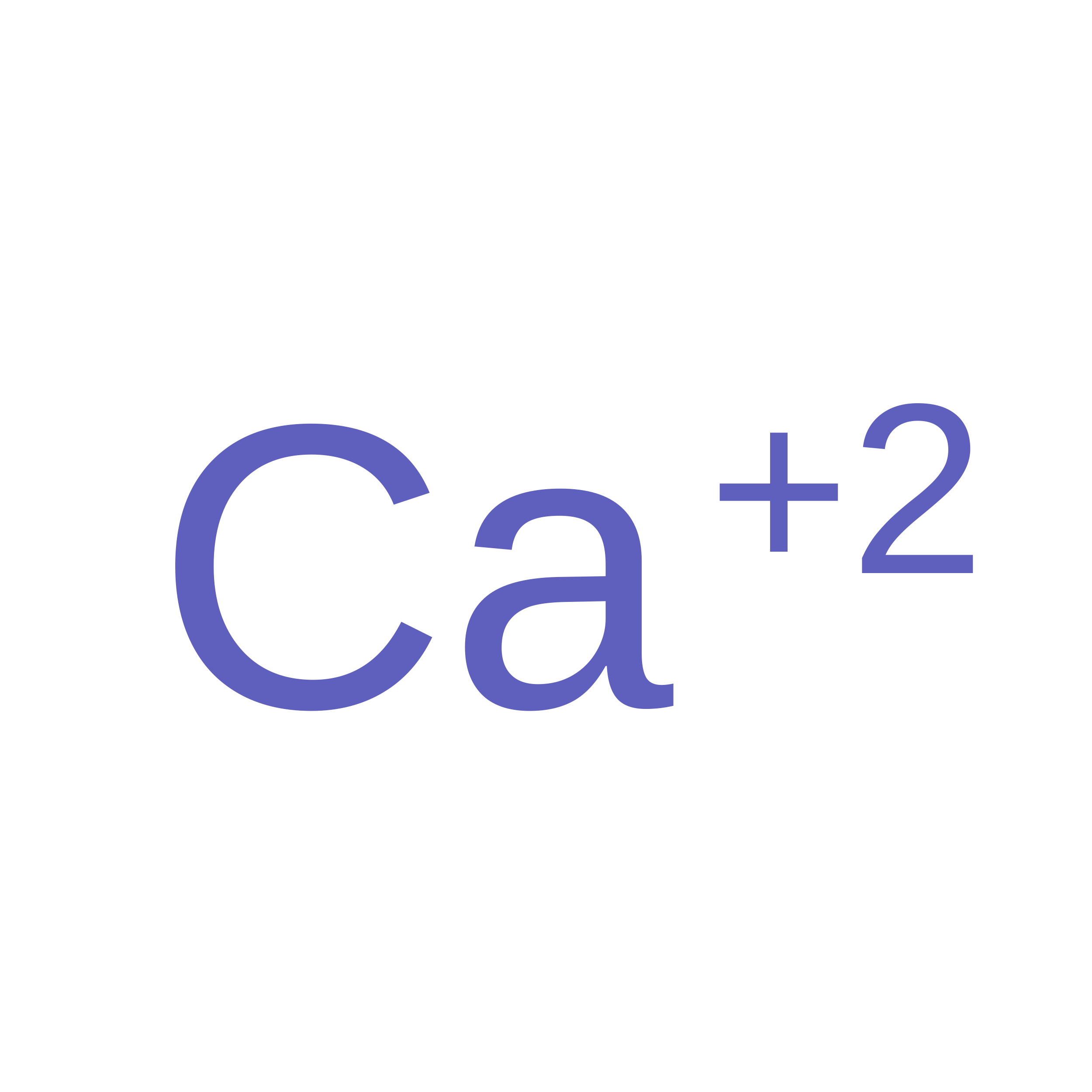
U [auth C]CALCIUM ION
Ca
BHPQYMZQTOCNFJ-UHFFFAOYSA-N
CL

Query on CL


Download:Ideal Coordinates CCD File
I [auth A]CHLORIDE ION
Cl
VEXZGXHMUGYJMC-UHFFFAOYSA-M
MG

Query on MG


Download:Ideal Coordinates CCD File
H [auth A]
J [auth A]
K [auth A]
L [auth A]
N [auth B]
H [auth A],
J [auth A],
K [auth A],
L [auth A],
N [auth B],
Q [auth B],
R [auth B],
T [auth C]
MAGNESIUM ION
Mg
JLVVSXFLKOJNIY-UHFFFAOYSA-N

Experimental Data & Validation

Experimental Data

  • Method: X-RAY DIFFRACTION
  • Resolution: 2.90 Å
  • R-Value Free:  0.305 (Depositor), 0.272 (DCC) 
  • R-Value Work:  0.273 (Depositor) 
  • R-Value Observed: 0.274 (Depositor) 
Space Group: P 21 21 21
Unit Cell:
Length ( Å )Angle ( ˚ )
a = 103.619α = 90
b = 155.285β = 90
c = 180.445γ = 90
Software Package:
Software NamePurpose
REFMACrefinement
MOSFLMdata reduction
SCALAdata scaling
PHASERphasing

Structure Validation

View Full Validation Report


Ligand Structure Quality Assessment 


Entry History 

Deposition Data

Revision History  (Full details and data files)

  • Version 1.0: 2016-09-21
    Type: Initial release
  • Version 1.1: 2017-09-20
    Changes: Data collection, Database references, Derived calculations
  • Version 2.0: 2019-08-21
    Changes: Advisory, Atomic model, Data collection, Database references, Derived calculations, Polymer sequence, Source and taxonomy, Structure summary
  • Version 2.1: 2024-01-10
    Changes: Data collection, Database references, Derived calculations, Refinement description