5HR4 | pdb_00005hr4

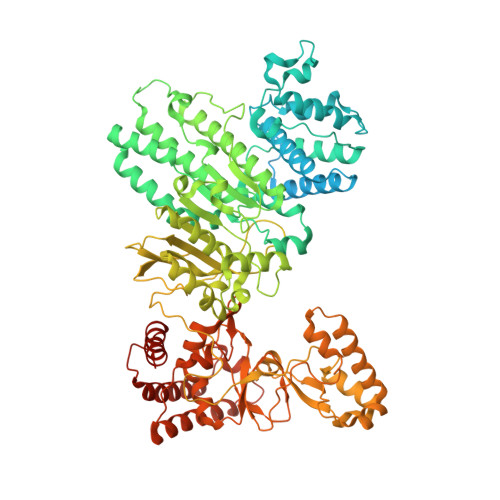
Structure of Type IIL restriction-modification enzyme MmeI in complex with DNA has implications for engineering of new specificities


Experimental Data Snapshot

  • Method: X-RAY DIFFRACTION
  • Resolution: 2.60 Å
  • R-Value Free: 
    0.242 (Depositor), 0.242 (DCC) 
  • R-Value Work: 
    0.215 (Depositor), 0.217 (DCC) 
  • R-Value Observed: 
    0.216 (Depositor) 

wwPDB Validation 3D Report Full Report

Validation slider image for 5HR4

Ligand Structure Quality Assessment 


This is version 1.1 of the entry. See complete history

Literature

Structure of Type IIL Restriction-Modification Enzyme MmeI in Complex with DNA Has Implications for Engineering New Specificities.

Callahan, S.J.Luyten, Y.A.Gupta, Y.K.Wilson, G.G.Roberts, R.J.Morgan, R.D.Aggarwal, A.K.

(2016) PLoS Biol 14: e1002442-e1002442

  • DOI: https://doi.org/10.1371/journal.pbio.1002442
  • Primary Citation Related Structures: 
    5HR4

  • PubMed Abstract: 

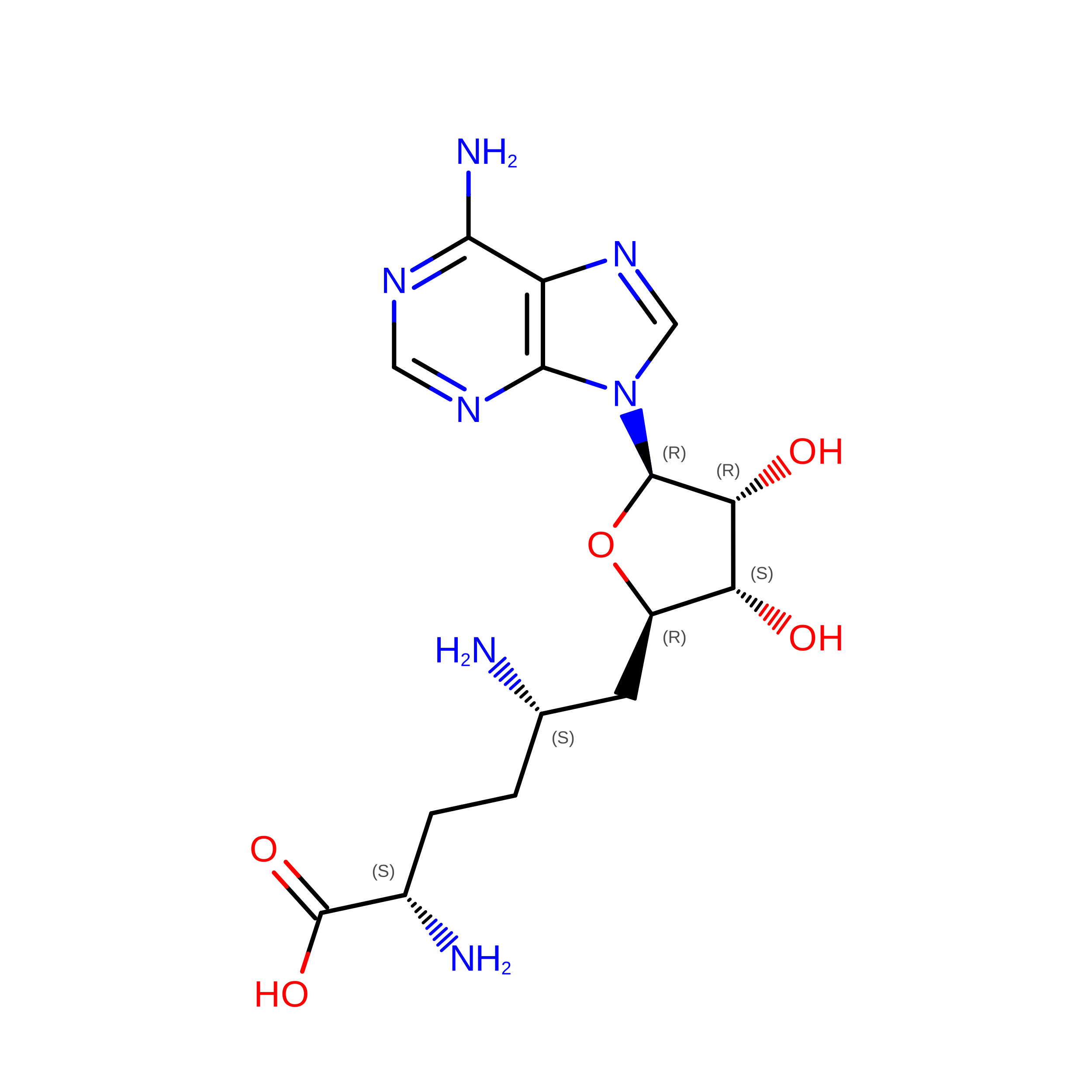
    The creation of restriction enzymes with programmable DNA-binding and -cleavage specificities has long been a goal of modern biology. The recently discovered Type IIL MmeI family of restriction-and-modification (RM) enzymes that possess a shared target recognition domain provides a framework for engineering such new specificities. However, a lack of structural information on Type IIL enzymes has limited the repertoire that can be rationally engineered. We report here a crystal structure of MmeI in complex with its DNA substrate and an S-adenosylmethionine analog (Sinefungin). The structure uncovers for the first time the interactions that underlie MmeI-DNA recognition and methylation (5'-TCCRAC-3'; R = purine) and provides a molecular basis for changing specificity at four of the six base pairs of the recognition sequence (5'-TCCRAC-3'). Surprisingly, the enzyme is resilient to specificity changes at the first position of the recognition sequence (5'-TCCRAC-3'). Collectively, the structure provides a basis for engineering further derivatives of MmeI and delineates which base pairs of the recognition sequence are more amenable to alterations than others.


  • Organizational Affiliation
    • Department of Structural and Chemical Biology, Mount Sinai School of Medicine, New York, New York, United States of America.

Macromolecule Content 

  • Total Structure Weight: 227.25 kDa 
  • Atom Count: 12,745 
  • Modeled Residue Count: 1,551 
  • Deposited Residue Count: 1,890 
  • Unique protein chains: 1
  • Unique nucleic acid chains: 2

Macromolecules


Find similar proteins by:|  3D Structure
Entity ID: 1
MoleculeChains  Sequence LengthOrganismDetailsImage
MmeIA [auth C],
D [auth J]
919Methylophilus methylotrophusMutation(s): 0 
Gene Names: mmeIRM
EC: 2.1.1.72
UniProt
Find proteins for B2MU09 (Methylophilus methylotrophus)
Explore B2MU09 
Go to UniProtKB:  B2MU09
Entity Groups
Sequence Clusters30% Identity50% Identity70% Identity90% Identity95% Identity100% Identity
UniProt GroupB2MU09
Sequence Annotations
Expand
Reference Sequence
Find similar nucleic acids by:  Sequence
Entity ID: 2
MoleculeChains LengthOrganismImage
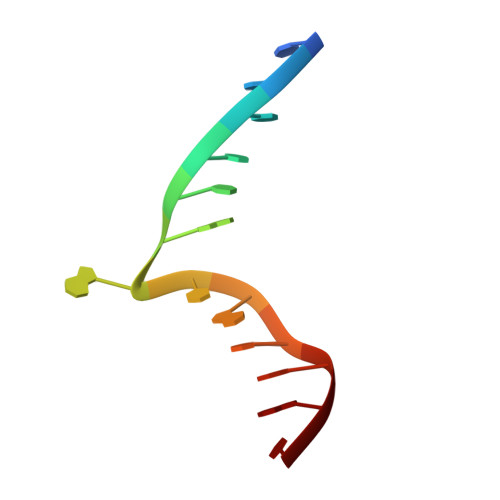
DNA (5'-D(P*TP*AP*TP*CP*CP*GP*AP*CP*AP*TP*AP*AP*C)-3')B [auth H],
E [auth K]
13Methylophilus methylotrophus
Sequence Annotations
Expand
Reference Sequence
Find similar nucleic acids by:  Sequence
Entity ID: 3
MoleculeChains LengthOrganismImage
DNA (5'-D(P*GP*TP*TP*AP*TP*GP*TP*CP*GP*GP*AP*TP*A)-3')C [auth I],
F [auth L]
13Methylophilus methylotrophus
Sequence Annotations
Expand
Reference Sequence

Experimental Data & Validation

Experimental Data

  • Method: X-RAY DIFFRACTION
  • Resolution: 2.60 Å
  • R-Value Free:  0.242 (Depositor), 0.242 (DCC) 
  • R-Value Work:  0.215 (Depositor), 0.217 (DCC) 
  • R-Value Observed: 0.216 (Depositor) 
Space Group: P 1
Unit Cell:
Length ( Å )Angle ( ˚ )
a = 61.877α = 72.84
b = 95.292β = 89.15
c = 161.969γ = 71.62
Software Package:
Software NamePurpose
PHENIXrefinement
XDSdata reduction
XDSdata scaling
PHENIXphasing

Structure Validation

View Full Validation Report


Ligand Structure Quality Assessment 


Entry History 

Deposition Data

Revision History  (Full details and data files)

  • Version 1.0: 2016-04-27
    Type: Initial release
  • Version 1.1: 2024-03-06
    Changes: Data collection, Database references, Derived calculations