5HKN | pdb_00005hkn

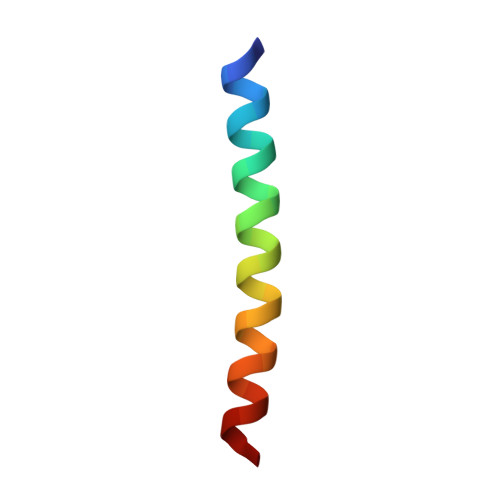
Crystal structure de novo designed fullerene organizing protein complex with fullerene


Experimental Data Snapshot

  • Method: X-RAY DIFFRACTION
  • Resolution: 1.76 Å
  • R-Value Free: 
    0.239 (Depositor), 0.251 (DCC) 
  • R-Value Work: 
    0.203 (Depositor) 
  • R-Value Observed: 
    0.206 (Depositor) 

Starting Model: experimental
View more details

wwPDB Validation 3D Report Full Report

Validation slider image for 5HKN

Ligand Structure Quality Assessment 


This is version 1.2 of the entry. See complete history

Literature

Protein-directed self-assembly of a fullerene crystal.

Kim, K.H.Ko, D.K.Kim, Y.T.Kim, N.H.Paul, J.Zhang, S.Q.Murray, C.B.Acharya, R.DeGrado, W.F.Kim, Y.H.Grigoryan, G.

(2016) Nat Commun 7: 11429-11429

  • DOI: https://doi.org/10.1038/ncomms11429
  • Primary Citation Related Structures: 
    5ET3, 5HKN, 5HKR

  • PubMed Abstract: 

    Learning to engineer self-assembly would enable the precise organization of molecules by design to create matter with tailored properties. Here we demonstrate that proteins can direct the self-assembly of buckminsterfullerene (C60) into ordered superstructures. A previously engineered tetrameric helical bundle binds C60 in solution, rendering it water soluble. Two tetramers associate with one C60, promoting further organization revealed in a 1.67-Å crystal structure. Fullerene groups occupy periodic lattice sites, sandwiched between two Tyr residues from adjacent tetramers. Strikingly, the assembly exhibits high charge conductance, whereas both the protein-alone crystal and amorphous C60 are electrically insulating. The affinity of C60 for its crystal-binding site is estimated to be in the nanomolar range, with lattices of known protein crystals geometrically compatible with incorporating the motif. Taken together, these findings suggest a new means of organizing fullerene molecules into a rich variety of lattices to generate new properties by design.


  • Organizational Affiliation
    • SKKU Advanced Institute of Nanotechnology, Sungkyunkwan University, Suwon 16419, Korea.

Macromolecule Content 

  • Total Structure Weight: 7.1 kDa 
  • Atom Count: 526 
  • Modeled Residue Count: 60 
  • Deposited Residue Count: 60 
  • Unique protein chains: 1

Macromolecules

Find similar proteins by:|  3D Structure
Entity ID: 1
MoleculeChains  Sequence LengthOrganismDetailsImage
fullerene organizing protein
A, B
30synthetic constructMutation(s): 0 

Small Molecules

Ligands 1 Unique
IDChains Name / Formula / InChI Key2D Diagram3D Interactions
60C

Query on 60C


Download:Ideal Coordinates CCD File
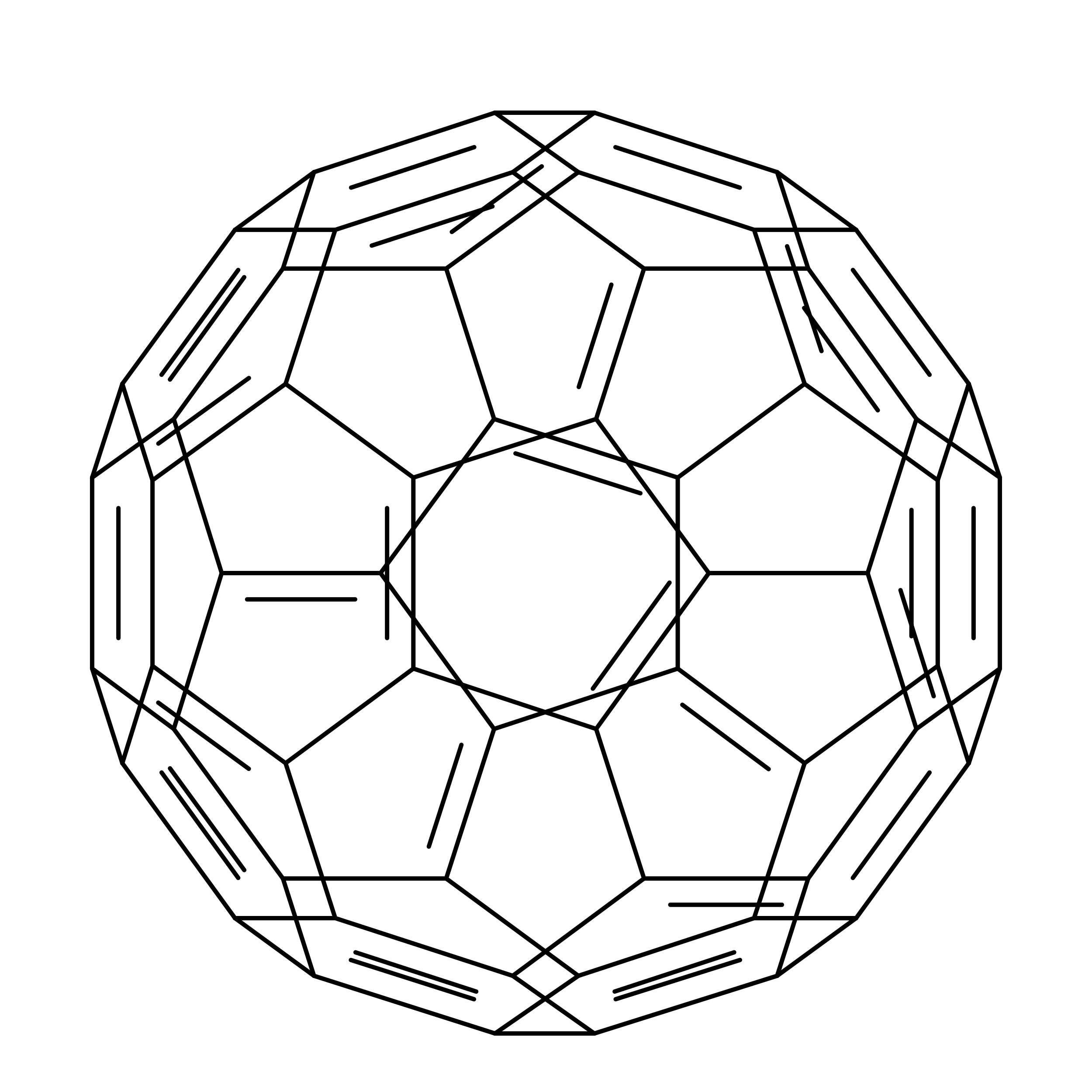
C [auth B](C_{60}-I_{h})[5,6]fullerene
C60
XMWRBQBLMFGWIX-UHFFFAOYSA-N

Experimental Data & Validation

Experimental Data

  • Method: X-RAY DIFFRACTION
  • Resolution: 1.76 Å
  • R-Value Free:  0.239 (Depositor), 0.251 (DCC) 
  • R-Value Work:  0.203 (Depositor) 
  • R-Value Observed: 0.206 (Depositor) 
Space Group: P 62
Unit Cell:
Length ( Å )Angle ( ˚ )
a = 41.71α = 90
b = 41.71β = 90
c = 67.23γ = 120
Software Package:
Software NamePurpose
PHENIXrefinement
HKL-2000data reduction
SCALEPACKdata scaling
PHASERphasing

Structure Validation

View Full Validation Report


Ligand Structure Quality Assessment 


Entry History 

& Funding Information

Deposition Data


Funding OrganizationLocationGrant Number
DBT IndiaIndia--

Revision History  (Full details and data files)

  • Version 1.0: 2016-05-04
    Type: Initial release
  • Version 1.1: 2020-01-01
    Changes: Database references, Derived calculations
  • Version 1.2: 2023-11-08
    Changes: Data collection, Database references, Refinement description