5C5T | pdb_00005c5t

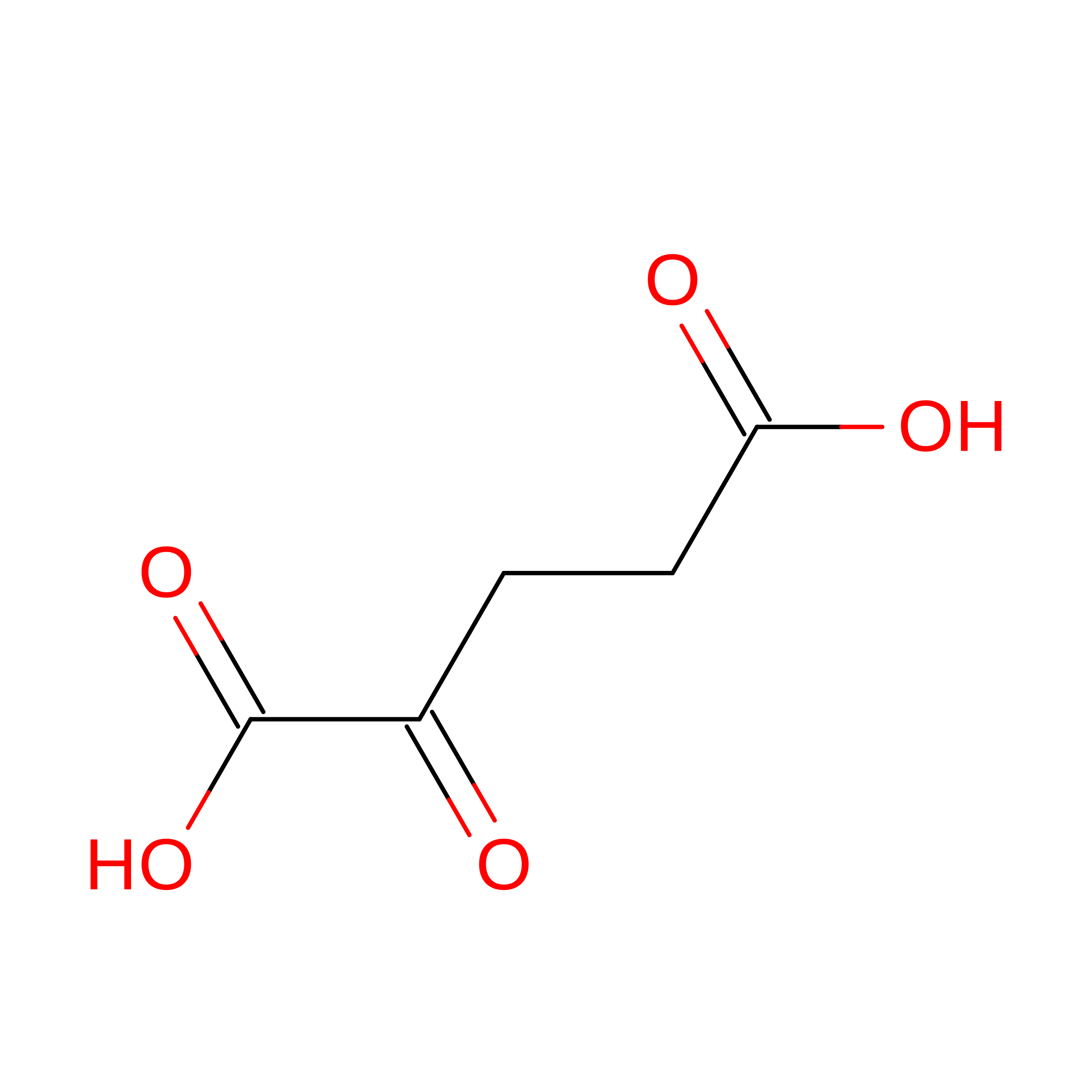
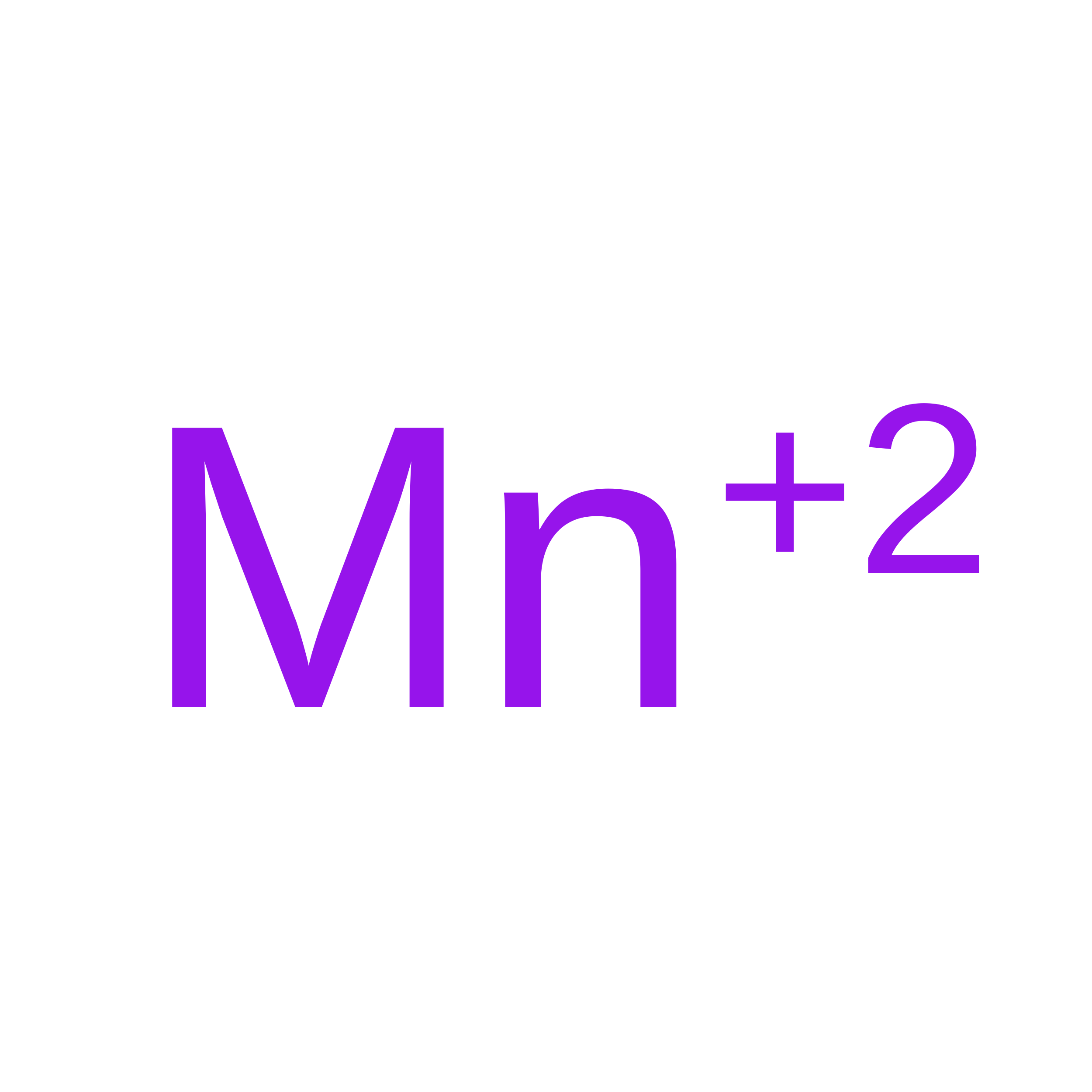
The crystal structure of viral collagen prolyl hydroxylase vCPH from Paramecium Bursaria Chlorella virus-1 - 2OG complex


Experimental Data Snapshot

  • Method: X-RAY DIFFRACTION
  • Resolution: 1.60 Å
  • R-Value Free: 
    0.211 (Depositor), 0.222 (DCC) 
  • R-Value Work: 
    0.177 (Depositor), 0.188 (DCC) 
  • R-Value Observed: 
    0.179 (Depositor) 

Starting Model: experimental
View more details

wwPDB Validation 3D Report Full Report

Validation slider image for 5C5T

This is version 1.3 of the entry. See complete history

Literature

Structure and Mechanism of a Viral Collagen Prolyl Hydroxylase.

Longbotham, J.E.Levy, C.Johannissen, L.O.Tarhonskaya, H.Jiang, S.Loenarz, C.Flashman, E.Hay, S.Schofield, C.J.Scrutton, N.S.

(2015) Biochemistry 54: 6093-6105

  • DOI: https://doi.org/10.1021/acs.biochem.5b00789
  • Primary Citation Related Structures: 
    5C5T, 5C5U

  • PubMed Abstract: 

    The Fe(II)- and 2-oxoglutarate (2-OG)-dependent dioxygenases comprise a large and diverse enzyme superfamily the members of which have multiple physiological roles. Despite this diversity, these enzymes share a common chemical mechanism and a core structural fold, a double-stranded β-helix (DSBH), as well as conserved active site residues. The prolyl hydroxylases are members of this large superfamily. Prolyl hydroxylases are involved in collagen biosynthesis and oxygen sensing in mammalian cells. Structural-mechanistic studies with prolyl hydroxylases have broader implications for understanding mechanisms in the Fe(II)- and 2-OG-dependent dioxygenase superfamily. Here, we describe crystal structures of an N-terminally truncated viral collagen prolyl hydroxylase (vCPH). The crystal structure shows that vCPH contains the conserved DSBH motif and iron binding active site residues of 2-OG oxygenases. Molecular dynamics simulations are used to delineate structural changes in vCPH upon binding its substrate. Kinetic investigations are used to report on reaction cycle intermediates and compare them to the closest homologues of vCPH. The study highlights the utility of vCPH as a model enzyme for broader mechanistic analysis of Fe(II)- and 2-OG-dependent dioxygenases, including those of biomedical interest.


  • Organizational Affiliation
    • Centre for Synthetic Biology of Fine and Specialty Chemicals (SYNBIOCHEM), Manchester Institute of Biotechnology, The University of Manchester , Manchester M1 7DN, United Kingdom.

Macromolecule Content 

  • Total Structure Weight: 52.21 kDa 
  • Atom Count: 3,326 
  • Modeled Residue Count: 360 
  • Deposited Residue Count: 456 
  • Unique protein chains: 1

Macromolecules

Find similar proteins by:|  3D Structure
Entity ID: 1
MoleculeChains  Sequence LengthOrganismDetailsImage
Prolyl 4-hydroxylase
A, B
228Paramecium bursaria Chlorella virus 1Mutation(s): 0 
Gene Names: A085R
UniProt
Find proteins for Q84406 (Paramecium bursaria Chlorella virus 1)
Explore Q84406 
Go to UniProtKB:  Q84406
Entity Groups
Sequence Clusters30% Identity50% Identity70% Identity90% Identity95% Identity100% Identity
UniProt GroupQ84406
Sequence Annotations
Expand
Reference Sequence

Experimental Data & Validation

Experimental Data

  • Method: X-RAY DIFFRACTION
  • Resolution: 1.60 Å
  • R-Value Free:  0.211 (Depositor), 0.222 (DCC) 
  • R-Value Work:  0.177 (Depositor), 0.188 (DCC) 
  • R-Value Observed: 0.179 (Depositor) 
Space Group: P 1 21 1
Unit Cell:
Length ( Å )Angle ( ˚ )
a = 33.79α = 90
b = 156.95β = 90.02
c = 41.24γ = 90
Software Package:
Software NamePurpose
PHENIXrefinement
XDSdata reduction
XSCALEdata scaling
PHASERphasing

Structure Validation

View Full Validation Report


Entry History 

& Funding Information

Deposition Data

  • Released Date: 2015-09-30 
  • Deposition Author(s): Levy, C.W.

Funding OrganizationLocationGrant Number
United Kingdom--

Revision History  (Full details and data files)

  • Version 1.0: 2015-09-30
    Type: Initial release
  • Version 1.1: 2015-10-14
    Changes: Database references
  • Version 1.2: 2024-01-10
    Changes: Data collection, Database references, Derived calculations, Refinement description
  • Version 1.3: 2024-11-20
    Changes: Structure summary