4ZM3 | pdb_00004zm3

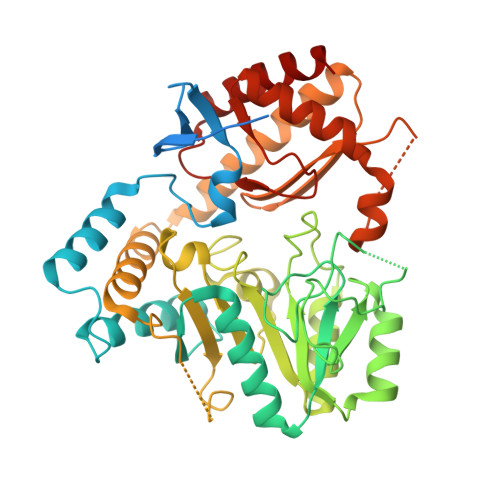
Crystal structure of PLP-Dependent 3-Aminobenzoate Synthase PctV wild-type


Experimental Data Snapshot

  • Method: X-RAY DIFFRACTION
  • Resolution: 2.27 Å
  • R-Value Free: 
    0.222 (Depositor), 0.228 (DCC) 
  • R-Value Work: 
    0.180 (Depositor), 0.187 (DCC) 
  • R-Value Observed: 
    0.182 (Depositor) 

Starting Model: experimental
View more details

wwPDB Validation 3D Report Full Report

Validation slider image for 4ZM3

Ligand Structure Quality Assessment 


This is version 1.3 of the entry. See complete history

Literature

Mechanism-Based Trapping of the Quinonoid Intermediate by Using the K276R Mutant of PLP-Dependent 3-Aminobenzoate Synthase PctV in the Biosynthesis of Pactamycin.

Hirayama, A.Miyanaga, A.Kudo, F.Eguchi, T.

(2015) Chembiochem 16: 2484-2490

  • DOI: https://doi.org/10.1002/cbic.201500426
  • Primary Citation Related Structures: 
    4ZM3, 4ZM4

  • PubMed Abstract: 

    Mutational analysis of the pyridoxal 5'-phosphate (PLP)-dependent enzyme PctV was carried out to elucidate the multi-step reaction mechanism for the formation of 3-aminobenzoate (3-ABA) from 3-dehydroshikimate (3-DSA). Introduction of mutation K276R led to the accumulation of a quinonoid intermediate with an absorption maximum at 580 nm after the reaction of pyridoxamine 5'-phosphate (PMP) with 3-DSA. The chemical structure of this intermediate was supported by X-ray crystallographic analysis of the complex formed between the K276R mutant and the quinonoid intermediate. These results clearly show that a quinonoid intermediate is involved in the formation of 3-ABA. They also indicate that Lys276 (in the active site of PctV) plays multiple roles, including acid/base catalysis during the dehydration reaction of the quinonoid intermediate.


  • Organizational Affiliation
    • Department of Chemistry and Materials Science, Tokyo Institute of Technology, 2-12-1 O-okayama, Meguro-ku, Tokyo, 152-8551, Japan.

Macromolecule Content 

  • Total Structure Weight: 200.24 kDa 
  • Atom Count: 12,181 
  • Modeled Residue Count: 1,541 
  • Deposited Residue Count: 1,856 
  • Unique protein chains: 1

Macromolecules

Find similar proteins by:|  3D Structure
Entity ID: 1
MoleculeChains  Sequence LengthOrganismDetailsImage
Aminotransferase
A, B, C, D
464Streptomyces pactumMutation(s): 0 
Gene Names: pctVptmT
UniProt
Find proteins for A8R0K5 (Streptomyces pactum)
Explore A8R0K5 
Go to UniProtKB:  A8R0K5
Entity Groups
Sequence Clusters30% Identity50% Identity70% Identity90% Identity95% Identity100% Identity
UniProt GroupA8R0K5
Sequence Annotations
Expand
Reference Sequence

Small Molecules

Ligands 3 Unique
IDChains Name / Formula / InChI Key2D Diagram3D Interactions
PLP

Query on PLP


Download:Ideal Coordinates CCD File
E [auth A],
F [auth B],
G [auth C],
I [auth D]
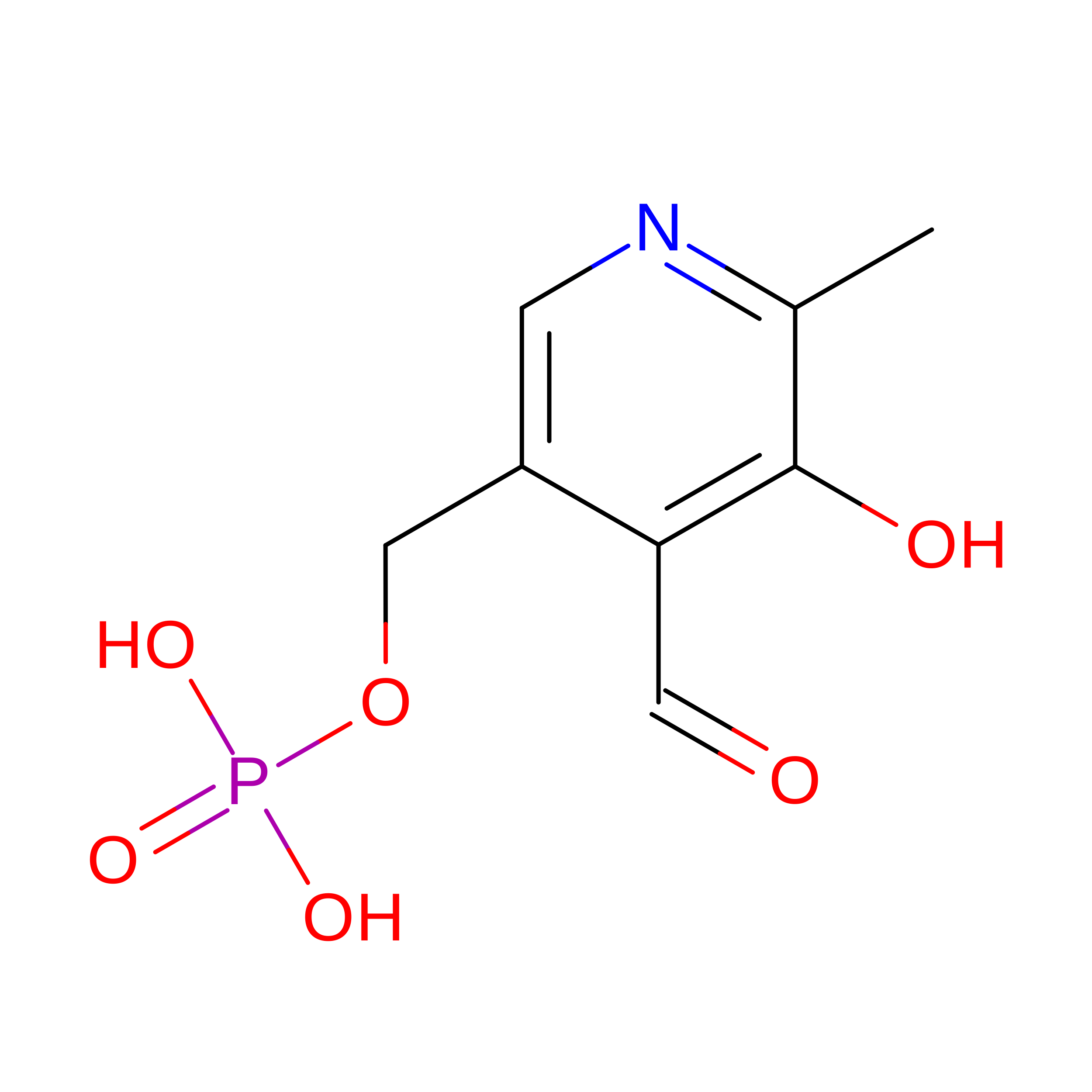
PYRIDOXAL-5'-PHOSPHATE
C8 H10 N O6 P
NGVDGCNFYWLIFO-UHFFFAOYSA-N
PGE

Query on PGE


Download:Ideal Coordinates CCD File
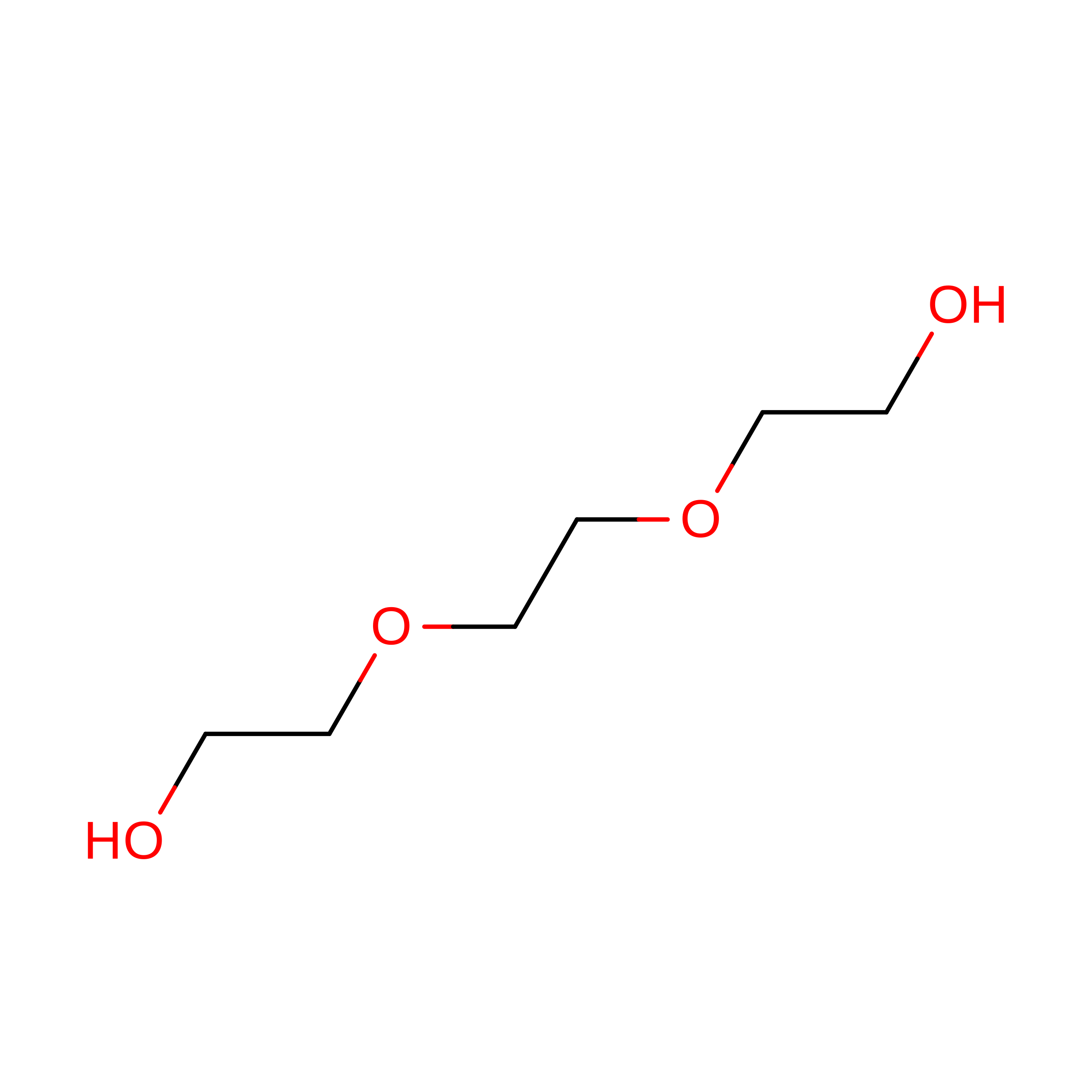
H [auth C]TRIETHYLENE GLYCOL
C6 H14 O4
ZIBGPFATKBEMQZ-UHFFFAOYSA-N
PEG

Query on PEG


Download:Ideal Coordinates CCD File
J [auth D],
K [auth D],
L [auth D]
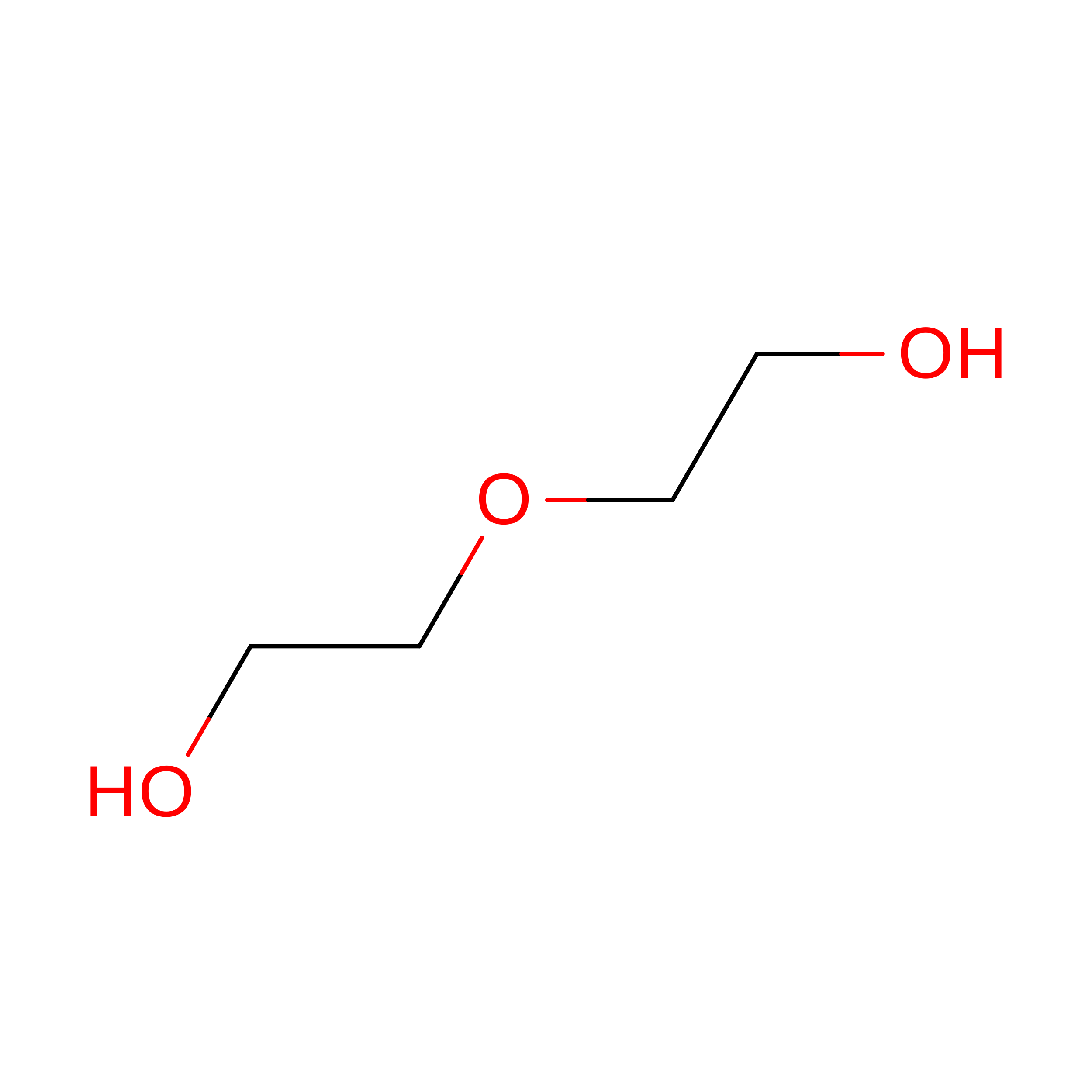
DI(HYDROXYETHYL)ETHER
C4 H10 O3
MTHSVFCYNBDYFN-UHFFFAOYSA-N

Experimental Data & Validation

Experimental Data

  • Method: X-RAY DIFFRACTION
  • Resolution: 2.27 Å
  • R-Value Free:  0.222 (Depositor), 0.228 (DCC) 
  • R-Value Work:  0.180 (Depositor), 0.187 (DCC) 
  • R-Value Observed: 0.182 (Depositor) 
Space Group: P 1 21 1
Unit Cell:
Length ( Å )Angle ( ˚ )
a = 58.99α = 90
b = 170.83β = 98.33
c = 74.57γ = 90
Software Package:
Software NamePurpose
REFMACrefinement
MOSFLMdata reduction
SCALAdata scaling
MOLREPphasing
Cootmodel building
ARPmodel building

Structure Validation

View Full Validation Report


Ligand Structure Quality Assessment 


Entry History 

& Funding Information

Deposition Data


Funding OrganizationLocationGrant Number
Ministry of Education, Culture, Sports, Science and TechnologyJapan22108003

Revision History  (Full details and data files)

  • Version 1.0: 2015-10-14
    Type: Initial release
  • Version 1.1: 2016-01-27
    Changes: Database references
  • Version 1.2: 2020-02-19
    Changes: Data collection, Derived calculations
  • Version 1.3: 2023-11-08
    Changes: Data collection, Database references, Refinement description