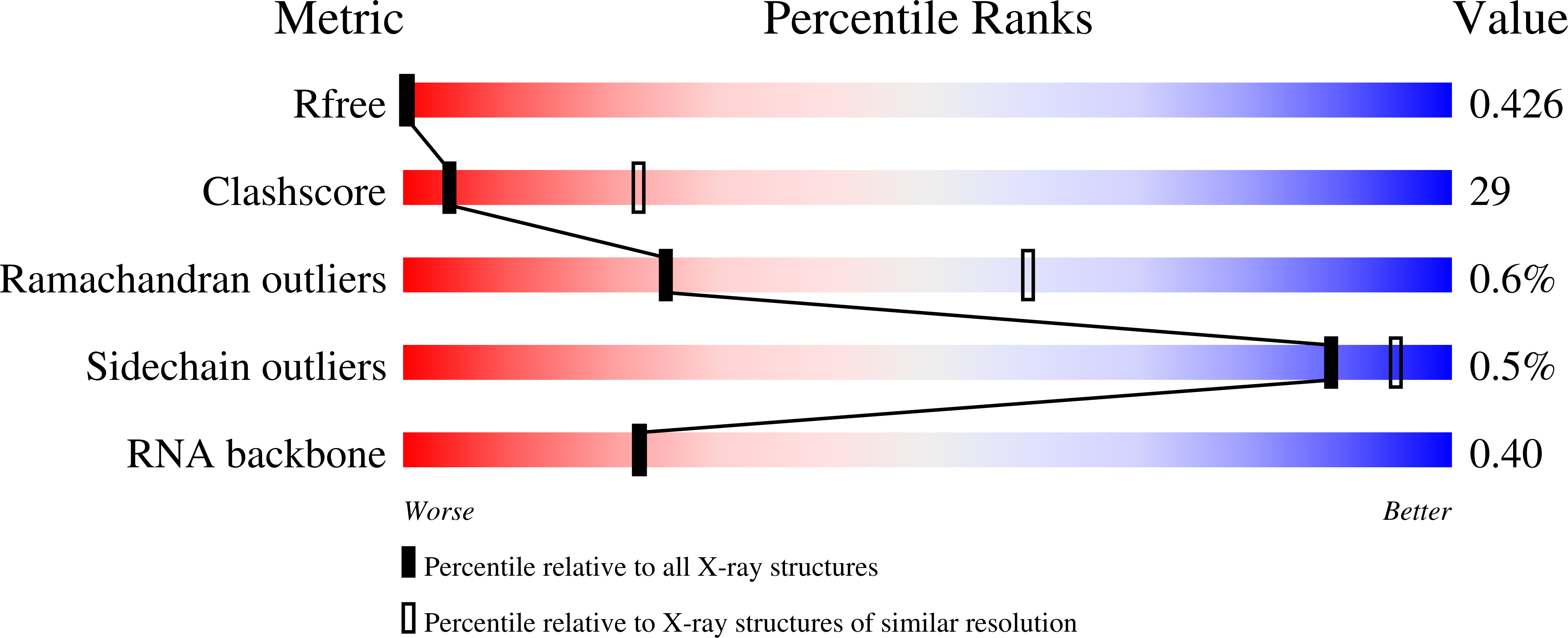
4Z92 | pdb_00004z92

crystal structure of parechovirus-1 virion


Experimental Data Snapshot

  • Method: X-RAY DIFFRACTION
  • Resolution: 3.10 Å
  • R-Value Free: 
    0.427 (DCC) 
  • R-Value Work: 
    0.290 (Depositor), 0.427 (DCC) 

Starting Model: experimental
View more details

wwPDB Validation 3D Report Full Report

Validation slider image for 4Z92

This is version 1.4 of the entry. See complete history

Literature

The Structure of Human Parechovirus 1 Reveals an Association of the RNA Genome with the Capsid.

Kalynych, S.Palkova, L.Plevka, P.

(2015) J Virol 90: 1377-1386

  • DOI: https://doi.org/10.1128/JVI.02346-15
  • Primary Citation Related Structures: 
    4Z92

  • PubMed Abstract: 

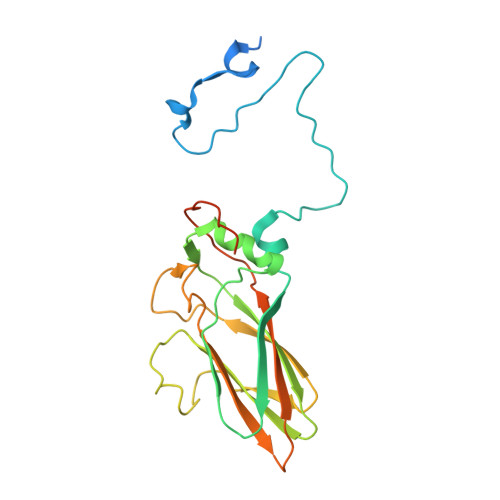
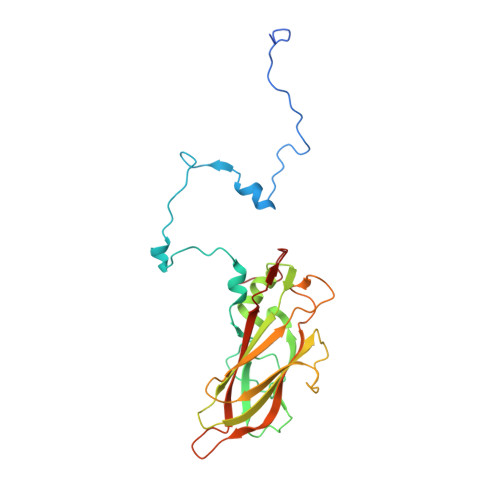
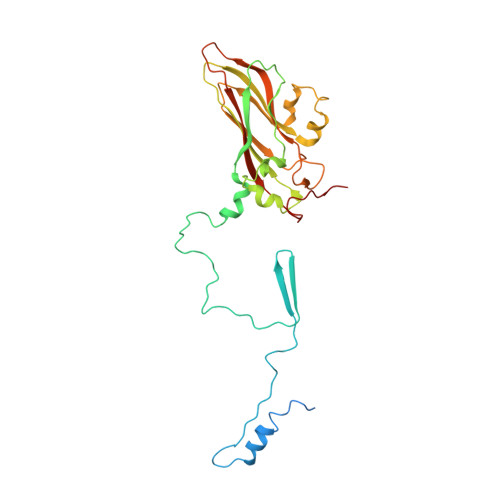
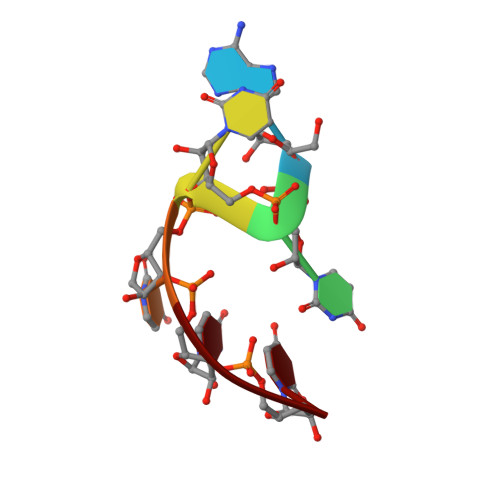
    Parechoviruses are human pathogens that cause diseases ranging from gastrointestinal disorders to encephalitis. Unlike those of most picornaviruses, parechovirus capsids are composed of only three subunits: VP0, VP1, and VP3. Here, we present the structure of a human parechovirus 1 (HPeV-1) virion determined to a resolution of 3.1 Å. We found that interactions among pentamers in the HPeV-1 capsid are mediated by the N termini of VP0s, which correspond to the capsid protein VP4 and the N-terminal part of the capsid protein VP2 of other picornaviruses. In order to facilitate delivery of the virus genome into the cytoplasm, the N termini of VP0s have to be released from contacts between pentamers and exposed at the particle surface, resulting in capsid disruption. A hydrophobic pocket, which can be targeted by capsid-binding antiviral compounds in many other picornaviruses, is not present in HPeV-1. However, we found that interactions between the HPeV-1 single-stranded RNA genome and subunits VP1 and VP3 in the virion impose a partial icosahedral ordering on the genome. The residues involved in RNA binding are conserved among all parechoviruses, suggesting a putative role of the genome in virion stability or assembly. Therefore, putative small molecules that could disrupt HPeV RNA-capsid protein interactions could be developed into antiviral inhibitors. Human parechoviruses (HPeVs) are pathogens that cause diseases ranging from respiratory and gastrointestinal disorders to encephalitis. Recently, there have been outbreaks of HPeV infections in Western Europe and North America. We present the first atomic structure of parechovirus HPeV-1 determined by X-ray crystallography. The structure explains why HPeVs cannot be targeted by antiviral compounds that are effective against other picornaviruses. Furthermore, we found that the interactions of the HPeV-1 genome with the capsid resulted in a partial icosahedral ordering of the genome. The residues involved in RNA binding are conserved among all parechoviruses, suggesting an evolutionarily fixed role of the genome in virion assembly. Therefore, putative small molecules disrupting HPeV RNA-capsid protein interactions could be developed into antiviral inhibitors.


  • Organizational Affiliation
    • Central European Institute of Technology, Masaryk University, Brno, Czech Republic.

Macromolecule Content 

  • Total Structure Weight: 88.22 kDa 
  • Atom Count: 5,404 
  • Modeled Residue Count: 694 
  • Deposited Residue Count: 782 
  • Unique protein chains: 3
  • Unique nucleic acid chains: 1

Macromolecules


Find similar proteins by:|  3D Structure
Entity ID: 1
MoleculeChains  Sequence LengthOrganismDetailsImage
capsid subunit VP1234Echovirus 22 (strain Harris)Mutation(s): 0 
UniProt
Find proteins for Q66578 (Human parechovirus 1 (strain Harris))
Explore Q66578 
Go to UniProtKB:  Q66578
Entity Groups
Sequence Clusters30% Identity50% Identity70% Identity90% Identity95% Identity100% Identity
UniProt GroupQ66578
Sequence Annotations
Expand
Reference Sequence
Find similar proteins by:|  3D Structure
Entity ID: 2
MoleculeChains  Sequence LengthOrganismDetailsImage
Capsid subunit VP3253Echovirus 22 (strain Harris)Mutation(s): 0 
UniProt
Find proteins for Q66578 (Human parechovirus 1 (strain Harris))
Explore Q66578 
Go to UniProtKB:  Q66578
Entity Groups
Sequence Clusters30% Identity50% Identity70% Identity90% Identity95% Identity100% Identity
UniProt GroupQ66578
Sequence Annotations
Expand
Reference Sequence
Find similar proteins by:|  3D Structure
Entity ID: 3
MoleculeChains  Sequence LengthOrganismDetailsImage
capsid subunit VP0289Echovirus 22 (strain Harris)Mutation(s): 0 
UniProt
Find proteins for Q66578 (Human parechovirus 1 (strain Harris))
Explore Q66578 
Go to UniProtKB:  Q66578
Entity Groups
Sequence Clusters30% Identity50% Identity70% Identity90% Identity95% Identity100% Identity
UniProt GroupQ66578
Sequence Annotations
Expand
Reference Sequence
Find similar nucleic acids by:  Sequence
Entity ID: 4
MoleculeChains LengthOrganismImage
RNA (5'-R(*AP*UP*UP*UP*UP*U)-3')6Echovirus 22 (strain Harris)
Sequence Annotations
Expand
Reference Sequence

Experimental Data & Validation

Experimental Data

  • Method: X-RAY DIFFRACTION
  • Resolution: 3.10 Å
  • R-Value Free:  0.427 (DCC) 
  • R-Value Work:  0.290 (Depositor), 0.427 (DCC) 
Space Group: P 63 2 2
Unit Cell:
Length ( Å )Angle ( ˚ )
a = 399.5α = 90
b = 399.5β = 90
c = 332.86γ = 120
Software Package:
Software NamePurpose
CNSrefinement
XDSdata reduction
SCALAdata scaling
PHASERphasing

Structure Validation

View Full Validation Report


Entry History 

Deposition Data

Revision History  (Full details and data files)

  • Version 1.0: 2015-11-18
    Type: Initial release
  • Version 1.1: 2015-12-02
    Changes: Database references
  • Version 1.2: 2016-01-27
    Changes: Database references
  • Version 1.3: 2019-02-20
    Changes: Advisory, Data collection, Derived calculations
  • Version 1.4: 2024-01-10
    Changes: Data collection, Database references, Derived calculations, Other, Refinement description