4Y5Y | pdb_00004y5y

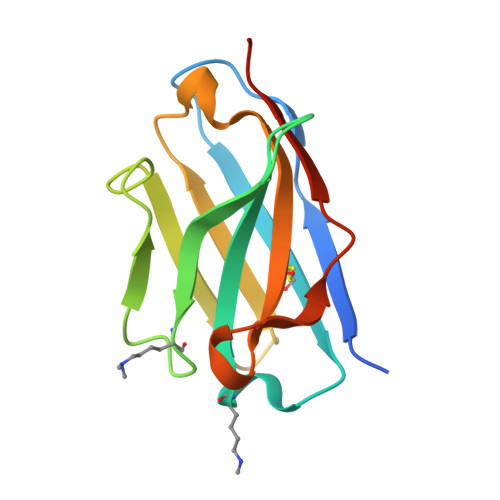
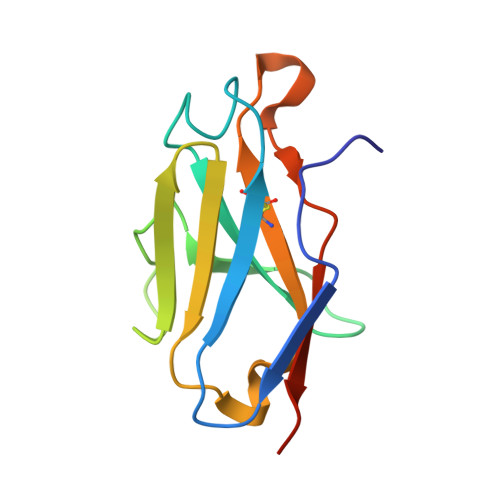
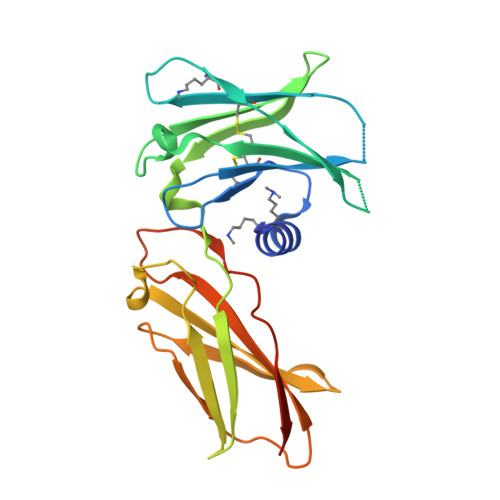
Diabody 330 complex with EpoR


Experimental Data Snapshot

  • Method: X-RAY DIFFRACTION
  • Resolution: 2.85 Å
  • R-Value Free: 
    0.241 (Depositor), 0.248 (DCC) 
  • R-Value Work: 
    0.221 (Depositor), 0.226 (DCC) 

Starting Models: experimental
View more details

wwPDB Validation 3D Report Full Report

Validation slider image for 4Y5Y

This is version 1.3 of the entry. See complete history

Literature

Tuning Cytokine Receptor Signaling by Re-orienting Dimer Geometry with Surrogate Ligands.

Moraga, I.Wernig, G.Wilmes, S.Gryshkova, V.Richter, C.P.Hong, W.J.Sinha, R.Guo, F.Fabionar, H.Wehrman, T.S.Krutzik, P.Demharter, S.Plo, I.Weissman, I.L.Minary, P.Majeti, R.Constantinescu, S.N.Piehler, J.Garcia, K.C.

(2015) Cell 160: 1196-1208

  • DOI: https://doi.org/10.1016/j.cell.2015.02.011
  • Primary Citation Related Structures: 
    4Y5V, 4Y5X, 4Y5Y

  • PubMed Abstract: 

    Most cell-surface receptors for cytokines and growth factors signal as dimers, but it is unclear whether remodeling receptor dimer topology is a viable strategy to "tune" signaling output. We utilized diabodies (DA) as surrogate ligands in a prototypical dimeric receptor-ligand system, the cytokine Erythropoietin (EPO) and its receptor (EpoR), to dimerize EpoR ectodomains in non-native architectures. Diabody-induced signaling amplitudes varied from full to minimal agonism, and structures of these DA/EpoR complexes differed in EpoR dimer orientation and proximity. Diabodies also elicited biased or differential activation of signaling pathways and gene expression profiles compared to EPO. Non-signaling diabodies inhibited proliferation of erythroid precursors from patients with a myeloproliferative neoplasm due to a constitutively active JAK2V617F mutation. Thus, intracellular oncogenic mutations causing ligand-independent receptor activation can be counteracted by extracellular ligands that re-orient receptors into inactive dimer topologies. This approach has broad applications for tuning signaling output for many dimeric receptor systems.


  • Organizational Affiliation
    • Howard Hughes Medical Institute, Stanford University School of Medicine, Stanford, CA 94305-5345, USA; Department of Molecular and Cellular Physiology, Stanford University School of Medicine, Stanford, CA 94305-5345, USA.

Macromolecule Content 

  • Total Structure Weight: 102.43 kDa 
  • Atom Count: 6,531 
  • Modeled Residue Count: 868 
  • Deposited Residue Count: 952 
  • Unique protein chains: 3

Macromolecules

Find similar proteins by:|  3D Structure
Entity ID: 1
MoleculeChains  Sequence LengthOrganismDetailsImage
diabody 330 VH domain
A, D
130Homo sapiensMutation(s): 0 
Find similar proteins by:|  3D Structure
Entity ID: 2
MoleculeChains  Sequence LengthOrganismDetailsImage
diabody 330 VL domain
B, E
117Homo sapiensMutation(s): 0 
Find similar proteins by:|  3D Structure
Entity ID: 3
MoleculeChains  Sequence LengthOrganismDetailsImage
Erythropoietin receptor
C, F
229Homo sapiensMutation(s): 4 
Gene Names: EPOR
UniProt & NIH Common Fund Data Resources
Find proteins for P19235 (Homo sapiens)
Explore P19235 
Go to UniProtKB:  P19235
PHAROS:  P19235
GTEx:  ENSG00000187266 
Entity Groups
Sequence Clusters30% Identity50% Identity70% Identity90% Identity95% Identity100% Identity
UniProt GroupP19235
Sequence Annotations
Expand
Reference Sequence

Small Molecules

Ligands 1 Unique
IDChains Name / Formula / InChI Key2D Diagram3D Interactions
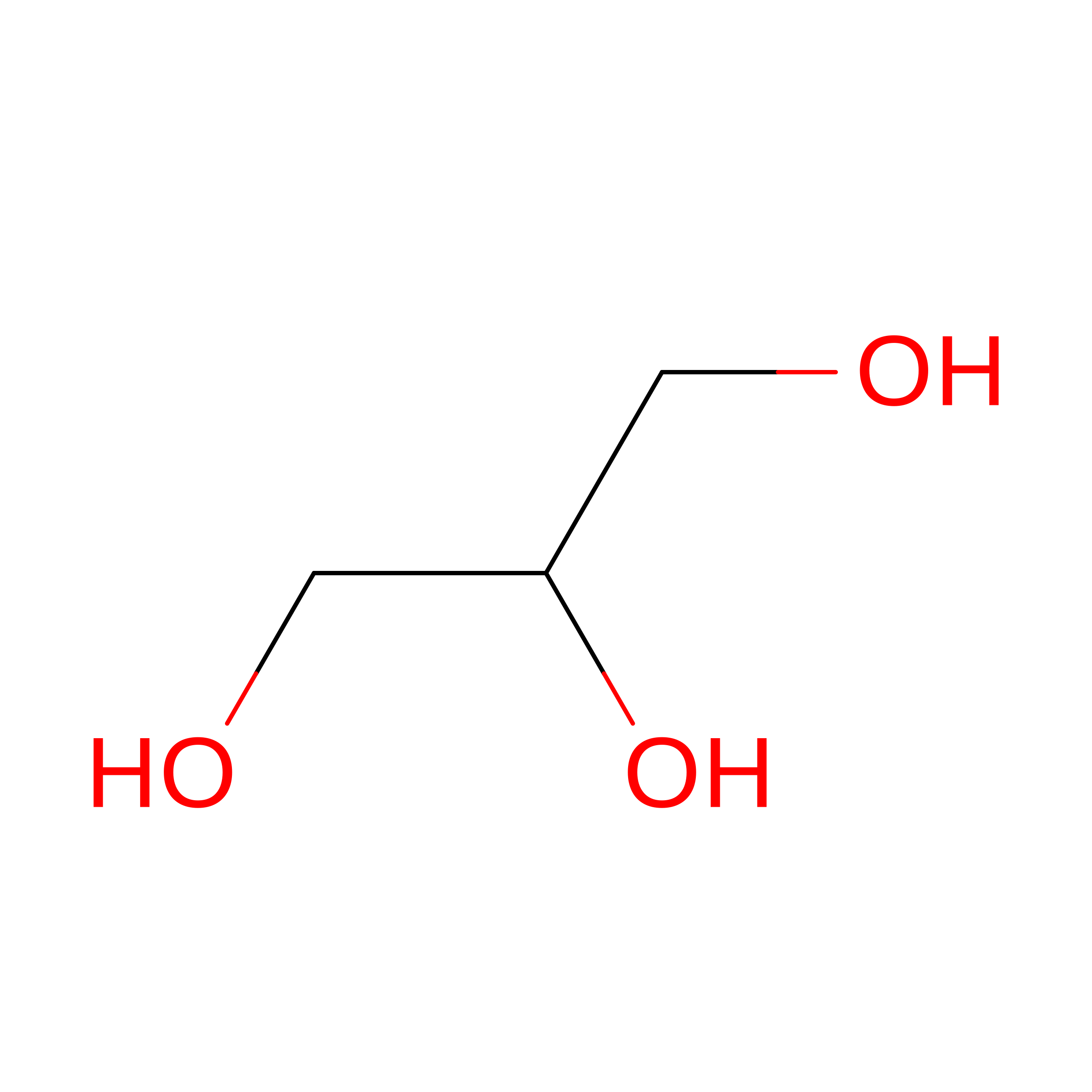
GOL

Query on GOL


Download:Ideal Coordinates CCD File
G [auth C]GLYCEROL
C3 H8 O3
PEDCQBHIVMGVHV-UHFFFAOYSA-N
Modified Residues  1 Unique
IDChains TypeFormula2D DiagramParent
MLY
Query on MLY
A, D
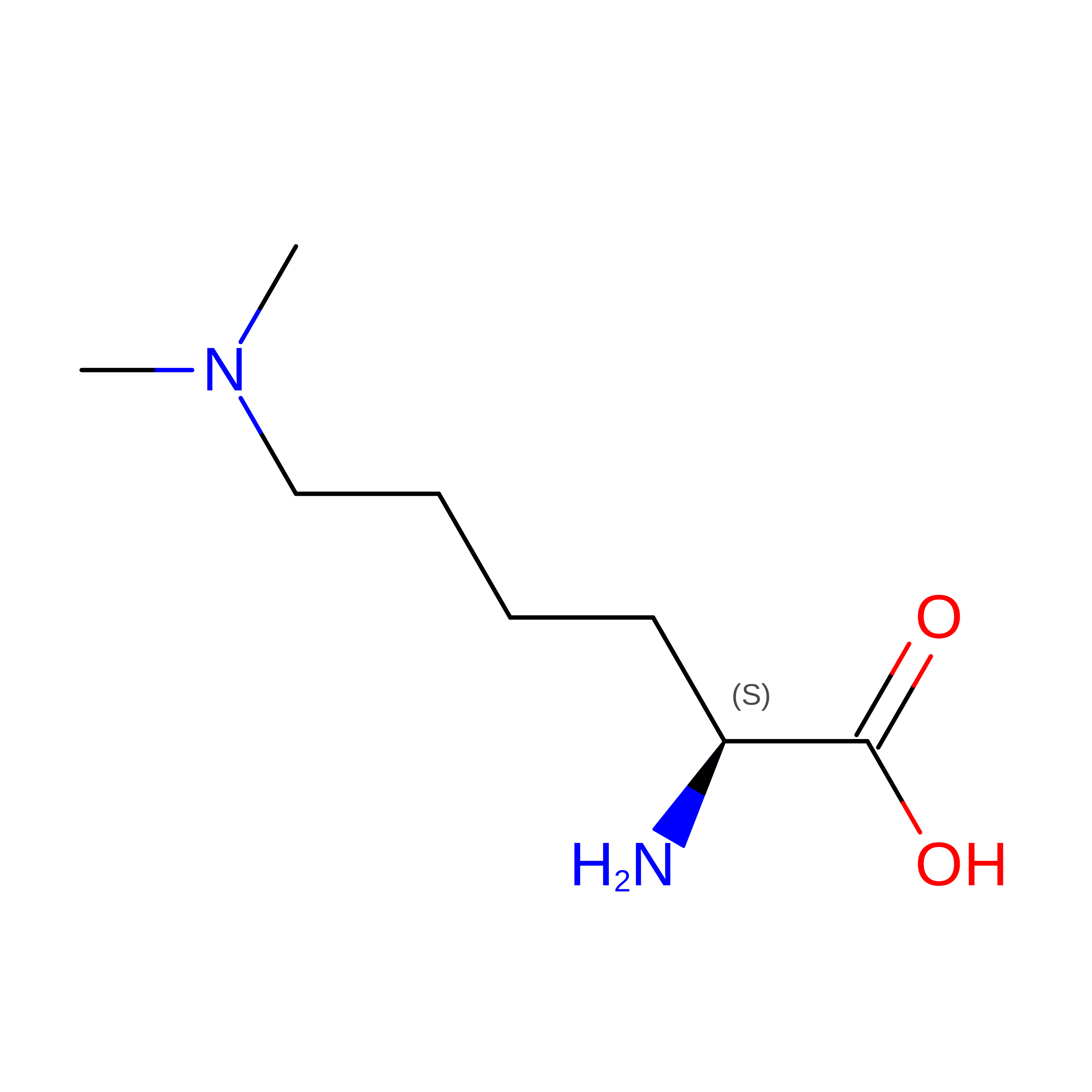
L-PEPTIDE LINKINGC8 H18 N2 O2LYS

Experimental Data & Validation

Experimental Data

  • Method: X-RAY DIFFRACTION
  • Resolution: 2.85 Å
  • R-Value Free:  0.241 (Depositor), 0.248 (DCC) 
  • R-Value Work:  0.221 (Depositor), 0.226 (DCC) 
Space Group: P 2 21 21
Unit Cell:
Length ( Å )Angle ( ˚ )
a = 78.141α = 90
b = 95.799β = 90
c = 144.972γ = 90
Software Package:
Software NamePurpose
Aimlessdata scaling
PHENIXrefinement
PDB_EXTRACTdata extraction
XDSdata scaling
PHASERphasing

Structure Validation

View Full Validation Report


Entry History 

Deposition Data

Revision History  (Full details and data files)

  • Version 1.0: 2015-03-18
    Type: Initial release
  • Version 1.1: 2015-03-25
    Changes: Database references
  • Version 1.2: 2017-11-01
    Changes: Author supporting evidence, Derived calculations, Refinement description, Source and taxonomy
  • Version 1.3: 2023-09-27
    Changes: Data collection, Database references, Refinement description