4XQK | pdb_00004xqk

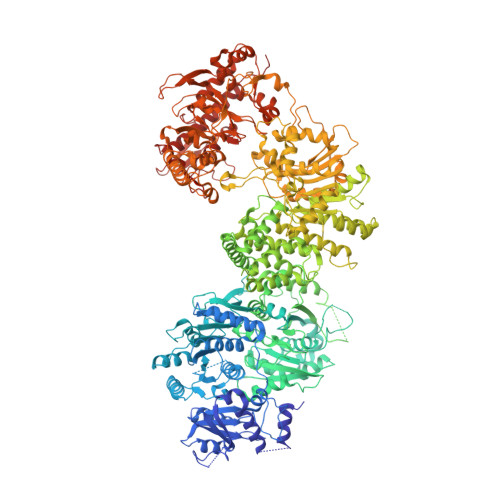
ATP-dependent Type ISP restriction-modification enzyme LlaBIII bound to DNA


Experimental Data Snapshot

  • Method: X-RAY DIFFRACTION
  • Resolution: 2.70 Å
  • R-Value Free: 
    0.260 (Depositor), 0.269 (DCC) 
  • R-Value Work: 
    0.218 (Depositor), 0.228 (DCC) 
  • R-Value Observed: 
    0.221 (Depositor) 

wwPDB Validation 3D Report Full Report

Validation slider image for 4XQK

This is version 1.4 of the entry. See complete history

Literature

Translocation-coupled DNA cleavage by the Type ISP restriction-modification enzymes

Chand, M.K.Nirwan, N.Diffin, F.M.Aelst, K.V.Kulkarni, M.Pernstich, C.Szczelkun, M.D.Saikrishnan, K.

(2015) Nat Chem Biol 11: 870-877

  • DOI: https://doi.org/10.1038/nchembio.1926
  • Primary Citation Related Structures: 
    4XQK

  • PubMed Abstract: 

    Production of endonucleolytic double-strand DNA breaks requires separate strand cleavage events. Although catalytic mechanisms for simple, dimeric endonucleases are known, there are many complex nuclease machines that are poorly understood. Here we studied the single polypeptide Type ISP restriction-modification (RM) enzymes, which cleave random DNA between distant target sites when two enzymes collide after convergent ATP-driven translocation. We report the 2.7-Å resolution X-ray crystal structure of a Type ISP enzyme-DNA complex, revealing that both the helicase-like ATPase and nuclease are located upstream of the direction of translocation, an observation inconsistent with simple nuclease-domain dimerization. Using single-molecule and biochemical techniques, we demonstrate that each ATPase remodels its DNA-protein complex and translocates along DNA without looping it, leading to a collision complex in which the nuclease domains are distal. Sequencing of the products of single cleavage events suggests a previously undescribed endonuclease model, where multiple, stochastic strand-nicking events combine to produce DNA scission.


  • Organizational Affiliation
    • Division of Biology, Indian Institute of Science Education and Research, Pune, India.

Macromolecule Content 

  • Total Structure Weight: 394.9 kDa 
  • Atom Count: 25,746 
  • Modeled Residue Count: 3,113 
  • Deposited Residue Count: 3,268 
  • Unique protein chains: 1
  • Unique nucleic acid chains: 2

Macromolecules


Find similar proteins by:|  3D Structure
Entity ID: 1
MoleculeChains  Sequence LengthOrganismDetailsImage
LlaBIII
A, B
1,578Lactococcus cremorisMutation(s): 0 
UniProt
Find proteins for A0A0M3KL05 (Lactococcus lactis subsp. cremoris)
Explore A0A0M3KL05 
Go to UniProtKB:  A0A0M3KL05
Entity Groups
Sequence Clusters30% Identity50% Identity70% Identity90% Identity95% Identity100% Identity
UniProt GroupA0A0M3KL05
Sequence Annotations
Expand
Reference Sequence
Find similar nucleic acids by:  (by identity cutoff) 
Entity ID: 2
MoleculeChains LengthOrganismImage
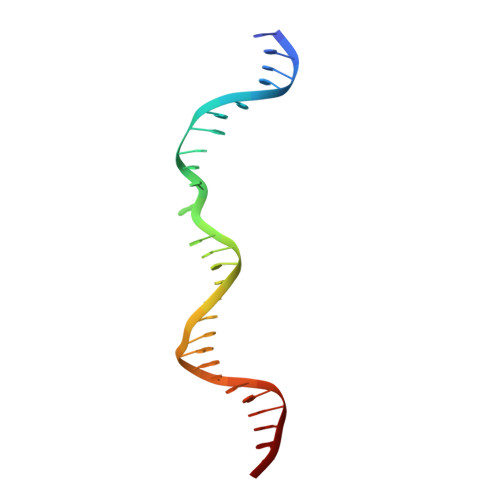
DNA (28-MER)
C, E
28synthetic construct
Sequence Annotations
Expand
Reference Sequence
Find similar nucleic acids by:  (by identity cutoff) 
Entity ID: 3
MoleculeChains LengthOrganismImage
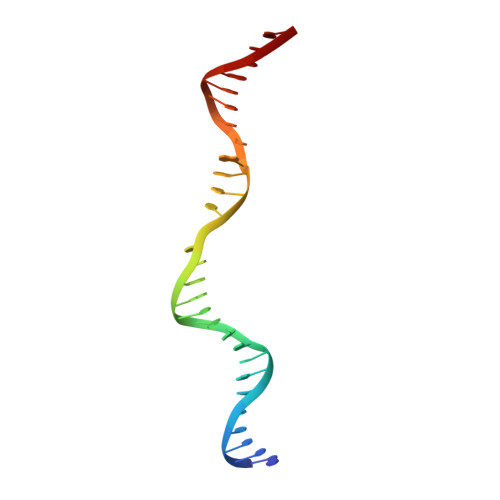
DNA (28-MER)
D, F
28synthetic construct
Sequence Annotations
Expand
Reference Sequence

Experimental Data & Validation

Experimental Data

  • Method: X-RAY DIFFRACTION
  • Resolution: 2.70 Å
  • R-Value Free:  0.260 (Depositor), 0.269 (DCC) 
  • R-Value Work:  0.218 (Depositor), 0.228 (DCC) 
  • R-Value Observed: 0.221 (Depositor) 
Space Group: P 1
Unit Cell:
Length ( Å )Angle ( ˚ )
a = 62.88α = 103.3
b = 112.66β = 90.88
c = 146.21γ = 105.79
Software Package:
Software NamePurpose
PHENIXrefinement
XDSdata reduction
XSCALEdata scaling
PHASERphasing

Structure Validation

View Full Validation Report


Entry History 

& Funding Information

Deposition Data


Funding OrganizationLocationGrant Number
Wellcome Trust-DBT India AllianceIndia500048-Z-09-Z

Revision History  (Full details and data files)

  • Version 1.0: 2015-09-16
    Type: Initial release
  • Version 1.1: 2015-09-23
    Changes: Data collection
  • Version 1.2: 2015-11-04
    Changes: Database references
  • Version 1.3: 2020-02-05
    Changes: Data collection, Derived calculations, Source and taxonomy
  • Version 1.4: 2024-03-20
    Changes: Data collection, Database references, Derived calculations