4WKM | pdb_00004wkm

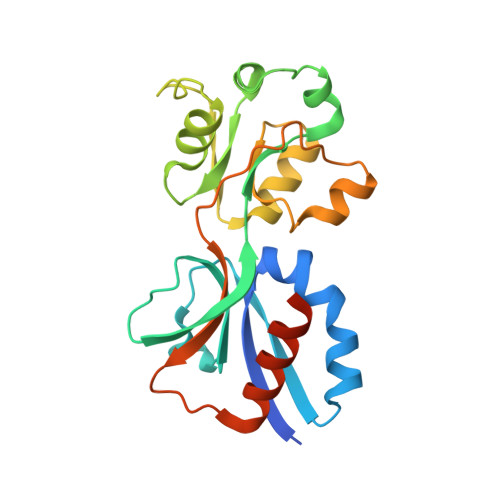
AmpR effector binding domain from Citrobacter freundii bound to UDP-MurNAc-pentapeptide


Experimental Data Snapshot

  • Method: X-RAY DIFFRACTION
  • Resolution: 2.15 Å
  • R-Value Free: 
    0.254 (Depositor), 0.255 (DCC) 
  • R-Value Work: 
    0.201 (Depositor), 0.208 (DCC) 
  • R-Value Observed: 
    0.202 (Depositor) 

Starting Model: experimental
View more details

wwPDB Validation 3D Report Full Report

Validation slider image for 4WKM

Ligand Structure Quality Assessment 


This is version 3.0 of the entry. See complete history

Literature

The beta-Lactamase Gene Regulator AmpR Is a Tetramer That Recognizes and Binds the d-Ala-d-Ala Motif of Its Repressor UDP-N-acetylmuramic Acid (MurNAc)-pentapeptide.

Vadlamani, G.Thomas, M.D.Patel, T.R.Donald, L.J.Reeve, T.M.Stetefeld, J.Standing, K.G.Vocadlo, D.J.Mark, B.L.

(2015) J Biological Chem 290: 2630-2643

  • DOI: https://doi.org/10.1074/jbc.M114.618199
  • Primary Citation Related Structures: 
    4WKM

  • PubMed Abstract: 

    Inducible expression of chromosomal AmpC β-lactamase is a major cause of β-lactam antibiotic resistance in the Gram-negative bacteria Pseudomonas aeruginosa and Enterobacteriaceae. AmpC expression is induced by the LysR-type transcriptional regulator (LTTR) AmpR, which activates ampC expression in response to changes in peptidoglycan (PG) metabolite levels that occur during exposure to β-lactams. Under normal conditions, AmpR represses ampC transcription by binding the PG precursor UDP-N-acetylmuramic acid (MurNAc)-pentapeptide. When exposed to β-lactams, however, PG catabolites (1,6-anhydroMurNAc-peptides) accumulate in the cytosol, which have been proposed to competitively displace UDP-MurNAc-pentapeptide from AmpR and convert it into an activator of ampC transcription. Here we describe the molecular interactions between AmpR (from Citrobacter freundii), its DNA operator, and repressor UDP-MurNAc-pentapeptide. Non-denaturing mass spectrometry revealed AmpR to be a homotetramer that is stabilized by DNA containing the T-N11-A LTTR binding motif and revealed that it can bind four repressor molecules in an apparently stepwise manner. A crystal structure of the AmpR effector-binding domain bound to UDP-MurNAc-pentapeptide revealed that the terminal D-Ala-D-Ala motif of the repressor forms the primary contacts with the protein. This observation suggests that 1,6-anhydroMurNAc-pentapeptide may convert AmpR into an activator of ampC transcription more effectively than 1,6-anhydroMurNAc-tripeptide (which lacks the D-Ala-D-Ala motif). Finally, small angle x-ray scattering demonstrates that the AmpR·DNA complex adopts a flat conformation similar to the LTTR protein AphB and undergoes only a slight conformational change when binding UDP-MurNAc-pentapeptide. Modeling the AmpR·DNA tetramer bound to UDP-MurNAc-pentapeptide predicts that the UDP-MurNAc moiety of the repressor participates in modulating AmpR function.


  • Organizational Affiliation
    • From the Departments of Microbiology.

Macromolecule Content 

  • Total Structure Weight: 204.71 kDa 
  • Atom Count: 13,708 
  • Modeled Residue Count: 1,609 
  • Deposited Residue Count: 1,792 
  • Unique protein chains: 2

Macromolecules

Find similar proteins by:|  3D Structure
Entity ID: 1
MoleculeChains  Sequence LengthOrganismDetailsImage
LysR family transcriptional regulator
A, B, C, D, E
A, B, C, D, E, F, G, H
219Citrobacter freundii ATCC 8090 = MTCC 1658 = NBRC 12681Mutation(s): 0 
Gene Names: D186_13659
Find similar proteins by:  Sequence   |   3D Structure  
Entity ID: 2
MoleculeChains  Sequence LengthOrganismDetailsImage
ALA-FGA-API-DAL-DAL
I, J, K, L, M
I, J, K, L, M, N, O, P
5N/AMutation(s): 0 

Small Molecules

Ligands 2 Unique
IDChains Name / Formula / InChI Key2D Diagram3D Interactions
MUB

Query on MUB


Download:Ideal Coordinates CCD File
AA [auth L]
BA [auth M]
CA [auth N]
DA [auth O]
EA [auth P]
AA [auth L],
BA [auth M],
CA [auth N],
DA [auth O],
EA [auth P],
X [auth I],
Y [auth J],
Z [auth K]
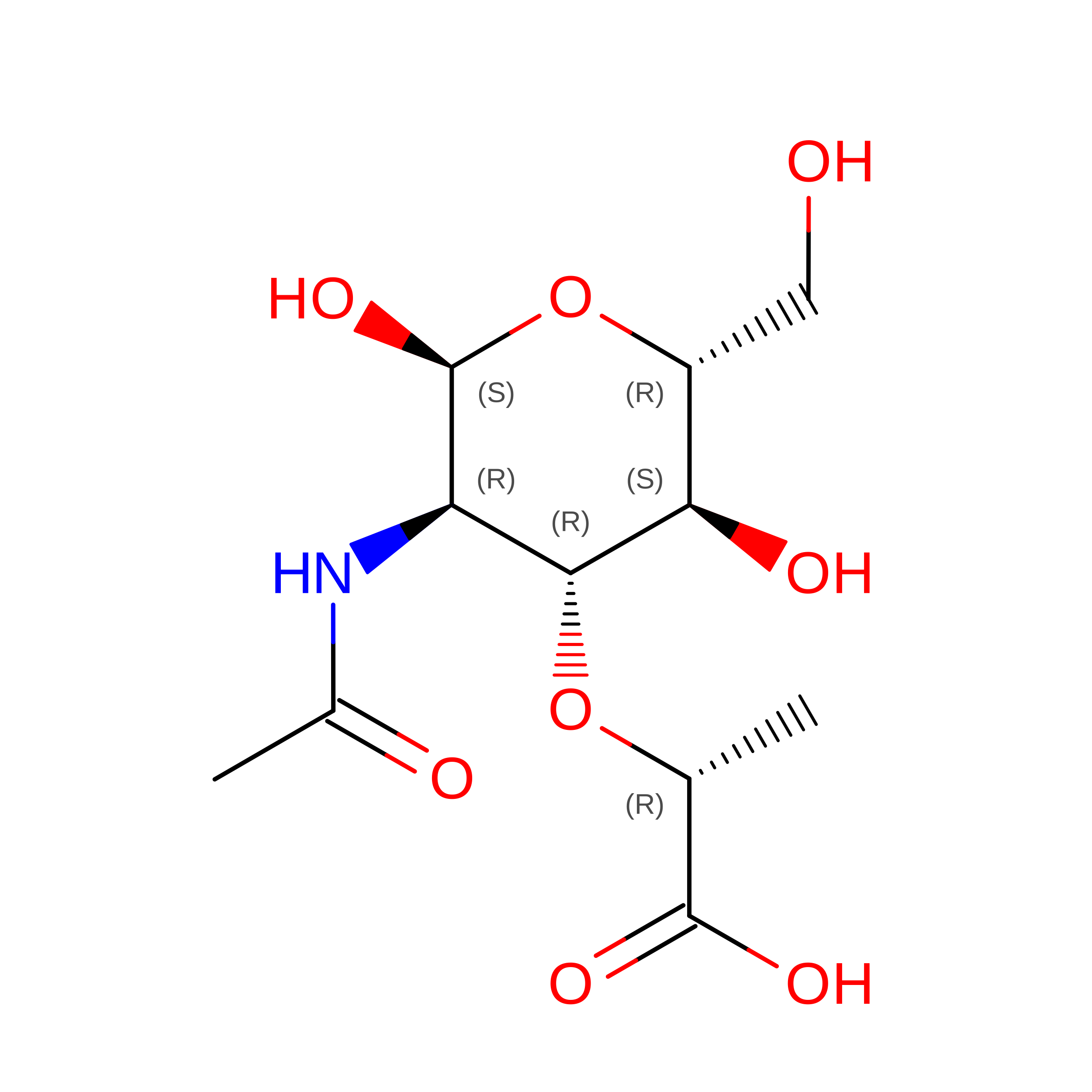
N-acetyl-alpha-muramic acid
C11 H19 N O8
MNLRQHMNZILYPY-MDMHTWEWSA-N
GOL

Query on GOL


Download:Ideal Coordinates CCD File
Q [auth A]
R [auth C]
S [auth D]
T [auth E]
U [auth F]
Q [auth A],
R [auth C],
S [auth D],
T [auth E],
U [auth F],
V [auth G],
W [auth H]
GLYCEROL
C3 H8 O3
PEDCQBHIVMGVHV-UHFFFAOYSA-N
Modified Residues  1 Unique
IDChains TypeFormula2D DiagramParent
API
Query on API
I, J, K, L, M
I, J, K, L, M, N, O, P
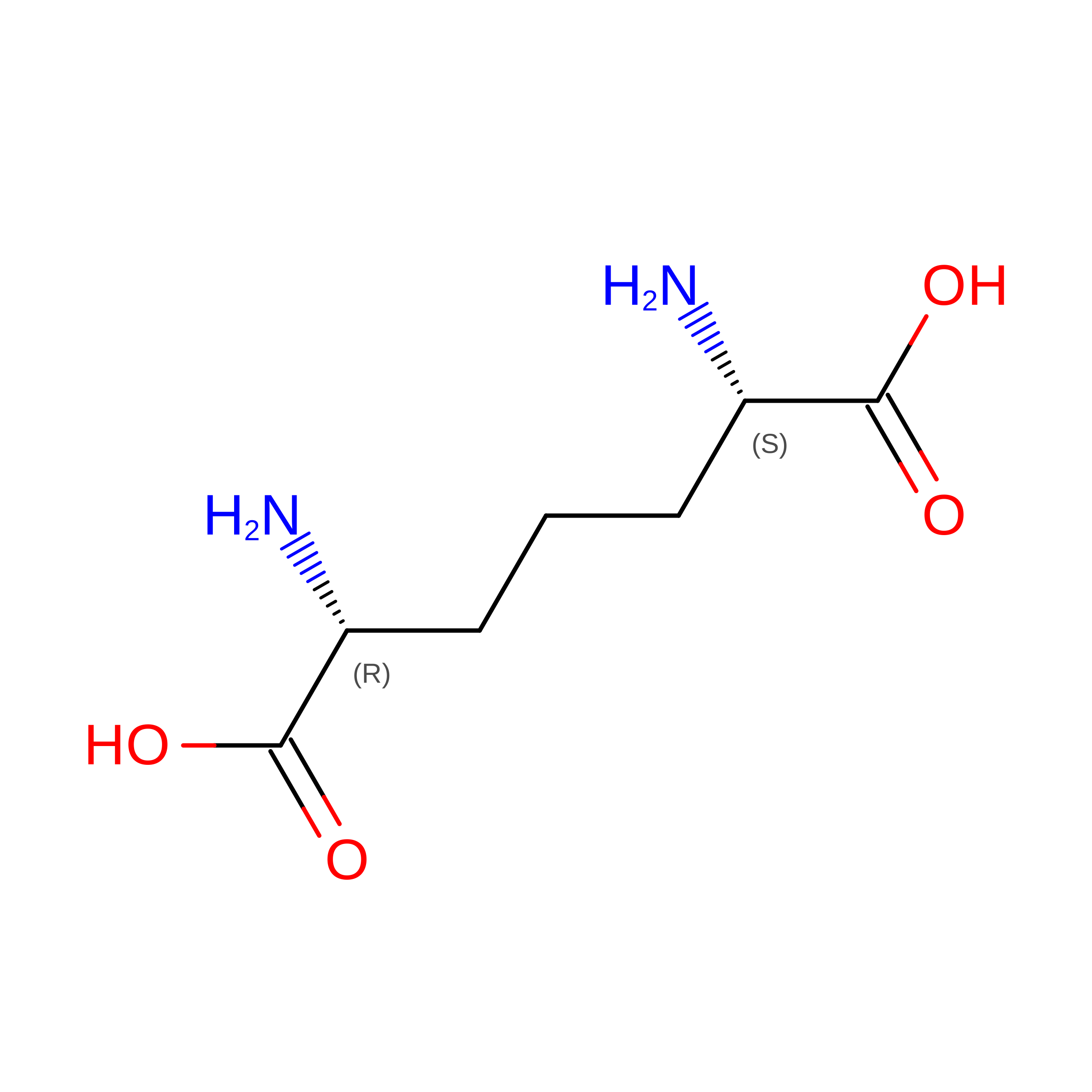
L-PEPTIDE LINKINGC7 H14 N2 O4LYS
DAL
Query on DAL
I, J, K, L, M
I, J, K, L, M, N, O, P
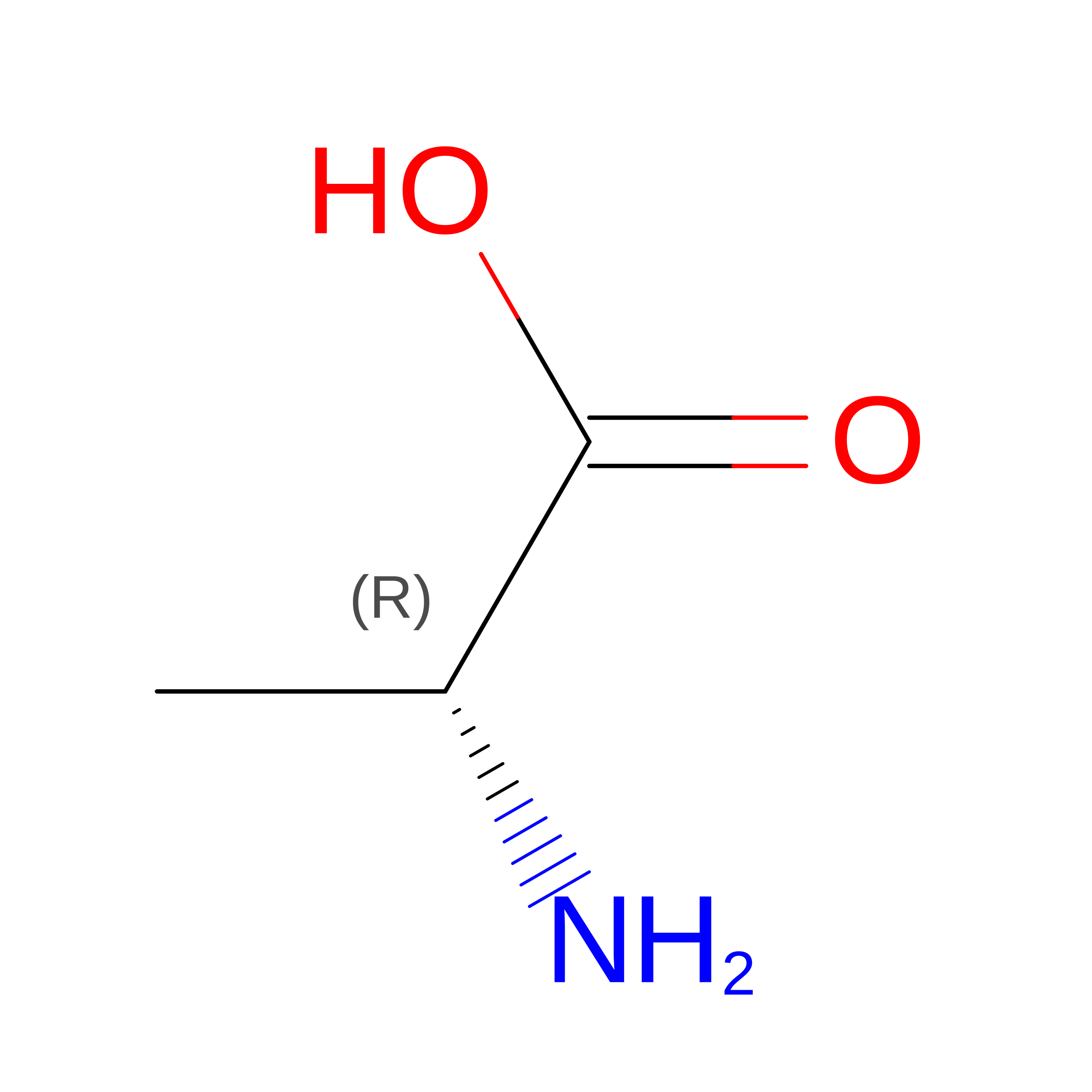
D-PEPTIDE LINKINGC3 H7 N O2

--

Experimental Data & Validation

Experimental Data

  • Method: X-RAY DIFFRACTION
  • Resolution: 2.15 Å
  • R-Value Free:  0.254 (Depositor), 0.255 (DCC) 
  • R-Value Work:  0.201 (Depositor), 0.208 (DCC) 
  • R-Value Observed: 0.202 (Depositor) 
Space Group: P 21 21 2
Unit Cell:
Length ( Å )Angle ( ˚ )
a = 62.7α = 90
b = 183.6β = 90
c = 197.81γ = 90
Software Package:
Software NamePurpose
PHENIXrefinement

Structure Validation

View Full Validation Report


Ligand Structure Quality Assessment 


Entry History 

& Funding Information

Deposition Data


Funding OrganizationLocationGrant Number
Canadian Institutes of Health Research (CIHR)Canada--
Cystic Fibrosis CanadaCanada--

Revision History  (Full details and data files)

  • Version 1.0: 2014-12-17
    Type: Initial release
  • Version 1.1: 2015-02-11
    Changes: Structure summary
  • Version 1.2: 2020-01-08
    Changes: Author supporting evidence, Data collection, Database references, Derived calculations, Source and taxonomy
  • Version 2.0: 2020-07-29
    Type: Remediation
    Reason: Carbohydrate remediation
    Changes: Atomic model, Data collection, Derived calculations, Structure summary
  • Version 2.1: 2023-09-27
    Changes: Data collection, Database references, Derived calculations, Refinement description, Structure summary
  • Version 3.0: 2023-11-15
    Changes: Atomic model, Data collection, Derived calculations