4TYY | pdb_00004tyy

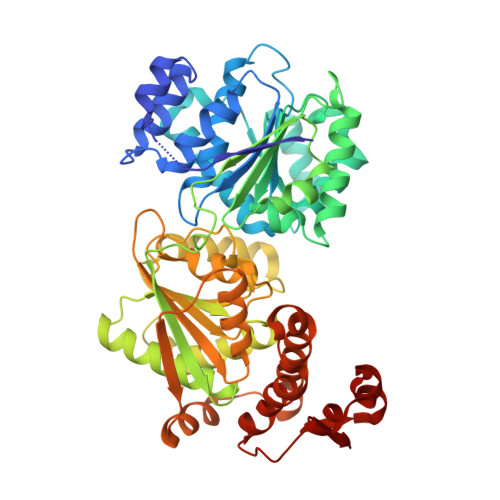
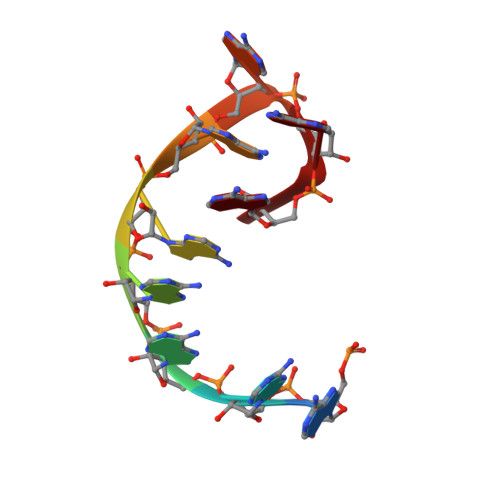
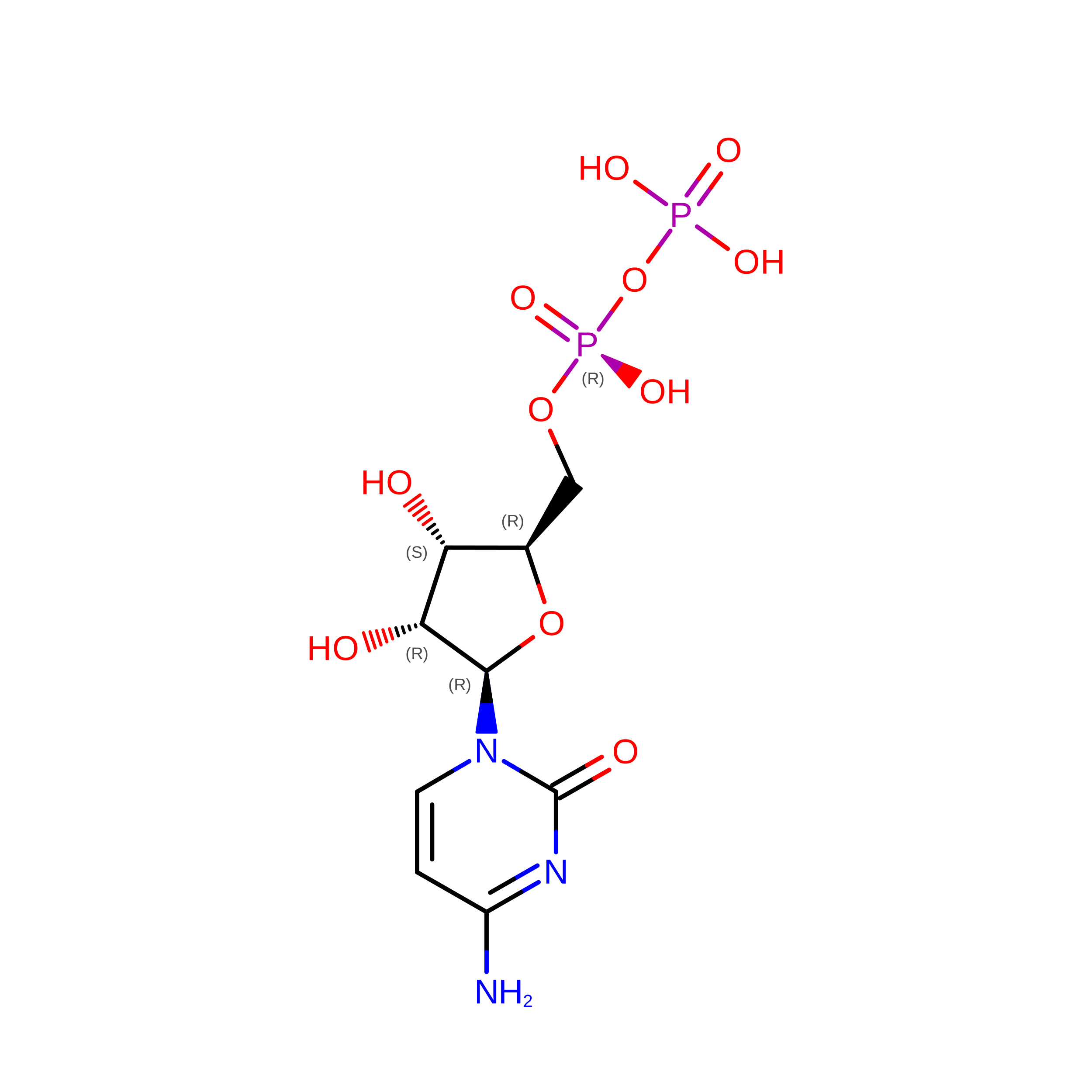
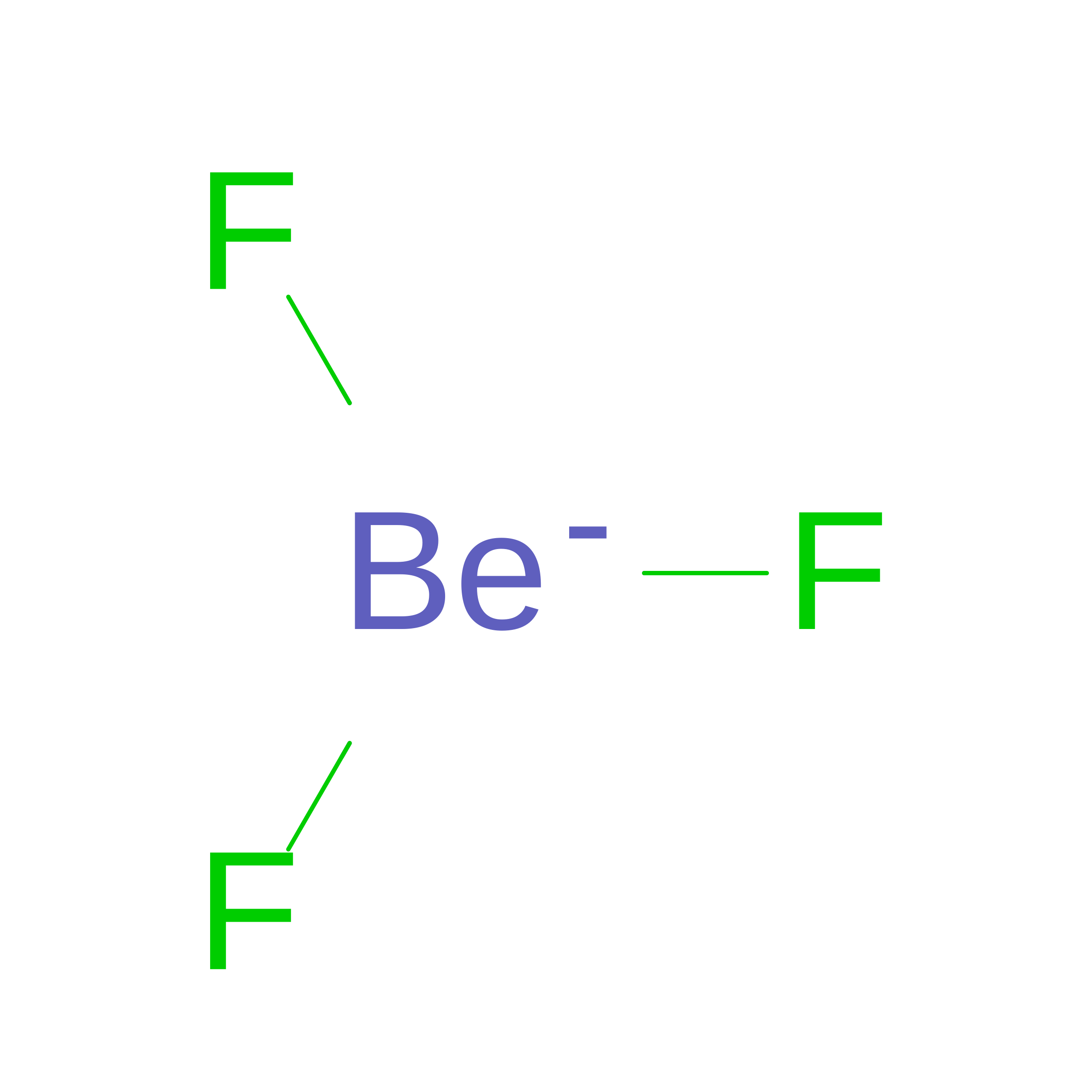
DEAD-box helicase Mss116 bound to ssRNA and CDP-BeF


Experimental Data Snapshot

  • Method: X-RAY DIFFRACTION
  • Resolution: 2.74 Å
  • R-Value Free: 
    0.267 (Depositor), 0.281 (DCC) 
  • R-Value Work: 
    0.223 (Depositor), 0.238 (DCC) 
  • R-Value Observed: 
    0.226 (Depositor) 

Starting Model: experimental
View more details

wwPDB Validation 3D Report Full Report

Validation slider image for 4TYY

Ligand Structure Quality Assessment 


This is version 1.3 of the entry. See complete history

Literature

Molecular insights into RNA and DNA helicase evolution from the determinants of specificity for a DEAD-box RNA helicase.

Mallam, A.L.Sidote, D.J.Lambowitz, A.M.

(2014) Elife 3: e04630-e04630

  • DOI: https://doi.org/10.7554/eLife.04630
  • Primary Citation Related Structures: 
    4TYN, 4TYW, 4TYY, 4TZ0, 4TZ6

  • PubMed Abstract: 

    How different helicase families with a conserved catalytic 'helicase core' evolved to function on varied RNA and DNA substrates by diverse mechanisms remains unclear. In this study, we used Mss116, a yeast DEAD-box protein that utilizes ATP to locally unwind dsRNA, to investigate helicase specificity and mechanism. Our results define the molecular basis for the substrate specificity of a DEAD-box protein. Additionally, they show that Mss116 has ambiguous substrate-binding properties and interacts with all four NTPs and both RNA and DNA. The efficiency of unwinding correlates with the stability of the 'closed-state' helicase core, a complex with nucleotide and nucleic acid that forms as duplexes are unwound. Crystal structures reveal that core stability is modulated by family-specific interactions that favor certain substrates. This suggests how present-day helicases diversified from an ancestral core with broad specificity by retaining core closure as a common catalytic mechanism while optimizing substrate-binding interactions for different cellular functions.


  • Organizational Affiliation
    • Institute for Cellular and Molecular Biology, University of Texas at Austin, Austin, United States.

Macromolecule Content 

  • Total Structure Weight: 61.26 kDa 
  • Atom Count: 4,078 
  • Modeled Residue Count: 514 
  • Deposited Residue Count: 518 
  • Unique protein chains: 1
  • Unique nucleic acid chains: 1

Macromolecules


Find similar proteins by:|  3D Structure
Entity ID: 2
MoleculeChains  Sequence LengthOrganismDetailsImage
ATP-dependent RNA helicase MSS116, mitochondrialB [auth A]509Saccharomyces cerevisiae S288CMutation(s): 0 
Gene Names: MSS116YDR194CYD9346.05C
EC: 3.6.4.13
UniProt
Find proteins for P15424 (Saccharomyces cerevisiae (strain ATCC 204508 / S288c))
Explore P15424 
Go to UniProtKB:  P15424
Entity Groups
Sequence Clusters30% Identity50% Identity70% Identity90% Identity95% Identity100% Identity
UniProt GroupP15424
Sequence Annotations
Expand
Reference Sequence
Find similar nucleic acids by:  Sequence
Entity ID: 1
MoleculeChains LengthOrganismImage
RNA (5'-R(P*AP*AP*AP*AP*AP*AP*AP*AP*A)-3')A [auth B]9Saccharomyces cerevisiae
Sequence Annotations
Expand
Reference Sequence

Experimental Data & Validation

Experimental Data

  • Method: X-RAY DIFFRACTION
  • Resolution: 2.74 Å
  • R-Value Free:  0.267 (Depositor), 0.281 (DCC) 
  • R-Value Work:  0.223 (Depositor), 0.238 (DCC) 
  • R-Value Observed: 0.226 (Depositor) 
Space Group: P 21 21 2
Unit Cell:
Length ( Å )Angle ( ˚ )
a = 89.635α = 90
b = 126.842β = 90
c = 55.303γ = 90
Software Package:
Software NamePurpose
PHENIXrefinement

Structure Validation

View Full Validation Report


Ligand Structure Quality Assessment 


Entry History 

Deposition Data

Revision History  (Full details and data files)

  • Version 1.0: 2014-12-31
    Type: Initial release
  • Version 1.1: 2015-01-21
    Changes: Database references
  • Version 1.2: 2015-03-04
    Changes: Database references
  • Version 1.3: 2023-09-27
    Changes: Data collection, Database references, Derived calculations, Refinement description, Source and taxonomy