4TPU | pdb_00004tpu

CRYSTAL STRUCTURE OF FERREDOXIN-DEPENDENT DISULFIDE REDUCTASE FROM METHANOSARCINA ACETIVORANS


Experimental Data Snapshot

  • Method: X-RAY DIFFRACTION
  • Resolution: 2.35 Å
  • R-Value Free: 
    0.269 (Depositor), 0.250 (DCC) 
  • R-Value Work: 
    0.202 (Depositor), 0.195 (DCC) 
  • R-Value Observed: 
    0.208 (Depositor) 

wwPDB Validation 3D Report Full Report

Validation slider image for 4TPU

This is version 1.3 of the entry. See complete history

Literature

Structural and Biochemical Characterization of a Ferredoxin:Thioredoxin Reductase-like Enzyme from Methanosarcina acetivorans.

Kumar, A.K.Kumar, R.S.Yennawar, N.H.Yennawar, H.P.Ferry, J.G.

(2015) Biochemistry 54: 3122-3128

  • DOI: https://doi.org/10.1021/acs.biochem.5b00137
  • Primary Citation Related Structures: 
    4TPU

  • PubMed Abstract: 

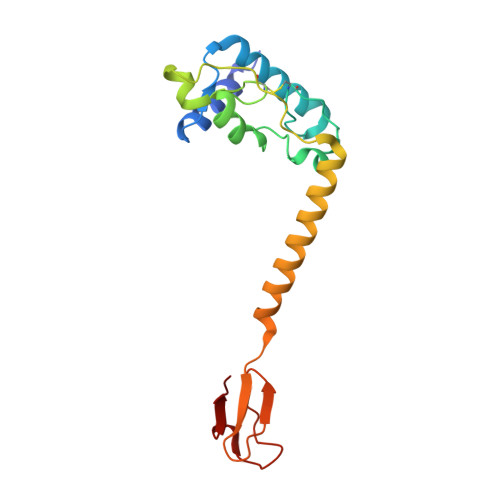
    Bioinformatics analyses predict the distribution in nature of several classes of diverse disulfide reductases that evolved from an ancestral plant-type ferredoxin:thioredoxin reductase (FTR) catalytic subunit to meet a variety of ecological needs. Methanosarcina acetivorans is a methane-producing species from the domain Archaea predicted to encode an FTR-like enzyme with two domains, one resembling the FTR catalytic subunit and the other containing a rubredoxin-like domain replacing the variable subunit of present-day FTR enzymes. M. acetivorans is of special interest as it was recently proposed to have evolved at the time of the end-Permian extinction and to be largely responsible for the most severe biotic crisis in the fossil record by converting acetate to methane. The crystal structure and biochemical characteristics were determined for the FTR-like enzyme from M. acetivorans, here named FDR (ferredoxin disulfide reductase). The results support a role for the rubredoxin-like center of FDR in transfer of electrons from ferredoxin to the active-site [Fe₄S₄] cluster adjacent to a pair of redox-active cysteines participating in reduction of disulfide substrates. A mechanism is proposed for disulfide reduction similar to one of two mechanisms previously proposed for the plant-type FTR. Overall, the results advance the biochemical and evolutionary understanding of the FTR-like family of enzymes and the conversion of acetate to methane that is an essential link in the global carbon cycle and presently accounts for most of this greenhouse gas that is biologically generated.

Macromolecule Content 

  • Total Structure Weight: 21.64 kDa 
  • Atom Count: 1,438 
  • Modeled Residue Count: 169 
  • Deposited Residue Count: 173 
  • Unique protein chains: 1

Macromolecules

Find similar proteins by:|  3D Structure
Entity ID: 1
MoleculeChains  Sequence LengthOrganismDetailsImage
Rubredoxin173Methanosarcina acetivorans C2AMutation(s): 0 
Gene Names: MA_1659
EC: 1.8.7.2
UniProt
Find proteins for Q8TQ92 (Methanosarcina acetivorans (strain ATCC 35395 / DSM 2834 / JCM 12185 / C2A))
Explore Q8TQ92 
Go to UniProtKB:  Q8TQ92
Entity Groups
Sequence Clusters30% Identity50% Identity70% Identity90% Identity95% Identity100% Identity
UniProt GroupQ8TQ92
Sequence Annotations
Expand
Reference Sequence

Small Molecules

Ligands 6 Unique
IDChains Name / Formula / InChI Key2D Diagram3D Interactions
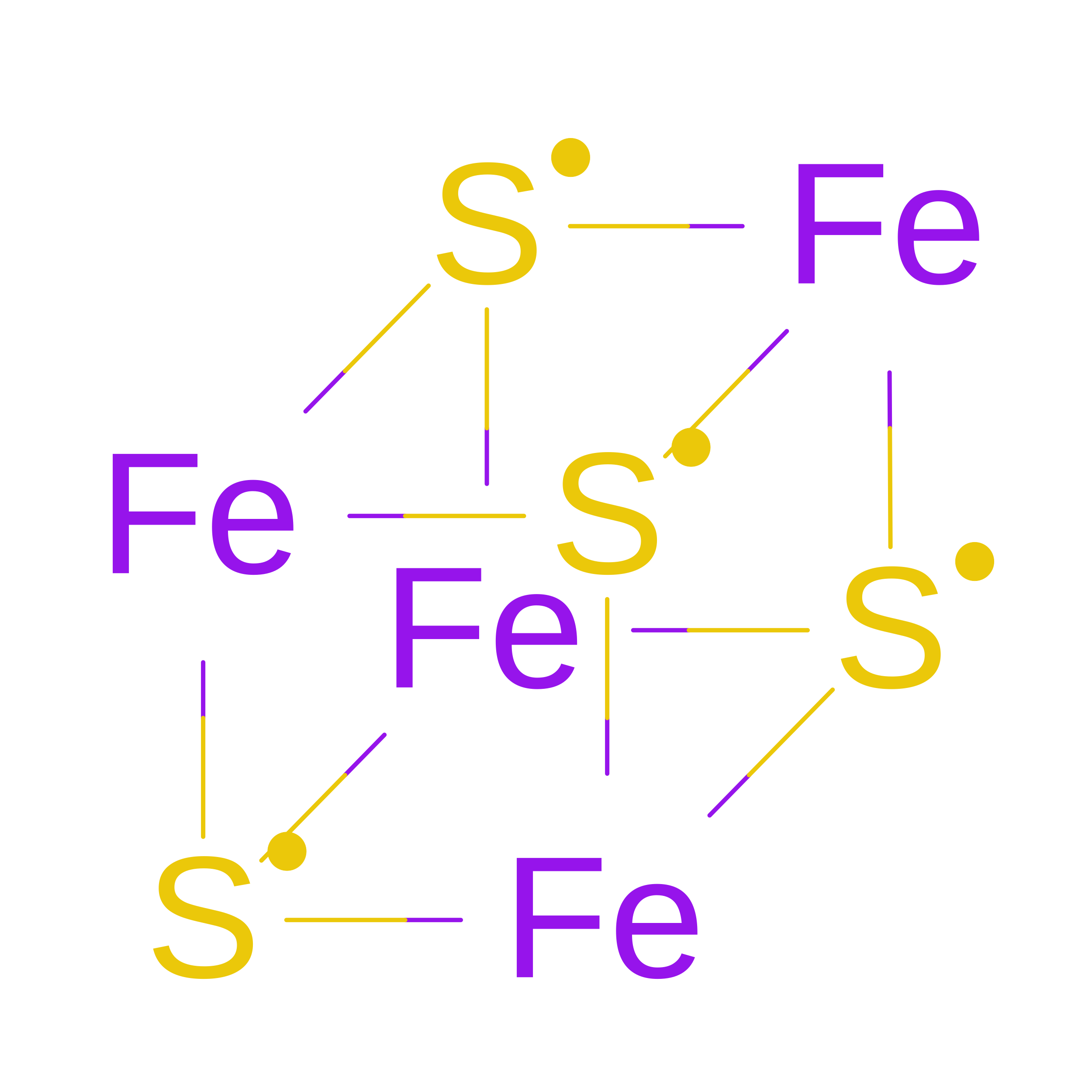
SF4

Query on SF4


Download:Ideal Coordinates CCD File
C [auth A]IRON/SULFUR CLUSTER
Fe4 S4
LJBDFODJNLIPKO-UHFFFAOYSA-N
SO4

Query on SO4


Download:Ideal Coordinates CCD File
B [auth A]SULFATE ION
O4 S
QAOWNCQODCNURD-UHFFFAOYSA-L
BR

Query on BR


Download:Ideal Coordinates CCD File
H [auth A]
K [auth A]
L [auth A]
M [auth A]
N [auth A]
H [auth A],
K [auth A],
L [auth A],
M [auth A],
N [auth A],
O [auth A],
Q [auth A]
BROMIDE ION
Br
CPELXLSAUQHCOX-UHFFFAOYSA-M
URE

Query on URE


Download:Ideal Coordinates CCD File
E [auth A],
F [auth A]
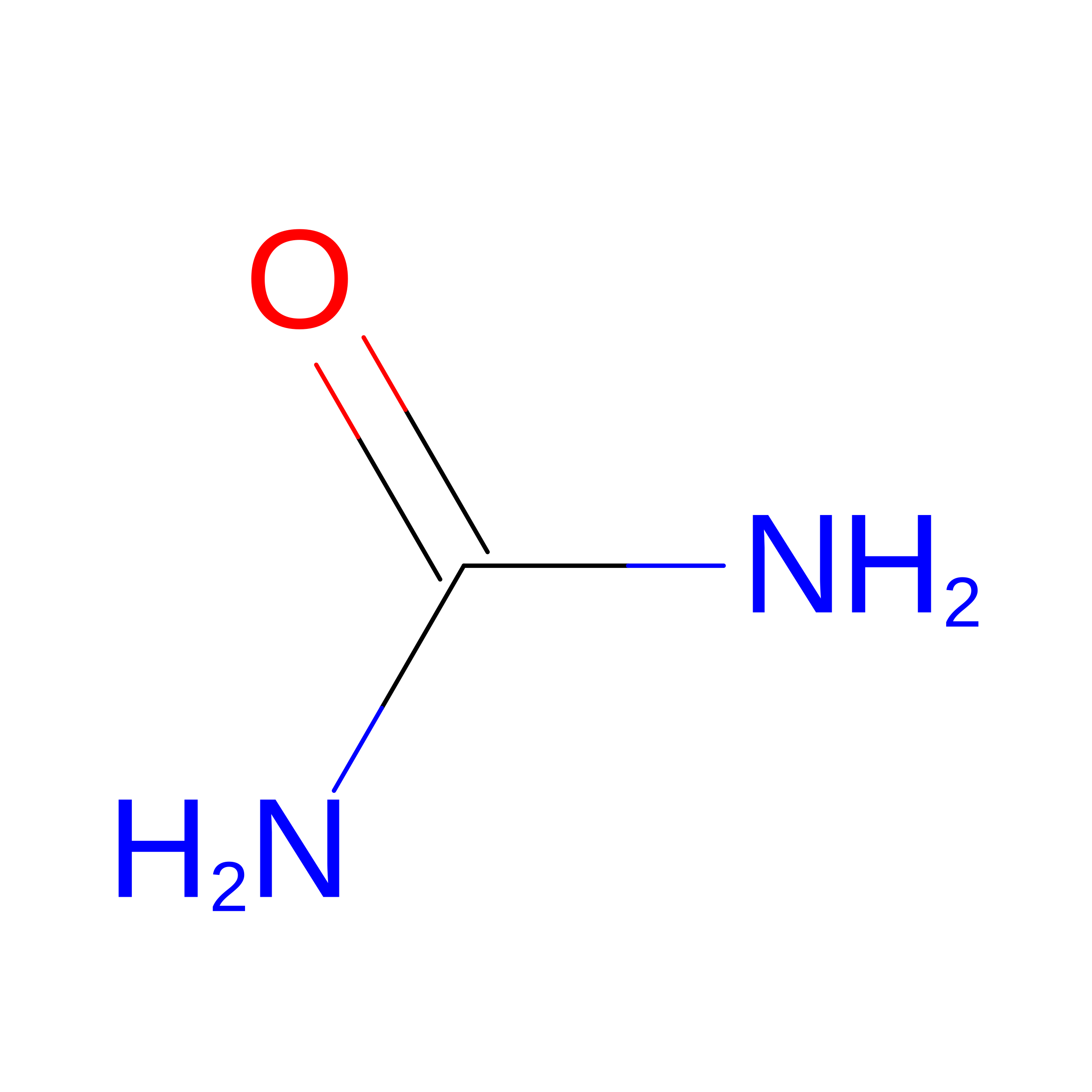
UREA
C H4 N2 O
XSQUKJJJFZCRTK-UHFFFAOYSA-N
FE

Query on FE


Download:Ideal Coordinates CCD File
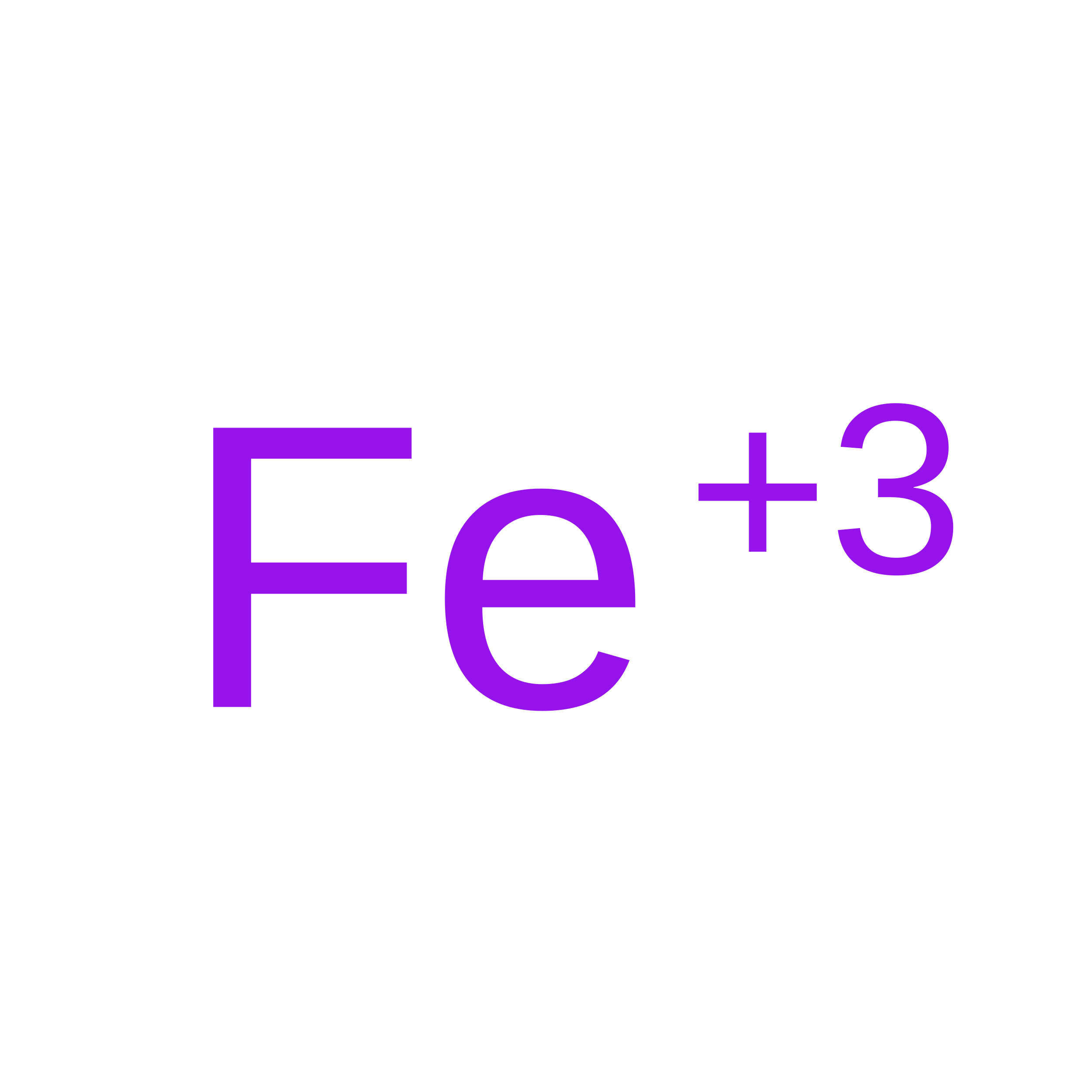
D [auth A]FE (III) ION
Fe
VTLYFUHAOXGGBS-UHFFFAOYSA-N
NA

Query on NA


Download:Ideal Coordinates CCD File
G [auth A],
I [auth A],
J [auth A],
P [auth A]
SODIUM ION
Na
FKNQFGJONOIPTF-UHFFFAOYSA-N

Experimental Data & Validation

Experimental Data

  • Method: X-RAY DIFFRACTION
  • Resolution: 2.35 Å
  • R-Value Free:  0.269 (Depositor), 0.250 (DCC) 
  • R-Value Work:  0.202 (Depositor), 0.195 (DCC) 
  • R-Value Observed: 0.208 (Depositor) 
Space Group: P 2 3
Unit Cell:
Length ( Å )Angle ( ˚ )
a = 93.181α = 90
b = 93.181β = 90
c = 93.181γ = 90
Software Package:
Software NamePurpose
PHENIXmodel building
PHENIXrefinement
HKL-3000data reduction
HKL-3000data scaling
PHENIXphasing

Structure Validation

View Full Validation Report


Entry History 

Deposition Data

Revision History  (Full details and data files)

  • Version 1.0: 2015-05-13
    Type: Initial release
  • Version 1.1: 2015-07-29
    Changes: Database references
  • Version 1.2: 2023-12-27
    Changes: Data collection, Database references, Derived calculations, Source and taxonomy
  • Version 1.3: 2024-10-09
    Changes: Structure summary