4PWG | pdb_00004pwg

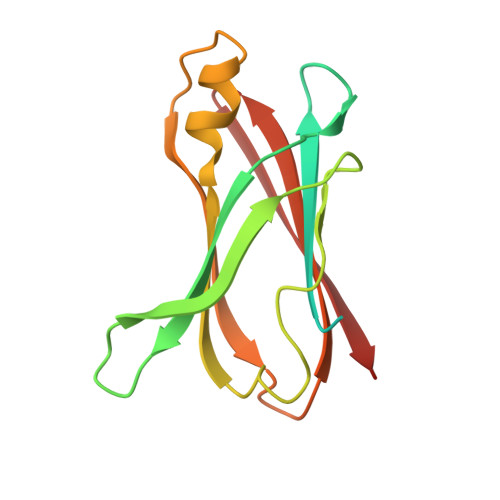
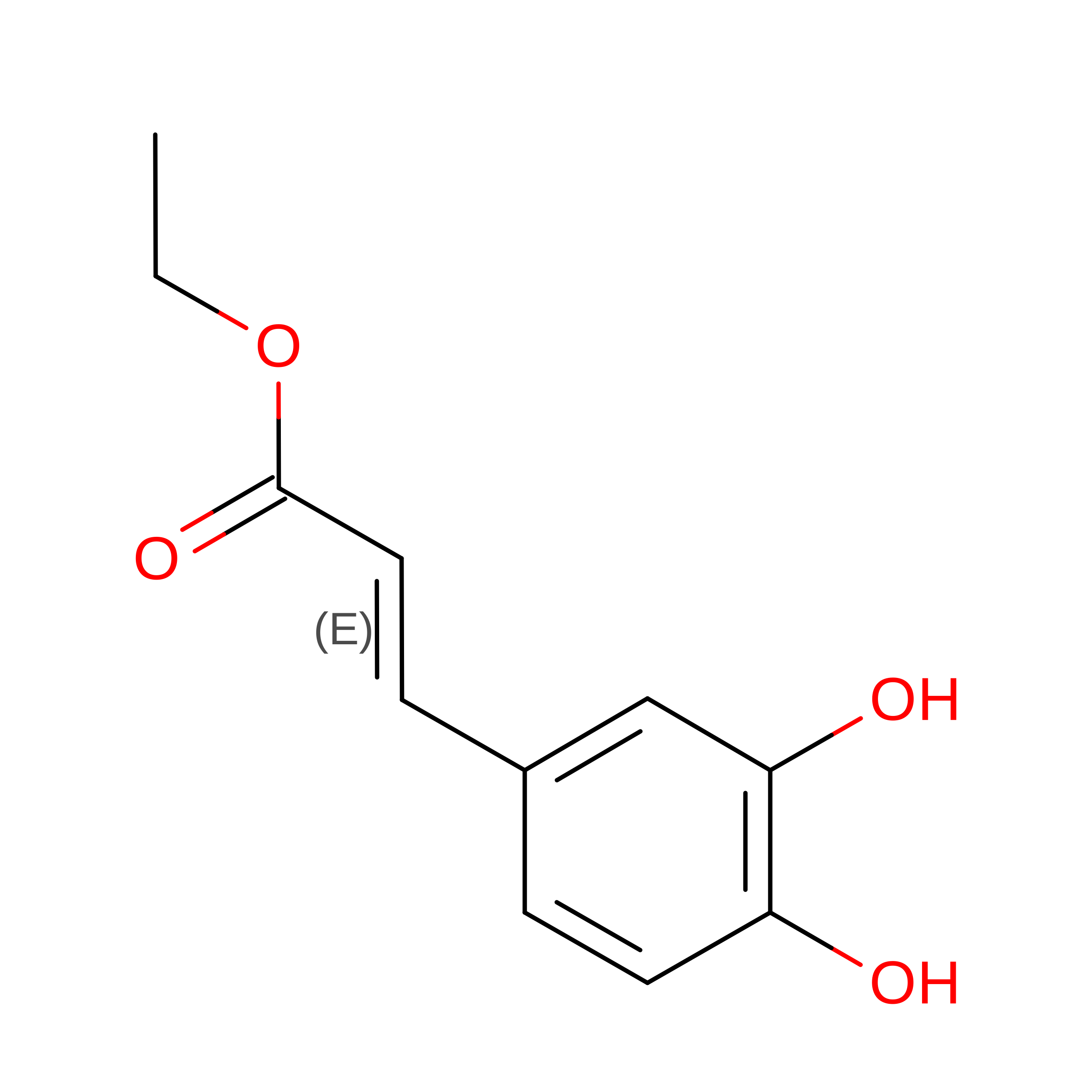
Crystal structure of V30M mutant human transthyretin complexed with caffeic acid ethyl ester


Experimental Data Snapshot

  • Method: X-RAY DIFFRACTION
  • Resolution: 1.80 Å
  • R-Value Free: 
    0.243 (Depositor), 0.244 (DCC) 
  • R-Value Work: 
    0.189 (Depositor), 0.194 (DCC) 
  • R-Value Observed: 
    0.192 (Depositor) 

Starting Model: experimental
View more details

wwPDB Validation 3D Report Full Report

Validation slider image for 4PWG

Ligand Structure Quality Assessment 


This is version 1.1 of the entry. See complete history

Literature

Inhibitory Activities of Propolis and Its Promising Component, Caffeic Acid Phenethyl Ester, against Amyloidogenesis of Human Transthyretin

Yokoyama, T.Kosaka, Y.Mizuguchi, M.

(2014) J Med Chem 57: 8928-8935

  • DOI: https://doi.org/10.1021/jm500997m
  • Primary Citation Related Structures: 
    4PWE, 4PWF, 4PWG, 4PWH, 4PWI, 4PWJ, 4PWK, 4QRF

  • PubMed Abstract: 

    Transthyretin (TTR) is a homotetrameric serum protein associated with amyloidoses such as familial amyloid polyneuropathy and senile systemic amyloidosis. The amyloid fibril formation of TTR can be inhibited through stabilization of the TTR tetramer by the binding of small molecules. In this study, we examined the inhibitory potency of caffeic acid phenethyl ester (CAPE) and its derivatives. Thioflavin T assay showed that CAPE suppressed the amyloid fibril formation of TTR. Comparative analysis of the inhibitory potencies revealed that phenethyl ferulate was the most potent among the CAPE derivatives. The binding of phenethyl ferulate and the selected compounds to TTR were confirmed by the 8-anilino-1-naphthalenesulfonic acid displacement and X-ray crystallography. It was also demonstrated that Bio 30, which is a CAPE-rich commercially available New Zealand propolis, inhibited TTR amyloidogenesis and stabilized the TTR tetramer. These results suggested that a propolis may be efficient for preventing TTR amyloidosis.


  • Organizational Affiliation
    • Faculty of Pharmaceutical Sciences, University of Toyama , 2630 Sugitani, Toyama 930-0914, Japan.

Macromolecule Content 

  • Total Structure Weight: 35.14 kDa 
  • Atom Count: 1,961 
  • Modeled Residue Count: 231 
  • Deposited Residue Count: 318 
  • Unique protein chains: 1

Macromolecules

Find similar proteins by:|  3D Structure
Entity ID: 1
MoleculeChains  Sequence LengthOrganismDetailsImage
Transthyretin
A, B
159Homo sapiensMutation(s): 1 
Gene Names: TTR
UniProt & NIH Common Fund Data Resources
Find proteins for P02766 (Homo sapiens)
Explore P02766 
Go to UniProtKB:  P02766
PHAROS:  P02766
GTEx:  ENSG00000118271 
Entity Groups
Sequence Clusters30% Identity50% Identity70% Identity90% Identity95% Identity100% Identity
UniProt GroupP02766
Sequence Annotations
Expand
Reference Sequence

Small Molecules

Binding Affinity Annotations 
IDSourceBinding Affinity
0XR BindingDB:  4PWG EC50: 2.30e+4 (nM) from 1 assay(s)

Experimental Data & Validation

Experimental Data

  • Method: X-RAY DIFFRACTION
  • Resolution: 1.80 Å
  • R-Value Free:  0.243 (Depositor), 0.244 (DCC) 
  • R-Value Work:  0.189 (Depositor), 0.194 (DCC) 
  • R-Value Observed: 0.192 (Depositor) 
Space Group: P 21 21 2
Unit Cell:
Length ( Å )Angle ( ˚ )
a = 43.19α = 90
b = 85.541β = 90
c = 63.771γ = 90
Software Package:
Software NamePurpose
HKL-2000data collection
PHENIXmodel building
PHENIXrefinement
HKL-2000data reduction
SCALEPACKdata scaling
PHENIXphasing

Structure Validation

View Full Validation Report


Ligand Structure Quality Assessment 


Entry History 

Deposition Data

Revision History  (Full details and data files)

  • Version 1.0: 2014-11-26
    Type: Initial release
  • Version 1.1: 2023-11-08
    Changes: Data collection, Database references, Derived calculations, Refinement description