Download Mendeley
Rational Design of Broad Spectrum Antibacterial Activity Based on a Clinically Relevant Enoyl-Acyl Carrier Protein (Acp) Reductase Inhibitor.
Schiebel, J., Chang, A., Shah, S., Lu, Y., Liu, L., Pan, P., Hirschbeck, M.W., Tareilus, M., Eltschkner, S., Yu, W., Cummings, J.E., Knudson, S.E., Bommineni, G.R., Walker, S.G., Slayden, R.A., Sotriffer, C.A., Tonge, P.J., Kisker, C.(2014) J Biol Chem 289: 15987
- PubMed: 24739388 Search on PubMedSearch on PubMed Central
- DOI: https://doi.org/10.1074/jbc.M113.532804
- Primary Citation Related Structures:
4BKU, 4CUZ, 4CV0, 4CV1, 4CV2, 4CV3 - PubMed Abstract:
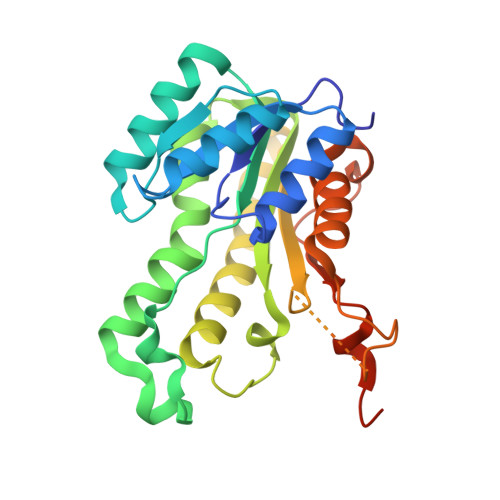
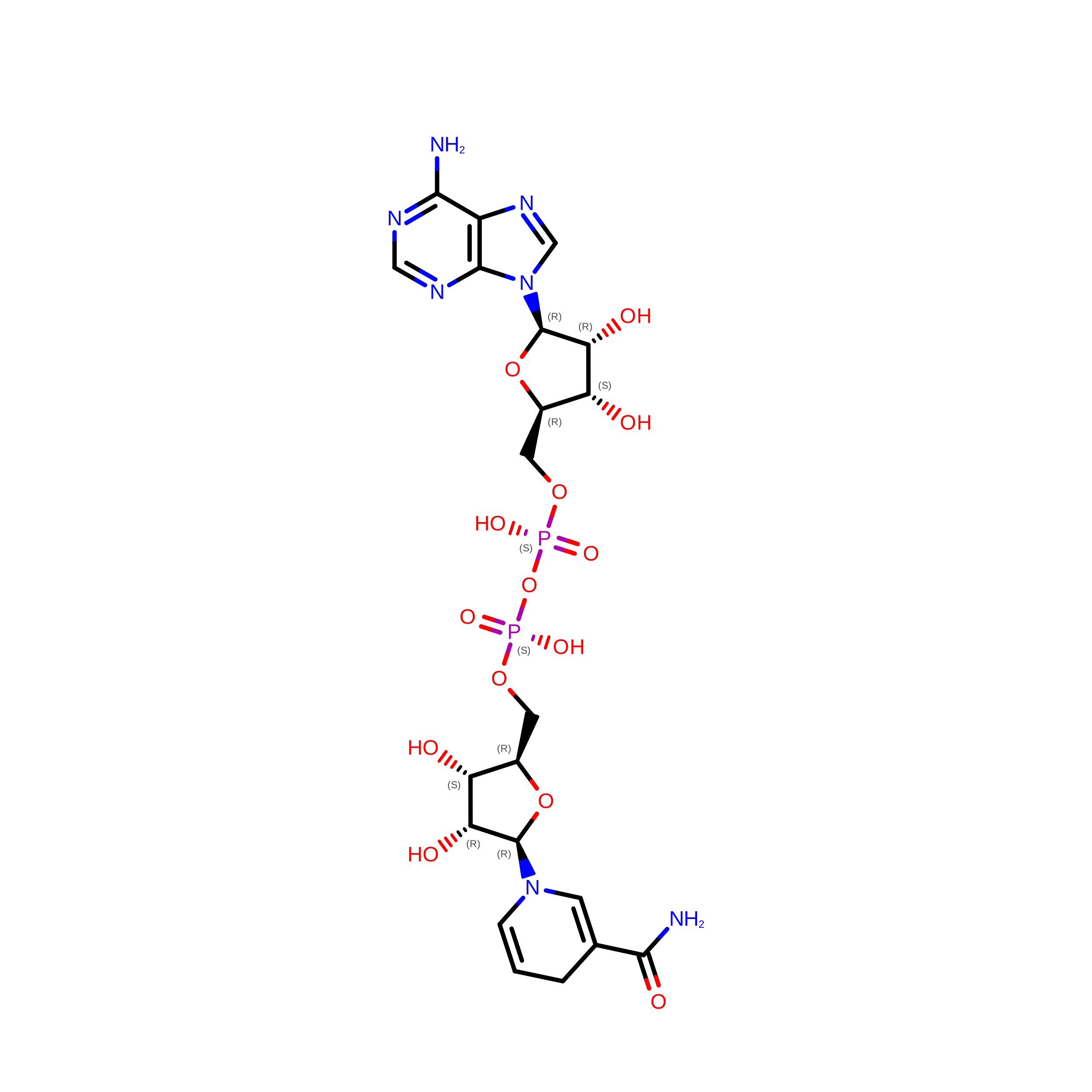
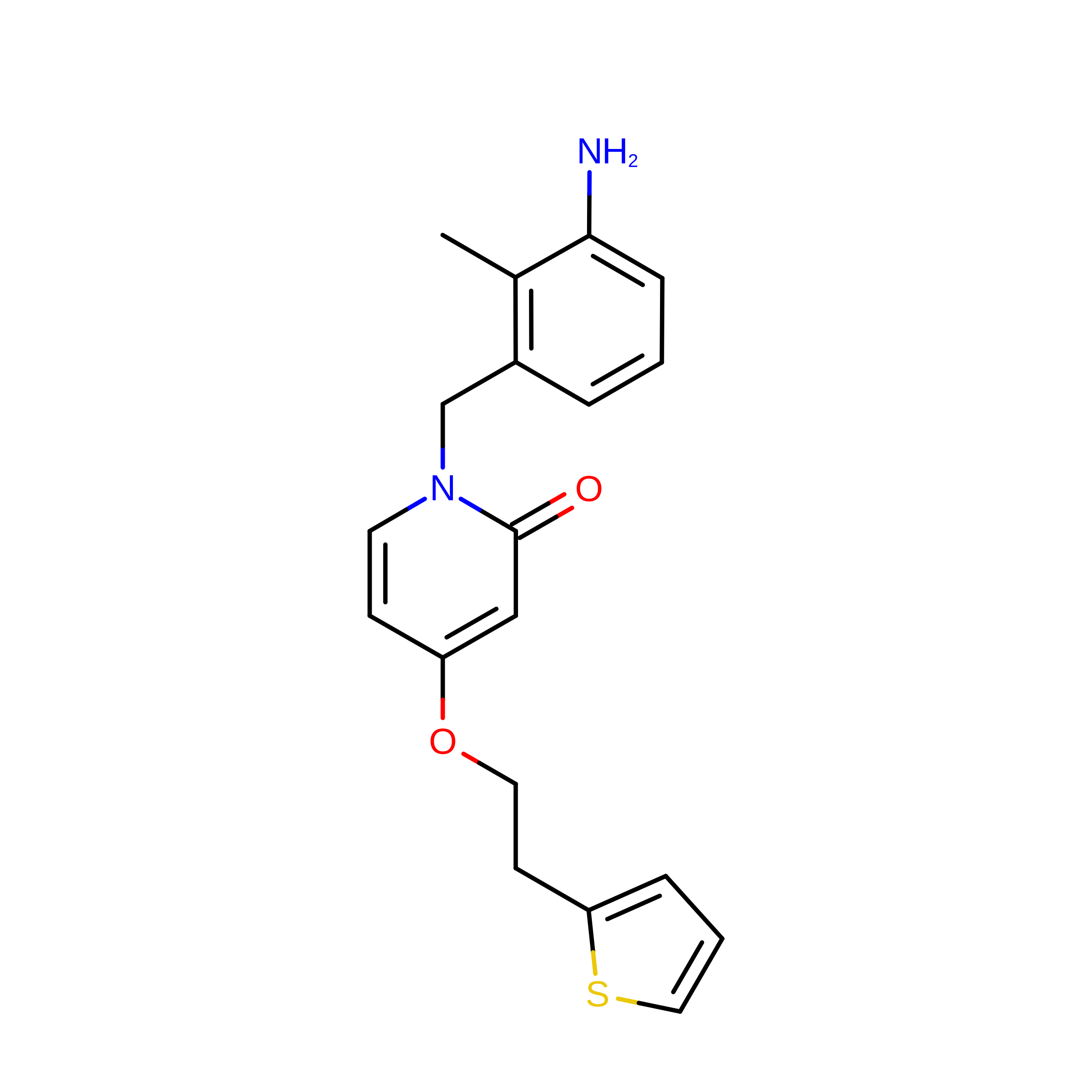
Determining the molecular basis for target selectivity is of particular importance in drug discovery. The ideal antibiotic should be active against a broad spectrum of pathogenic organisms with a minimal effect on human targets. CG400549, a Staphylococcus-specific 2-pyridone compound that inhibits the enoyl-acyl carrier protein reductase (FabI), has recently been shown to possess human efficacy for the treatment of methicillin-resistant Staphylococcus aureus infections, which constitute a serious threat to human health. In this study, we solved the structures of three different FabI homologues in complex with several pyridone inhibitors, including CG400549. Based on these structures, we rationalize the 65-fold reduced affinity of CG400549 toward Escherichia coli versus S. aureus FabI and implement concepts to improve the spectrum of antibacterial activity. The identification of different conformational states along the reaction coordinate of the enzymatic hydride transfer provides an elegant visual depiction of the relationship between catalysis and inhibition, which facilitates rational inhibitor design. Ultimately, we developed the novel 4-pyridone-based FabI inhibitor PT166 that retained favorable pharmacokinetics and efficacy in a mouse model of S. aureus infection with extended activity against Gram-negative and mycobacterial organisms.
- From the Rudolf Virchow Center for Experimental Biomedicine, Institute for Structural Biology, University of Wuerzburg, D-97080 Wuerzburg, Germany, the Institute of Pharmacy and Food Chemistry, University of Wuerzburg, Am Hubland, D-97074 Wuerzburg, Germany.
Organizational Affiliation: