4ALH | pdb_00004alh

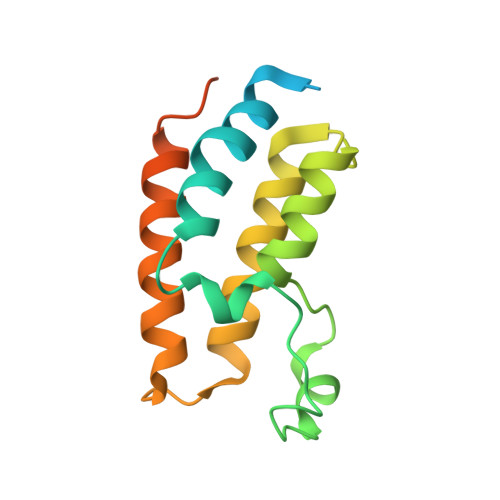
N-TERMINAL BROMODOMAIN OF HUMAN BRD2 WITH 3,5 dimethyl-4-phenyl-1,2- oxazole


Experimental Data Snapshot

  • Method: X-RAY DIFFRACTION
  • Resolution: 1.97 Å
  • R-Value Free: 
    0.203 (Depositor), 0.206 (DCC) 
  • R-Value Work: 
    0.168 (Depositor), 0.175 (DCC) 
  • R-Value Observed: 
    0.169 (Depositor) 

wwPDB Validation 3D Report Full Report

Validation slider image for 4ALH

Ligand Structure Quality Assessment 


This is version 1.2 of the entry. See complete history

Literature

Fragment-Based Discovery of Bromodomain Inhibitors Part 2: Optimization of Phenylisoxazole Sulfonamides.

Bamborough, P.Diallo, H.Goodacre, J.D.Gordon, L.Lewis, A.Seal, J.T.Wilson, D.M.Woodrow, M.D.Chung, C.W.

(2012) J Med Chem 55: 587

  • DOI: https://doi.org/10.1021/jm201283q
  • Primary Citation Related Structures: 
    4A9M, 4A9N, 4A9O, 4ALH

  • PubMed Abstract: 

    Bromodomains are epigenetic reader modules that regulate gene transcription through their recognition of acetyl-lysine modified histone tails. Inhibitors of this protein-protein interaction have the potential to modulate multiple diseases as demonstrated by the profound anti-inflammatory and antiproliferative effects of a recently disclosed class of BET compounds. While these compounds were discovered using phenotypic assays, here we present a highly efficient alternative approach to find new chemical templates, exploiting the abundant structural knowledge that exists for this target class. A phenyl dimethyl isoxazole chemotype resulting from a focused fragment screen has been rapidly optimized through structure-based design, leading to a sulfonamide series showing anti-inflammatory activity in cellular assays. This proof-of-principle experiment demonstrates the tractability of the BET family and bromodomain target class to fragment-based hit discovery and structure-based lead optimization.


  • Organizational Affiliation
    • Epinova DPU, Immuno-Inflammation Centre of Excellence for Drug Discovery, GlaxoSmithKline R&D, Medicines Research Centre, Gunnels Wood Road, Stevenage, Hertfordshire SG1 2NY, UK. Paul.a.Bamborough@gsk.com

Macromolecule Content 

  • Total Structure Weight: 54.75 kDa 
  • Atom Count: 3,180 
  • Modeled Residue Count: 323 
  • Deposited Residue Count: 462 
  • Unique protein chains: 1

Macromolecules

Find similar proteins by:|  3D Structure
Entity ID: 1
MoleculeChains  Sequence LengthOrganismDetailsImage
BROMODOMAIN CONTAINING 2
A, B, C
154Homo sapiensMutation(s): 0 
UniProt & NIH Common Fund Data Resources
Find proteins for P25440 (Homo sapiens)
Explore P25440 
Go to UniProtKB:  P25440
PHAROS:  P25440
GTEx:  ENSG00000204256 
Entity Groups
Sequence Clusters30% Identity50% Identity70% Identity90% Identity95% Identity100% Identity
UniProt GroupP25440
Sequence Annotations
Expand
Reference Sequence

Small Molecules

Ligands 3 Unique
IDChains Name / Formula / InChI Key2D Diagram3D Interactions
A9P

Query on A9P


Download:Ideal Coordinates CCD File
F [auth A],
I [auth B],
K [auth C]
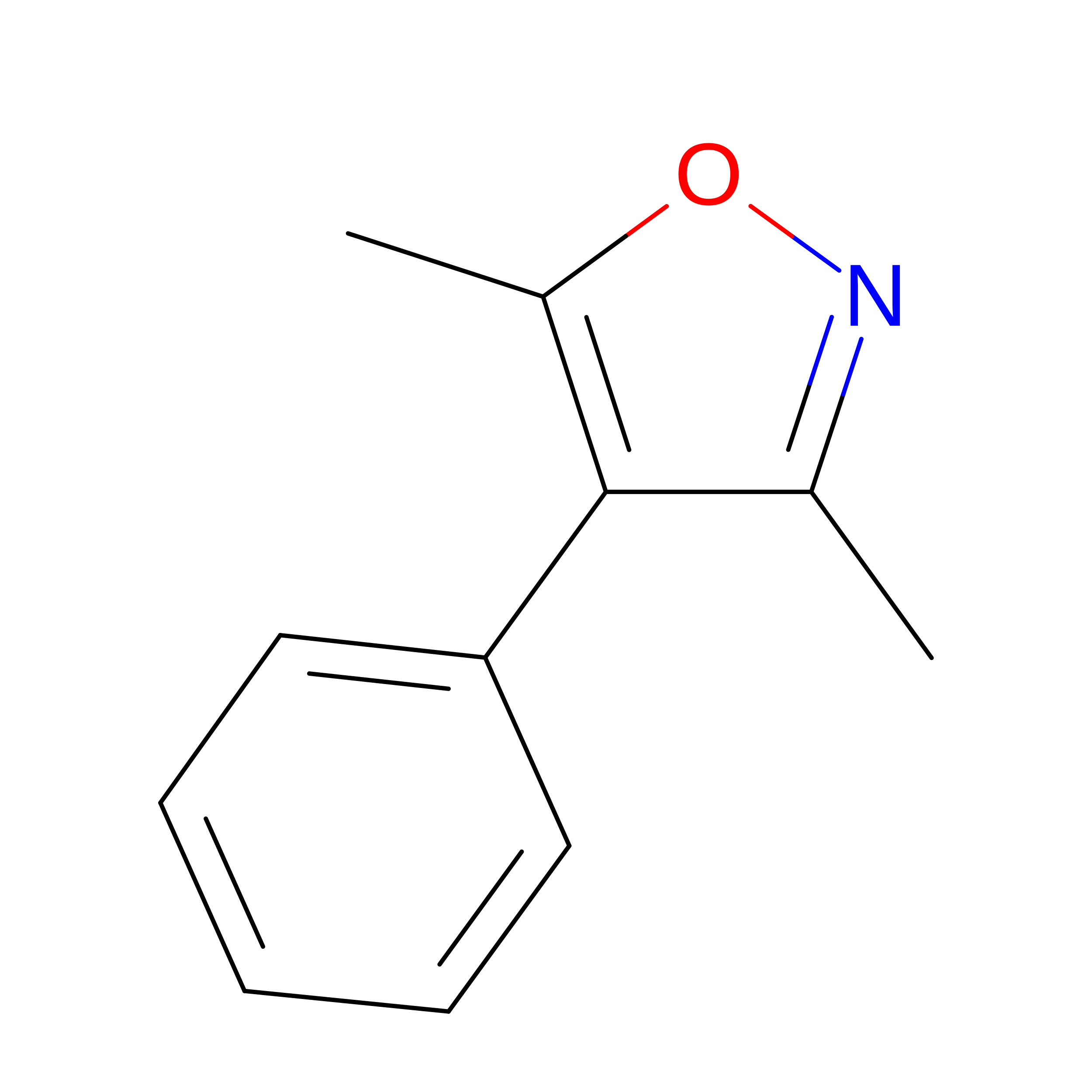
3,5 DIMETHYL-4-PHENYL-1,2-OXAZOLE
C11 H11 N O
BHAXDAUULXCVEK-UHFFFAOYSA-N
SO4

Query on SO4


Download:Ideal Coordinates CCD File
G [auth A],
H [auth A],
J [auth B],
L [auth C]
SULFATE ION
O4 S
QAOWNCQODCNURD-UHFFFAOYSA-L
EDO

Query on EDO


Download:Ideal Coordinates CCD File
D [auth A],
E [auth A]
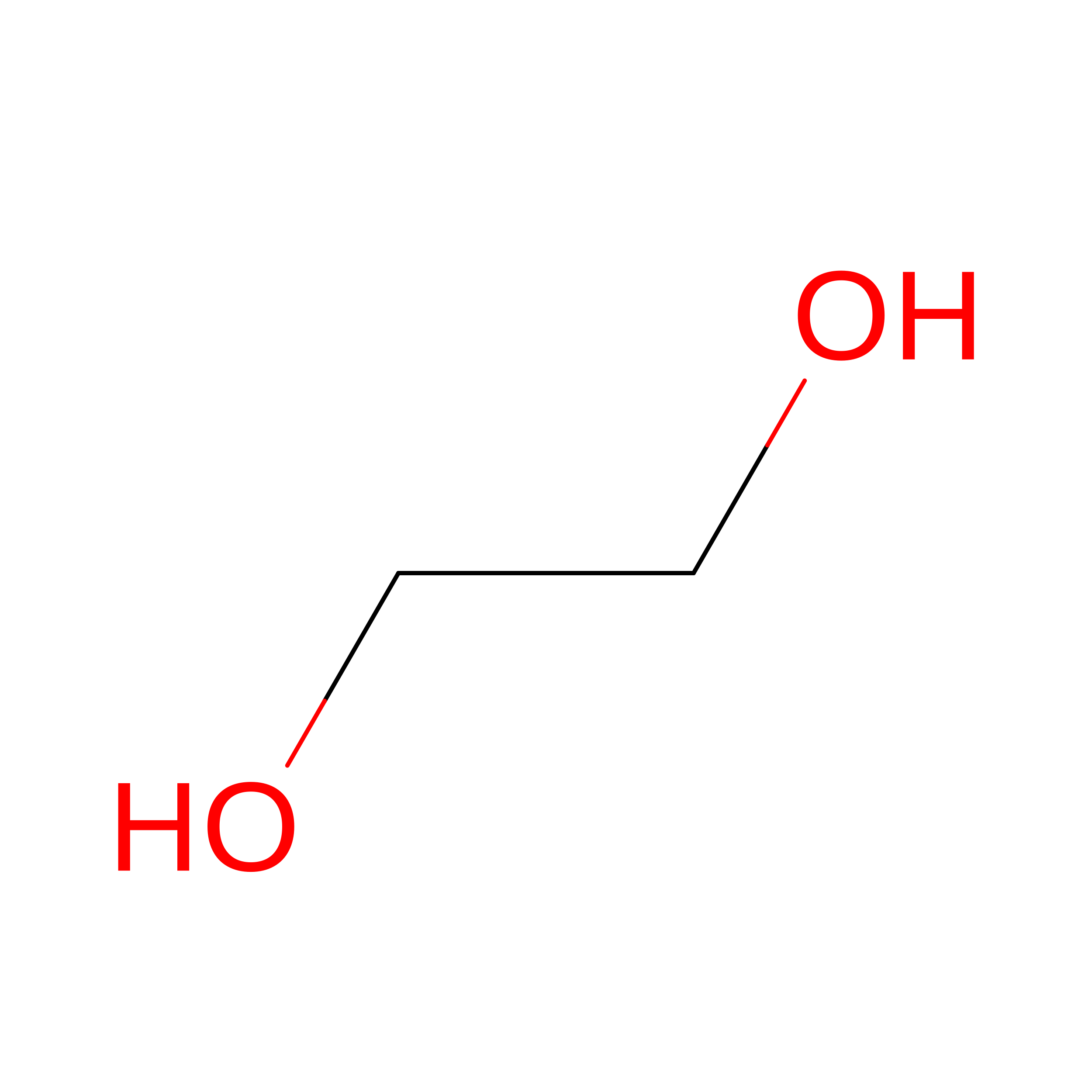
1,2-ETHANEDIOL
C2 H6 O2
LYCAIKOWRPUZTN-UHFFFAOYSA-N

Experimental Data & Validation

Experimental Data

  • Method: X-RAY DIFFRACTION
  • Resolution: 1.97 Å
  • R-Value Free:  0.203 (Depositor), 0.206 (DCC) 
  • R-Value Work:  0.168 (Depositor), 0.175 (DCC) 
  • R-Value Observed: 0.169 (Depositor) 
Space Group: C 1 2 1
Unit Cell:
Length ( Å )Angle ( ˚ )
a = 114.282α = 90
b = 55.697β = 94.92
c = 68.713γ = 90
Software Package:
Software NamePurpose
REFMACrefinement
HKL-2000data reduction
SCALEPACKdata scaling

Structure Validation

View Full Validation Report


Ligand Structure Quality Assessment 


Entry History 

Deposition Data

Revision History  (Full details and data files)

  • Version 1.0: 2012-04-11
    Type: Initial release
  • Version 1.1: 2019-05-15
    Changes: Data collection, Experimental preparation, Other
  • Version 1.2: 2024-05-08
    Changes: Data collection, Database references, Derived calculations, Other