3ZOF | pdb_00003zof

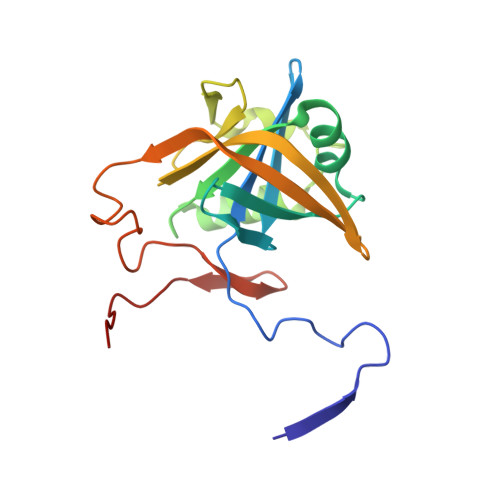
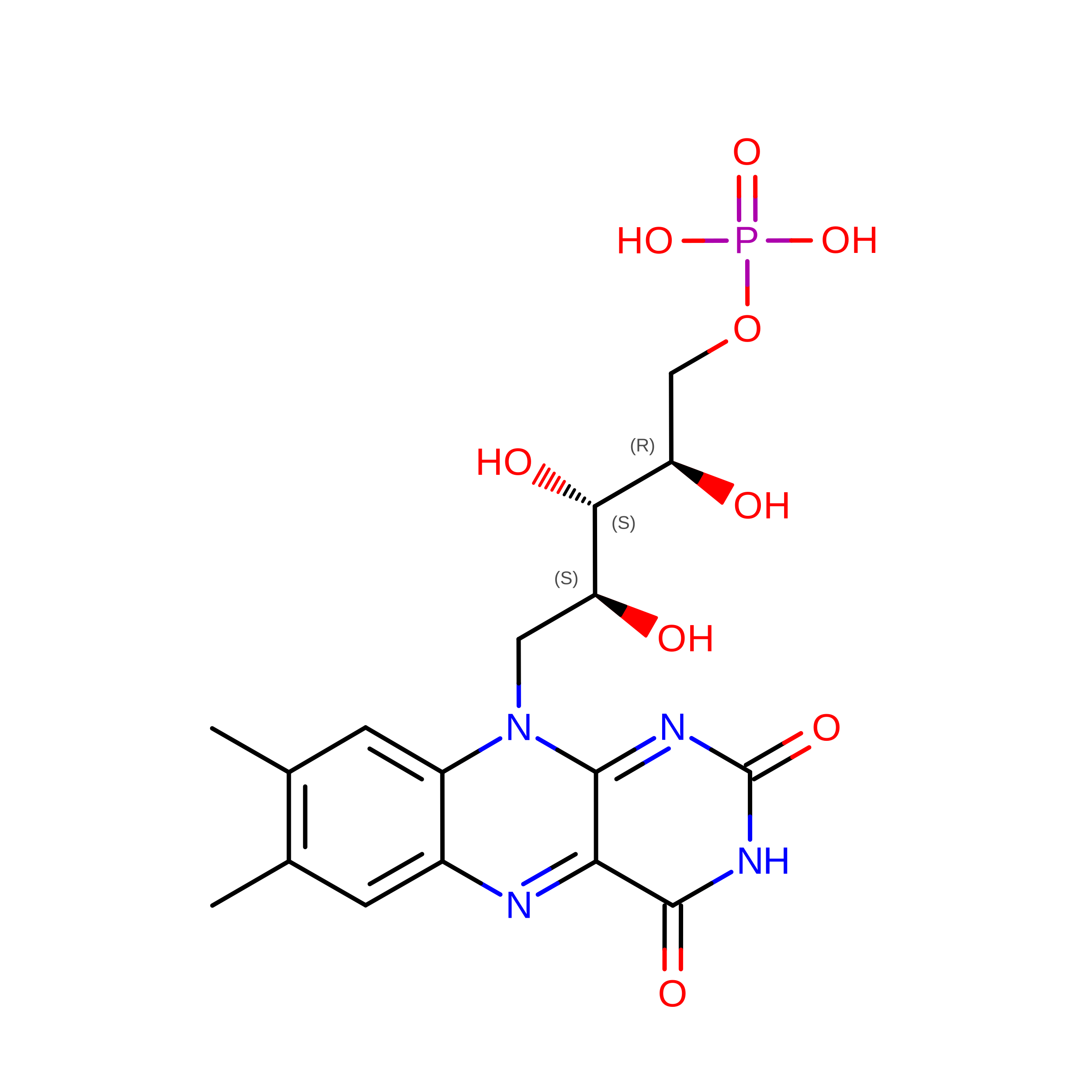
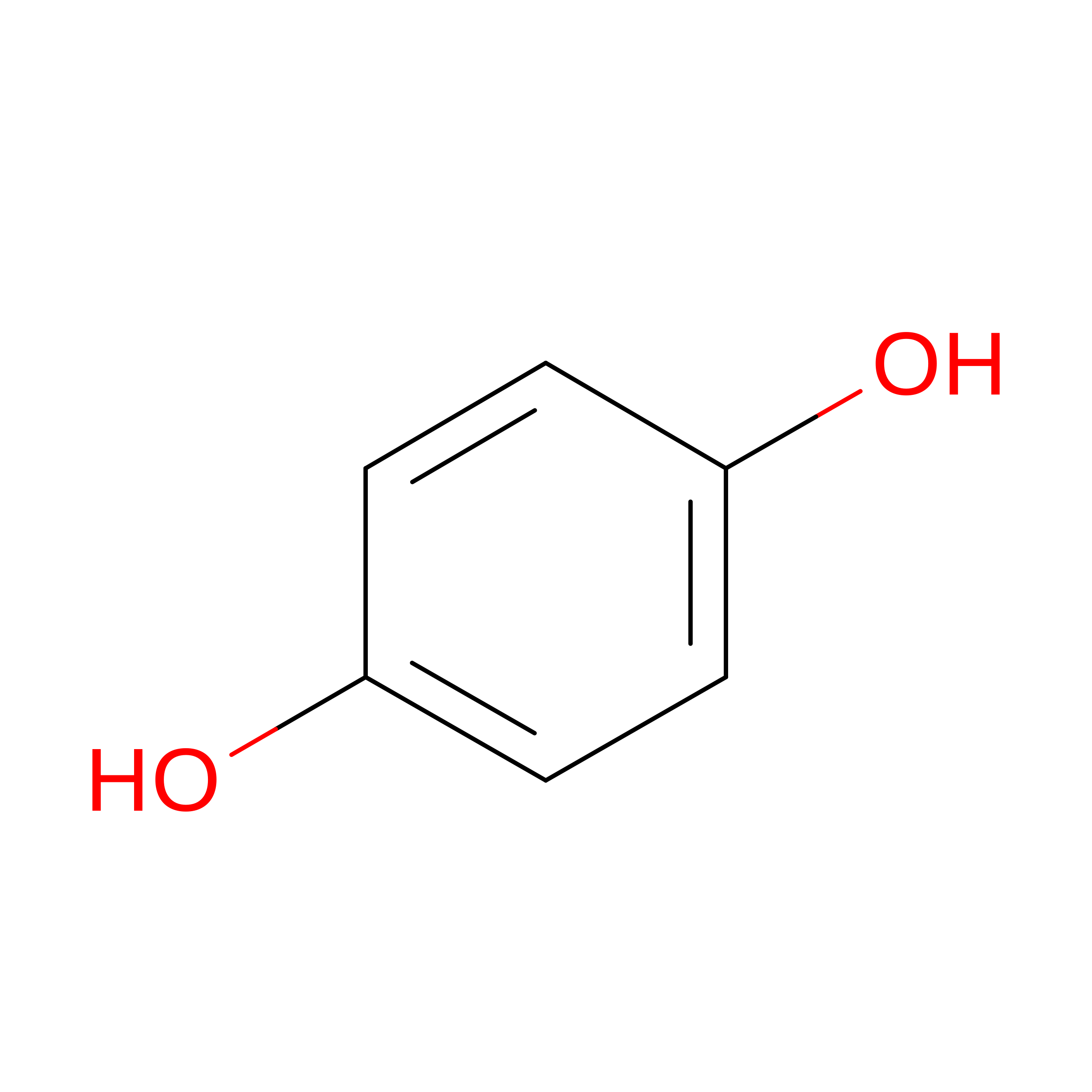
Crystal structure of FMN-binding protein (YP_005476) from Thermus thermophilus with bound benzene-1,4-diol


Experimental Data Snapshot

  • Method: X-RAY DIFFRACTION
  • Resolution: 2.15 Å
  • R-Value Free: 
    0.249 (Depositor), 0.255 (DCC) 
  • R-Value Work: 
    0.192 (Depositor), 0.198 (DCC) 
  • R-Value Observed: 
    0.195 (Depositor) 

Starting Model: experimental
View more details

wwPDB Validation 3D Report Full Report

Validation slider image for 3ZOF

Ligand Structure Quality Assessment 


This is version 1.2 of the entry. See complete history

Literature

Identification of Promiscuous Ene-Reductase Activity by Mining Structural Databases Using Active Site Constellations.

Steinkellner, G.Gruber, C.C.Pavkov-Keller, T.Binter, A.Steiner, K.Winkler, C.Lyskowski, A.Schwamberger, O.Oberer, M.Schwab, H.Faber, K.Macheroux, P.Gruber, K.

(2014) Nat Commun 5: 4150

  • DOI: https://doi.org/10.1038/ncomms5150
  • Primary Citation Related Structures: 
    3ZOC, 3ZOD, 3ZOE, 3ZOF, 3ZOG, 3ZOH

  • PubMed Abstract: 

    The exploitation of catalytic promiscuity and the application of de novo design have recently opened the access to novel, non-natural enzymatic activities. Here we describe a structural bioinformatic method for predicting catalytic activities of enzymes based on three-dimensional constellations of functional groups in active sites ('catalophores'). As a proof-of-concept we identify two enzymes with predicted promiscuous ene-reductase activity (reduction of activated C-C double bonds) and compare them with known ene-reductases, that is, members of the Old Yellow Enzyme family. Despite completely different amino acid sequences, overall structures and protein folds, high-resolution crystal structures reveal equivalent binding modes of typical Old Yellow Enzyme substrates and ligands. Biochemical and biocatalytic data show that the two enzymes indeed possess ene-reductase activity and reveal an inverted stereopreference compared with Old Yellow Enzymes for some substrates. This method could thus be a tool for the identification of viable starting points for the development and engineering of novel biocatalysts.


  • Organizational Affiliation
    • 1] ACIB GmbH, Petersgasse 14, 8010 Graz, Austria [2].

Macromolecule Content 

  • Total Structure Weight: 40.62 kDa 
  • Atom Count: 3,000 
  • Modeled Residue Count: 356 
  • Deposited Residue Count: 356 
  • Unique protein chains: 1

Macromolecules

Find similar proteins by:|  3D Structure
Entity ID: 1
MoleculeChains  Sequence LengthOrganismDetailsImage
FLAVOREDOXIN
A, B
178Thermus thermophilus HB27Mutation(s): 0 
UniProt
Find proteins for Q72HI0 (Thermus thermophilus (strain ATCC BAA-163 / DSM 7039 / HB27))
Explore Q72HI0 
Go to UniProtKB:  Q72HI0
Entity Groups
Sequence Clusters30% Identity50% Identity70% Identity90% Identity95% Identity100% Identity
UniProt GroupQ72HI0
Sequence Annotations
Expand
Reference Sequence

Experimental Data & Validation

Experimental Data

  • Method: X-RAY DIFFRACTION
  • Resolution: 2.15 Å
  • R-Value Free:  0.249 (Depositor), 0.255 (DCC) 
  • R-Value Work:  0.192 (Depositor), 0.198 (DCC) 
  • R-Value Observed: 0.195 (Depositor) 
Space Group: P 21 21 21
Unit Cell:
Length ( Å )Angle ( ˚ )
a = 64.524α = 90
b = 74.618β = 90
c = 77.743γ = 90
Software Package:
Software NamePurpose
REFMACrefinement
XDSdata reduction
PHASERphasing

Structure Validation

View Full Validation Report


Ligand Structure Quality Assessment 


Entry History 

Deposition Data

Revision History  (Full details and data files)

  • Version 1.0: 2014-05-14
    Type: Initial release
  • Version 1.1: 2014-07-02
    Changes: Database references
  • Version 1.2: 2023-12-20
    Changes: Data collection, Database references, Derived calculations, Other, Refinement description