3ZL2 | pdb_00003zl2

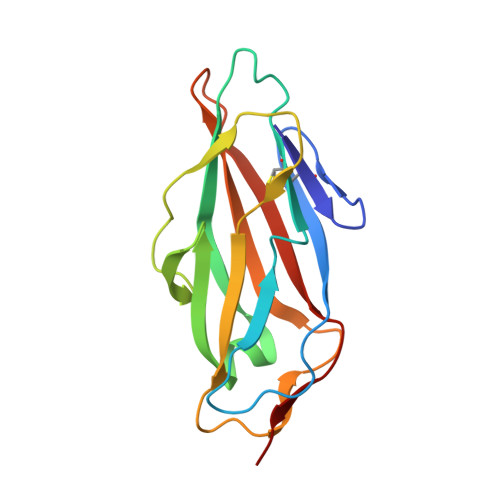
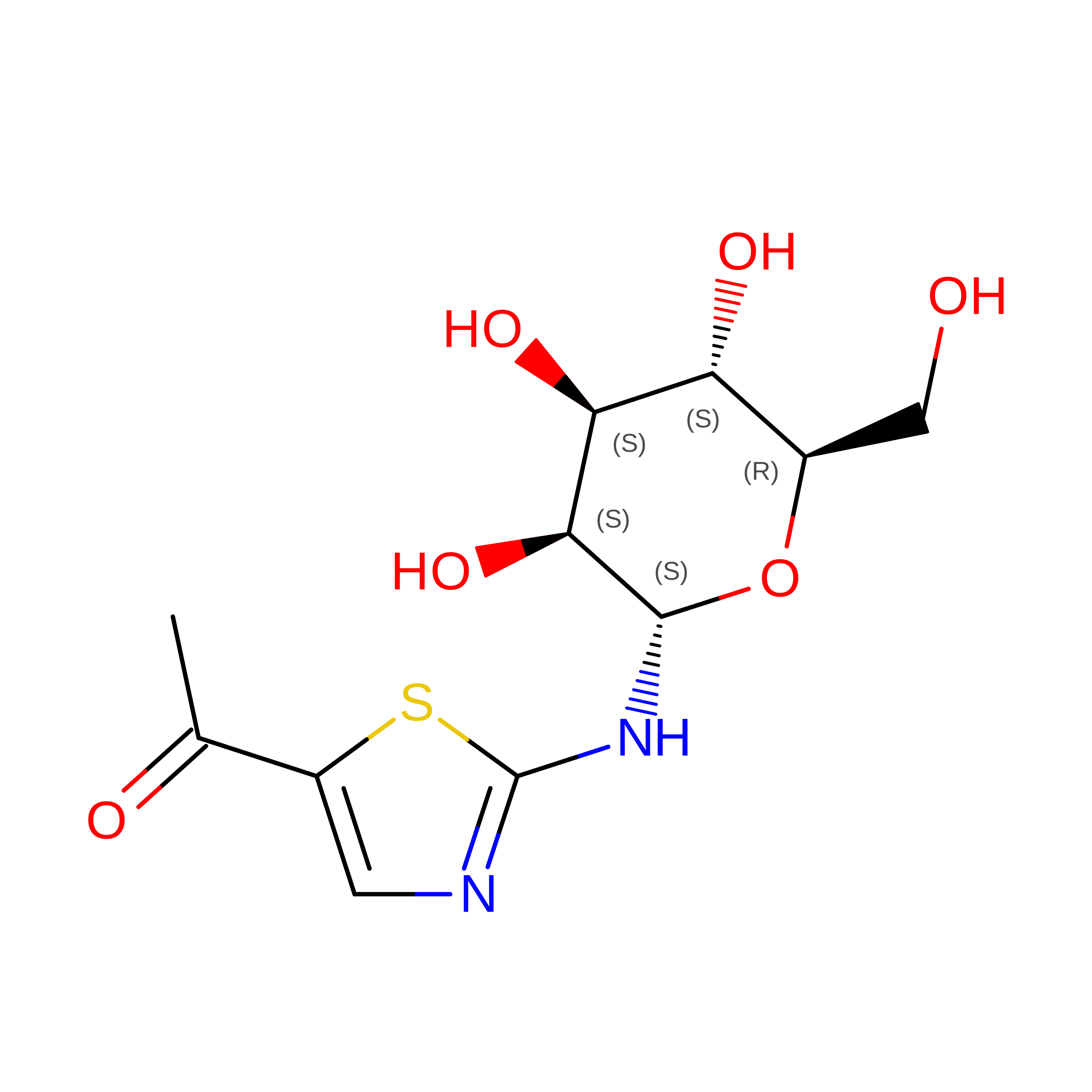
A thiazolyl-mannoside bound to FimH, orthorhombic space group


Experimental Data Snapshot

  • Method: X-RAY DIFFRACTION
  • Resolution: 1.25 Å
  • R-Value Free: 
    0.188 (Depositor), 0.182 (DCC) 
  • R-Value Work: 
    0.168 (Depositor), 0.166 (DCC) 
  • R-Value Observed: 
    0.169 (Depositor) 

Starting Model: experimental
View more details

wwPDB Validation 3D Report Full Report

Validation slider image for 3ZL2

Ligand Structure Quality Assessment 


This is version 2.2 of the entry. See complete history

Literature

Thiazolylaminomannosides as Potent Antiadhesives of Type 1 Piliated Escherichia Coli Isolated from Crohn'S Disease Patients.

Brument, S.Sivignon, A.Dumych, T.I.Moreau, N.Roos, G.Guerardel, Y.Chalopin, T.Deniaud, D.Bilyy, R.O.Darfeuille-Michaud, A.Bouckaert, J.Gouin, S.G.

(2013) J Med Chem 56: 5395

  • DOI: https://doi.org/10.1021/jm400723n
  • Primary Citation Related Structures: 
    3ZL1, 3ZL2

  • PubMed Abstract: 

    Adherent-invasive Escherichia coli (AIEC) have previously been shown to induce gut inflammation in patients with Crohn's disease (CD). We developed a set of mannosides to prevent AIEC attachment to the gut by blocking the FimH bacterial adhesin. The crystal structure of the FimH lectin domain in complex with a lead thiazolylaminomannoside highlighted the preferential position for pharmacomodulations. A small library of analogues showing nanomolar affinity for FimH was then developed. Notably, AIEC attachment to intestinal cells was efficiently prevented by the most active compound and at around 10000-fold and 100-fold lower concentrations than mannose and the potent FimH inhibitor heptylmannoside, respectively. An ex vivo assay performed on the colonic tissue of a transgenic mouse model of CD confirmed this antiadhesive potential. Given the key role of AIEC in the chronic intestinal inflammation of CD patients, these results suggest a potential antiadhesive treatment with the FimH inhibitors developed.


  • Organizational Affiliation
    • LUNAM Université , CEISAM, Chimie Et Interdisciplinarité, Synthèse, Analyse, Modélisation, UMR CNRS 6230, UFR des Sciences et des Techniques, 2 rue de la Houssinière, BP 92208, 44322 NANTES Cedex 3, France.

Macromolecule Content 

  • Total Structure Weight: 17.22 kDa 
  • Atom Count: 1,610 
  • Modeled Residue Count: 158 
  • Deposited Residue Count: 158 
  • Unique protein chains: 1

Macromolecules

Find similar proteins by:|  3D Structure
Entity ID: 1
MoleculeChains  Sequence LengthOrganismDetailsImage
PROTEIN FIMH158Escherichia coli J96Mutation(s): 0 
UniProt
Find proteins for P08191 (Escherichia coli (strain K12))
Explore P08191 
Go to UniProtKB:  P08191
Entity Groups
Sequence Clusters30% Identity50% Identity70% Identity90% Identity95% Identity100% Identity
UniProt GroupP08191
Sequence Annotations
Expand
Reference Sequence

Small Molecules

Ligands 1 Unique
IDChains Name / Formula / InChI Key2D Diagram3D Interactions
BWG

Query on BWG


Download:Ideal Coordinates CCD File
B [auth A]N-{5-[(1R)-1-hydroxyethyl]-1,3-thiazol-2-yl}-alpha-D-mannopyranosylamine
C11 H16 N2 O6 S
VVRCICGIWCXPFT-ZMLRDBKSSA-N

Experimental Data & Validation

Experimental Data

  • Method: X-RAY DIFFRACTION
  • Resolution: 1.25 Å
  • R-Value Free:  0.188 (Depositor), 0.182 (DCC) 
  • R-Value Work:  0.168 (Depositor), 0.166 (DCC) 
  • R-Value Observed: 0.169 (Depositor) 
Space Group: P 21 21 2
Unit Cell:
Length ( Å )Angle ( ˚ )
a = 69.46α = 90
b = 95.05β = 90
c = 28.49γ = 90
Software Package:
Software NamePurpose
PHENIXrefinement
XDSdata reduction
XDSdata scaling
PHASERphasing

Structure Validation

View Full Validation Report


Ligand Structure Quality Assessment 


Entry History 

Revision History  (Full details and data files)

  • Version 1.0: 2013-07-10
    Type: Initial release
  • Version 1.1: 2013-08-28
    Changes: Database references
  • Version 2.0: 2020-07-29
    Type: Remediation
    Reason: Carbohydrate remediation
    Changes: Atomic model, Data collection, Derived calculations, Other
  • Version 2.1: 2023-12-20
    Changes: Data collection, Database references, Refinement description, Structure summary
  • Version 2.2: 2024-10-16
    Changes: Structure summary