3RTQ | pdb_00003rtq

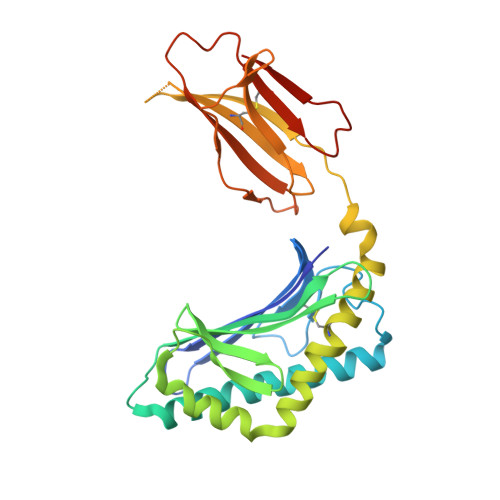
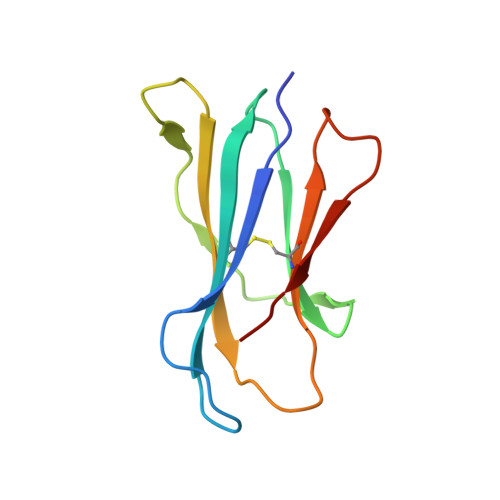
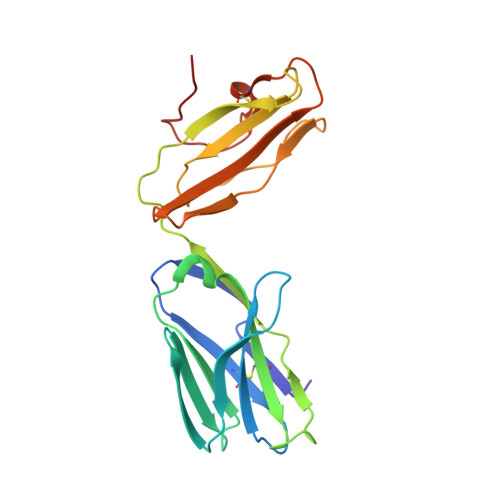
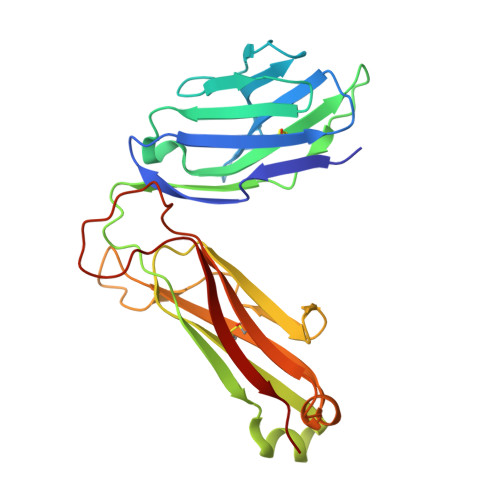
Structure of the mouse CD1d-HS44-iNKT TCR complex


Experimental Data Snapshot

  • Method: X-RAY DIFFRACTION
  • Resolution: 2.80 Å
  • R-Value Free: 
    0.268 (Depositor), 0.261 (DCC) 
  • R-Value Work: 
    0.227 (Depositor), 0.222 (DCC) 
  • R-Value Observed: 
    0.229 (Depositor) 

wwPDB Validation 3D Report Full Report

Validation slider image for 3RTQ

Ligand Structure Quality Assessment 


This is version 2.1 of the entry. See complete history

Literature

Structural and functional characterization of a novel nonglycosidic type I NKT agonist with immunomodulatory properties.

Kerzerho, J.Yu, E.D.Barra, C.M.Alari-Pahisa, E.Girardi, E.Harrak, Y.Lauzurica, P.Llebaria, A.Zajonc, D.M.Akbari, O.Castano, A.R.

(2012) J Immunol 188: 2254-2265

  • DOI: https://doi.org/10.4049/jimmunol.1103049
  • Primary Citation Related Structures: 
    3RTQ

  • PubMed Abstract: 

    Activation of type I NKT (iNKT) cells by CD1d-presented agonists is a potent immunotherapeutic tool. α-Galactosylceramide (α-GalCer) is the prototypic agonist, but its excessive potency with simultaneous production of both pro- and anti-inflammatory cytokines hampers its potential therapeutic use. In search for novel agonists, we have analyzed the structure and function of HS44, a synthetic aminocyclitolic ceramide analog designed to avoid unrestrained iNKT cell activation. HS44 is a weaker agonist compared with α-GalCer in vitro, although in vivo it induces robust IFN-γ production, and highly reduced but still functional Th2 response. The characteristic cytokine storm produced upon α-GalCer activation was not induced. Consequently, HS44 induced a very efficient iNKT cell-dependent antitumoral response in B16 animal model. In addition, intranasal administration showed the capacity to induce lung inflammation and airway hyperreactivity, a cardinal asthma feature. Thus, HS44 is able to elicit functional Th1 or Th2 responses. Structural studies show that HS44 binds to CD1d with the same conformation as α-GalCer. The TCR binds to HS44 similarly as α-GalCer, but forms less contacts, thus explaining its weaker TCR affinity and, consequently, its weaker recognition by iNKT cells. The ability of this compound to activate an efficient, but not massive, tailored functional immune response makes it an attractive reagent for immune manipulation.


  • Organizational Affiliation
    • Department of Molecular Microbiology and Immunology, Keck School of Medicine, University of Southern California, Los Angeles, CA 90033, USA.

Macromolecule Content 

  • Total Structure Weight: 96.57 kDa 
  • Atom Count: 6,588 
  • Modeled Residue Count: 806 
  • Deposited Residue Count: 834 
  • Unique protein chains: 4

Macromolecules

Find similar proteins by:|  3D Structure
Entity ID: 1
MoleculeChains  Sequence LengthOrganismDetailsImage
Antigen-presenting glycoprotein CD1d1285Mus musculusMutation(s): 0 
Gene Names: Cd1.1CD1dCd1d1
UniProt & NIH Common Fund Data Resources
Find proteins for P11609 (Mus musculus)
Explore P11609 
Go to UniProtKB:  P11609
IMPC:  MGI:107674
Entity Groups
Sequence Clusters30% Identity50% Identity70% Identity90% Identity95% Identity100% Identity
UniProt GroupP11609
Glycosylation
Glycosylation Sites: 3Go to GlyGen: P11609-1
Sequence Annotations
Expand
Reference Sequence
Find similar proteins by:|  3D Structure
Entity ID: 2
MoleculeChains  Sequence LengthOrganismDetailsImage
Beta-2-microglobulin99Mus musculusMutation(s): 1 
Gene Names: B2m
UniProt & NIH Common Fund Data Resources
Find proteins for P01887 (Mus musculus)
Explore P01887 
Go to UniProtKB:  P01887
IMPC:  MGI:88127
Entity Groups
Sequence Clusters30% Identity50% Identity70% Identity90% Identity95% Identity100% Identity
UniProt GroupP01887
Sequence Annotations
Expand
Reference Sequence
Find similar proteins by:|  3D Structure
Entity ID: 3
MoleculeChains  Sequence LengthOrganismDetailsImage
Valpha14 (mouse variable domain, human constant domain)209Mus musculusMutation(s): 0 
Gene Names: Valpha14
Find similar proteins by:|  3D Structure
Entity ID: 4
MoleculeChains  Sequence LengthOrganismDetailsImage
V beta8.2 (mouse variable domain, human constant domain)241Mus musculusMutation(s): 0 
Gene Names: Vbeta8.2

Oligosaccharides

Help  
Entity ID: 5
MoleculeChains Length2D Diagram GlycosylationD Interactions
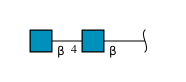
2-acetamido-2-deoxy-beta-D-glucopyranose-(1-4)-2-acetamido-2-deoxy-beta-D-glucopyranose
E
2N-Glycosylation
Glycosylation Resources
GlyTouCan: G42666HT
GlyCosmos: G42666HT
GlyGen: G42666HT
Entity ID: 6
MoleculeChains Length2D Diagram GlycosylationD Interactions
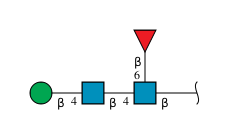
beta-D-mannopyranose-(1-4)-2-acetamido-2-deoxy-beta-D-glucopyranose-(1-4)-[beta-L-fucopyranose-(1-6)]2-acetamido-2-deoxy-beta-D-glucopyranose
F
4N-Glycosylation
Glycosylation Resources
GlyTouCan: G86566TX
GlyCosmos: G86566TX
GlyGen: G86566TX

Small Molecules

Ligands 2 Unique
IDChains Name / Formula / InChI Key2D Diagram3D Interactions
H4S

Query on H4S


Download:Ideal Coordinates CCD File
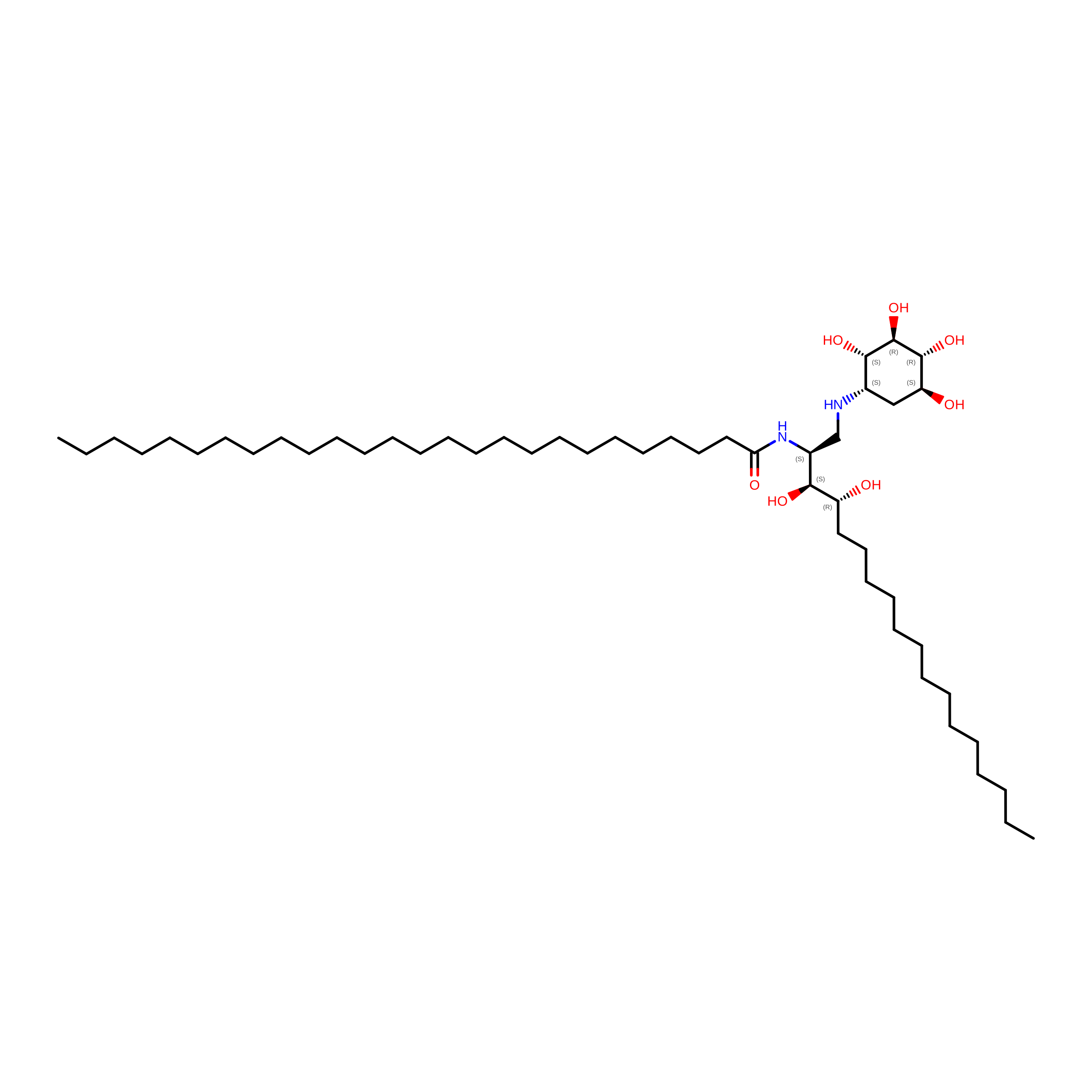
H [auth A]N-[(2S,3S,4R)-3,4-dihydroxy-1-{[(1S,2S,3R,4R,5S)-2,3,4,5-tetrahydroxycyclohexyl]amino}octadecan-2-yl]hexacosanamide
C50 H100 N2 O7
XXEARWSQDQWKKF-KVWQTNEHSA-N
NAG

Query on NAG


Download:Ideal Coordinates CCD File
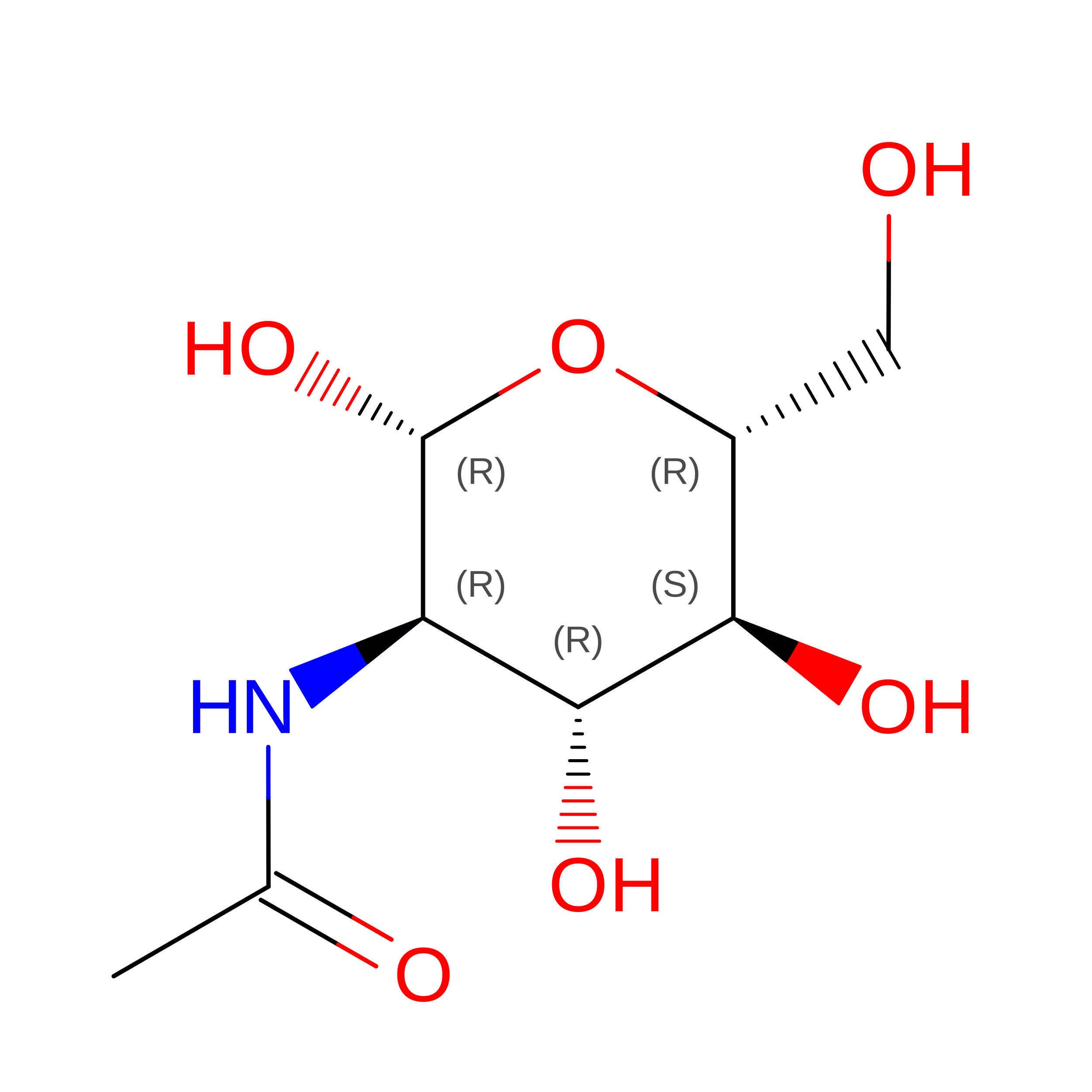
G [auth A]2-acetamido-2-deoxy-beta-D-glucopyranose
C8 H15 N O6
OVRNDRQMDRJTHS-FMDGEEDCSA-N

Experimental Data & Validation

Experimental Data

  • Method: X-RAY DIFFRACTION
  • Resolution: 2.80 Å
  • R-Value Free:  0.268 (Depositor), 0.261 (DCC) 
  • R-Value Work:  0.227 (Depositor), 0.222 (DCC) 
  • R-Value Observed: 0.229 (Depositor) 
Space Group: C 2 2 21
Unit Cell:
Length ( Å )Angle ( ˚ )
a = 78.776α = 90
b = 191.66β = 90
c = 150.919γ = 90
Software Package:
Software NamePurpose
HKL-2000data collection
MOLREPphasing
REFMACrefinement
HKL-2000data reduction
HKL-2000data scaling

Structure Validation

View Full Validation Report


Ligand Structure Quality Assessment 


Entry History 

Deposition Data

Revision History  (Full details and data files)

  • Version 1.0: 2012-02-22
    Type: Initial release
  • Version 1.1: 2012-04-18
    Changes: Database references
  • Version 2.0: 2020-07-29
    Type: Remediation
    Reason: Carbohydrate remediation
    Changes: Atomic model, Data collection, Database references, Derived calculations, Structure summary
  • Version 2.1: 2024-10-16
    Changes: Data collection, Database references, Structure summary