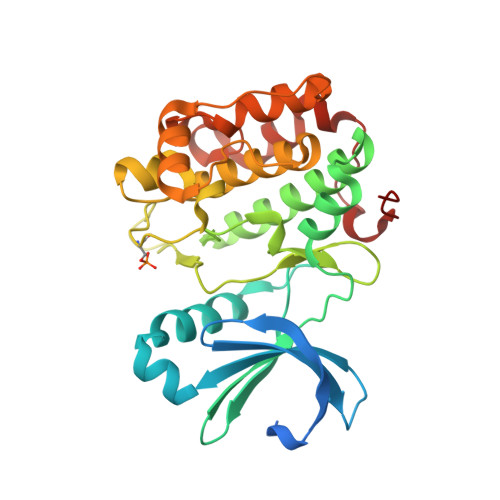
3RCJ | pdb_00003rcj

Rapid preparation of triazolyl substituted NH-heterocyclic kinase inhibitors via one-pot Sonogashira coupling TMS-deprotection CuAAC sequence


Experimental Data Snapshot

  • Method: X-RAY DIFFRACTION
  • Resolution: 1.70 Å
  • R-Value Free: 
    0.198 (Depositor), 0.218 (DCC) 
  • R-Value Work: 
    0.217 (Depositor), 0.201 (DCC) 
  • R-Value Observed: 
    0.217 (Depositor) 

wwPDB Validation 3D Report Full Report

Validation slider image for 3RCJ

Ligand Structure Quality Assessment 


This is version 1.4 of the entry. See complete history

Literature

Rapid preparation of triazolyl substituted NH-heterocyclic kinase inhibitors via one-pot Sonogashira coupling-TMS-deprotection-CuAAC sequence.

Merkul, E.Klukas, F.Dorsch, D.Gradler, U.Greiner, H.E.Muller, T.J.

(2011) Org Biomol Chem 9: 5129-5136

  • DOI: https://doi.org/10.1039/c1ob05586k
  • Primary Citation Related Structures: 
    3RCJ

  • PubMed Abstract: 

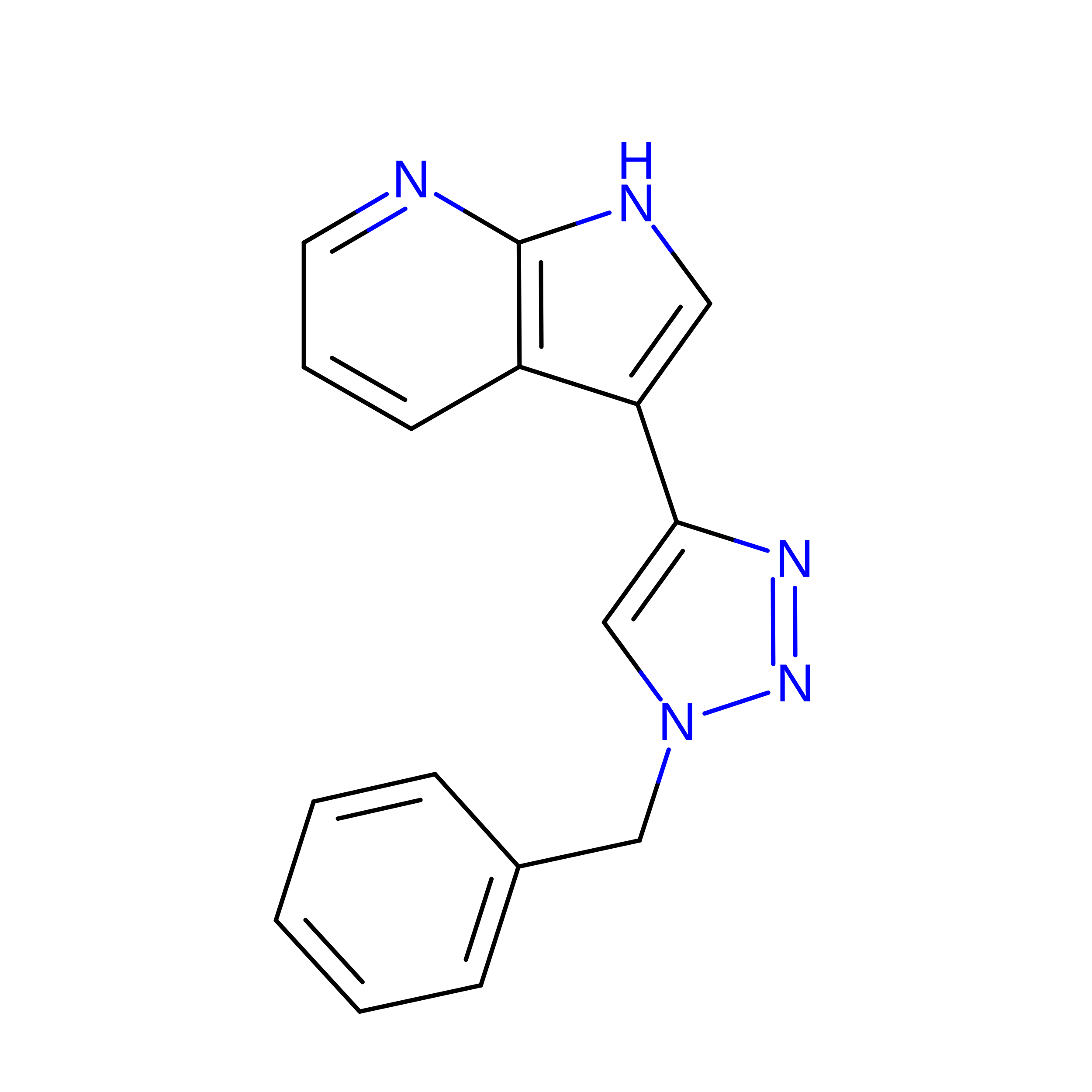
    The one-pot, three-component Sonogashira coupling-TMS-deprotection-CuAAC ("click") sequence is the key reaction for the rapid synthesis of triazolyl substituted N-Boc protected NH-heterocycles, such as indole, indazole, 4-, 5-, 6-, and 7-azaindoles, 4,7-diazaindole, 7-deazapurines, pyrrole, pyrazole, and imidazole. Subsequently, the protective group was readily removed to give the corresponding triazolyl derivatives of these tremendously important NH-heterocycles. All compounds have been tested in a broad panel of kinase assays. Several compounds, 8f, 8h, 8k, and 8l, have been shown to inhibit the kinase PDK1, a target with high oncology relevance, and thus they are promising lead structures for the development of more active derivatives. The X-ray structure analysis of compound 8f in complex with PDK1 has revealed the detailed binding mode of the molecule in the kinase.


  • Organizational Affiliation
    • Lehrstuhl für Organische Chemie, Institut für Organische Chemie und Makromolekulare Chemie, Heinrich-Heine-Universität Düsseldorf, Universitätsstraße 1, D-40225, Düsseldorf, Germany.

Macromolecule Content 

  • Total Structure Weight: 35.67 kDa 
  • Atom Count: 2,463 
  • Modeled Residue Count: 282 
  • Deposited Residue Count: 311 
  • Unique protein chains: 1

Macromolecules

Find similar proteins by:|  3D Structure
Entity ID: 1
MoleculeChains  Sequence LengthOrganismDetailsImage
3-phosphoinositide-dependent protein kinase 1311Homo sapiensMutation(s): 2 
Gene Names: PDPK1PDK1
EC: 2.7.11.1
UniProt & NIH Common Fund Data Resources
Find proteins for O15530 (Homo sapiens)
Explore O15530 
Go to UniProtKB:  O15530
PHAROS:  O15530
GTEx:  ENSG00000140992 
Entity Groups
Sequence Clusters30% Identity50% Identity70% Identity90% Identity95% Identity100% Identity
UniProt GroupO15530
Sequence Annotations
Expand
Reference Sequence

Small Molecules

Ligands 1 Unique
IDChains Name / Formula / InChI Key2D Diagram3D Interactions
3RC

Query on 3RC


Download:Ideal Coordinates CCD File
B [auth A]3-(1-benzyl-1H-1,2,3-triazol-4-yl)-1H-pyrrolo[2,3-b]pyridine
C16 H13 N5
ZTBIRAQXLAIYLL-UHFFFAOYSA-N
Modified Residues  1 Unique
IDChains TypeFormula2D DiagramParent
SEP
Query on SEP
A
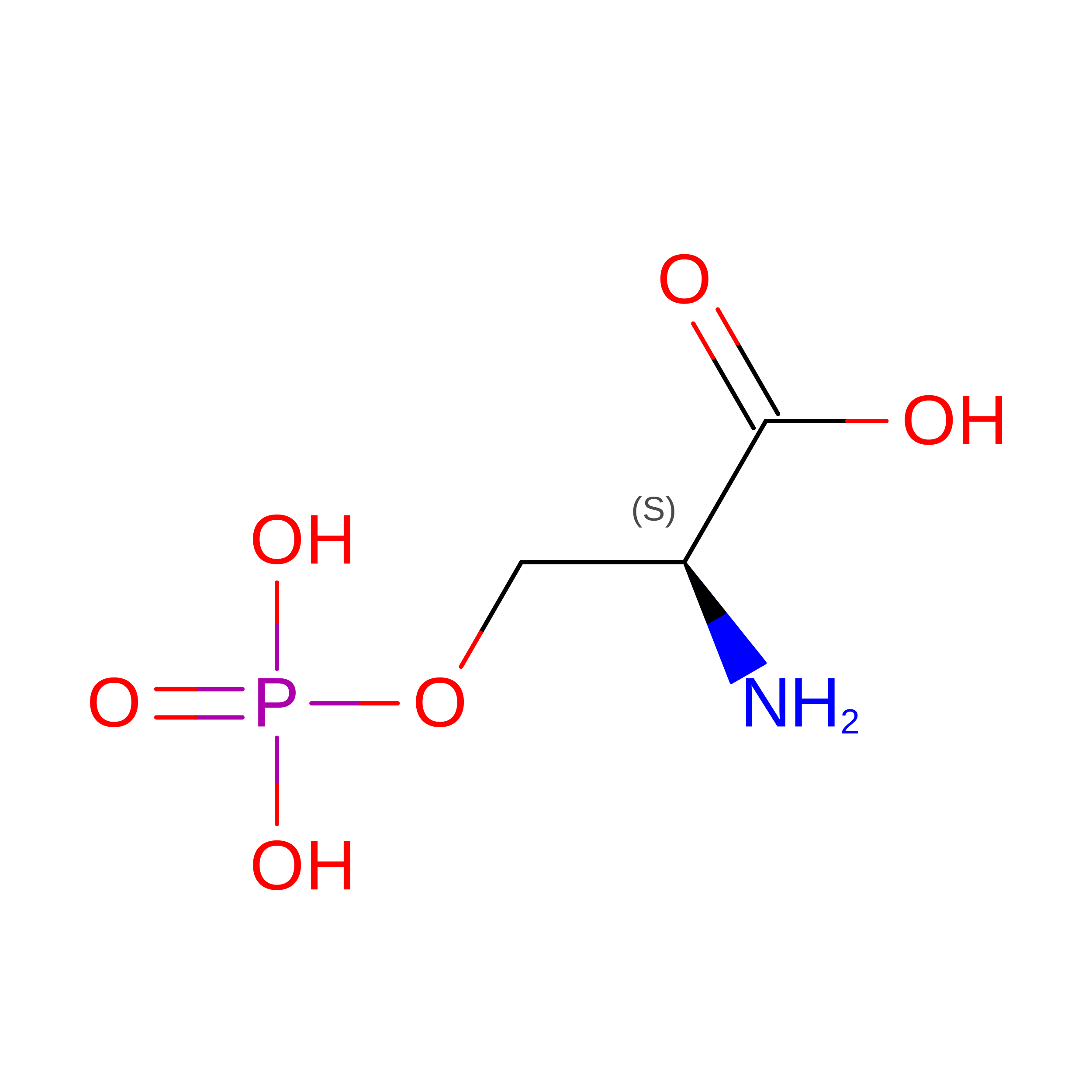
L-PEPTIDE LINKINGC3 H8 N O6 PSER

Experimental Data & Validation

Experimental Data

  • Method: X-RAY DIFFRACTION
  • Resolution: 1.70 Å
  • R-Value Free:  0.198 (Depositor), 0.218 (DCC) 
  • R-Value Work:  0.217 (Depositor), 0.201 (DCC) 
  • R-Value Observed: 0.217 (Depositor) 
Space Group: C 1 2 1
Unit Cell:
Length ( Å )Angle ( ˚ )
a = 148.87α = 90
b = 44.39β = 101.01
c = 47.1γ = 90
Software Package:
Software NamePurpose
XDSdata scaling
CNXrefinement
XDSdata reduction
CNXphasing

Structure Validation

View Full Validation Report


Ligand Structure Quality Assessment 


Entry History 

Deposition Data

Revision History  (Full details and data files)

  • Version 1.0: 2011-06-15
    Type: Initial release
  • Version 1.1: 2011-07-13
    Changes: Version format compliance
  • Version 1.2: 2011-07-20
    Changes: Database references
  • Version 1.3: 2012-12-05
    Changes: Non-polymer description
  • Version 1.4: 2024-11-06
    Changes: Data collection, Database references, Derived calculations, Structure summary