3O21 | pdb_00003o21

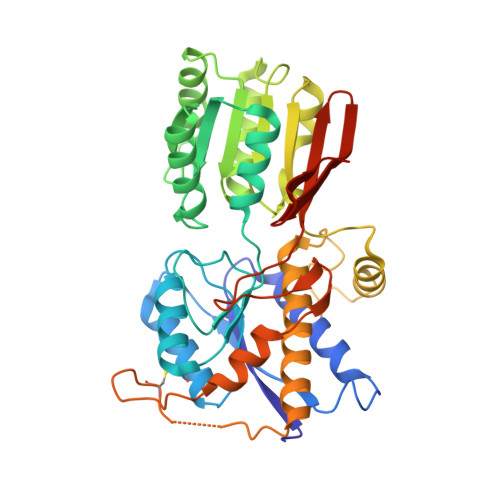
High resolution structure of GluA3 N-terminal domain (NTD)


Experimental Data Snapshot

  • Method: X-RAY DIFFRACTION
  • Resolution: 2.20 Å
  • R-Value Free: 
    0.258 (Depositor), 0.252 (DCC) 
  • R-Value Work: 
    0.207 (Depositor), 0.201 (DCC) 
  • R-Value Observed: 
    0.209 (Depositor) 

wwPDB Validation 3D Report Full Report

Validation slider image for 3O21

Ligand Structure Quality Assessment 


This is version 1.3 of the entry. See complete history

Literature

Dynamics and allosteric potential of the AMPA receptor N-terminal domain

Sukumaran, M.Rossmann, M.Shrivastava, I.Dutta, A.Bahar, I.Greger, I.H.

(2011) EMBO J 30: 972-982

  • DOI: https://doi.org/10.1038/emboj.2011.17
  • Primary Citation Related Structures: 
    3O21, 3P3W

  • PubMed Abstract: 

    Glutamate-gated ion channels (ionotropic glutamate receptors, iGluRs) sense the extracellular milieu via an extensive extracellular portion, comprised of two clamshell-shaped segments. The distal, N-terminal domain (NTD) has allosteric potential in NMDA-type iGluRs, which has not been ascribed to the analogous domain in AMPA receptors (AMPARs). In this study, we present new structural data uncovering dynamic properties of the GluA2 and GluA3 AMPAR NTDs. GluA3 features a zipped-open dimer interface with unconstrained lower clamshell lobes, reminiscent of metabotropic GluRs (mGluRs). The resulting labile interface supports interprotomer rotations, which can be transmitted to downstream receptor segments. Normal mode analysis reveals two dominant mechanisms of AMPAR NTD motion: intraprotomer clamshell motions and interprotomer counter-rotations, as well as accessible interconversion between AMPAR and mGluR conformations. In addition, we detect electron density for a potential ligand in the GluA2 interlobe cleft, which may trigger lobe motions. Together, these data support a dynamic role for the AMPAR NTDs, which widens the allosteric landscape of the receptor and could provide a novel target for ligand development.


  • Organizational Affiliation
    • Neurobiology Division, MRC Laboratory of Molecular Biology, Cambridge, UK.

Macromolecule Content 

  • Total Structure Weight: 182.04 kDa 
  • Atom Count: 12,793 
  • Modeled Residue Count: 1,489 
  • Deposited Residue Count: 1,556 
  • Unique protein chains: 1

Macromolecules

Find similar proteins by:|  3D Structure
Entity ID: 1
MoleculeChains  Sequence LengthOrganismDetailsImage
Glutamate receptor 3
A, B, C, D
389Rattus norvegicusMutation(s): 0 
Gene Names: Gria3Glur3
UniProt
Find proteins for P19492 (Rattus norvegicus)
Explore P19492 
Go to UniProtKB:  P19492
Entity Groups
Sequence Clusters30% Identity50% Identity70% Identity90% Identity95% Identity100% Identity
UniProt GroupP19492
Glycosylation
Glycosylation Sites: 2Go to GlyGen: P19492-1
Sequence Annotations
Expand
Reference Sequence

Small Molecules

Ligands 2 Unique
IDChains Name / Formula / InChI Key2D Diagram3D Interactions
NAG

Query on NAG


Download:Ideal Coordinates CCD File
E [auth A]
F [auth A]
G [auth B]
J [auth C]
K [auth C]
E [auth A],
F [auth A],
G [auth B],
J [auth C],
K [auth C],
L [auth C],
M [auth D],
N [auth D],
O [auth D]
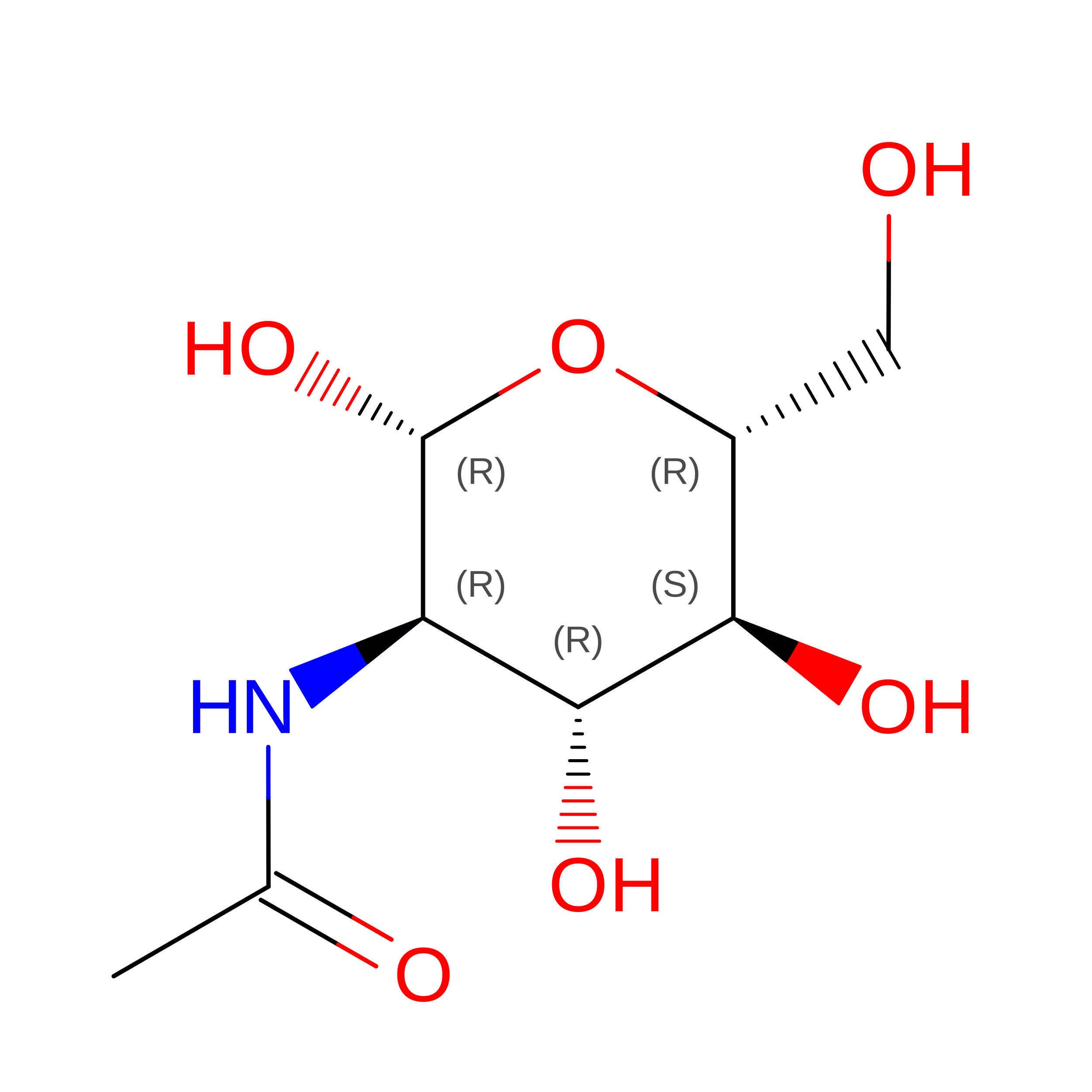
2-acetamido-2-deoxy-beta-D-glucopyranose
C8 H15 N O6
OVRNDRQMDRJTHS-FMDGEEDCSA-N
PO4

Query on PO4


Download:Ideal Coordinates CCD File
H [auth B],
I [auth B]
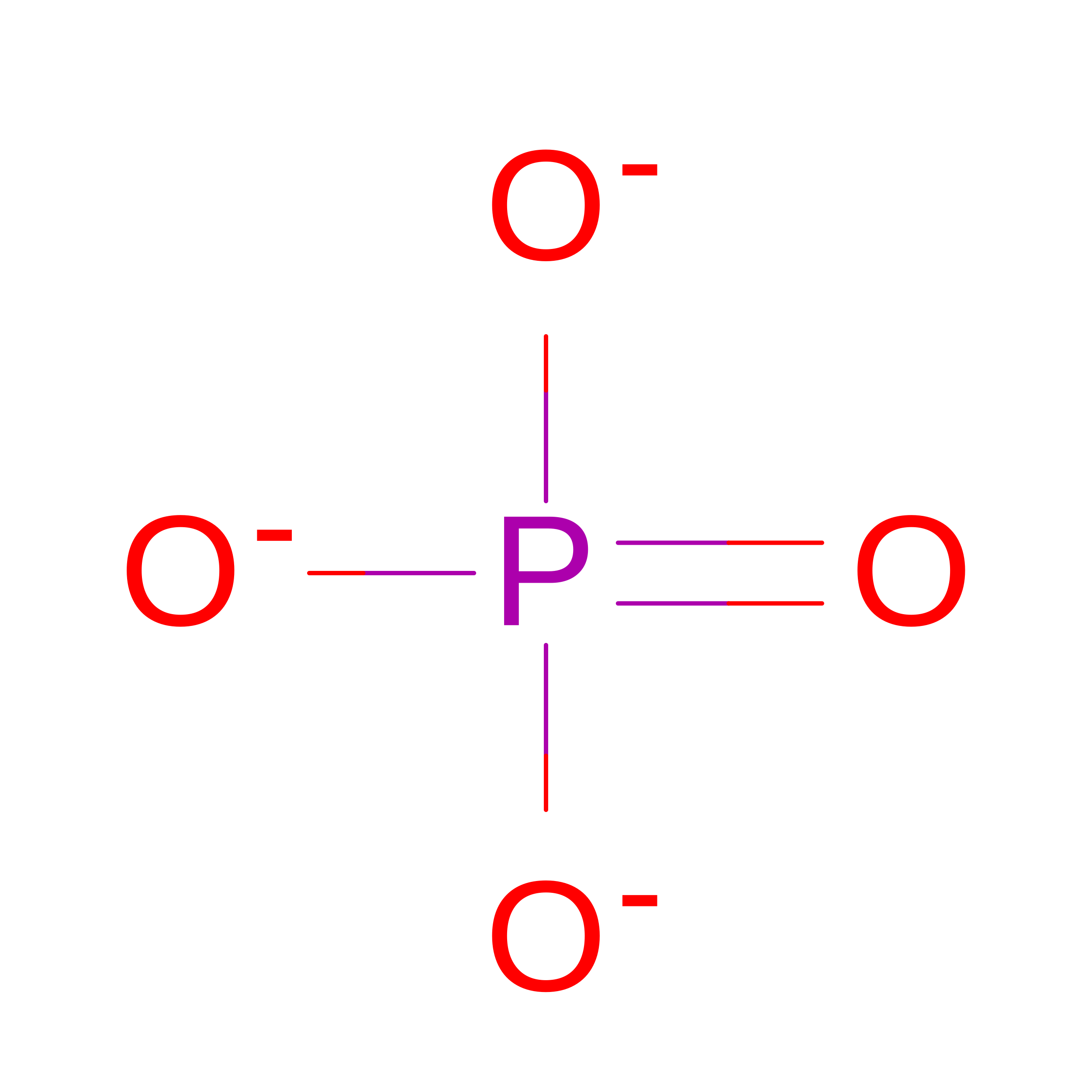
PHOSPHATE ION
O4 P
NBIIXXVUZAFLBC-UHFFFAOYSA-K

Experimental Data & Validation

Experimental Data

  • Method: X-RAY DIFFRACTION
  • Resolution: 2.20 Å
  • R-Value Free:  0.258 (Depositor), 0.252 (DCC) 
  • R-Value Work:  0.207 (Depositor), 0.201 (DCC) 
  • R-Value Observed: 0.209 (Depositor) 
Space Group: P 21 21 21
Unit Cell:
Length ( Å )Angle ( ˚ )
a = 98.755α = 90
b = 130.91β = 90
c = 131.085γ = 90
Software Package:
Software NamePurpose
SCALEPACKdata scaling
PHENIXrefinement
PDB_EXTRACTdata extraction
ADSCdata collection
HKL-2000data reduction
PHASERphasing

Structure Validation

View Full Validation Report


Ligand Structure Quality Assessment 


Entry History 

Deposition Data

Revision History  (Full details and data files)

  • Version 1.0: 2011-03-09
    Type: Initial release
  • Version 1.1: 2011-07-13
    Changes: Version format compliance
  • Version 1.2: 2020-07-29
    Type: Remediation
    Reason: Carbohydrate remediation
    Changes: Data collection, Database references, Derived calculations, Structure summary
  • Version 1.3: 2024-11-13
    Changes: Data collection, Database references, Structure summary