3I28 | pdb_00003i28

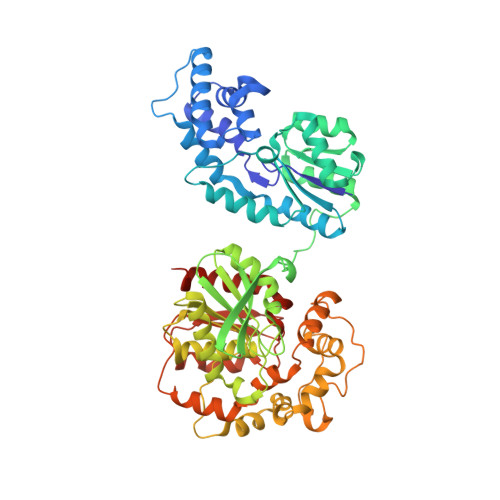
Crystal Structure of soluble epoxide Hydrolase


Experimental Data Snapshot

  • Method: X-RAY DIFFRACTION
  • Resolution: 1.95 Å
  • R-Value Free: 
    0.255 (Depositor) 
  • R-Value Work: 
    0.214 (Depositor) 
  • R-Value Observed: 
    0.216 (Depositor) 

wwPDB Validation 3D Report Full Report

Validation slider image for 3I28

Ligand Structure Quality Assessment 


This is version 1.3 of the entry. See complete history

Literature

Structure-based optimization of arylamides as inhibitors of soluble epoxide hydrolase.

Eldrup, A.B.Soleymanzadeh, F.Taylor, S.J.Muegge, I.Farrow, N.A.Joseph, D.McKellop, K.Man, C.C.Kukulka, A.De Lombaert, S.

(2009) J Med Chem 52: 5880-5895

  • DOI: https://doi.org/10.1021/jm9005302
  • Primary Citation Related Structures: 
    3I1Y, 3I28

  • PubMed Abstract: 

    Inhibition of soluble epoxide hydrolase (sEH) is hypothesized to lead to an increase in circulating levels of epoxyeicosatrienoic acids, resulting in the potentiation of their in vivo pharmacological properties. As part of an effort to identify inhibitors of sEH with high and sustained plasma exposure, we recently performed a high throughput screen of our compound collection. The screen identified N-(3,3-diphenyl-propyl)-nicotinamide as a potent inhibitor of sEH. Further profiling of this lead revealed short metabolic half-lives in microsomes and rapid clearance in the rat. Consistent with these observations, the determination of the in vitro metabolic profile of N-(3,3-diphenyl-propyl)-nicotinamide in rat liver microsomes revealed extensive oxidative metabolism and a propensity for metabolite switching. Lead optimization, guided by the analysis of the solid-state costructure of N-(3,3-diphenyl-propyl)-nicotinamide bound to human sEH, led to the identification of a class of potent and selective inhibitors. An inhibitor from this class displayed an attractive in vitro metabolic profile and high and sustained plasma exposure in the rat after oral administration.


  • Organizational Affiliation
    • Department of Medicinal Chemistry, Boehringer Ingelheim Pharmaceuticals, Ridgefield, Connecticut 06877, USA. anne.eldrup@boehringer-ingelheim.com

Macromolecule Content 

  • Total Structure Weight: 63.12 kDa 
  • Atom Count: 4,499 
  • Modeled Residue Count: 545 
  • Deposited Residue Count: 555 
  • Unique protein chains: 1

Macromolecules

Find similar proteins by:|  3D Structure
Entity ID: 1
MoleculeChains  Sequence LengthOrganismDetailsImage
Epoxide hydrolase 2555Homo sapiensMutation(s): 0 
Gene Names: EPHX2
EC: 3.3.2.10 (PDB Primary Data), 3.1.3.76 (UniProt)
UniProt & NIH Common Fund Data Resources
Find proteins for P34913 (Homo sapiens)
Explore P34913 
Go to UniProtKB:  P34913
PHAROS:  P34913
GTEx:  ENSG00000120915 
Entity Groups
Sequence Clusters30% Identity50% Identity70% Identity90% Identity95% Identity100% Identity
UniProt GroupP34913
Sequence Annotations
Expand
Reference Sequence

Small Molecules

Ligands 1 Unique
IDChains Name / Formula / InChI Key2D Diagram3D Interactions
34N

Query on 34N


Download:Ideal Coordinates CCD File
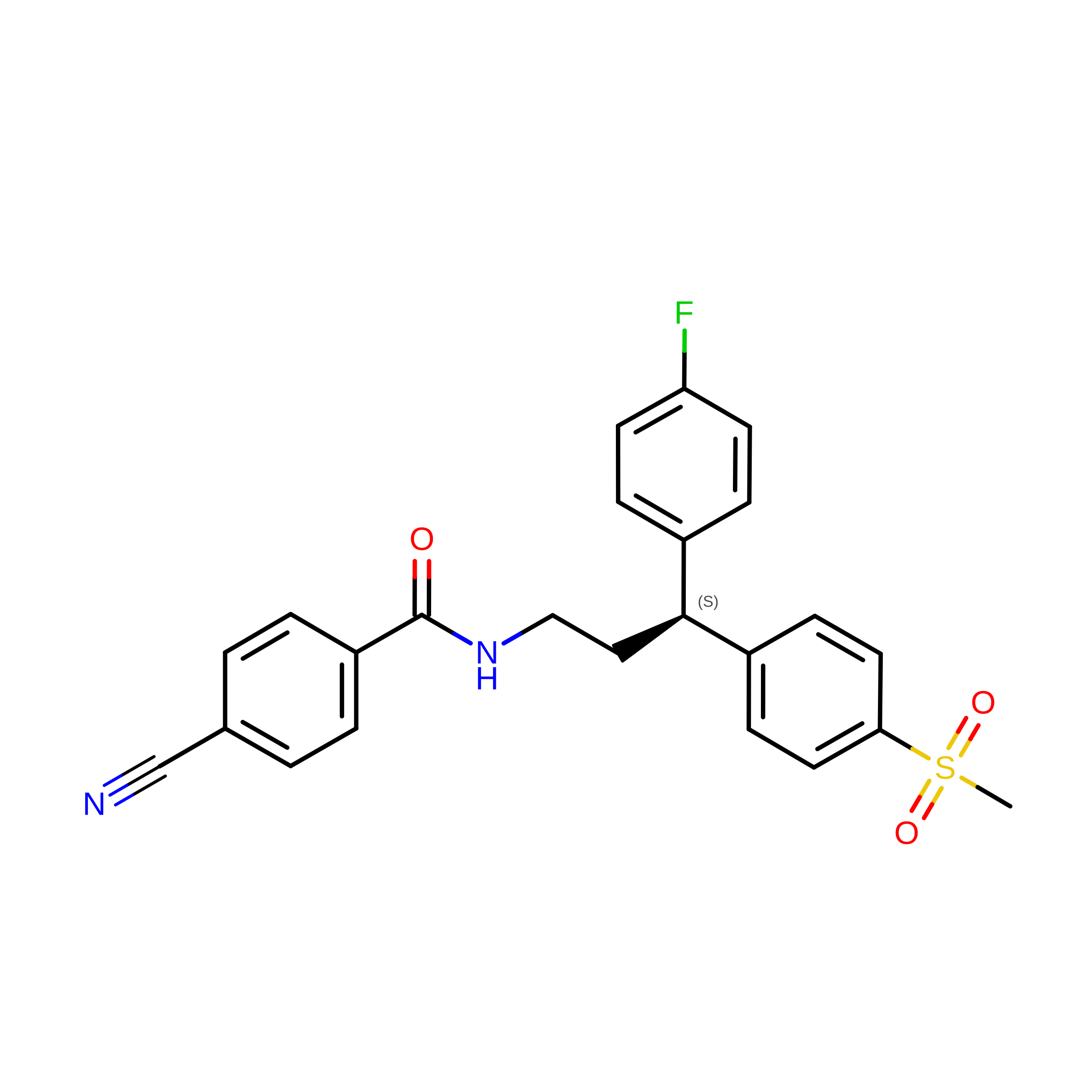
B [auth A]4-cyano-N-{(3S)-3-(4-fluorophenyl)-3-[4-(methylsulfonyl)phenyl]propyl}benzamide
C24 H21 F N2 O3 S
OXJGQTIVCHEXQS-QHCPKHFHSA-N
Binding Affinity Annotations 
IDSourceBinding Affinity
34N BindingDB:  3I28 IC50: 8 (nM) from 1 assay(s)

Experimental Data & Validation

Experimental Data

  • Method: X-RAY DIFFRACTION
  • Resolution: 1.95 Å
  • R-Value Free:  0.255 (Depositor) 
  • R-Value Work:  0.214 (Depositor) 
  • R-Value Observed: 0.216 (Depositor) 
Space Group: P 65 2 2
Unit Cell:
Length ( Å )Angle ( ˚ )
a = 92.41α = 90
b = 92.41β = 90
c = 243.983γ = 120
Software Package:
Software NamePurpose
PHENIXrefinement
PDB_EXTRACTdata extraction

Structure Validation

View Full Validation Report


Ligand Structure Quality Assessment 


Entry History 

Deposition Data

  • Released Date: 2009-10-13 
  • Deposition Author(s): Farrow, N.A.

Revision History  (Full details and data files)

  • Version 1.0: 2009-10-13
    Type: Initial release
  • Version 1.1: 2011-07-13
    Changes: Non-polymer description, Version format compliance
  • Version 1.2: 2021-02-24
    Changes: Derived calculations
  • Version 1.3: 2024-02-21
    Changes: Data collection, Database references