3HFG | pdb_00003hfg

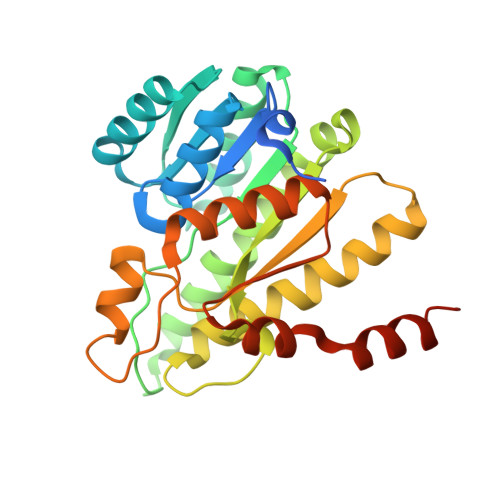
Crystal Structure of Human 11-beta-hydroxysteroid-dehydrogenase Bound to an Sulfonyl-piperazine Inhibitor


Experimental Data Snapshot

  • Method: X-RAY DIFFRACTION
  • Resolution: 2.30 Å
  • R-Value Free: 
    0.285 (Depositor) 
  • R-Value Work: 
    0.231 (Depositor) 
  • R-Value Observed: 
    0.234 (Depositor) 

wwPDB Validation 3D Report Full Report

Validation slider image for 3HFG

Ligand Structure Quality Assessment 


This is version 1.4 of the entry. See complete history

Literature

Efficacious 11beta-hydroxysteroid dehydrogenase type I inhibitors in the diet-induced obesity mouse model.

Wan, Z.K.Chenail, E.Xiang, J.Li, H.Q.Ipek, M.Bard, J.Svenson, K.Mansour, T.S.Xu, X.Tian, X.Suri, V.Hahm, S.Xing, Y.Johnson, C.E.Li, X.Qadri, A.Panza, D.Perreault, M.Tobin, J.F.Saiah, E.

(2009) J Med Chem 52: 5449-5461

  • DOI: https://doi.org/10.1021/jm900639u
  • Primary Citation Related Structures: 
    3H6K, 3HFG

  • PubMed Abstract: 

    Cortisol and the glucocorticoid receptor signaling pathway have been implicated in the development of diabetes and obesity. The reduction of cortisone to cortisol is catalyzed by 11beta-hydroxysteroid dehydrogenase type I (11beta-HSD1). 2,4-Disubsituted benzenesulfonamides were identified as potent inhibitors of both the human and mouse enzymes. The lead compounds displayed good pharmacokinetics and ex vivo inhibition of the target in mice. Cocrystal structures of compounds 1 and 20 bound to human 11beta-HSD1 were obtained. Compound 20 was found to achieve high concentrations in target tissues, resulting in 95% inhibition in the ex vivo assay when dosed with a food mix (0.5 mg of drug per g of food) after 4 days. Compound 20 was efficacious in a mouse diet-induced obesity model and significantly reduced fed glucose and fasted insulin levels. Our findings suggest that 11beta-HSD1 inhibition may be a valid target for the treatment of diabetes.


  • Organizational Affiliation
    • Chemical Sciences, Wyeth Research, Cambridge, Massachusetts 02140, USA. zwan@wyeth.com

Macromolecule Content 

  • Total Structure Weight: 132.2 kDa 
  • Atom Count: 8,217 
  • Modeled Residue Count: 1,026 
  • Deposited Residue Count: 1,144 
  • Unique protein chains: 1

Macromolecules

Find similar proteins by:|  3D Structure
Entity ID: 1
MoleculeChains  Sequence LengthOrganismDetailsImage
Corticosteroid 11-beta-dehydrogenase isozyme 1
A, B, C, D
286Homo sapiensMutation(s): 1 
Gene Names: HSD11B1HSD11HSD11L
EC: 1.1.1.146 (PDB Primary Data), 1.1.1.201 (UniProt)
UniProt & NIH Common Fund Data Resources
Find proteins for P28845 (Homo sapiens)
Explore P28845 
Go to UniProtKB:  P28845
PHAROS:  P28845
GTEx:  ENSG00000117594 
Entity Groups
Sequence Clusters30% Identity50% Identity70% Identity90% Identity95% Identity100% Identity
UniProt GroupP28845
Sequence Annotations
Expand
Reference Sequence

Small Molecules

Ligands 2 Unique
IDChains Name / Formula / InChI Key2D Diagram3D Interactions
NAP

Query on NAP


Download:Ideal Coordinates CCD File
F [auth A],
H [auth B],
J [auth C],
L [auth D]
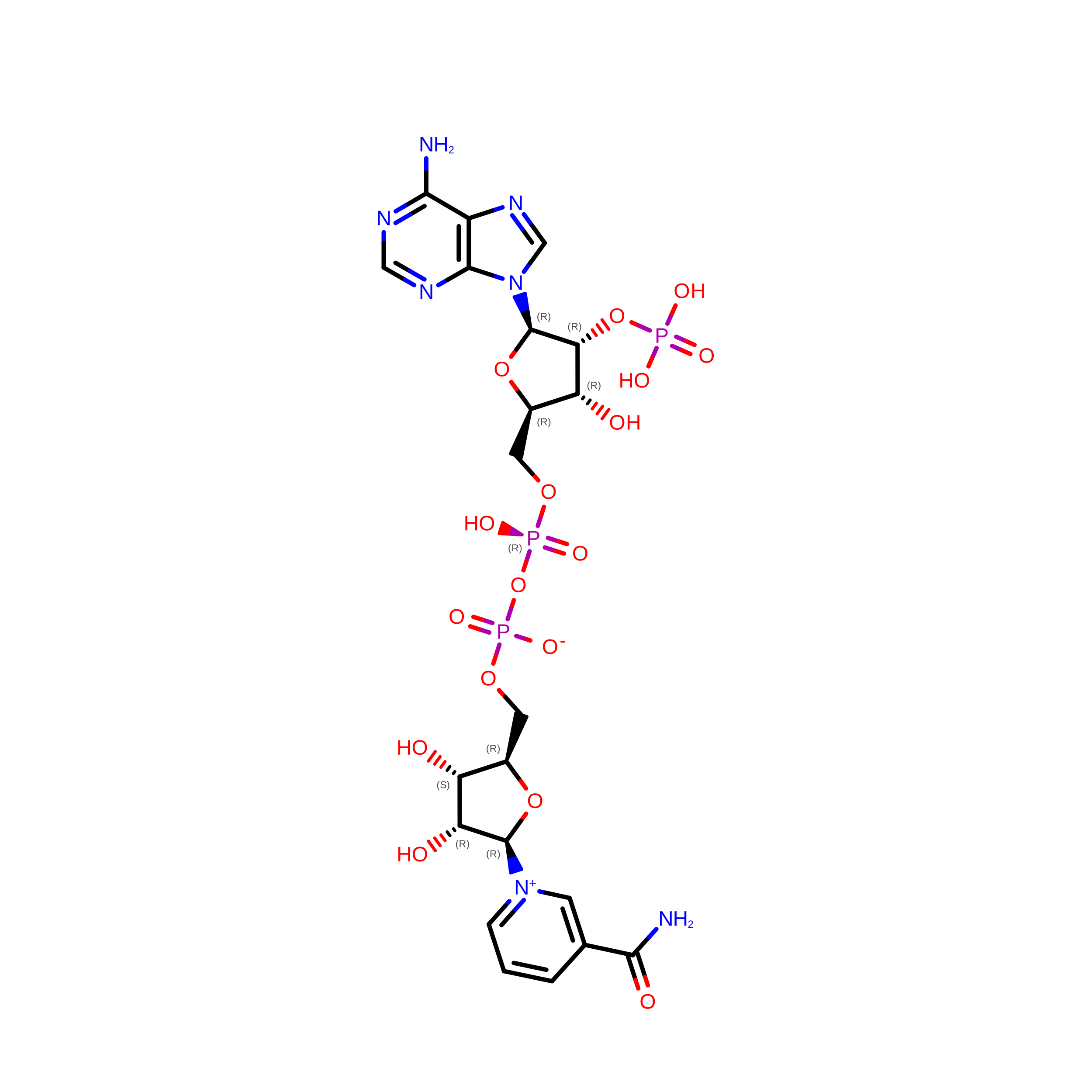
NADP NICOTINAMIDE-ADENINE-DINUCLEOTIDE PHOSPHATE
C21 H28 N7 O17 P3
XJLXINKUBYWONI-NNYOXOHSSA-N
17R

Query on 17R


Download:Ideal Coordinates CCD File
E [auth A],
G [auth B],
I [auth C],
K [auth D]
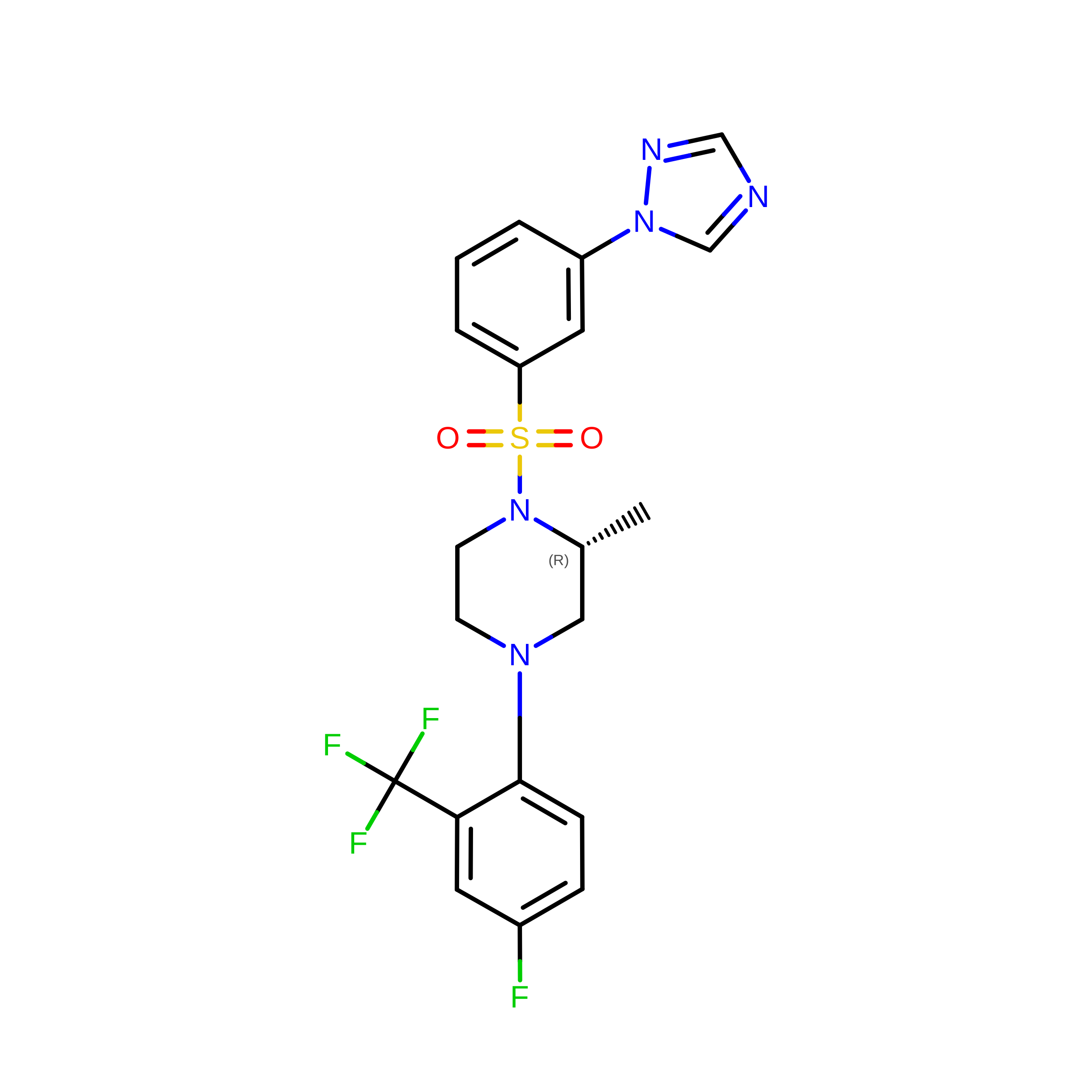
(2R)-4-[4-fluoro-2-(trifluoromethyl)phenyl]-2-methyl-1-{[3-(1H-1,2,4-triazol-1-yl)phenyl]sulfonyl}piperazine
C20 H19 F4 N5 O2 S
ALJLAOVBUJZEDK-CQSZACIVSA-N

Experimental Data & Validation

Experimental Data

  • Method: X-RAY DIFFRACTION
  • Resolution: 2.30 Å
  • R-Value Free:  0.285 (Depositor) 
  • R-Value Work:  0.231 (Depositor) 
  • R-Value Observed: 0.234 (Depositor) 
Space Group: P 1 21 1
Unit Cell:
Length ( Å )Angle ( ˚ )
a = 56.438α = 90
b = 152.67β = 92.41
c = 74.203γ = 90
Software Package:
Software NamePurpose
DENZOdata reduction
SCALEPACKdata scaling
REFMACrefinement
PDB_EXTRACTdata extraction
PHENIXrefinement

Structure Validation

View Full Validation Report


Ligand Structure Quality Assessment 


Entry History 

Deposition Data

Revision History  (Full details and data files)

  • Version 1.0: 2009-09-29
    Type: Initial release
  • Version 1.1: 2011-07-13
    Changes: Version format compliance
  • Version 1.2: 2017-11-01
    Changes: Advisory, Refinement description
  • Version 1.3: 2021-10-13
    Changes: Advisory, Data collection, Database references, Derived calculations
  • Version 1.4: 2024-02-21
    Changes: Data collection