3APR | pdb_00003apr

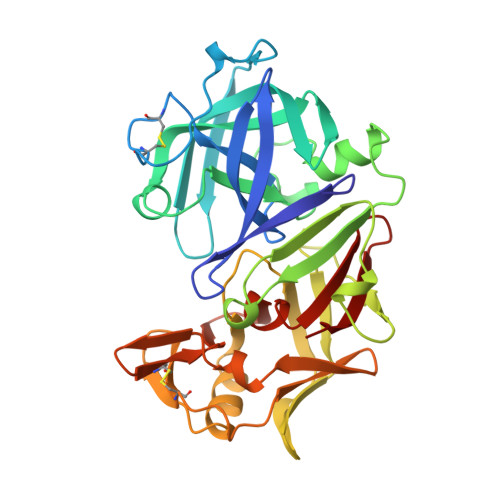
BINDING OF A REDUCED PEPTIDE INHIBITOR TO THE ASPARTIC PROTEINASE FROM RHIZOPUS CHINENSIS. IMPLICATIONS FOR A MECHANISM OF ACTION


Experimental Data Snapshot

  • Method: X-RAY DIFFRACTION
  • Resolution: 1.80 Å
  • R-Value Work: 
    0.194 (DCC) 
  • R-Value Observed: 
    0.147 (Depositor) 

wwPDB Validation 3D Report Full Report

Validation slider image for 3APR

This is version 2.1 of the entry. See complete history

Literature

Binding of a reduced peptide inhibitor to the aspartic proteinase from Rhizopus chinensis: implications for a mechanism of action.

Suguna, K.Padlan, E.A.Smith, C.W.Carlson, W.D.Davies, D.R.

(1987) Proc Natl Acad Sci U S A 84: 7009-7013

  • DOI: https://doi.org/10.1073/pnas.84.20.7009
  • Primary Citation Related Structures: 
    3APR

  • PubMed Abstract: 

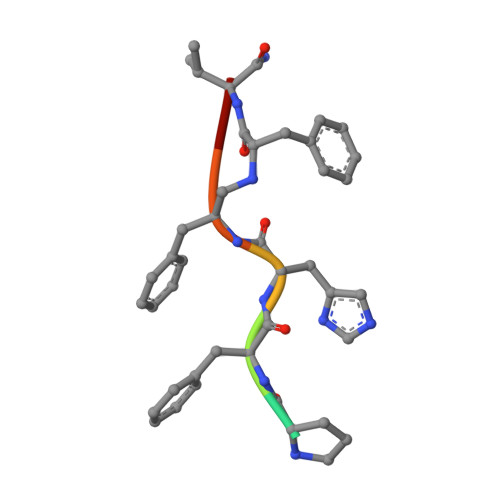
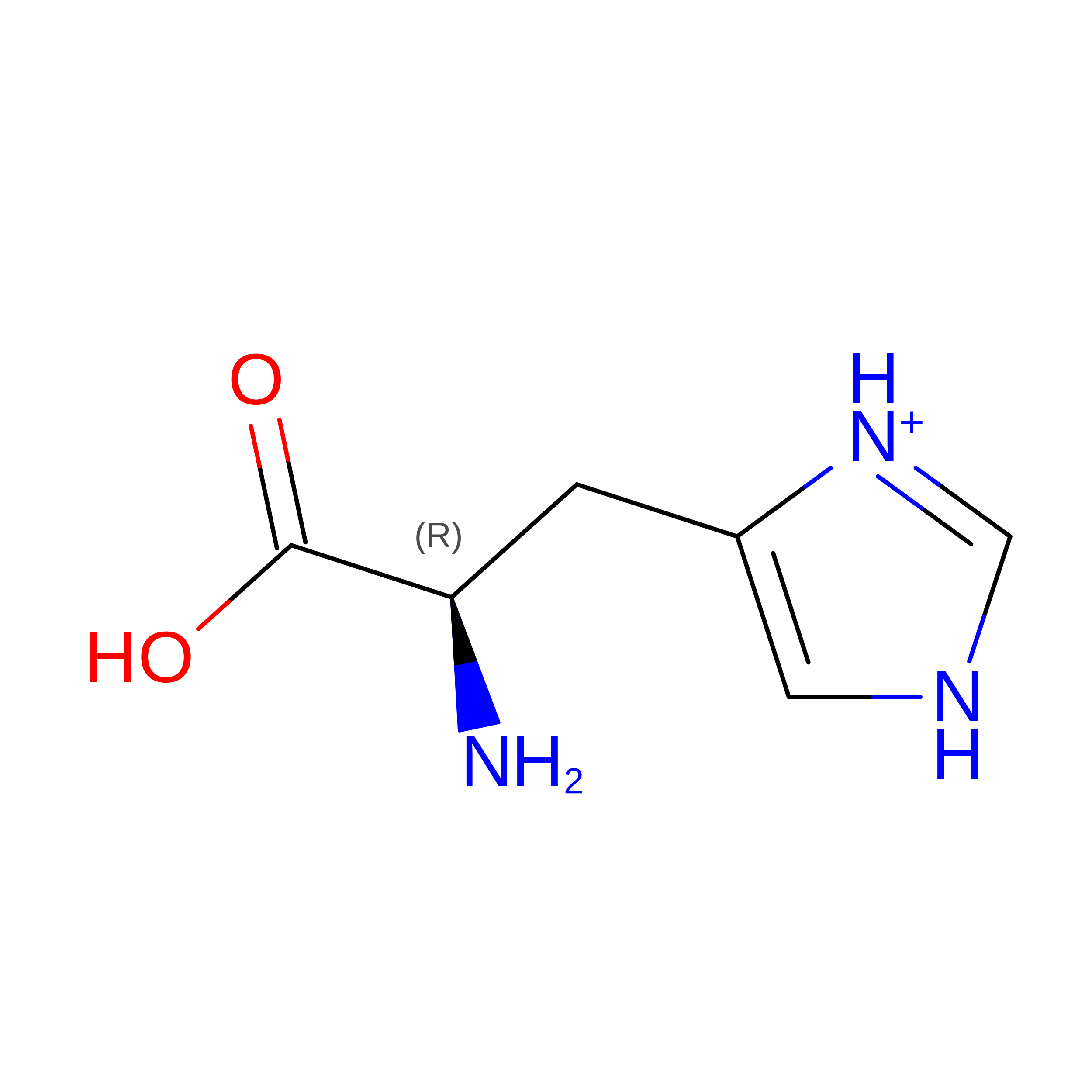
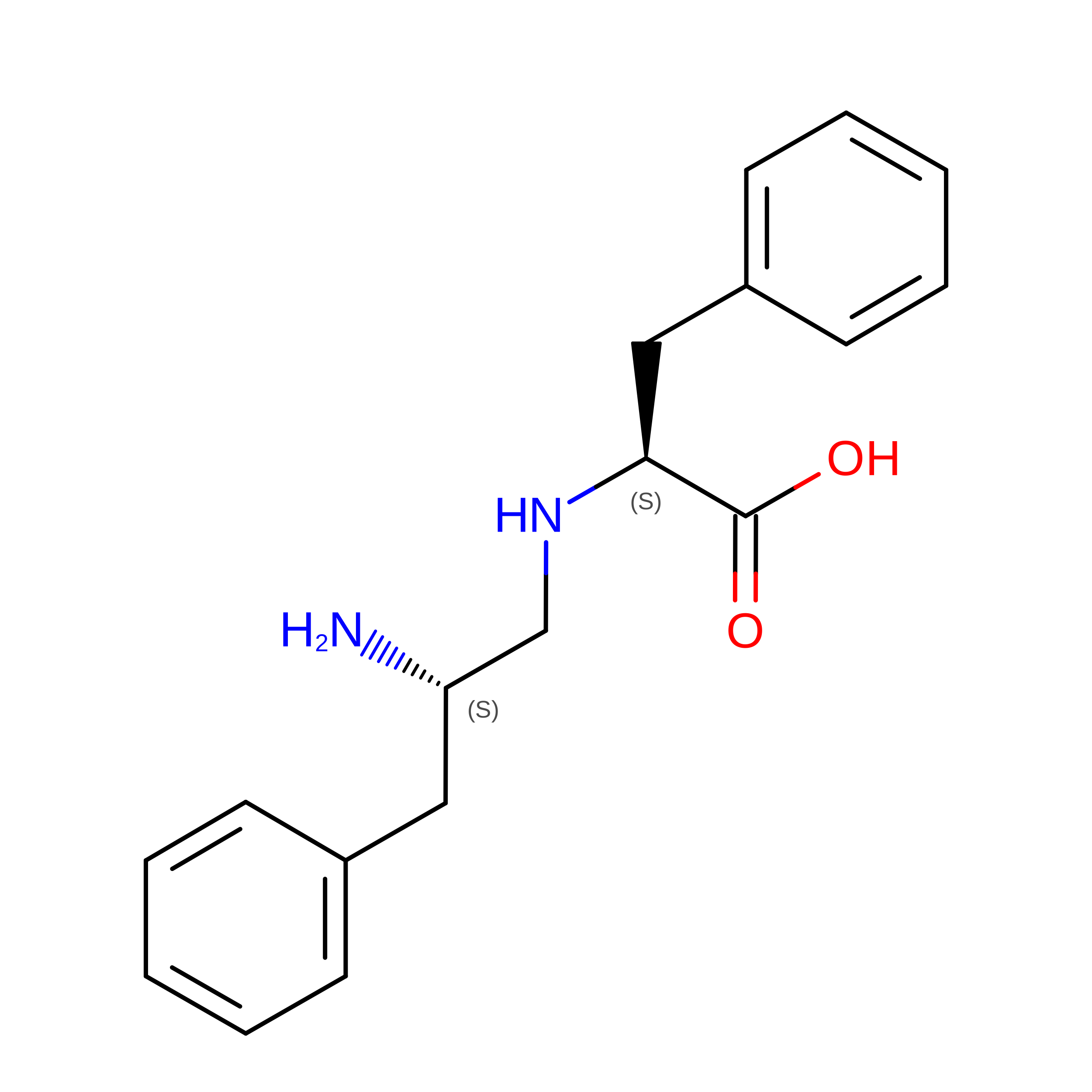
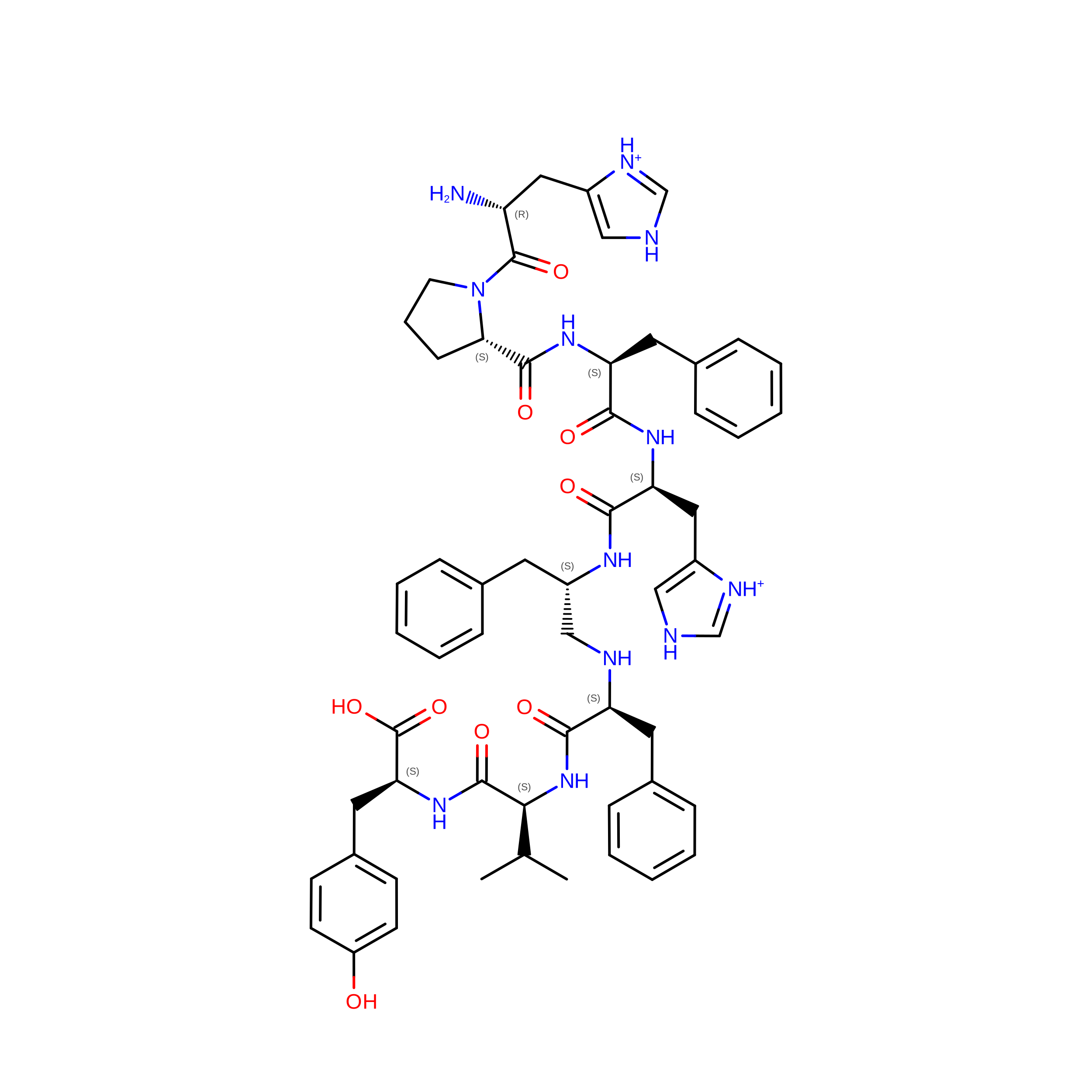
    A peptide inhibitor, having the sequence D-His-Pro-Phe-His-Phe psi [CH2-NH]Phe-Val-Tyr, with a reduced bond between the two adjacent phenylalanines, has been diffused into crystals of the aspartic proteinase from Rhizopus chinensis (rhizopuspepsin, EC 3.4.23.6). X-ray diffraction data to 1.8-A resolution have been collected on the complex, which has been subjected to restrained least-squares refinement to an R-factor (R equals the sum of the absolute value of the difference between the observed and calculated structure factor amplitudes divided by the sum of the observed structure factor amplitudes) of 14.7%. The inhibitor lies within the major groove of the enzyme and is clearly defined with the exception of the amino-terminal D-histidine and the carboxyl-terminal tyrosine. The reduced peptide bond is located in the active site with close contacts to the two catalytic aspartyl groups. The active-site water molecule that is held between the two carboxyl groups is displaced by the inhibitor, as are a number of other water molecules seen in the binding groove of the native enzyme. A mechanism of action for this class of enzymes is proposed from these results.


  • Organizational Affiliation
    • Laboratory of Molecular Biology, National Institute of Diabetes and Digestive and Kidney Diseases, Bethesda, MD 20892.

Macromolecule Content 

  • Total Structure Weight: 35.15 kDa 
  • Atom Count: 2,818 
  • Modeled Residue Count: 331 
  • Deposited Residue Count: 332 
  • Unique protein chains: 2

Macromolecules

Find similar proteins by:|  3D Structure
Entity ID: 1
MoleculeChains  Sequence LengthOrganismDetailsImage
RHIZOPUSPEPSINA [auth E]325Rhizopus microsporus var. chinensisMutation(s): 0 
EC: 3.4.23.6 (PDB Primary Data), 3.4.23.21 (UniProt)
UniProt
Find proteins for P06026 (Rhizopus chinensis)
Explore P06026 
Go to UniProtKB:  P06026
Entity Groups
Sequence Clusters30% Identity50% Identity70% Identity90% Identity95% Identity100% Identity
UniProt GroupP06026
Sequence Annotations
Expand
Reference Sequence
Find similar proteins by:  Sequence   |   3D Structure  
Entity ID: 2
MoleculeChains  Sequence LengthOrganismDetailsImage
REDUCED PEPTIDE INHIBITORB [auth I]7N/AMutation(s): 0 

Experimental Data & Validation

Experimental Data

  • Method: X-RAY DIFFRACTION
  • Resolution: 1.80 Å
  • R-Value Work:  0.194 (DCC) 
  • R-Value Observed: 0.147 (Depositor) 
Space Group: P 21 21 21
Unit Cell:
Length ( Å )Angle ( ˚ )
a = 60.37α = 90
b = 60.61β = 90
c = 106.77γ = 90
Software Package:
Software NamePurpose
PROLSQrefinement

Structure Validation

View Full Validation Report


Entry History 

Deposition Data

Revision History  (Full details and data files)

  • Version 1.0: 1988-01-16
    Type: Initial release
  • Version 1.1: 2008-03-03
    Changes: Version format compliance
  • Version 1.2: 2011-07-13
    Changes: Atomic model, Database references, Derived calculations, Non-polymer description, Structure summary, Version format compliance
  • Version 1.3: 2012-12-12
    Changes: Other
  • Version 1.4: 2017-11-29
    Changes: Derived calculations, Other
  • Version 2.0: 2023-11-15
    Changes: Atomic model, Data collection, Database references, Derived calculations
  • Version 2.1: 2024-11-13
    Changes: Structure summary