3ANS | pdb_00003ans

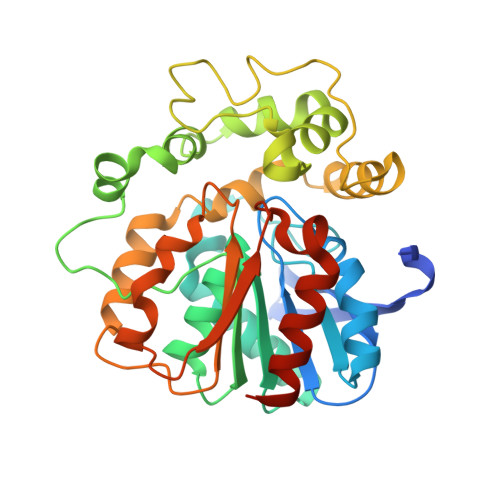
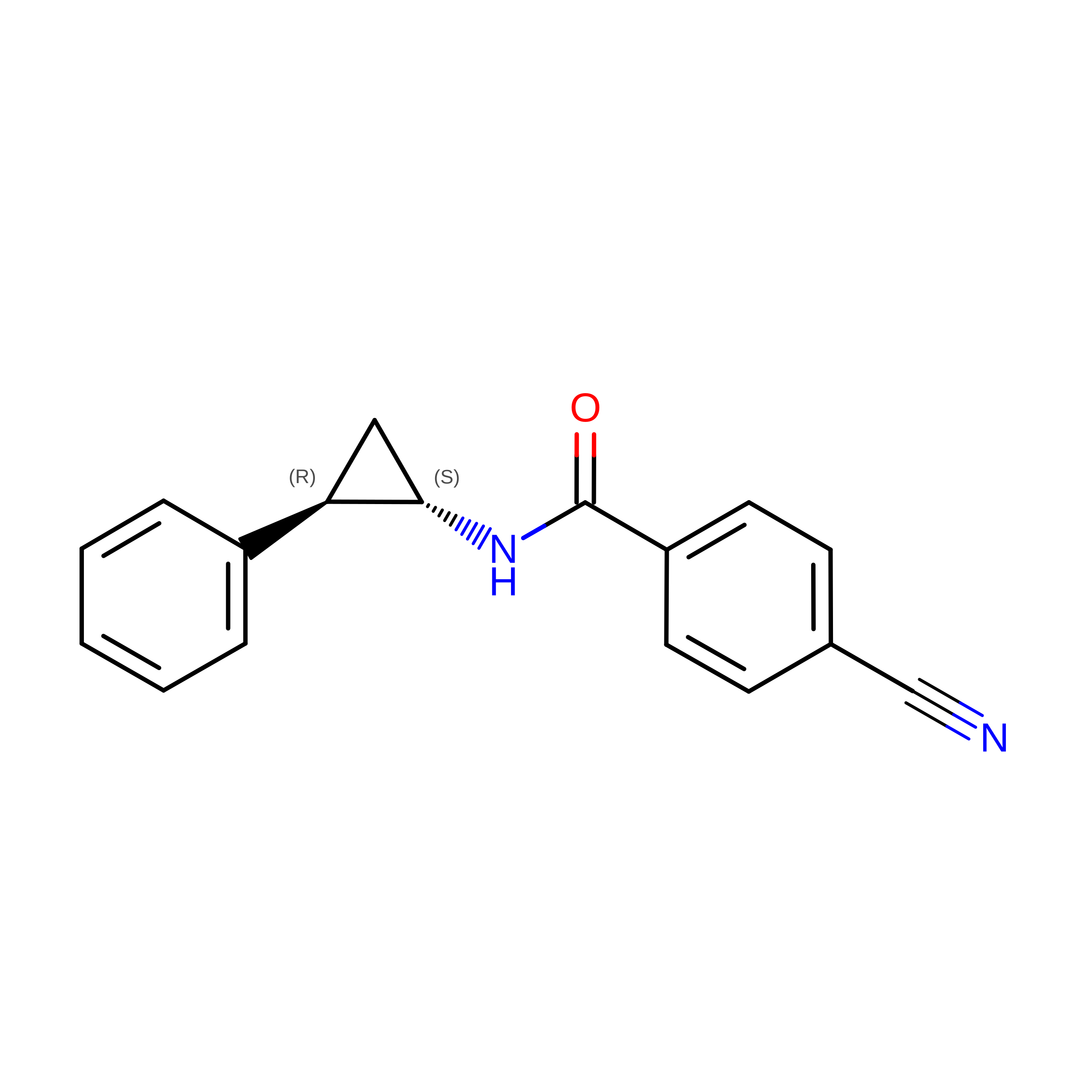
Human soluble epoxide hydrolase in complex with a synthetic inhibitor


Experimental Data Snapshot

  • Method: X-RAY DIFFRACTION
  • Resolution: 1.98 Å
  • R-Value Free: 
    0.260 (Depositor), 0.254 (DCC) 
  • R-Value Work: 
    0.219 (Depositor), 0.215 (DCC) 
  • R-Value Observed: 
    0.221 (Depositor) 

Starting Model: experimental
View more details

wwPDB Validation 3D Report Full Report

Validation slider image for 3ANS

Ligand Structure Quality Assessment 


This is version 1.4 of the entry. See complete history

Literature

A practical use of ligand efficiency indices out of the fragment-based approach: ligand efficiency-guided lead identification of soluble epoxide hydrolase inhibitors

Tanaka, D.Tsuda, Y.Shiyama, T.Nishimura, T.Chiyo, N.Tominaga, Y.Sawada, N.Mimoto, T.Kusunose, N.

(2011) J Med Chem 54: 851-857

  • DOI: https://doi.org/10.1021/jm101273e
  • Primary Citation Related Structures: 
    3ANS, 3ANT

  • PubMed Abstract: 

    Ligand efficiency is frequently used to evaluate fragment compounds in fragment-based drug discovery. We applied ligand efficiency indices in a conventional virtual screening-initiated lead generation study of soluble epoxide hydrolase inhibitors. From a considerable number of screening hits, we carefully selected a compound exhibiting relatively weak inhibitory activity but high ligand efficiency. This ligand efficiency-guided selection could reveal compounds possessing preferable lead-like characteristics in terms of molecular size and lipophilicity. The following hit-to-lead medicinal chemistry campaign successfully led to a more potent, ADMET-clean, lead-like compound preserving high ligand efficiency. Retrospective analyses, including consideration of the more recently proposed indices of ligand efficiency, shed light on the validity of our hit triage and hit-to-lead studies. The present work proposes a practical methodology for lead generation using the concept of ligand efficiency.


  • Organizational Affiliation
    • Chemistry Research Laboratories, Dainippon Sumitomo Pharma Co., Ltd. 3-1-98 Kasugade-naka, Konohana, Osaka 554-0022, Japan.

Macromolecule Content 

  • Total Structure Weight: 77.82 kDa 
  • Atom Count: 5,348 
  • Modeled Residue Count: 628 
  • Deposited Residue Count: 672 
  • Unique protein chains: 1

Macromolecules

Find similar proteins by:|  3D Structure
Entity ID: 1
MoleculeChains  Sequence LengthOrganismDetailsImage
Epoxide hydrolase 2
A, B
336Homo sapiensMutation(s): 0 
Gene Names: EPHX2
EC: 3.3.2.10 (PDB Primary Data), 3.1.3.76 (UniProt)
UniProt & NIH Common Fund Data Resources
Find proteins for P34913 (Homo sapiens)
Explore P34913 
Go to UniProtKB:  P34913
PHAROS:  P34913
GTEx:  ENSG00000120915 
Entity Groups
Sequence Clusters30% Identity50% Identity70% Identity90% Identity95% Identity100% Identity
UniProt GroupP34913
Sequence Annotations
Expand
Reference Sequence

Small Molecules

Experimental Data & Validation

Experimental Data

  • Method: X-RAY DIFFRACTION
  • Resolution: 1.98 Å
  • R-Value Free:  0.260 (Depositor), 0.254 (DCC) 
  • R-Value Work:  0.219 (Depositor), 0.215 (DCC) 
  • R-Value Observed: 0.221 (Depositor) 
Space Group: C 1 2 1
Unit Cell:
Length ( Å )Angle ( ˚ )
a = 129.63α = 90
b = 80.35β = 126.2
c = 88.69γ = 90
Software Package:
Software NamePurpose
d*TREKdata scaling
REFMACrefinement
PDB_EXTRACTdata extraction
CrystalCleardata collection
CrystalCleardata reduction
CrystalCleardata scaling
MOLREPphasing

Structure Validation

View Full Validation Report


Ligand Structure Quality Assessment 


Entry History 

Deposition Data

Revision History  (Full details and data files)

  • Version 1.0: 2011-01-19
    Type: Initial release
  • Version 1.1: 2011-07-13
    Changes: Version format compliance
  • Version 1.2: 2014-01-22
    Changes: Database references
  • Version 1.3: 2021-02-24
    Changes: Advisory, Database references, Derived calculations
  • Version 1.4: 2023-11-01
    Changes: Data collection, Database references, Refinement description