2YOK | pdb_00002yok

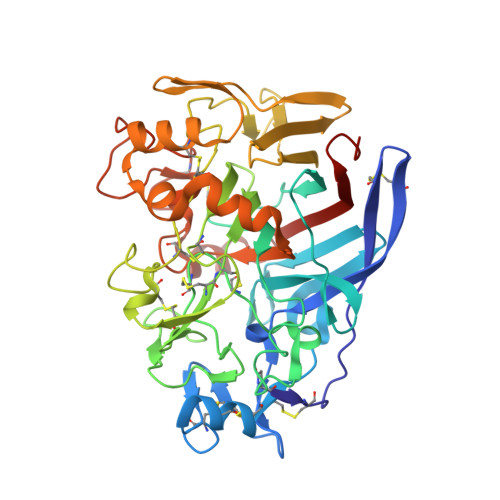
Cellobiohydrolase I Cel7A from Trichoderma harzianum at 1.7 A resolution


Experimental Data Snapshot

  • Method: X-RAY DIFFRACTION
  • Resolution: 1.67 Å
  • R-Value Free: 
    0.161 (Depositor), 0.170 (DCC) 
  • R-Value Work: 
    0.129 (Depositor), 0.144 (DCC) 
  • R-Value Observed: 
    0.130 (Depositor) 

Starting Model: experimental
View more details

wwPDB Validation 3D Report Full Report

Validation slider image for 2YOK

This is version 2.3 of the entry. See complete history

Literature

Joint X-Ray Crystallographic and Molecular Dynamics Study of Cellobiohydrolase I from Trichoderma Harzianum: Deciphering the Structural Features of Cellobiohydrolase Catalytic Activity.

Textor, L.C.Colussi, F.Silveira, R.L.Serpa, V.De Mello, B.L.Muniz, J.R.C.Squina, F.M.Pereira, N.J.Skaf, M.S.Polikarpov, I.

(2013) FEBS J 280: 56

  • DOI: https://doi.org/10.1111/febs.12049
  • Primary Citation Related Structures: 
    2YOK

  • PubMed Abstract: 

    Aiming to contribute toward the characterization of new, biotechnologically relevant cellulolytic enzymes, we report here the first crystal structure of the catalytic core domain of Cel7A (cellobiohydrolase I) from the filamentous fungus Trichoderma harzianum IOC 3844. Our structural studies and molecular dynamics simulations show that the flexibility of Tyr260, in comparison with Tyr247 from the homologous Trichoderma reesei Cel7A, is enhanced as a result of the short side-chains of adjacent Val216 and Ala384 residues and creates an additional gap at the side face of the catalytic tunnel. T. harzianum cellobiohydrolase I also has a shortened loop at the entrance of the cellulose-binding tunnel, which has been described to interact with the substrate in T. reesei Cel7A. These structural features might explain why T. harzianum Cel7A displays higher k(cat) and K(m) values, and lower product inhibition on both glucoside and lactoside substrates, compared with T. reesei Cel7A.


  • Organizational Affiliation
    • Instituto de Física de São Carlos, Universidade de São Paulo, São Carlos, SP, Brazil.

Macromolecule Content 

  • Total Structure Weight: 46.28 kDa 
  • Atom Count: 4,039 
  • Modeled Residue Count: 426 
  • Deposited Residue Count: 426 
  • Unique protein chains: 1

Macromolecules

Find similar proteins by:|  3D Structure
Entity ID: 1
MoleculeChains  Sequence LengthOrganismDetailsImage
EXOGLUCANASE 1426Trichoderma harzianumMutation(s): 0 
EC: 3.2.1.91
UniProt
Find proteins for Q9P8P3 (Trichoderma harzianum)
Explore Q9P8P3 
Go to UniProtKB:  Q9P8P3
Entity Groups
Sequence Clusters30% Identity50% Identity70% Identity90% Identity95% Identity100% Identity
UniProt GroupQ9P8P3
Glycosylation
Glycosylation Sites: 3
Sequence Annotations
Expand
Reference Sequence

Small Molecules

Ligands 3 Unique
IDChains Name / Formula / InChI Key2D Diagram3D Interactions
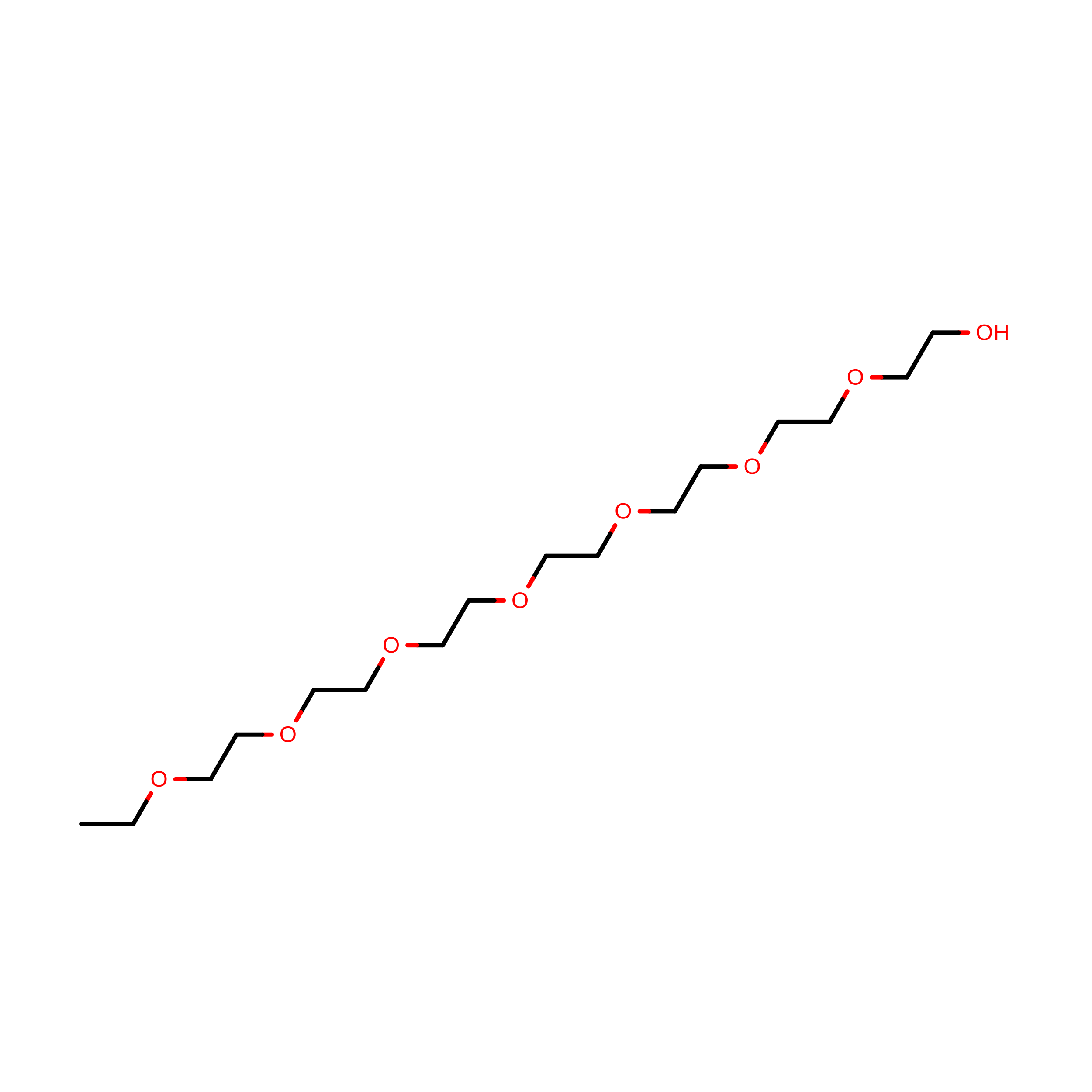
PE4

Query on PE4


Download:Ideal Coordinates CCD File
E [auth A]2-{2-[2-(2-{2-[2-(2-ETHOXY-ETHOXY)-ETHOXY]-ETHOXY}-ETHOXY)-ETHOXY]-ETHOXY}-ETHANOL
C16 H34 O8
PJWQOENWHPEPKI-UHFFFAOYSA-N
NAG

Query on NAG


Download:Ideal Coordinates CCD File
B [auth A],
C [auth A],
D [auth A]
2-acetamido-2-deoxy-beta-D-glucopyranose
C8 H15 N O6
OVRNDRQMDRJTHS-FMDGEEDCSA-N
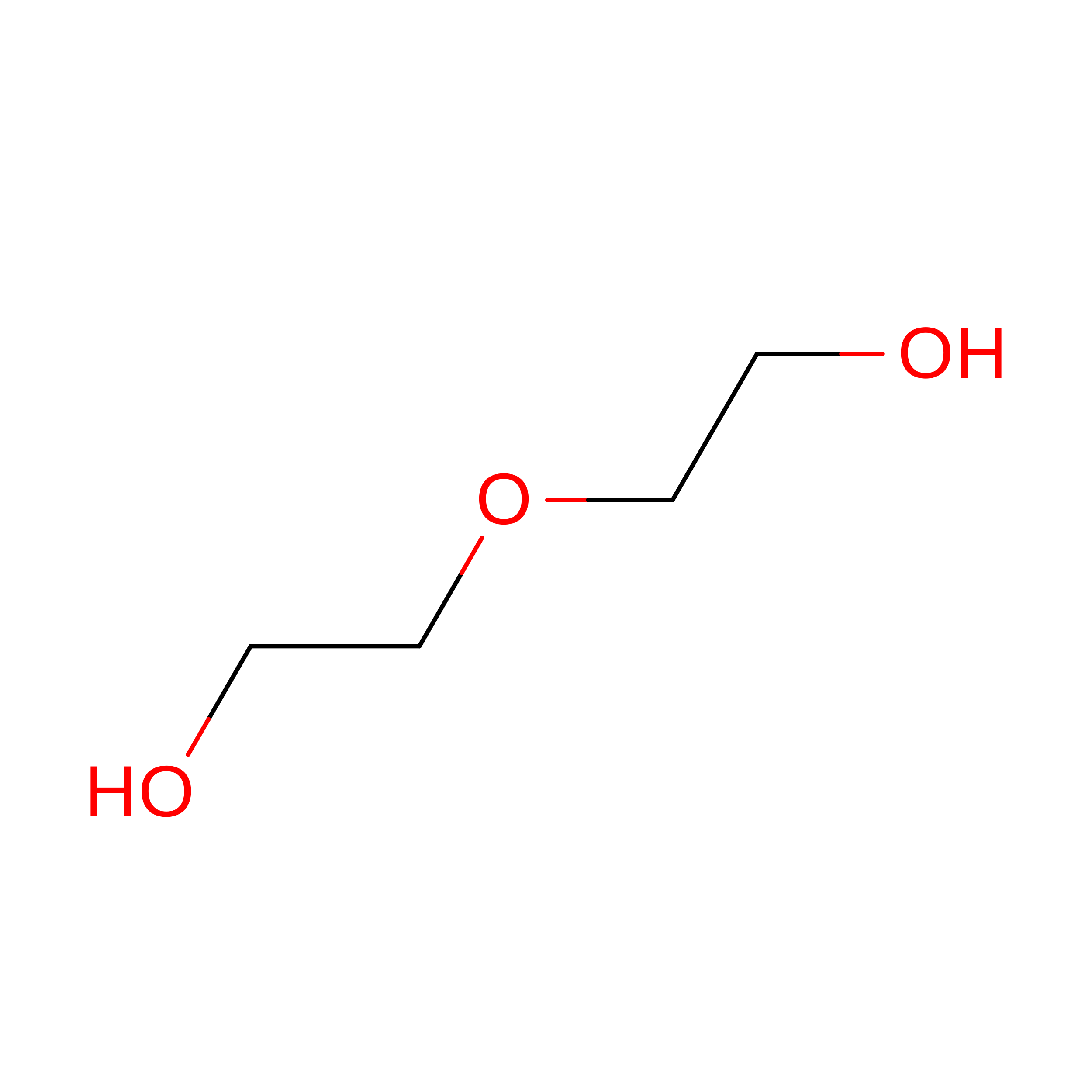
PEG

Query on PEG


Download:Ideal Coordinates CCD File
F [auth A]DI(HYDROXYETHYL)ETHER
C4 H10 O3
MTHSVFCYNBDYFN-UHFFFAOYSA-N
Modified Residues  1 Unique
IDChains TypeFormula2D DiagramParent
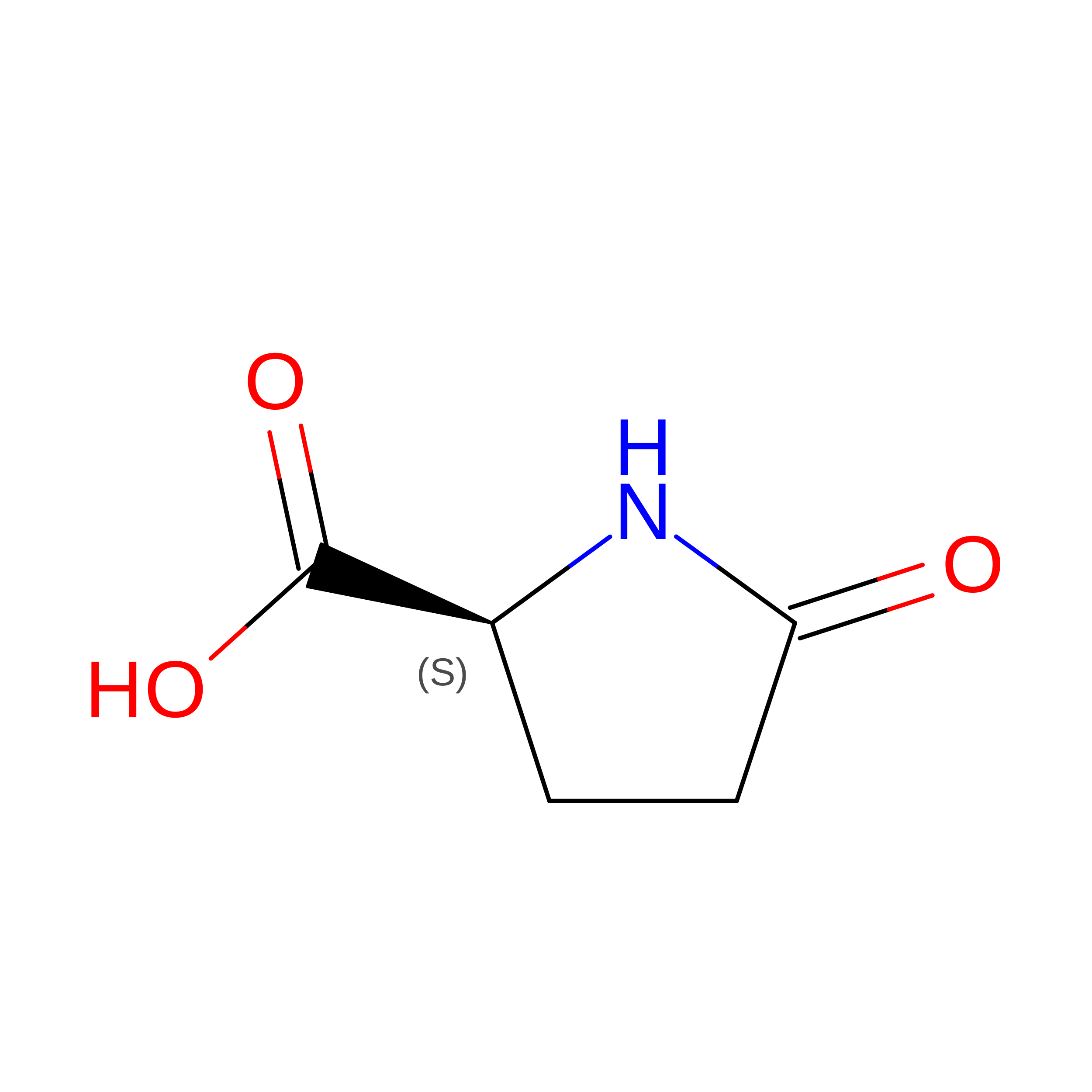
PCA
Query on PCA
A
L-PEPTIDE LINKINGC5 H7 N O3GLN

Experimental Data & Validation

Experimental Data

  • Method: X-RAY DIFFRACTION
  • Resolution: 1.67 Å
  • R-Value Free:  0.161 (Depositor), 0.170 (DCC) 
  • R-Value Work:  0.129 (Depositor), 0.144 (DCC) 
  • R-Value Observed: 0.130 (Depositor) 
Space Group: P 21 21 21
Unit Cell:
Length ( Å )Angle ( ˚ )
a = 56.734α = 90
b = 69.187β = 90
c = 90.569γ = 90
Software Package:
Software NamePurpose
REFMACrefinement

Structure Validation

View Full Validation Report


Entry History 

Deposition Data

Revision History  (Full details and data files)

  • Version 1.0: 2012-11-14
    Type: Initial release
  • Version 1.1: 2013-01-16
    Changes: Database references
  • Version 2.0: 2020-03-11
    Changes: Data collection, Derived calculations, Other, Polymer sequence
  • Version 2.1: 2020-07-29
    Type: Remediation
    Reason: Carbohydrate remediation
    Changes: Data collection, Derived calculations, Structure summary
  • Version 2.2: 2023-12-20
    Changes: Data collection, Database references, Refinement description, Structure summary
  • Version 2.3: 2024-11-13
    Changes: Structure summary