2XYG | pdb_00002xyg

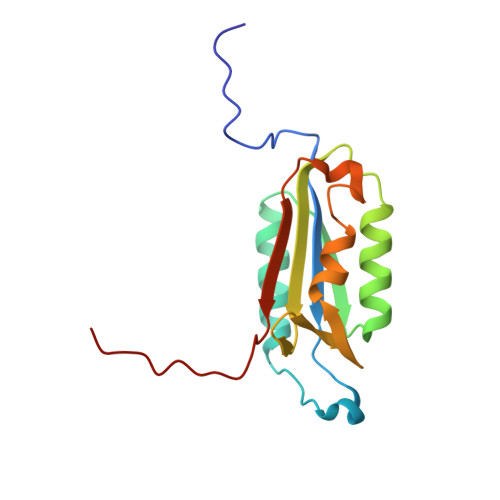
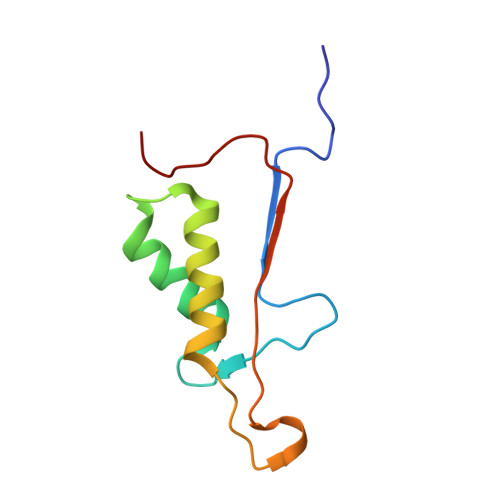
Caspase-3:CAS329306


Experimental Data Snapshot

  • Method: X-RAY DIFFRACTION
  • Resolution: 1.54 Å
  • R-Value Free: 
    0.197 (Depositor), 0.194 (DCC) 
  • R-Value Work: 
    0.179 (Depositor), 0.172 (DCC) 
  • R-Value Observed: 
    0.179 (Depositor) 

wwPDB Validation 3D Report Full Report

Validation slider image for 2XYG

Ligand Structure Quality Assessment 


This is version 1.1 of the entry. See complete history

Literature

In Silico Identification and Crystal Structure Validation of Caspase-3 Inhibitors without a P1 Aspartic Acid Moiety.

Ganesan, R.Jelakovic, S.Mittl, P.R.Caflisch, A.Grutter, M.G.

(2011) Acta Crystallogr Sect F Struct Biol Cryst Commun 67: 842

  • DOI: https://doi.org/10.1107/S1744309111018604
  • Primary Citation Related Structures: 
    2XYG, 2XYH, 2XYP

  • PubMed Abstract: 

    Using a fragment-based docking procedure, several small-molecule inhibitors of caspase-3 were identified and tested and the crystal structures of three inhibitor complexes were determined. The crystal structures revealed that one inhibitor (NSC 18508) occupies only the S1 subsite, while two other inhibitors (NSC 89167 and NSC 251810) bind only to the prime part of the substrate-binding site. One of the major conformational changes observed in all three caspase-3-inhibitor complexes is a rotation of the Tyr204 side chain, which blocks the S2 subsite. In addition, the structural variability of the residues shaping the S1-S4 as well as the S1' subsites supports an induced-fit mechanism for the binding of the inhibitors in the active site. The high-resolution crystal structures reported here provide novel insights into the architecture of the substrate-binding site, which might be useful for the design of more potent caspase inhibitors.


  • Organizational Affiliation
    • Department of Biochemistry, University of Zürich, Zürich, Switzerland.

Macromolecule Content 

  • Total Structure Weight: 27.89 kDa 
  • Atom Count: 2,377 
  • Modeled Residue Count: 239 
  • Deposited Residue Count: 239 
  • Unique protein chains: 2

Macromolecules

Find similar proteins by:|  3D Structure
Entity ID: 1
MoleculeChains  Sequence LengthOrganismDetailsImage
CASPASE-3 SUBUNIT P17146Homo sapiensMutation(s): 0 
EC: 3.4.22.56
UniProt & NIH Common Fund Data Resources
Find proteins for P42574 (Homo sapiens)
Explore P42574 
Go to UniProtKB:  P42574
PHAROS:  P42574
GTEx:  ENSG00000164305 
Entity Groups
Sequence Clusters30% Identity50% Identity70% Identity90% Identity95% Identity100% Identity
UniProt GroupP42574
Sequence Annotations
Expand
Reference Sequence
Find similar proteins by:|  3D Structure
Entity ID: 2
MoleculeChains  Sequence LengthOrganismDetailsImage
CASPASE-3 SUBUNIT P1293Homo sapiensMutation(s): 0 
EC: 3.4.22.56
UniProt & NIH Common Fund Data Resources
Find proteins for P42574 (Homo sapiens)
Explore P42574 
Go to UniProtKB:  P42574
PHAROS:  P42574
GTEx:  ENSG00000164305 
Entity Groups
Sequence Clusters30% Identity50% Identity70% Identity90% Identity95% Identity100% Identity
UniProt GroupP42574
Sequence Annotations
Expand
Reference Sequence

Small Molecules

Ligands 1 Unique
IDChains Name / Formula / InChI Key2D Diagram3D Interactions
TQ8

Query on TQ8


Download:Ideal Coordinates CCD File
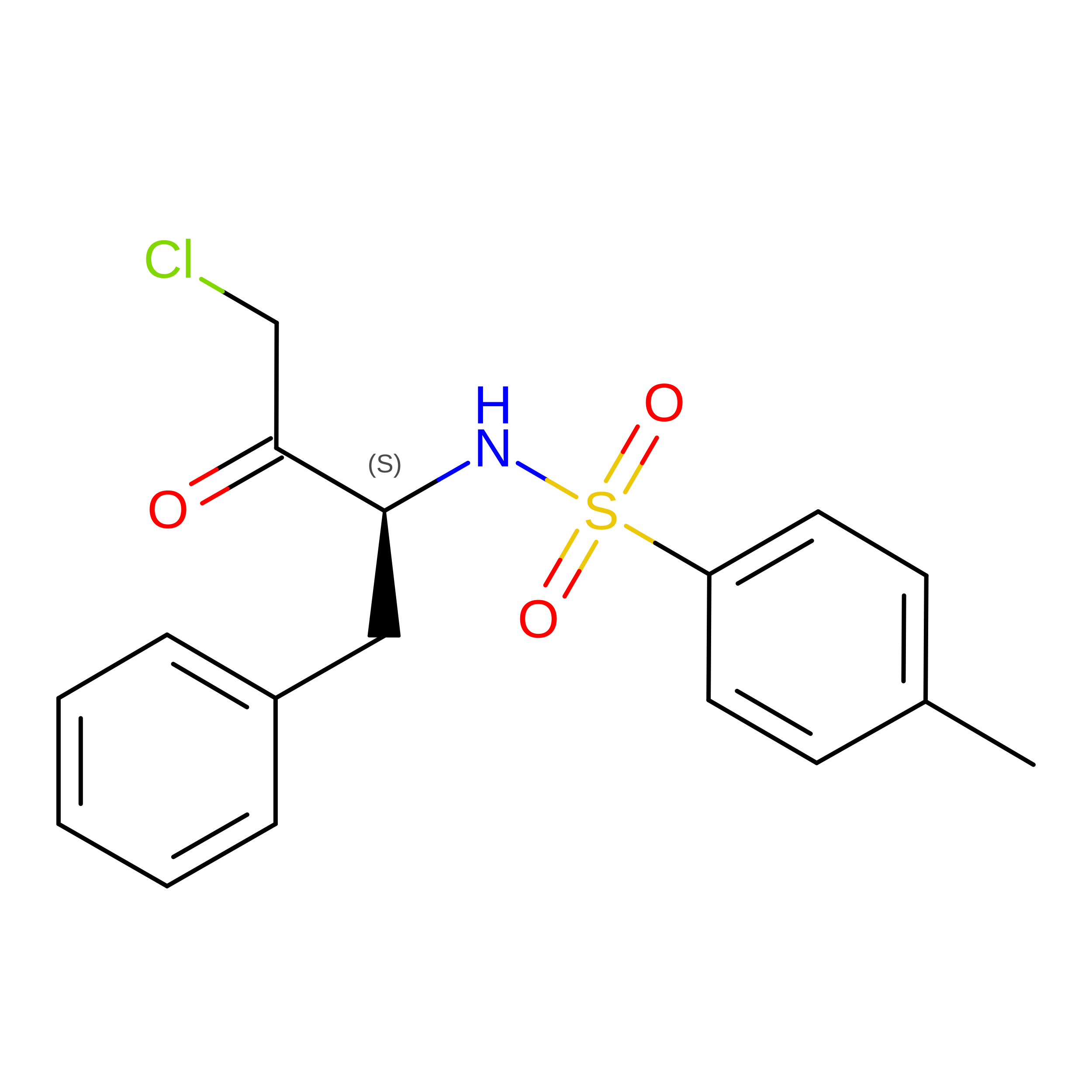
C [auth A]N-[(2S)-4-chloro-3-oxo-1-phenyl-butan-2-yl]-4-methyl-benzenesulfonamide
C17 H18 Cl N O3 S
MQUQNUAYKLCRME-INIZCTEOSA-N

Experimental Data & Validation

Experimental Data

  • Method: X-RAY DIFFRACTION
  • Resolution: 1.54 Å
  • R-Value Free:  0.197 (Depositor), 0.194 (DCC) 
  • R-Value Work:  0.179 (Depositor), 0.172 (DCC) 
  • R-Value Observed: 0.179 (Depositor) 
Space Group: I 2 2 2
Unit Cell:
Length ( Å )Angle ( ˚ )
a = 68.799α = 90
b = 83.538β = 90
c = 96.147γ = 90
Software Package:
Software NamePurpose
CNSrefinement
XDSdata reduction
XDSdata scaling

Structure Validation

View Full Validation Report


Ligand Structure Quality Assessment 


Entry History 

Deposition Data

Revision History  (Full details and data files)

  • Version 1.0: 2011-08-17
    Type: Initial release
  • Version 1.1: 2024-11-13
    Changes: Data collection, Database references, Derived calculations, Other, Structure summary