2VT4 | pdb_00002vt4

TURKEY BETA1 ADRENERGIC RECEPTOR WITH STABILISING MUTATIONS AND BOUND CYANOPINDOLOL


Experimental Data Snapshot

  • Method: X-RAY DIFFRACTION
  • Resolution: 2.70 Å
  • R-Value Free: 
    0.268 (Depositor) 
  • R-Value Work: 
    0.212 (Depositor), 0.205 (DCC) 
  • R-Value Observed: 
    0.215 (Depositor) 

Starting Model: experimental
View more details

wwPDB Validation 3D Report Full Report

Validation slider image for 2VT4

Ligand Structure Quality Assessment 


This is version 1.7 of the entry. See complete history

Literature

Structure of a Beta1-Adrenergic G-Protein-Coupled Receptor.

Warne, A.Serrano-Vega, M.J.Baker, J.G.Moukhametzianov, R.Edwards, P.C.Henderson, R.Leslie, A.G.W.Tate, C.G.Schertler, G.F.X.

(2008) Nature 454: 486

  • DOI: https://doi.org/10.1038/nature07101
  • Primary Citation Related Structures: 
    2VT4

  • PubMed Abstract: 

    G-protein-coupled receptors have a major role in transmembrane signalling in most eukaryotes and many are important drug targets. Here we report the 2.7 A resolution crystal structure of a beta(1)-adrenergic receptor in complex with the high-affinity antagonist cyanopindolol. The modified turkey (Meleagris gallopavo) receptor was selected to be in its antagonist conformation and its thermostability improved by earlier limited mutagenesis. The ligand-binding pocket comprises 15 side chains from amino acid residues in 4 transmembrane alpha-helices and extracellular loop 2. This loop defines the entrance of the ligand-binding pocket and is stabilized by two disulphide bonds and a sodium ion. Binding of cyanopindolol to the beta(1)-adrenergic receptor and binding of carazolol to the beta(2)-adrenergic receptor involve similar interactions. A short well-defined helix in cytoplasmic loop 2, not observed in either rhodopsin or the beta(2)-adrenergic receptor, directly interacts by means of a tyrosine with the highly conserved DRY motif at the end of helix 3 that is essential for receptor activation.


  • Organizational Affiliation
    • MRC Laboratory of Molecular Biology, Hills Road, Cambridge CB2 0QH, UK.

Macromolecule Content 

  • Total Structure Weight: 148.24 kDa 
  • Atom Count: 8,976 
  • Modeled Residue Count: 1,085 
  • Deposited Residue Count: 1,252 
  • Unique protein chains: 1

Macromolecules

Find similar proteins by:|  3D Structure
Entity ID: 1
MoleculeChains  Sequence LengthOrganismDetailsImage
BETA1 ADRENERGIC RECEPTOR
A, B, C, D
313Meleagris gallopavoMutation(s): 8 
Membrane Entity: Yes 
UniProt
Find proteins for P07700 (Meleagris gallopavo)
Explore P07700 
Go to UniProtKB:  P07700
Entity Groups
Sequence Clusters30% Identity50% Identity70% Identity90% Identity95% Identity100% Identity
UniProt GroupP07700
Sequence Annotations
Expand
Reference Sequence

Small Molecules

Ligands 4 Unique
IDChains Name / Formula / InChI Key2D Diagram3D Interactions
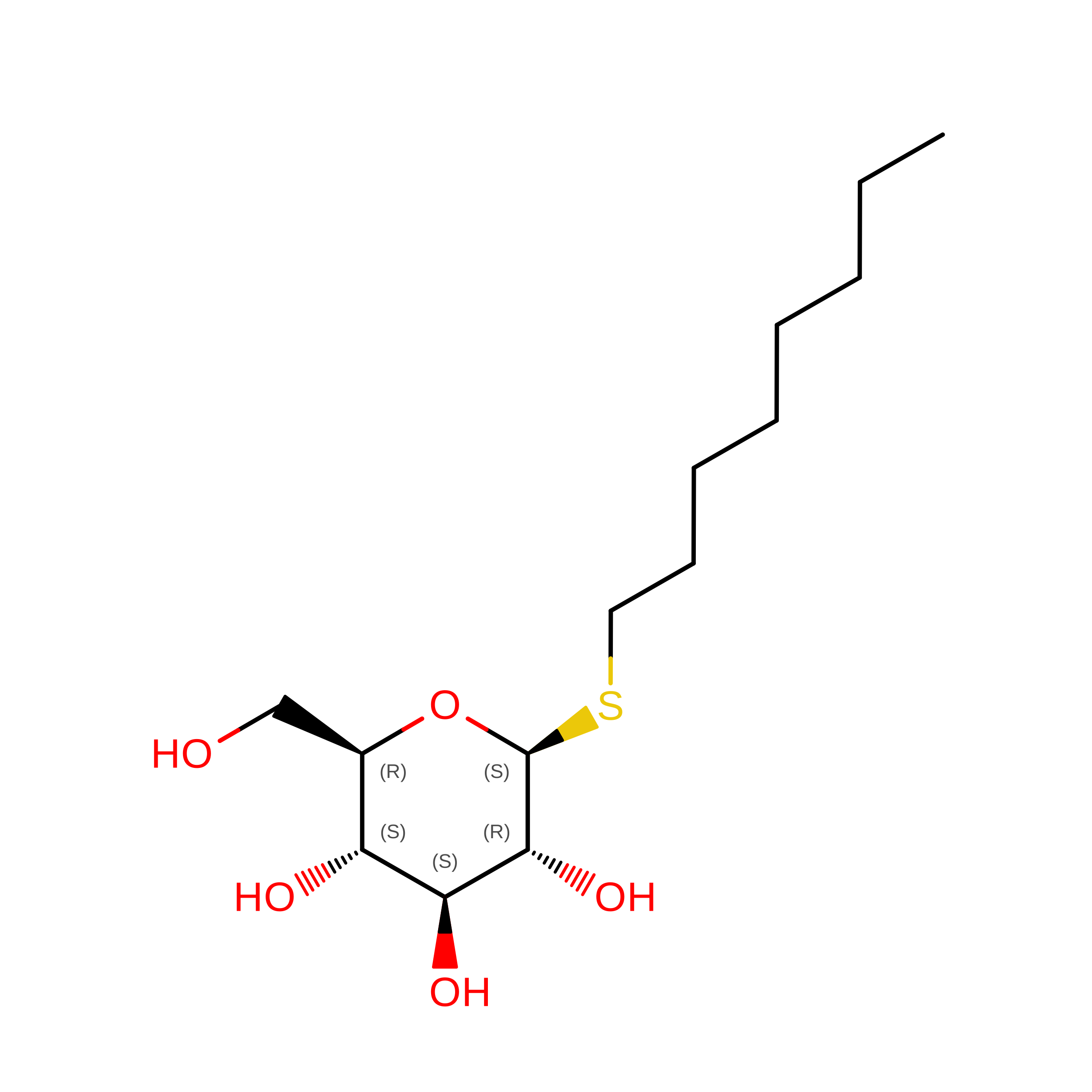
SOG

Query on SOG


Download:Ideal Coordinates CCD File
G [auth A]
H [auth A]
I [auth A]
M [auth B]
N [auth B]
G [auth A],
H [auth A],
I [auth A],
M [auth B],
N [auth B],
O [auth B],
R [auth C],
S [auth C],
T [auth C],
X [auth D],
Y [auth D],
Z [auth D]
octyl 1-thio-beta-D-glucopyranoside
C14 H28 O5 S
CGVLVOOFCGWBCS-RGDJUOJXSA-N
P32

Query on P32


Download:Ideal Coordinates CCD File
E [auth A],
K [auth B],
P [auth C],
V [auth D]
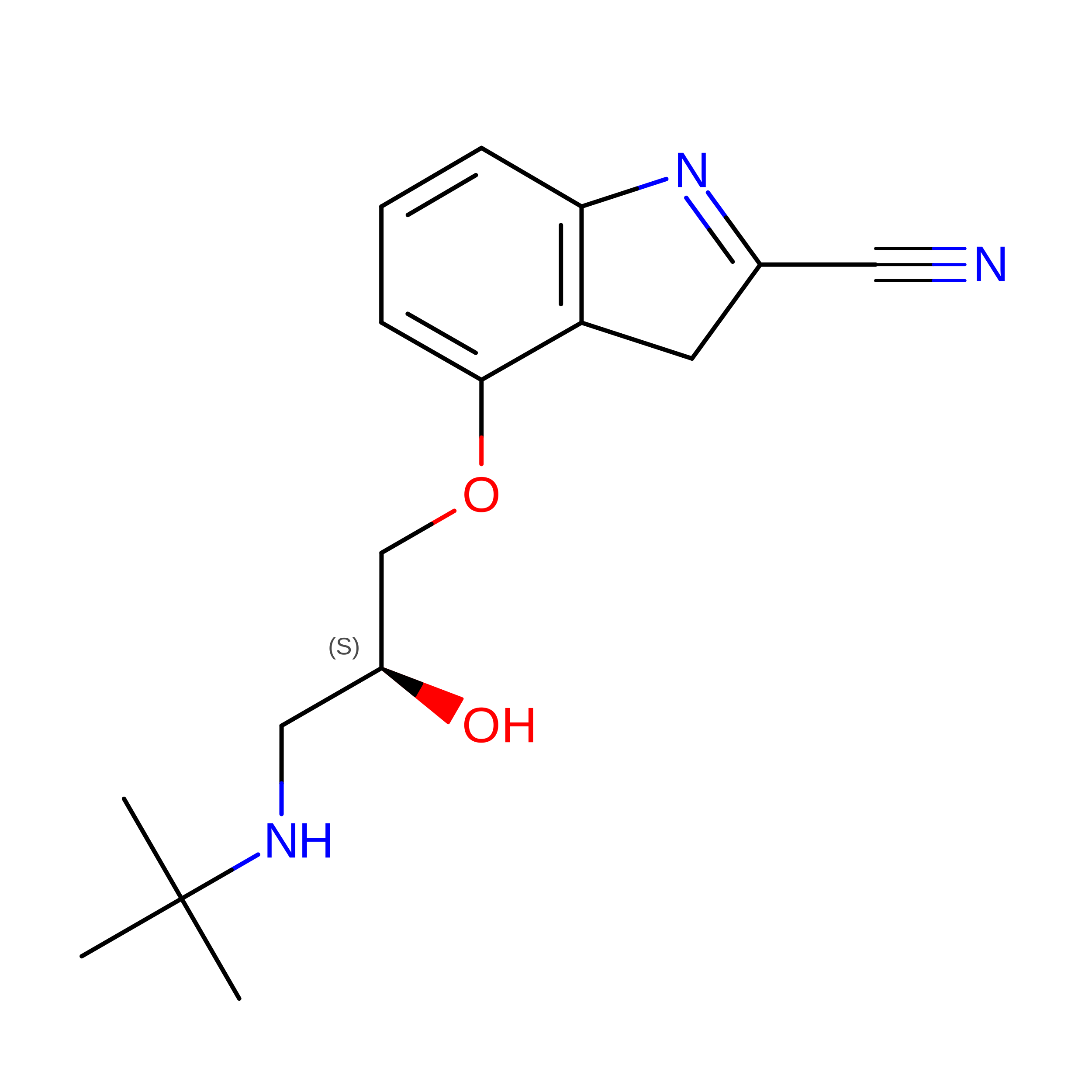
Cyanopindolol
C16 H21 N3 O2
CQEFAUFOQSCRMZ-LBPRGKRZSA-N
D10

Query on D10


Download:Ideal Coordinates CCD File
J [auth A],
U [auth C]
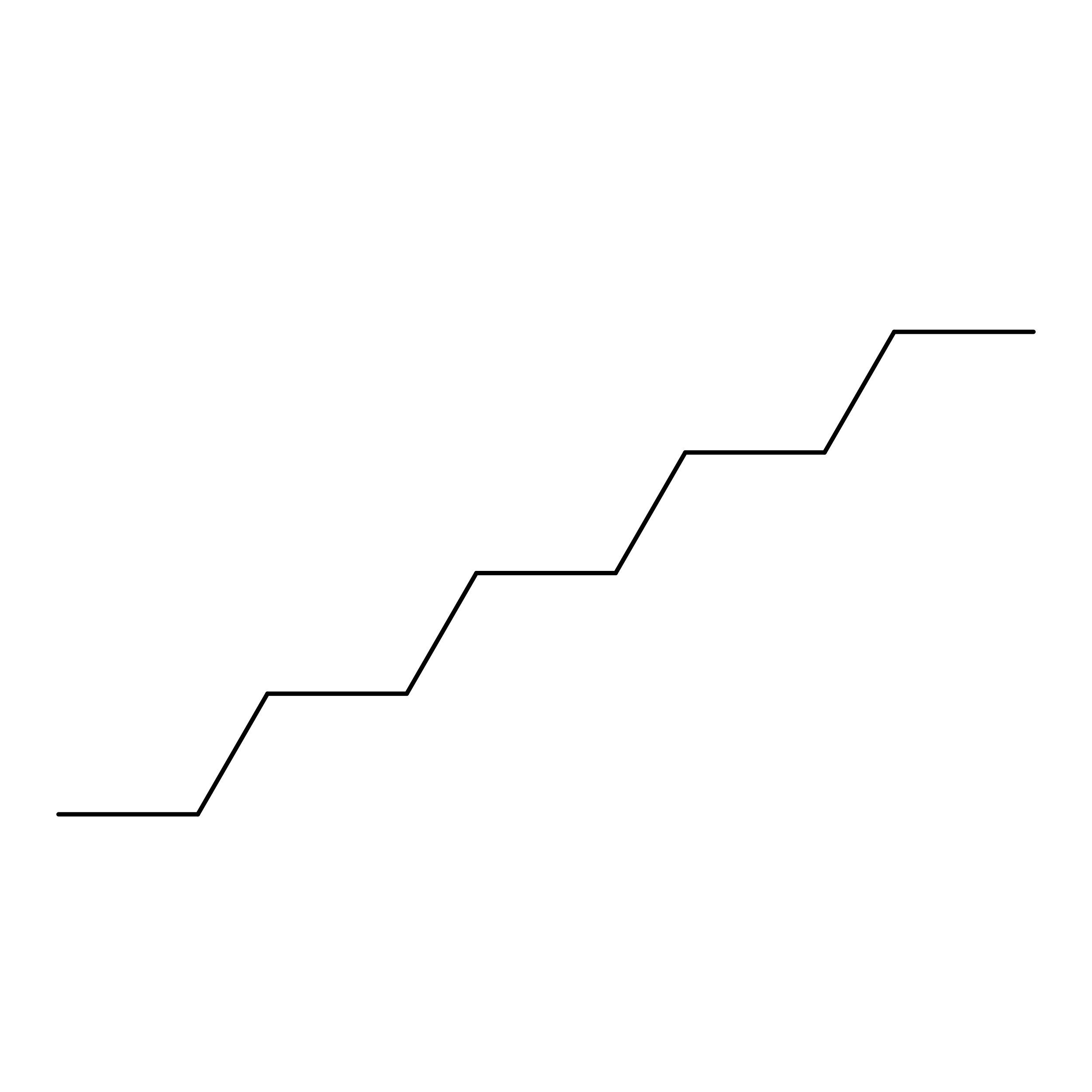
DECANE
C10 H22
DIOQZVSQGTUSAI-UHFFFAOYSA-N
NA

Query on NA


Download:Ideal Coordinates CCD File
F [auth A],
L [auth B],
Q [auth C],
W [auth D]
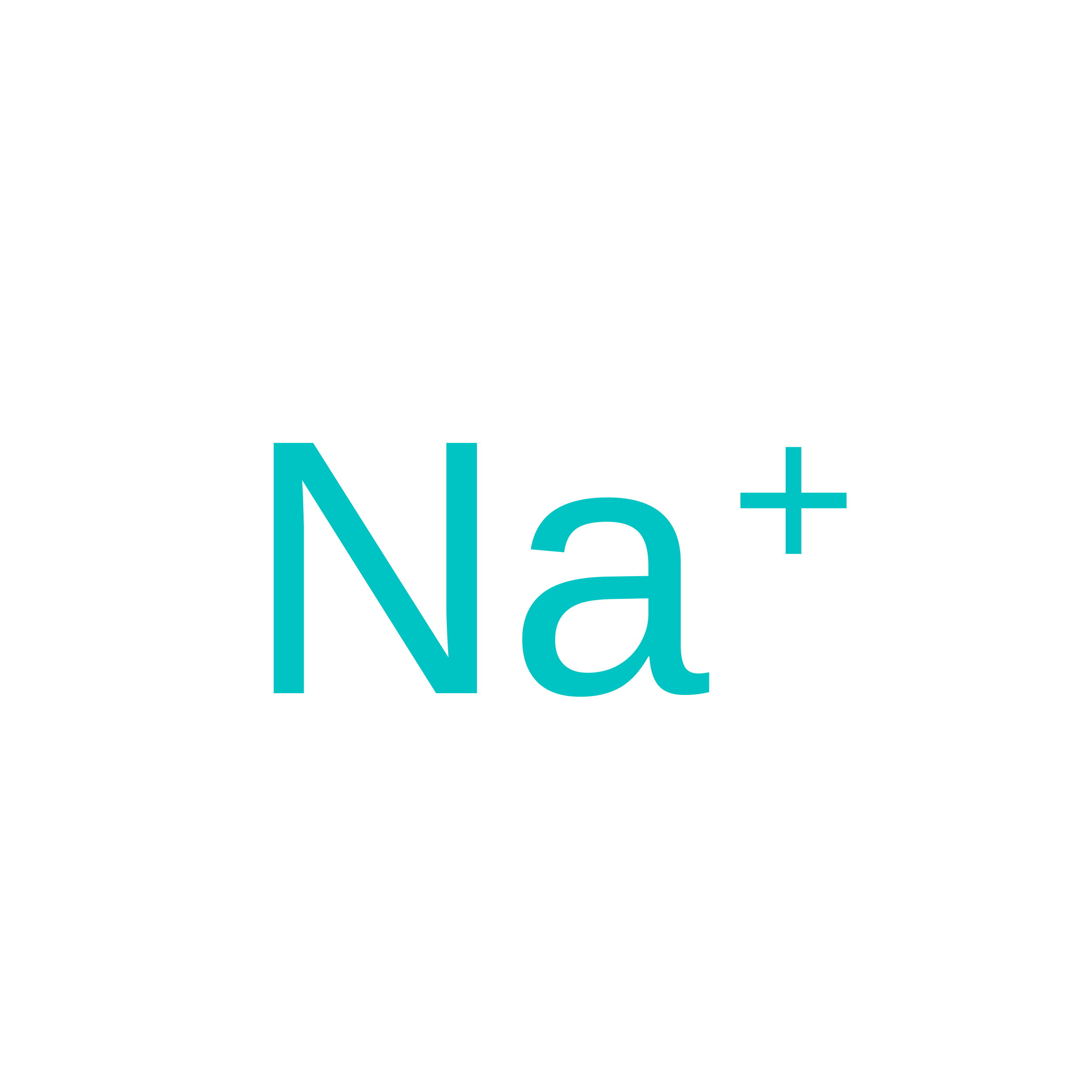
SODIUM ION
Na
FKNQFGJONOIPTF-UHFFFAOYSA-N

Experimental Data & Validation

Experimental Data

  • Method: X-RAY DIFFRACTION
  • Resolution: 2.70 Å
  • R-Value Free:  0.268 (Depositor) 
  • R-Value Work:  0.212 (Depositor), 0.205 (DCC) 
  • R-Value Observed: 0.215 (Depositor) 
Space Group: P 1
Unit Cell:
Length ( Å )Angle ( ˚ )
a = 55.5α = 67.6
b = 86.8β = 73.3
c = 95.5γ = 85.8
Software Package:
Software NamePurpose
PHENIXrefinement
MOSFLMdata reduction
SCALAdata scaling
PHENIXphasing

Structure Validation

View Full Validation Report


Ligand Structure Quality Assessment 


Entry History 

Revision History  (Full details and data files)

  • Version 1.0: 2008-06-24
    Type: Initial release
  • Version 1.1: 2013-01-30
    Changes: Database references, Derived calculations, Non-polymer description, Other, Version format compliance
  • Version 1.2: 2019-03-06
    Changes: Data collection, Experimental preparation, Other
  • Version 1.3: 2019-04-03
    Changes: Data collection, Source and taxonomy
  • Version 1.4: 2020-07-29
    Type: Remediation
    Reason: Carbohydrate remediation
    Changes: Derived calculations, Other, Structure summary
  • Version 1.5: 2023-12-13
    Changes: Data collection, Database references, Refinement description, Structure summary
  • Version 1.6: 2024-11-20
    Changes: Structure summary
  • Version 1.7: 2025-07-16
    Changes: Derived calculations, Structure summary