2R46 | pdb_00002r46

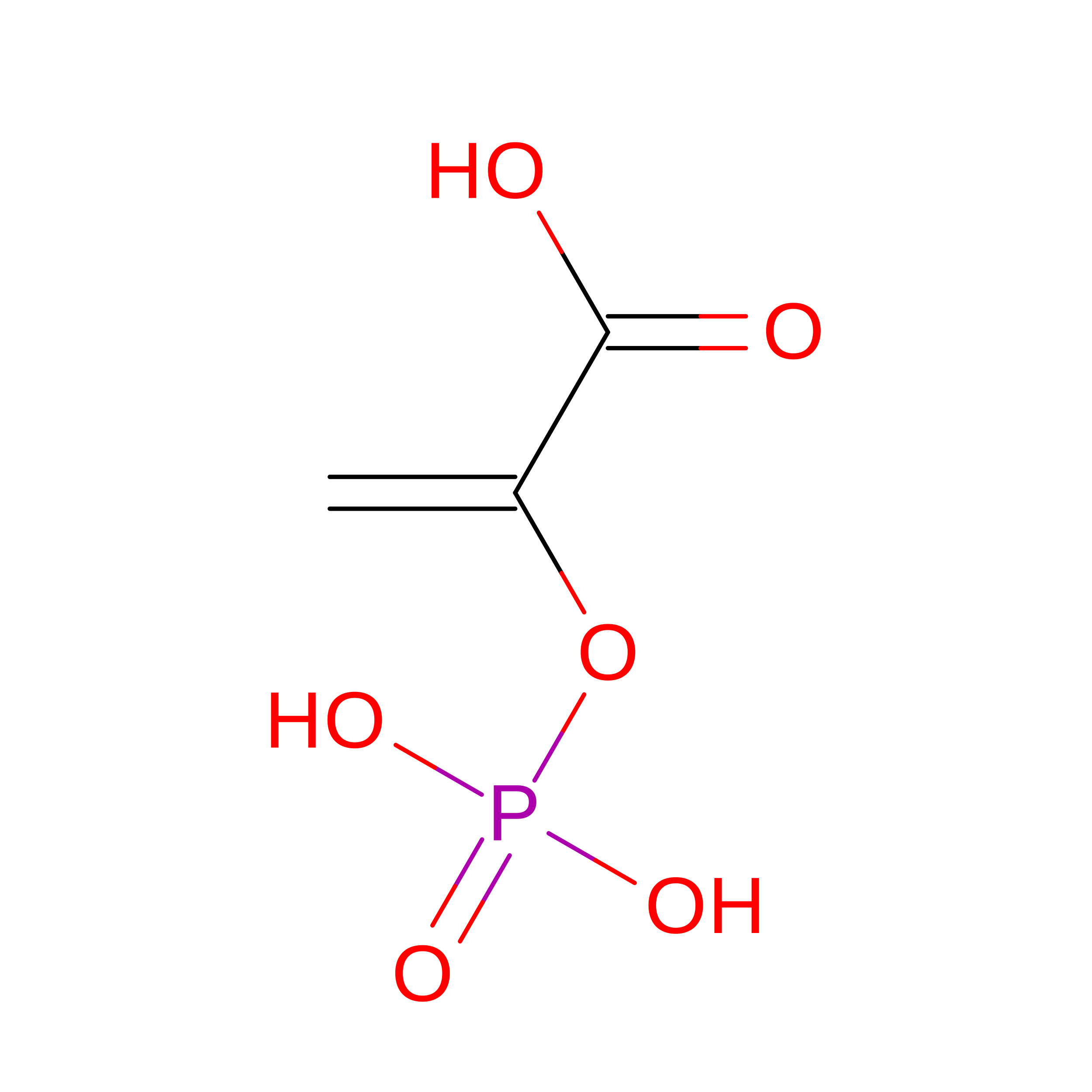
Crystal structure of Escherichia coli Glycerol-3-phosphate Dehydrogenase in complex with 2-phosphopyruvic acid.


Experimental Data Snapshot

  • Method: X-RAY DIFFRACTION
  • Resolution: 2.10 Å
  • R-Value Free: 
    0.230 (Depositor), 0.217 (DCC) 
  • R-Value Work: 
    0.191 (Depositor), 0.216 (DCC) 
  • R-Value Observed: 
    0.193 (Depositor) 

wwPDB Validation 3D Report Full Report

Validation slider image for 2R46

Ligand Structure Quality Assessment 


This is version 1.4 of the entry. See complete history

Literature

Structure of glycerol-3-phosphate dehydrogenase, an essential monotopic membrane enzyme involved in respiration and metabolism

Yeh, J.I.Chinte, U.Du, S.

(2008) Proc Natl Acad Sci U S A 105: 3280-3285

  • DOI: https://doi.org/10.1073/pnas.0712331105
  • Primary Citation Related Structures: 
    2QCU, 2R45, 2R46, 2R4E, 2R4J

  • PubMed Abstract: 

    Sn-glycerol-3-phosphate dehydrogenase (GlpD) is an essential membrane enzyme, functioning at the central junction of respiration, glycolysis, and phospholipid biosynthesis. Its critical role is indicated by the multitiered regulatory mechanisms that stringently controls its expression and function. Once expressed, GlpD activity is regulated through lipid-enzyme interactions in Escherichia coli. Here, we report seven previously undescribed structures of the fully active E. coli GlpD, up to 1.75 A resolution. In addition to elucidating the structure of the native enzyme, we have determined the structures of GlpD complexed with substrate analogues phosphoenolpyruvate, glyceric acid 2-phosphate, glyceraldehyde-3-phosphate, and product, dihydroxyacetone phosphate. These structural results reveal conformational states of the enzyme, delineating the residues involved in substrate binding and catalysis at the glycerol-3-phosphate site. Two probable mechanisms for catalyzing the dehydrogenation of glycerol-3-phosphate are envisioned, based on the conformational states of the complexes. To further correlate catalytic dehydrogenation to respiration, we have additionally determined the structures of GlpD bound with ubiquinone analogues menadione and 2-n-heptyl-4-hydroxyquinoline N-oxide, identifying a hydrophobic plateau that is likely the ubiquinone-binding site. These structures illuminate probable mechanisms of catalysis and suggest how GlpD shuttles electrons into the respiratory pathway. Glycerol metabolism has been implicated in insulin signaling and perturbations in glycerol uptake and catabolism are linked to obesity in humans. Homologs of GlpD are found in practically all organisms, from prokaryotes to humans, with >45% consensus protein sequences, signifying that these structural results on the prokaryotic enzyme may be readily applied to the eukaryotic GlpD enzymes.


  • Organizational Affiliation
    • Departments of Structural Biology and Bioengineering, University of Pittsburgh School of Medicine, 3501 5th Avenue, BST3 1036, Pittsburgh, PA 15260, USA.

Macromolecule Content 

  • Total Structure Weight: 118.95 kDa 
  • Atom Count: 8,658 
  • Modeled Residue Count: 990 
  • Deposited Residue Count: 1,002 
  • Unique protein chains: 1

Macromolecules

Find similar proteins by:|  3D Structure
Entity ID: 1
MoleculeChains  Sequence LengthOrganismDetailsImage
Aerobic glycerol-3-phosphate dehydrogenase
A, B
501Escherichia coliMutation(s): 0 
Gene Names: glpDglyD
EC: 1.1.99.5 (PDB Primary Data), 1.1.5.3 (UniProt)
UniProt
Find proteins for P13035 (Escherichia coli (strain K12))
Explore P13035 
Go to UniProtKB:  P13035
Entity Groups
Sequence Clusters30% Identity50% Identity70% Identity90% Identity95% Identity100% Identity
UniProt GroupP13035
Sequence Annotations
Expand
Reference Sequence

Small Molecules

Ligands 6 Unique
IDChains Name / Formula / InChI Key2D Diagram3D Interactions
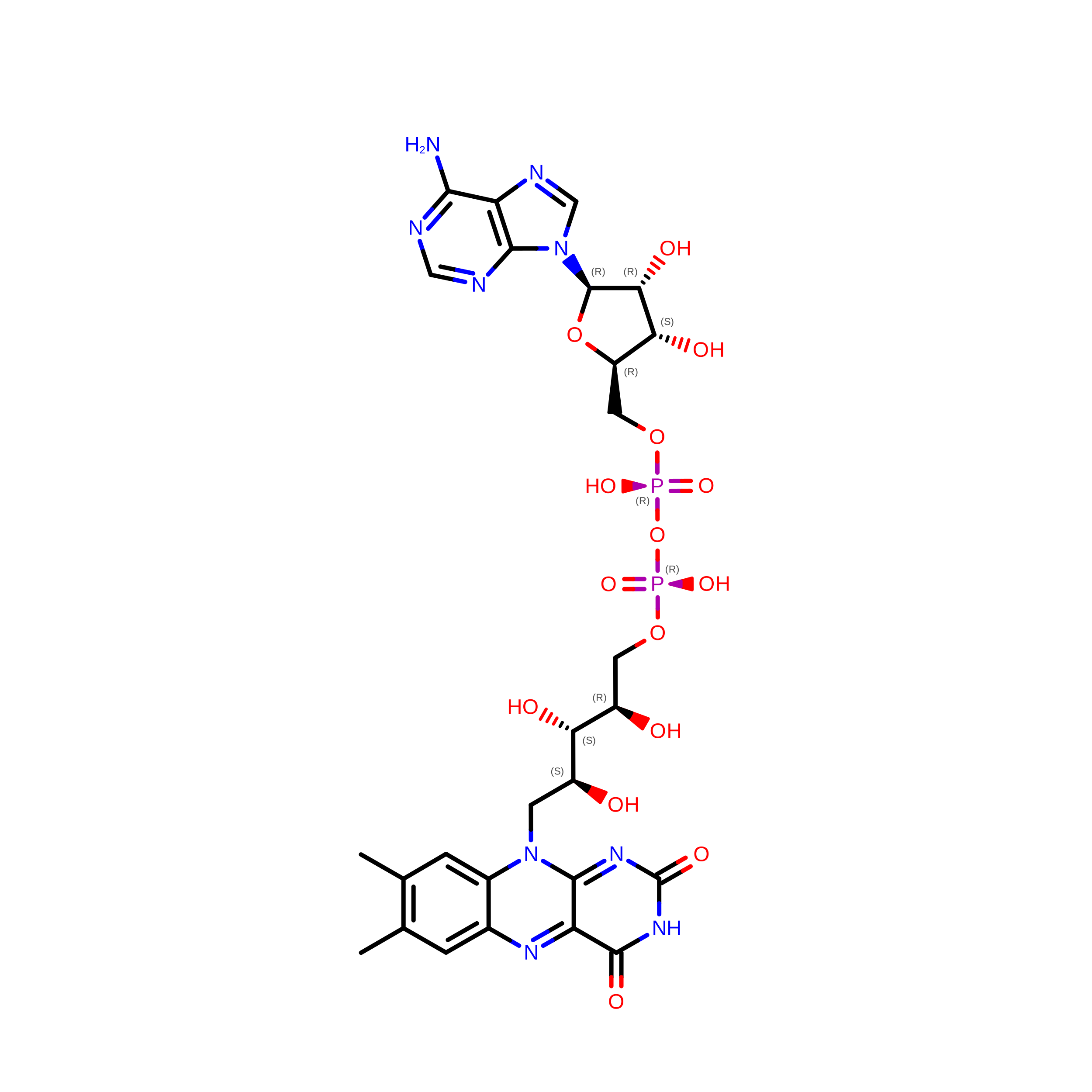
FAD

Query on FAD


Download:Ideal Coordinates CCD File
HA [auth B],
R [auth A]
FLAVIN-ADENINE DINUCLEOTIDE
C27 H33 N9 O15 P2
VWWQXMAJTJZDQX-UYBVJOGSSA-N
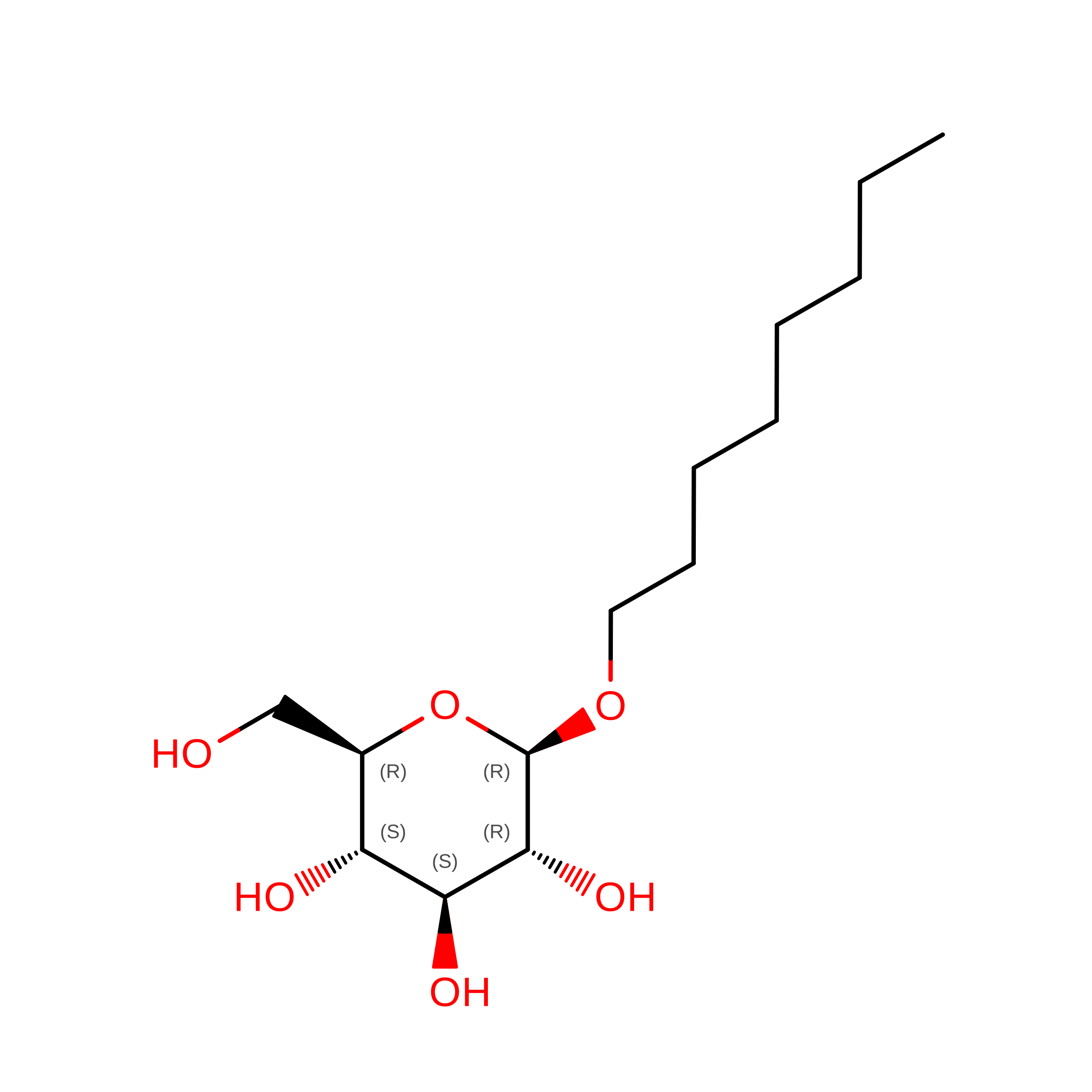
BOG

Query on BOG


Download:Ideal Coordinates CCD File
C [auth A],
D [auth A],
E [auth A],
U [auth B],
V [auth B]
octyl beta-D-glucopyranoside
C14 H28 O6
HEGSGKPQLMEBJL-RKQHYHRCSA-N
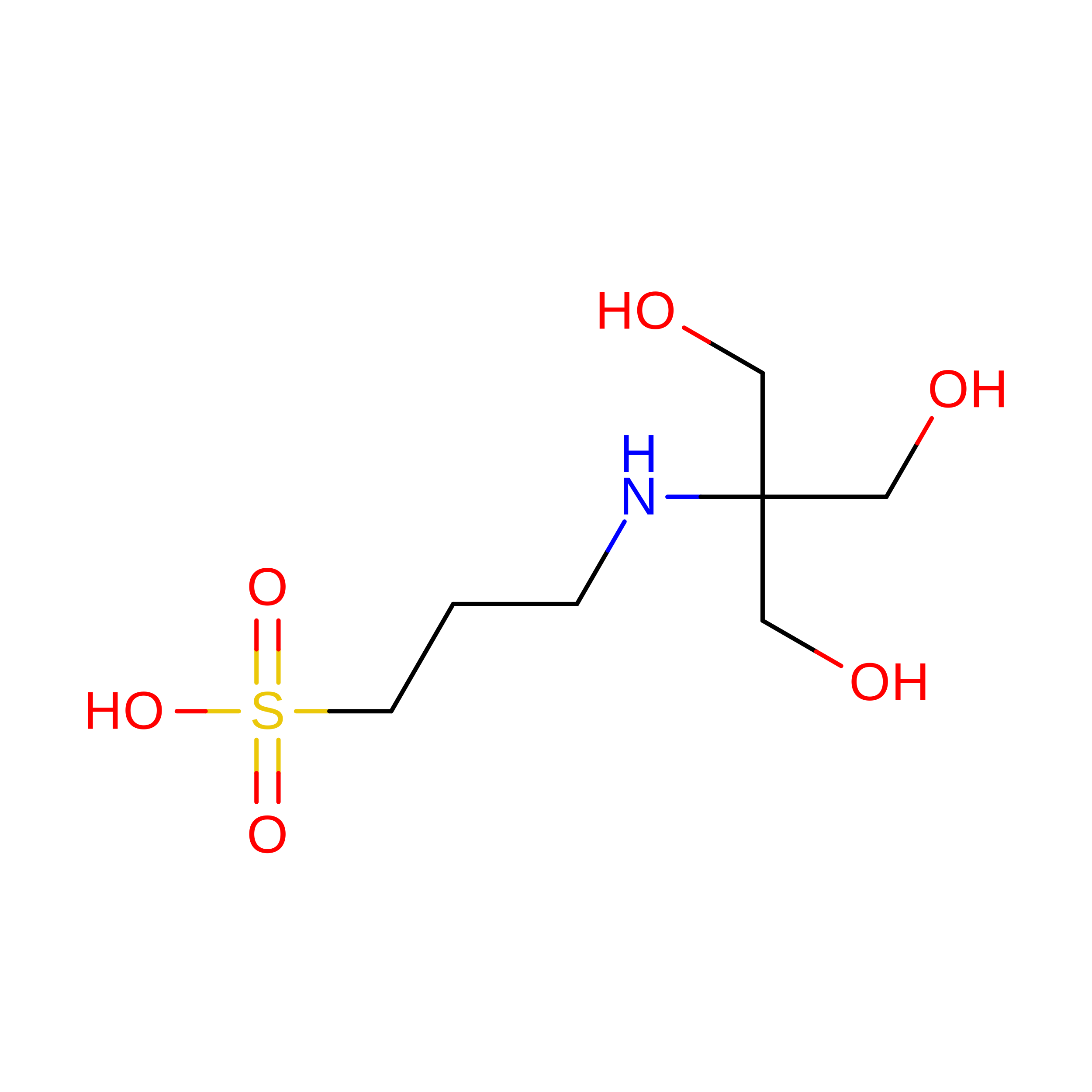
T3A

Query on T3A


Download:Ideal Coordinates CCD File
EA [auth B],
N [auth A]
N-(TRIS(HYDROXYMETHYL)METHYL)-3-AMINOPROPANESULFONIC ACID
C7 H17 N O6 S
YNLCVAQJIKOXER-UHFFFAOYSA-N
PEP

Query on PEP


Download:Ideal Coordinates CCD File
IA [auth B],
S [auth A]
PHOSPHOENOLPYRUVATE
C3 H5 O6 P
DTBNBXWJWCWCIK-UHFFFAOYSA-N
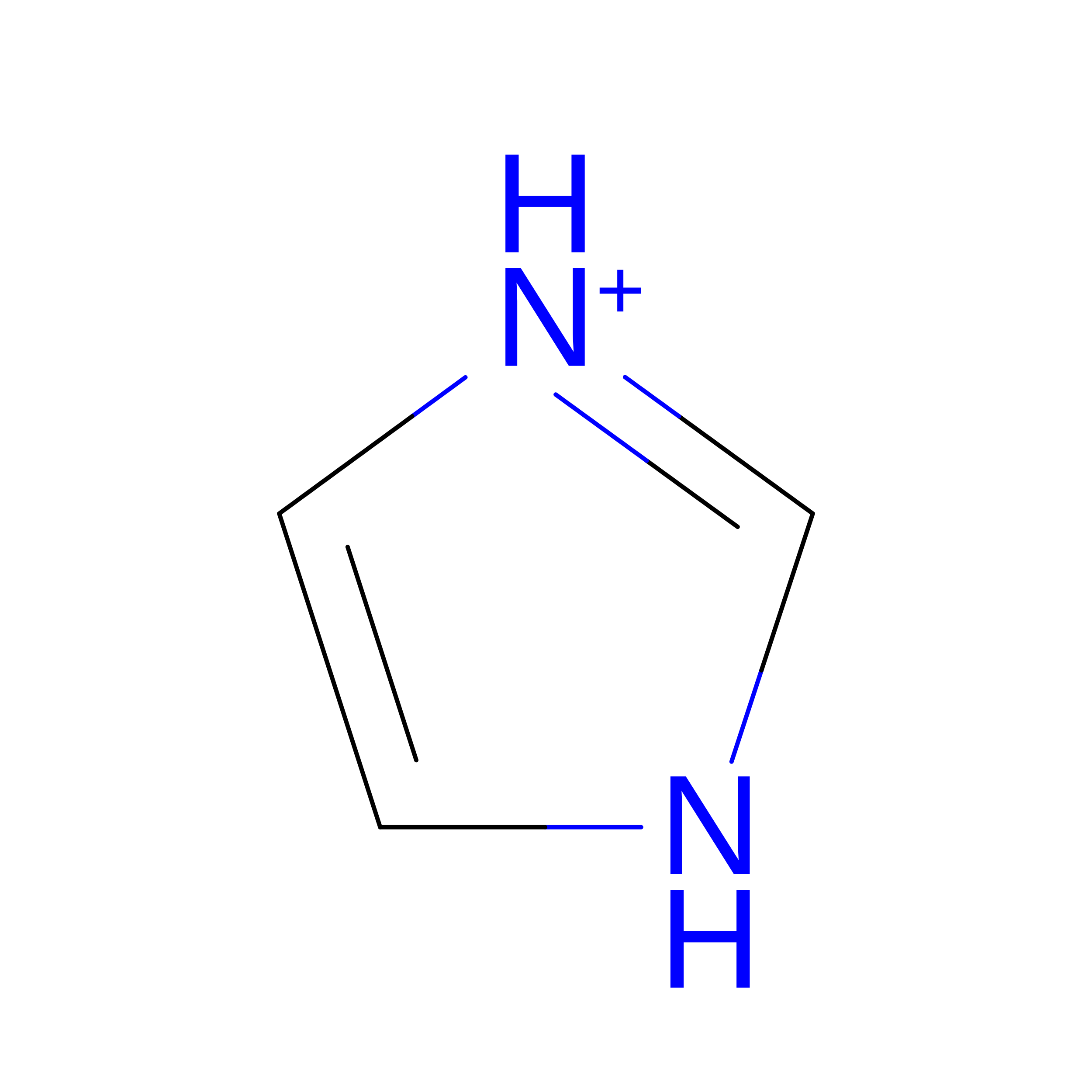
IMD

Query on IMD


Download:Ideal Coordinates CCD File
GA [auth B]IMIDAZOLE
C3 H5 N2
RAXXELZNTBOGNW-UHFFFAOYSA-O
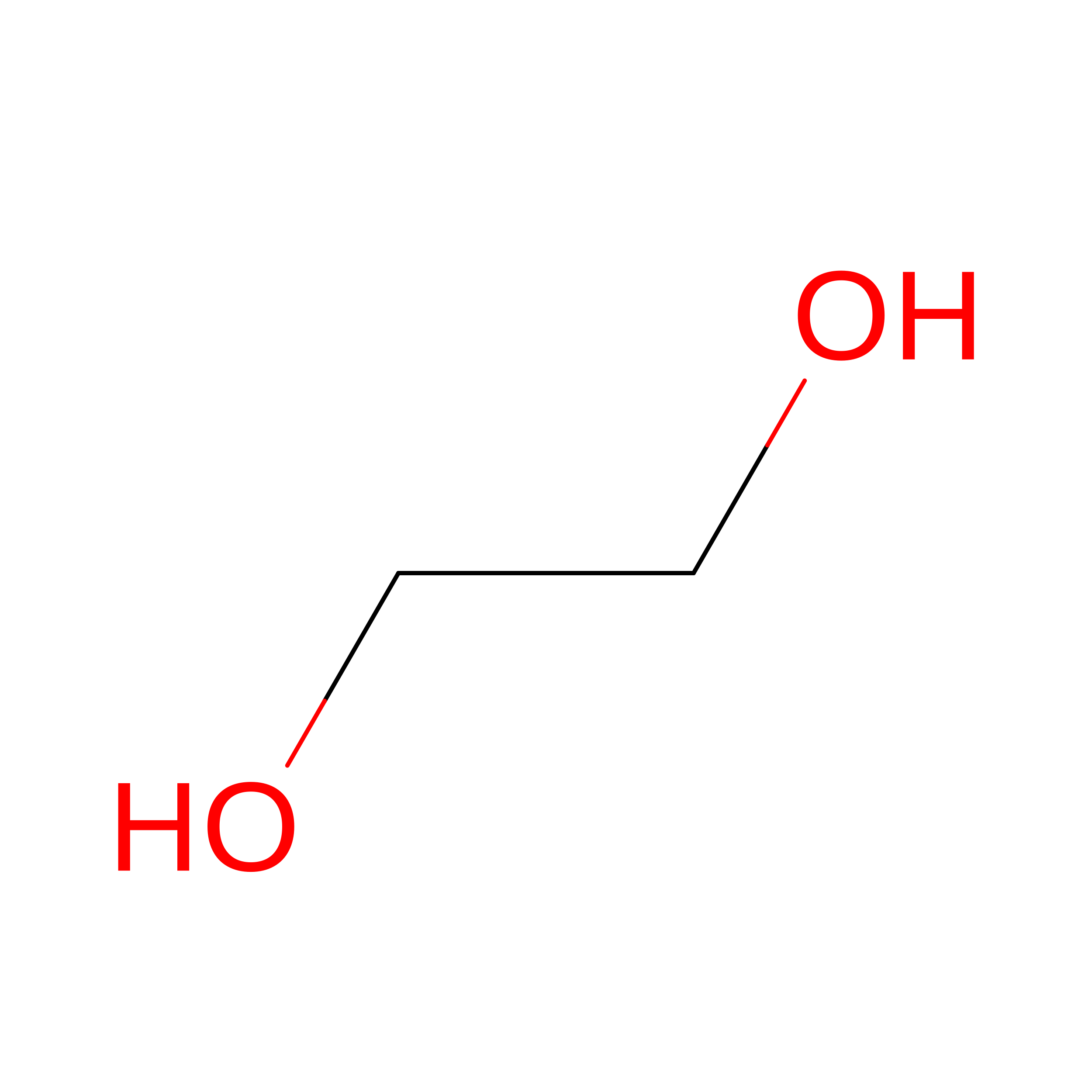
EDO

Query on EDO


Download:Ideal Coordinates CCD File
AA [auth B]
BA [auth B]
CA [auth B]
DA [auth B]
F [auth A]
AA [auth B],
BA [auth B],
CA [auth B],
DA [auth B],
F [auth A],
FA [auth B],
G [auth A],
H [auth A],
I [auth A],
J [auth A],
JA [auth B],
K [auth A],
L [auth A],
M [auth A],
O [auth A],
P [auth A],
Q [auth A],
T [auth A],
W [auth B],
X [auth B],
Y [auth B],
Z [auth B]
1,2-ETHANEDIOL
C2 H6 O2
LYCAIKOWRPUZTN-UHFFFAOYSA-N

Experimental Data & Validation

Experimental Data

  • Method: X-RAY DIFFRACTION
  • Resolution: 2.10 Å
  • R-Value Free:  0.230 (Depositor), 0.217 (DCC) 
  • R-Value Work:  0.191 (Depositor), 0.216 (DCC) 
  • R-Value Observed: 0.193 (Depositor) 
Space Group: I 2 2 2
Unit Cell:
Length ( Å )Angle ( ˚ )
a = 113.823α = 90
b = 113.937β = 90
c = 192.74γ = 90
Software Package:
Software NamePurpose
DENZOdata reduction
SCALEPACKdata scaling
PHASERphasing
REFMACrefinement
PDB_EXTRACTdata extraction
HKL-2000data scaling

Structure Validation

View Full Validation Report


Ligand Structure Quality Assessment 


Entry History 

Deposition Data

Revision History  (Full details and data files)

  • Version 1.0: 2008-04-29
    Type: Initial release
  • Version 1.1: 2011-07-13
    Changes: Version format compliance
  • Version 1.2: 2017-10-25
    Changes: Refinement description
  • Version 1.3: 2020-07-29
    Type: Remediation
    Reason: Carbohydrate remediation
    Changes: Advisory, Data collection, Derived calculations, Structure summary
  • Version 1.4: 2024-02-21
    Changes: Data collection, Database references, Refinement description, Structure summary