2HDU | pdb_00002hdu

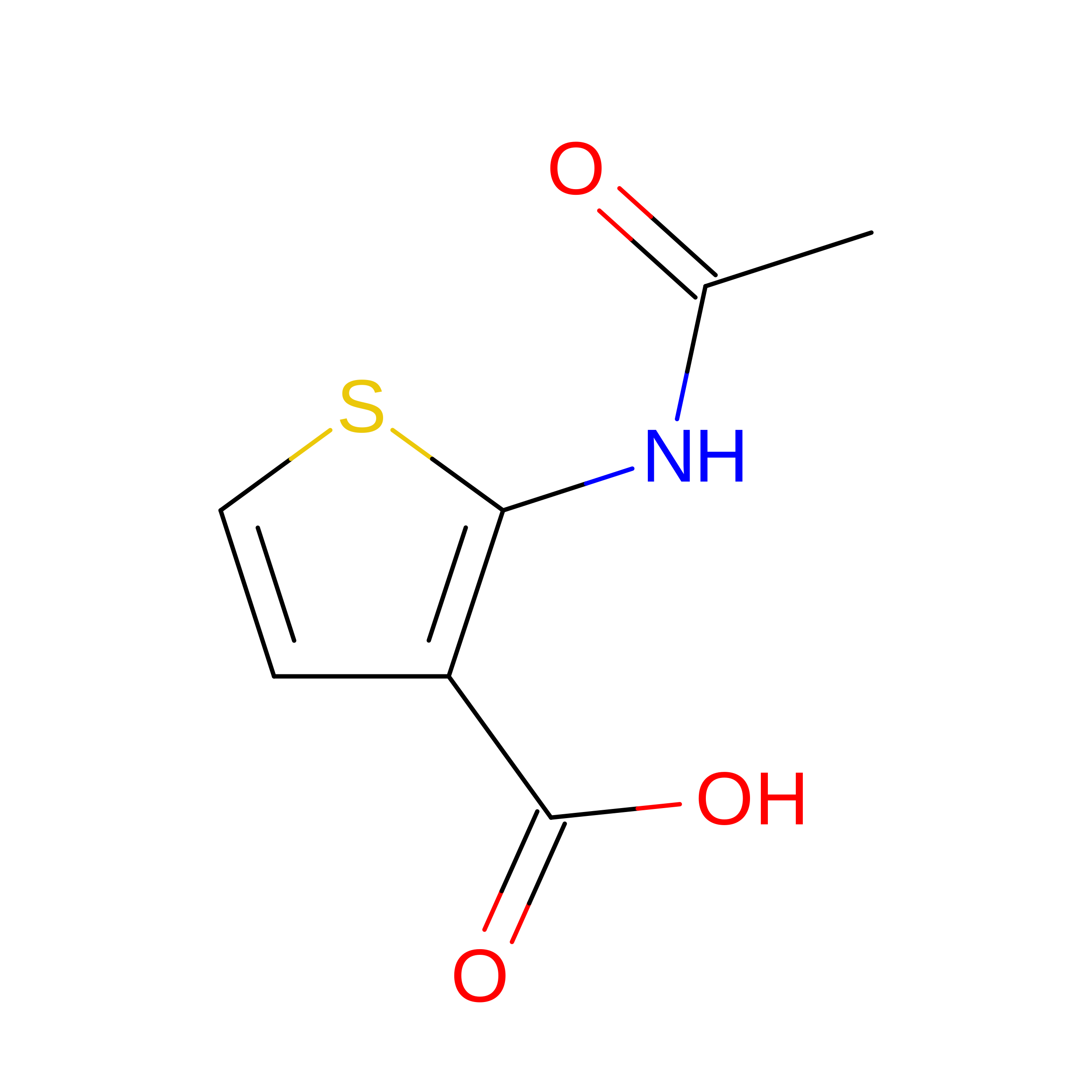
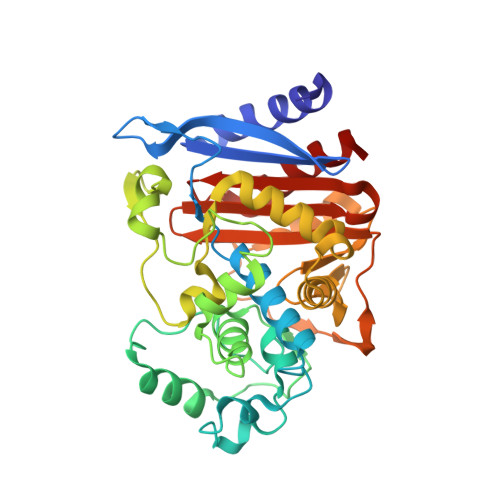
AmpC beta-lactamase in complex with 2-acetamidothiophene-3-carboxylic acid


Experimental Data Snapshot

  • Method: X-RAY DIFFRACTION
  • Resolution: 1.49 Å
  • R-Value Free: 
    0.168 (Depositor), 0.174 (DCC) 
  • R-Value Work: 
    0.135 (Depositor), 0.145 (DCC) 
  • R-Value Observed: 
    0.136 (Depositor) 

wwPDB Validation 3D Report Full Report

Validation slider image for 2HDU

Ligand Structure Quality Assessment 


This is version 1.4 of the entry. See complete history

Literature

Deconstructing fragment-based inhibitor discovery

Babaoglu, K.Shoichet, B.K.

(2006) Nat Chem Biol 2: 720-723

  • DOI: https://doi.org/10.1038/nchembio831
  • Primary Citation Related Structures: 
    2HDQ, 2HDR, 2HDS, 2HDU

  • PubMed Abstract: 

    Fragment-based screens test multiple low-molecular weight molecules for binding to a target. Fragments often bind with low affinities but typically have better ligand efficiencies (DeltaG(bind)/heavy atom count) than traditional screening hits. This efficiency, combined with accompanying atomic-resolution structures, has made fragments popular starting points for drug discovery programs. Fragment-based design adopts a constructive strategy: affinity is enhanced either by cycles of functional-group addition or by joining two independent fragments together. The final inhibitor is expected to adopt the same geometry as the original fragment hit. Here we consider whether the inverse, deconstructive logic also applies--can one always parse a higher-affinity inhibitor into fragments that recapitulate the binding geometry of the larger molecule? Cocrystal structures of fragments deconstructed from a known beta-lactamase inhibitor suggest that this is not always the case.

Macromolecule Content 

  • Total Structure Weight: 80.79 kDa 
  • Atom Count: 6,978 
  • Modeled Residue Count: 716 
  • Deposited Residue Count: 716 
  • Unique protein chains: 1

Macromolecules

Find similar proteins by:|  3D Structure
Entity ID: 1
MoleculeChains  Sequence LengthOrganismDetailsImage
Beta-lactamase
A, B
358Escherichia coli K-12Mutation(s): 0 
Gene Names: ampC
EC: 3.5.2.6
UniProt
Find proteins for P00811 (Escherichia coli (strain K12))
Explore P00811 
Go to UniProtKB:  P00811
Entity Groups
Sequence Clusters30% Identity50% Identity70% Identity90% Identity95% Identity100% Identity
UniProt GroupP00811
Sequence Annotations
Expand
Reference Sequence

Small Molecules

Ligands 3 Unique
IDChains Name / Formula / InChI Key2D Diagram3D Interactions
F12

Query on F12


Download:Ideal Coordinates CCD File
C [auth A]
D [auth A]
G [auth B]
H [auth B]
I [auth B]
C [auth A],
D [auth A],
G [auth B],
H [auth B],
I [auth B],
J [auth B],
K [auth B],
L [auth B]
2-(ACETYLAMINO)THIOPHENE-3-CARBOXYLIC ACID
C7 H7 N O3 S
RCEBHKDQZCVBTC-UHFFFAOYSA-N
PO4

Query on PO4


Download:Ideal Coordinates CCD File
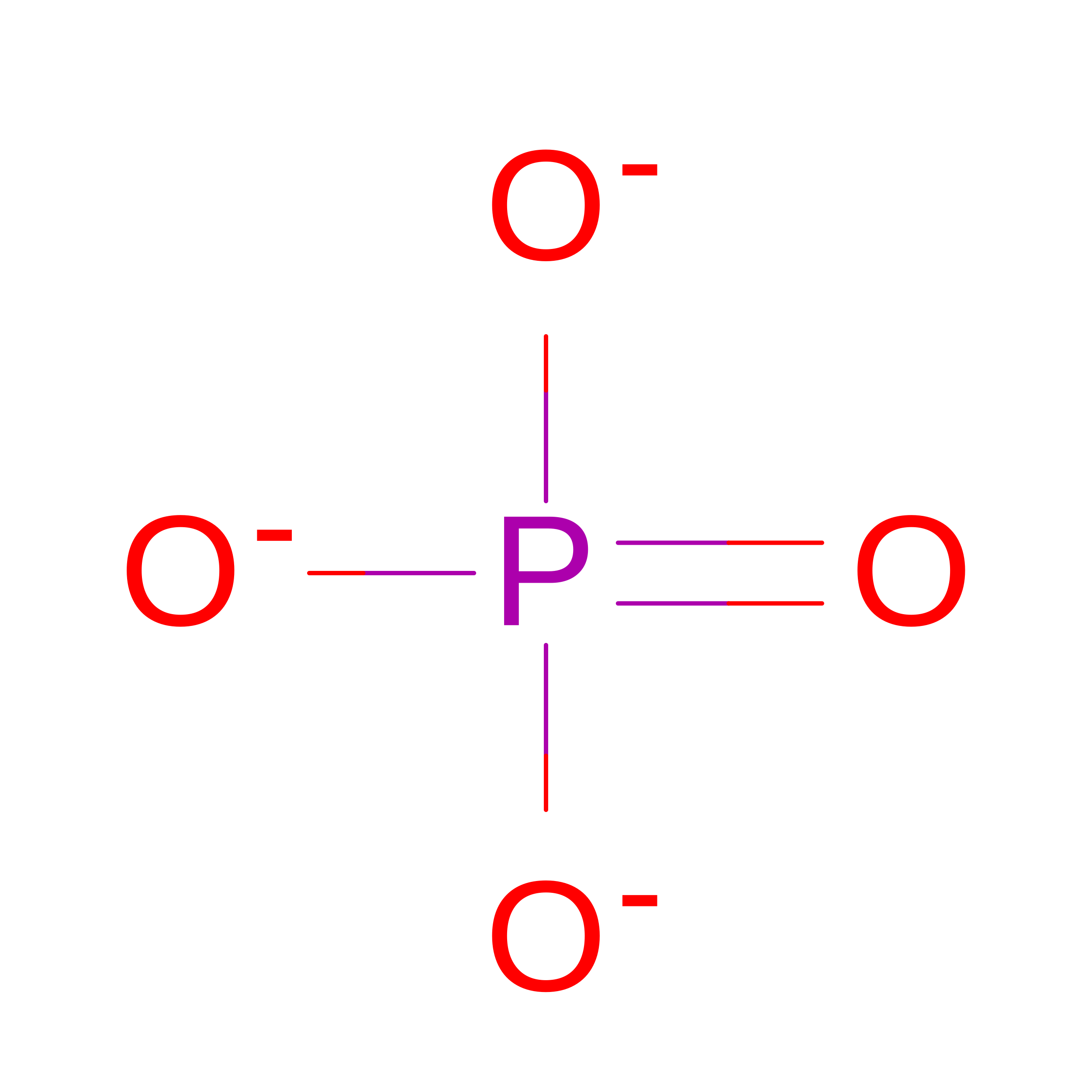
F [auth B]PHOSPHATE ION
O4 P
NBIIXXVUZAFLBC-UHFFFAOYSA-K
K

Query on K


Download:Ideal Coordinates CCD File
E [auth B]POTASSIUM ION
K
NPYPAHLBTDXSSS-UHFFFAOYSA-N
Binding Affinity Annotations 
IDSourceBinding Affinity
F12 BindingDB:  2HDU Ki: 5.00e+6 (nM) from 1 assay(s)

Experimental Data & Validation

Experimental Data

  • Method: X-RAY DIFFRACTION
  • Resolution: 1.49 Å
  • R-Value Free:  0.168 (Depositor), 0.174 (DCC) 
  • R-Value Work:  0.135 (Depositor), 0.145 (DCC) 
  • R-Value Observed: 0.136 (Depositor) 
Space Group: C 1 2 1
Unit Cell:
Length ( Å )Angle ( ˚ )
a = 117.905α = 90
b = 77.057β = 116.86
c = 97.52γ = 90
Software Package:
Software NamePurpose
DENZOdata reduction
SCALEPACKdata scaling
REFMACrefinement
PDB_EXTRACTdata extraction

Structure Validation

View Full Validation Report


Ligand Structure Quality Assessment 


Entry History 

Deposition Data

Revision History  (Full details and data files)

  • Version 1.0: 2006-11-07
    Type: Initial release
  • Version 1.1: 2008-05-01
    Changes: Version format compliance
  • Version 1.2: 2011-07-13
    Changes: Version format compliance
  • Version 1.3: 2017-10-18
    Changes: Refinement description
  • Version 1.4: 2024-12-25
    Changes: Advisory, Data collection, Database references, Derived calculations, Structure summary