2FHJ | pdb_00002fhj

Crystal structure of formylmethanofuran: tetrahydromethanopterin formyltransferase in complex with its coenzymes


Experimental Data Snapshot

  • Method: X-RAY DIFFRACTION
  • Resolution: 2.00 Å
  • R-Value Free: 
    0.256 (Depositor), 0.222 (DCC) 
  • R-Value Work: 
    0.219 (Depositor), 0.229 (DCC) 
  • R-Value Observed: 
    0.221 (Depositor) 

Starting Model: experimental
View more details

wwPDB Validation 3D Report Full Report

Validation slider image for 2FHJ

Ligand Structure Quality Assessment 


This is version 1.5 of the entry. See complete history

Literature

The structure of formylmethanofuran: tetrahydromethanopterin formyltransferase in complex with its coenzymes

Acharya, P.Warkentin, E.Ermler, U.Thauer, R.K.Shima, S.

(2006) J Mol Biology 357: 870-879

  • DOI: https://doi.org/10.1016/j.jmb.2006.01.015
  • Primary Citation Related Structures: 
    2FHJ, 2FHK

  • PubMed Abstract: 

    Formylmethanofuran:tetrahydromethanopterin formyltransferase is an essential enzyme in the one-carbon metabolism of methanogenic and sulfate-reducing archaea and of methylotrophic bacteria. The enzyme, which is devoid of a prosthetic group, catalyzes the reversible formyl transfer between the two substrates coenzyme methanofuran and coenzyme tetrahydromethanopterin (H4MPT) in a ternary complex catalytic mechanism. The structure of the formyltransferase without its coenzymes has been determined earlier. We report here the structure of the enzyme in complex with both coenzymes at a resolution of 2.0 A. Methanofuran, characterized for the first time in an enzyme structure, is embedded in an elongated cleft at the homodimer interface and fixed by multiple hydrophobic interactions. In contrast, tetrahydromethanopterin is only weakly bound in a shallow and wide cleft that provides two binding sites. It is assumed that the binding of the bulky coenzymes induces conformational changes of the polypeptide in the range of 3A that close the H4MPT binding cleft and position the reactive groups of both substrates optimally for the reaction. The key residue for substrate binding and catalysis is the strictly conserved Glu245. Glu245, embedded in a hydrophobic region and completely buried upon tetrahydromethanopterin binding, is presumably protonated prior to the reaction and is thus able to stabilize the tetrahedral oxyanion intermediate generated by the nucleophilic attack of the N5 atom of tetrahydromethanopterin onto the formyl carbon atom of formylmethanofuran.


  • Organizational Affiliation
    • Max-Planck-Institut für Biophysik, Max-von-Laue-Strasse 3, D-60438 Frankfurt am Main, Germany.

Macromolecule Content 

  • Total Structure Weight: 133.84 kDa 
  • Atom Count: 9,818 
  • Modeled Residue Count: 1,184 
  • Deposited Residue Count: 1,184 
  • Unique protein chains: 2

Macromolecules

Find similar proteins by:|  3D Structure
Entity ID: 1
MoleculeChains  Sequence LengthOrganismDetailsImage
Formylmethanofuran--tetrahydromethanopterin formyltransferase
A, B, C
296Methanopyrus kandleriMutation(s): 0 
Gene Names: FTR
EC: 2.3.1.101
UniProt
Find proteins for Q49610 (Methanopyrus kandleri (strain AV19 / DSM 6324 / JCM 9639 / NBRC 100938))
Explore Q49610 
Go to UniProtKB:  Q49610
Entity Groups
Sequence Clusters30% Identity50% Identity70% Identity90% Identity95% Identity100% Identity
UniProt GroupQ49610
Sequence Annotations
Expand
Reference Sequence
Find similar proteins by:|  3D Structure
Entity ID: 2
MoleculeChains  Sequence LengthOrganismDetailsImage
Formylmethanofuran--tetrahydromethanopterin formyltransferase296Methanopyrus kandleriMutation(s): 1 
Gene Names: FTR
EC: 2.3.1.101
UniProt
Find proteins for Q49610 (Methanopyrus kandleri (strain AV19 / DSM 6324 / JCM 9639 / NBRC 100938))
Explore Q49610 
Go to UniProtKB:  Q49610
Entity Groups
Sequence Clusters30% Identity50% Identity70% Identity90% Identity95% Identity100% Identity
UniProt GroupQ49610
Sequence Annotations
Expand
Reference Sequence

Small Molecules

Ligands 5 Unique
IDChains Name / Formula / InChI Key2D Diagram3D Interactions
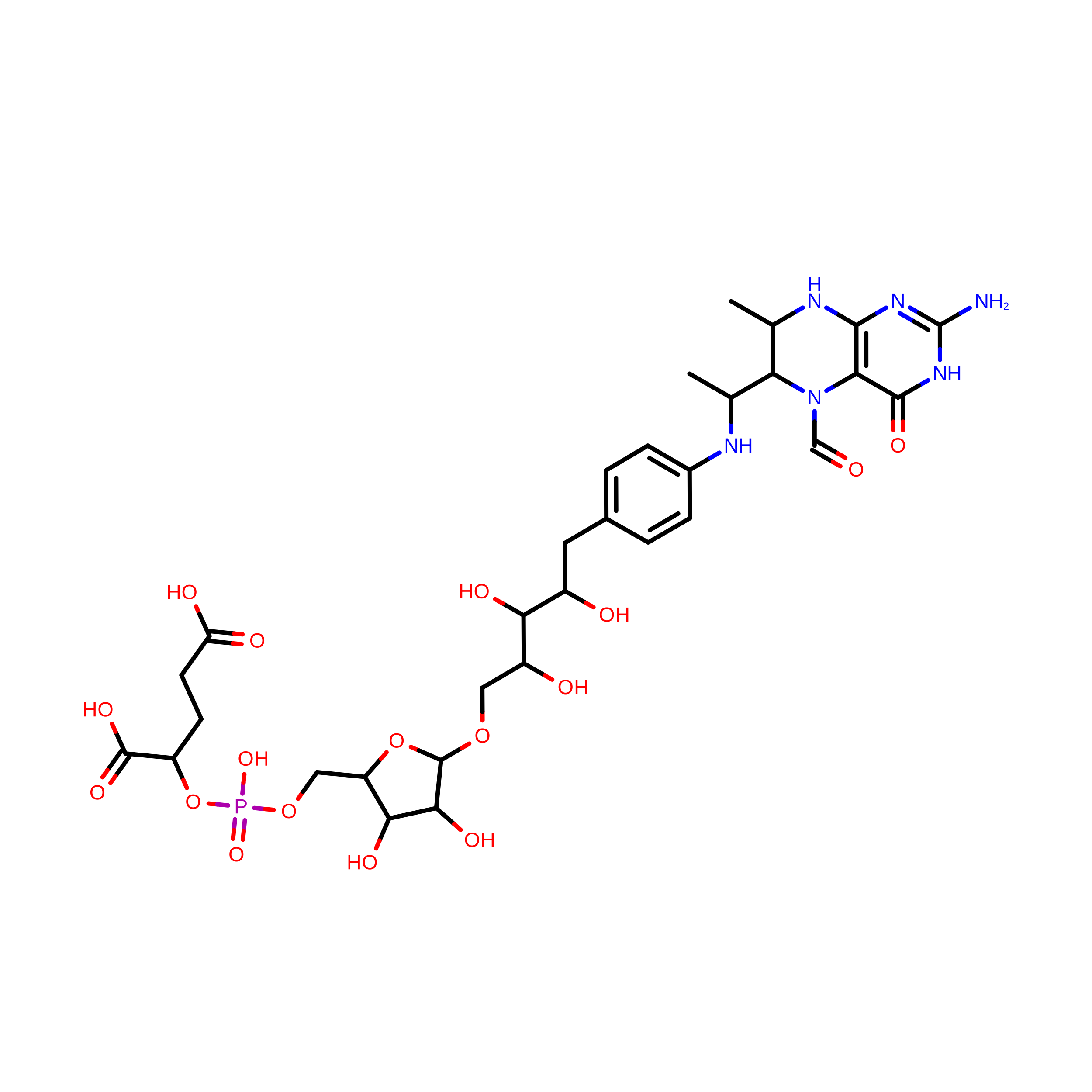
H4Z

Query on H4Z


Download:Ideal Coordinates CCD File
K [auth A],
W [auth C]
5-(4-{[1-(2-AMINO-5-FORMYL-7-METHYL-4-OXO-3,4,5,6,7,8-HEXAHYDROPTERIDIN-6-YL)ETHYL]AMINO}PHENYL)-5-DEOXY-1-O-{5-O-[(1,3-DICARBOXYPROPOXY)(HYDROXY)PHOSPHORYL]PENTOFURANOSYL}PENTITOL
C31 H45 N6 O17 P
RMPHWTMYCVTPKB-BKULHTCLSA-N
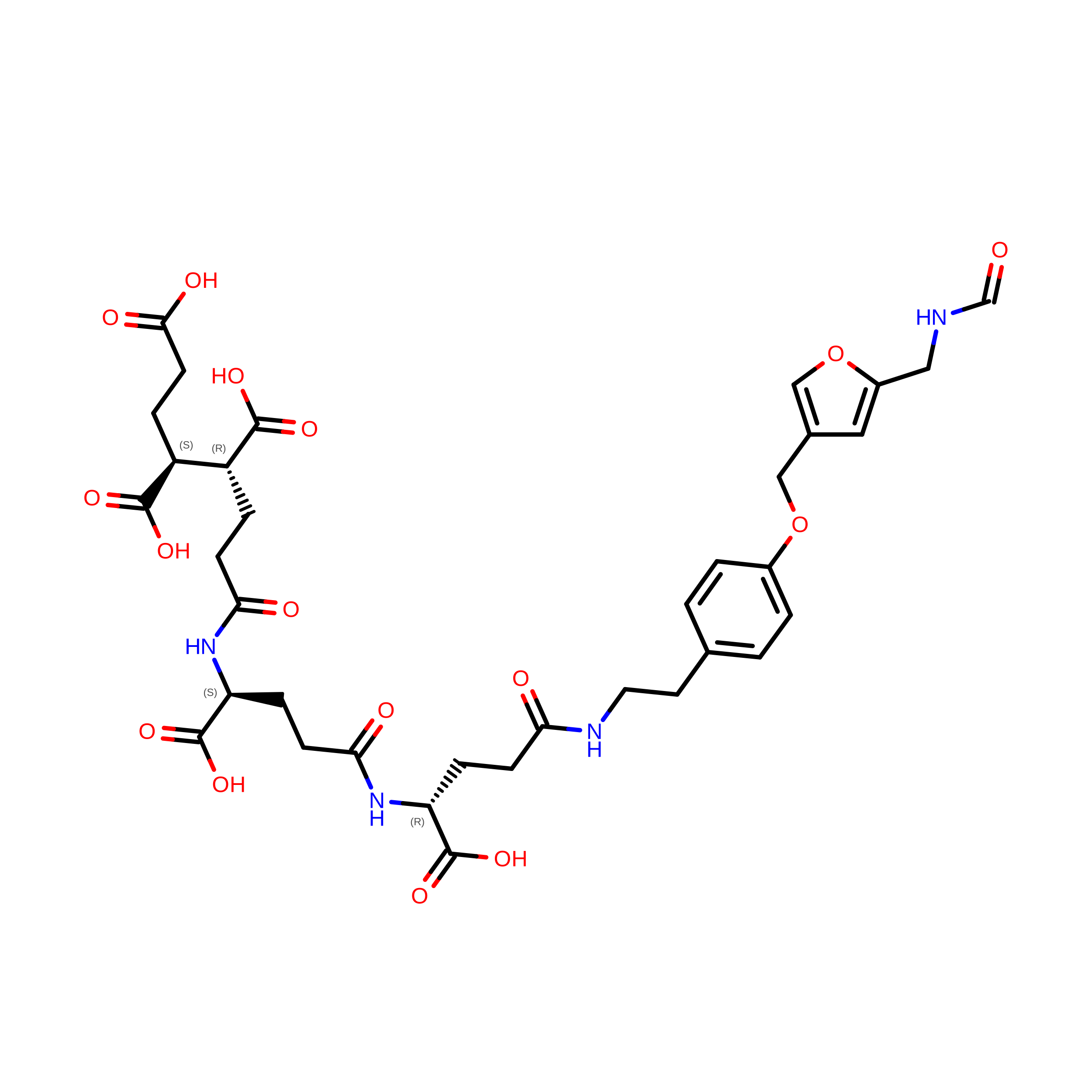
MFN

Query on MFN


Download:Ideal Coordinates CCD File
CA [auth D],
I [auth A],
J [auth A],
V [auth C]
N-[4,5,7-TRICARBOXYHEPTANOYL]-L-GAMMA-GLUTAMYL-N-{2-[4-({5-[(FORMYLAMINO)METHYL]-3-FURYL}METHOXY)PHENYL]ETHYL}-D-GLUTAMINE
C35 H44 N4 O16
RGBIJPWAWLXPOC-XRVZLLLRSA-N
PE3

Query on PE3


Download:Ideal Coordinates CCD File
X [auth C]3,6,9,12,15,18,21,24,27,30,33,36,39-TRIDECAOXAHENTETRACONTANE-1,41-DIOL
C28 H58 O15
ILLKMACMBHTSHP-UHFFFAOYSA-N
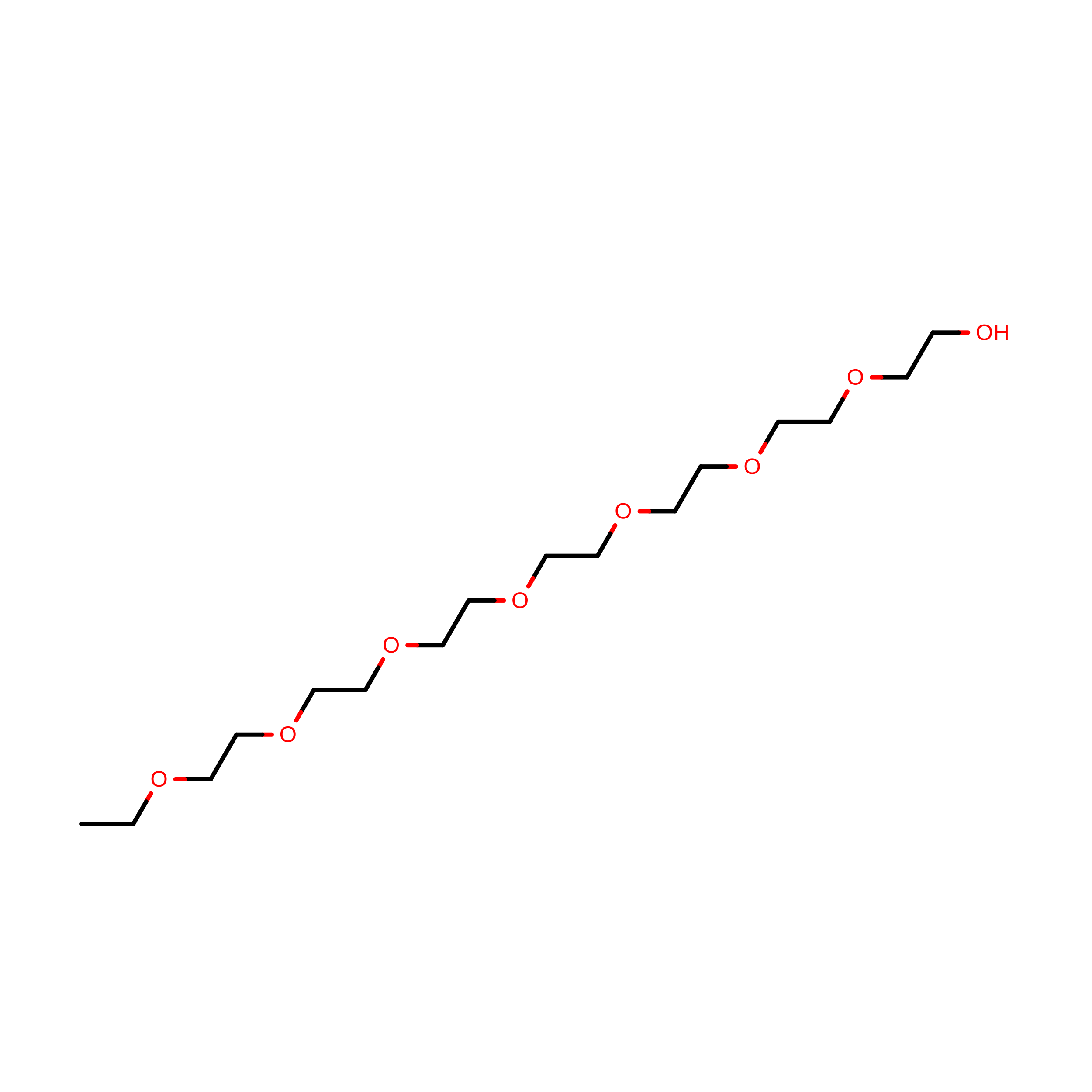
PE4

Query on PE4


Download:Ideal Coordinates CCD File
DA [auth D],
EA [auth D],
L [auth A]
2-{2-[2-(2-{2-[2-(2-ETHOXY-ETHOXY)-ETHOXY]-ETHOXY}-ETHOXY)-ETHOXY]-ETHOXY}-ETHANOL
C16 H34 O8
PJWQOENWHPEPKI-UHFFFAOYSA-N
K

Query on K


Download:Ideal Coordinates CCD File
AA [auth D]
BA [auth D]
E [auth A]
F [auth A]
G [auth A]
AA [auth D],
BA [auth D],
E [auth A],
F [auth A],
G [auth A],
H [auth A],
M [auth B],
N [auth B],
O [auth B],
P [auth B],
Q [auth B],
R [auth C],
S [auth C],
T [auth C],
U [auth C],
Y [auth D],
Z [auth D]
POTASSIUM ION
K
NPYPAHLBTDXSSS-UHFFFAOYSA-N
Modified Residues  1 Unique
IDChains TypeFormula2D DiagramParent
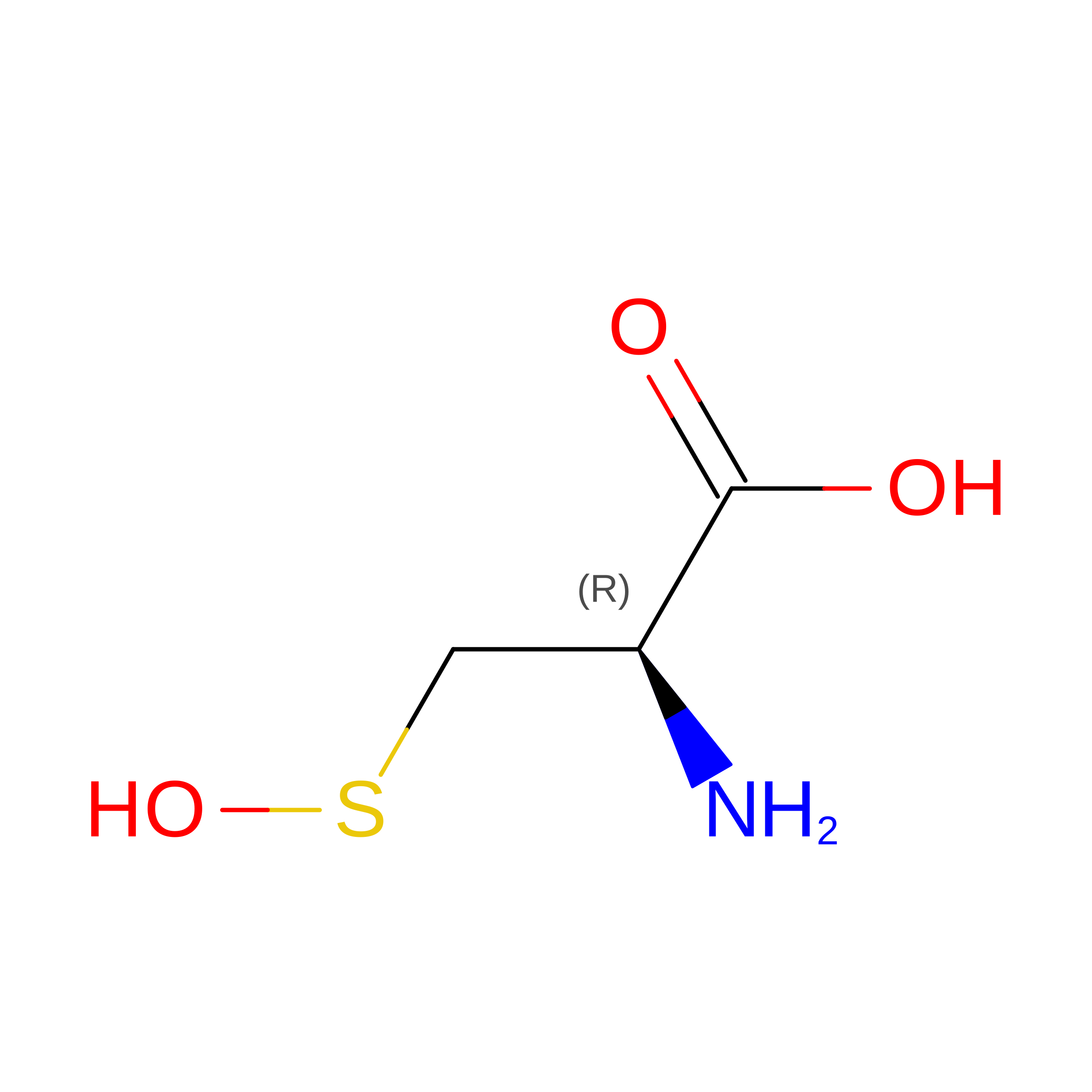
CSO
Query on CSO
D
L-PEPTIDE LINKINGC3 H7 N O3 SCYS

Experimental Data & Validation

Experimental Data

  • Method: X-RAY DIFFRACTION
  • Resolution: 2.00 Å
  • R-Value Free:  0.256 (Depositor), 0.222 (DCC) 
  • R-Value Work:  0.219 (Depositor), 0.229 (DCC) 
  • R-Value Observed: 0.221 (Depositor) 
Space Group: P 1 21 1
Unit Cell:
Length ( Å )Angle ( ˚ )
a = 85α = 90
b = 74.15β = 113.54
c = 103.87γ = 90
Software Package:
Software NamePurpose
DENZOdata reduction
XSCALEdata scaling
EPMRphasing
REFMACrefinement

Structure Validation

View Full Validation Report


Ligand Structure Quality Assessment 


Entry History 

Deposition Data

Revision History  (Full details and data files)

  • Version 1.0: 2006-03-07
    Type: Initial release
  • Version 1.1: 2008-05-01
    Changes: Version format compliance
  • Version 1.2: 2011-07-13
    Changes: Version format compliance
  • Version 1.3: 2023-08-30
    Changes: Data collection, Database references, Derived calculations, Refinement description
  • Version 1.4: 2023-11-15
    Changes: Data collection
  • Version 1.5: 2024-11-06
    Changes: Structure summary