2EUK | pdb_00002euk

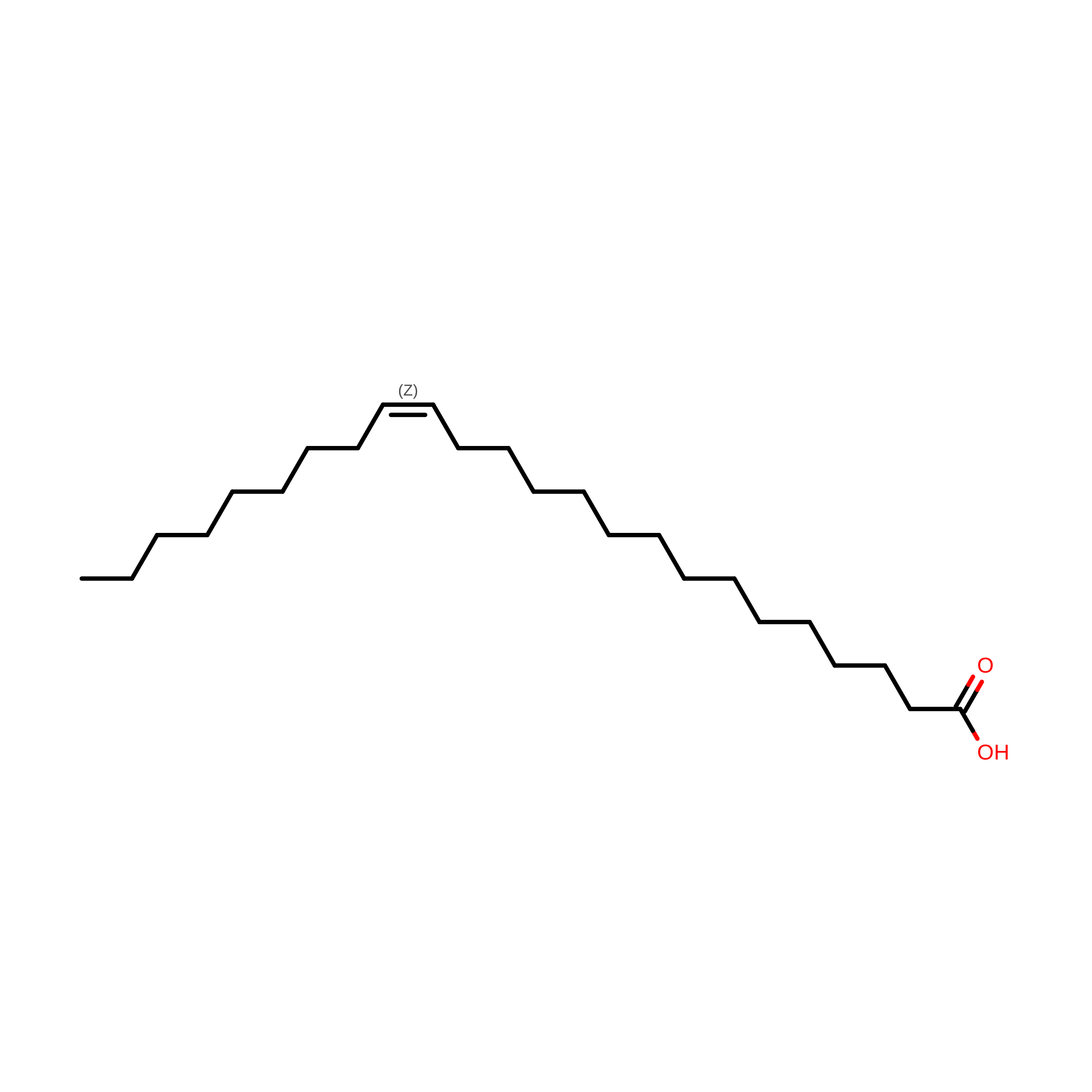
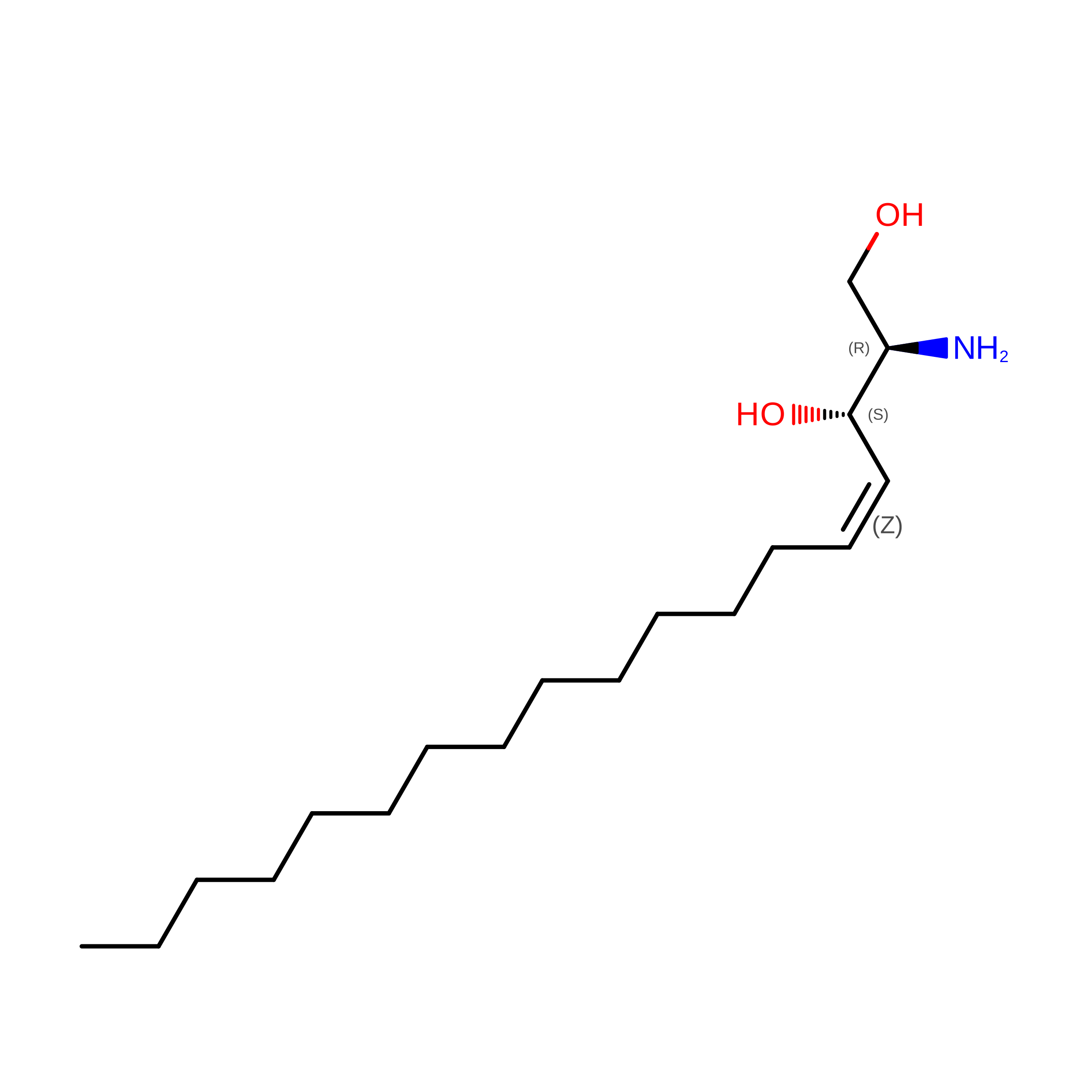
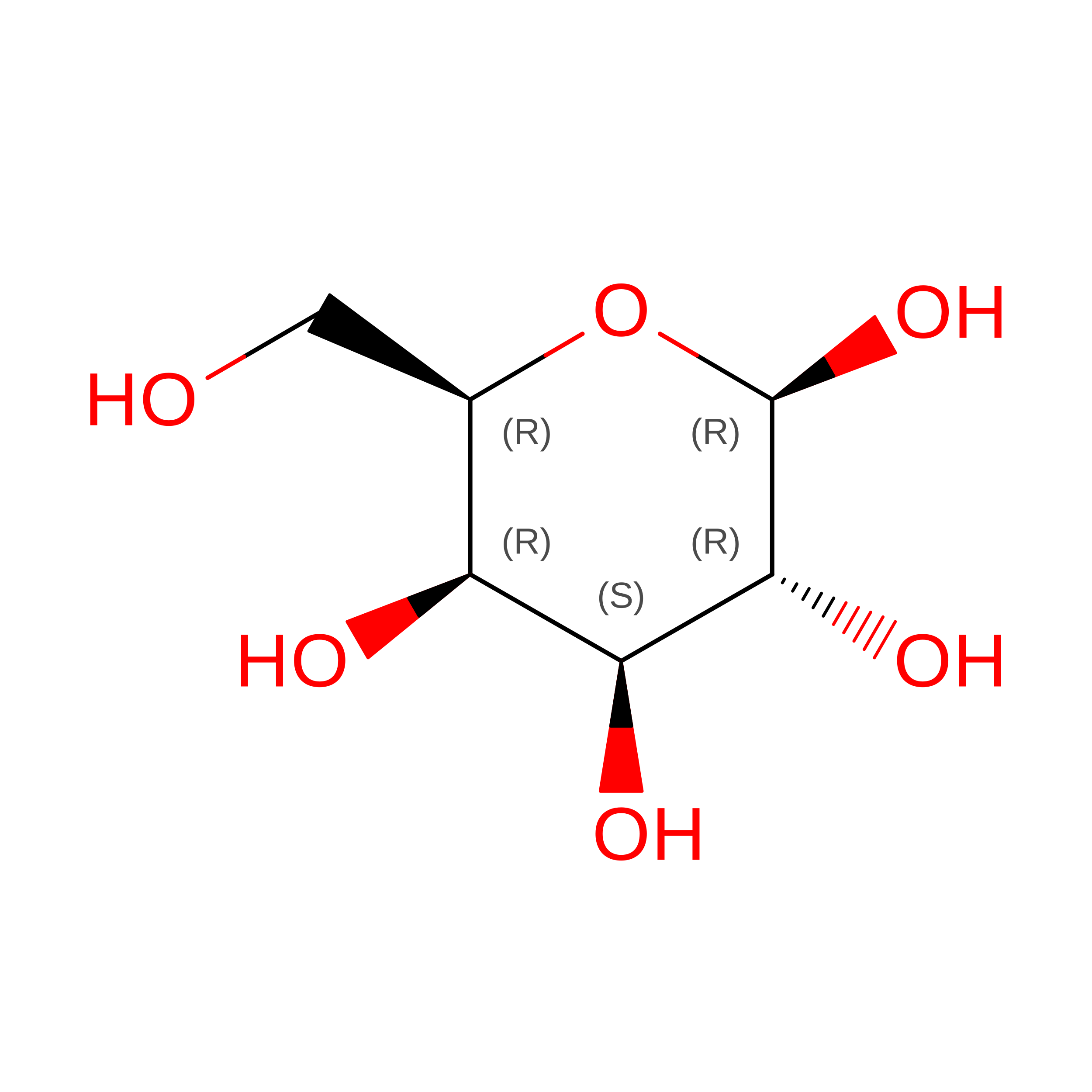
Crystal Structure of Human Glycolipid Transfer Protein complexed with 24:1 Galactosylceramide


Experimental Data Snapshot

  • Method: X-RAY DIFFRACTION
  • Resolution: 1.85 Å
  • R-Value Free: 
    0.230 (Depositor), 0.227 (DCC) 
  • R-Value Work: 
    0.181 (Depositor), 0.178 (DCC) 
  • R-Value Observed: 
    0.181 (Depositor) 

Starting Model: experimental
View more details

wwPDB Validation 3D Report Full Report

Validation slider image for 2EUK

Ligand Structure Quality Assessment 


This is version 1.5 of the entry. See complete history

Literature

The liganding of glycolipid transfer protein is controlled by glycolipid acyl structure.

Malinina, L.Malakhova, M.L.Kanack, A.T.Lu, M.Abagyan, R.Brown, R.E.Patel, D.J.

(2006) PLoS Biol 4: e362-e362

  • DOI: https://doi.org/10.1371/journal.pbio.0040362
  • Primary Citation Related Structures: 
    2EUK, 2EUM, 2EVD, 2EVL, 2EVS, 2EVT

  • PubMed Abstract: 

    Glycosphingolipids (GSLs) play major roles in cellular growth and development. Mammalian glycolipid transfer proteins (GLTPs) are potential regulators of cell processes mediated by GSLs and display a unique architecture among lipid binding/transfer proteins. The GLTP fold represents a novel membrane targeting/interaction domain among peripheral proteins. Here we report crystal structures of human GLTP bound to GSLs of diverse acyl chain length, unsaturation, and sugar composition. Structural comparisons show a highly conserved anchoring of galactosyl- and lactosyl-amide headgroups by the GLTP recognition center. By contrast, acyl chain chemical structure and occupancy of the hydrophobic tunnel dictate partitioning between sphingosine-in and newly-observed sphingosine-out ligand-binding modes. The structural insights, combined with computed interaction propensity distributions, suggest a concerted sequence of events mediated by GLTP conformational changes during GSL transfer to and/or from membranes, as well as during GSL presentation and/or transfer to other proteins.


  • Organizational Affiliation
    • Structural Biology Program, Memorial Sloan-Kettering Cancer Center, New York, New York, United States of America.

Macromolecule Content 

  • Total Structure Weight: 24.84 kDa 
  • Atom Count: 1,892 
  • Modeled Residue Count: 204 
  • Deposited Residue Count: 209 
  • Unique protein chains: 1

Macromolecules

Find similar proteins by:|  3D Structure
Entity ID: 1
MoleculeChains  Sequence LengthOrganismDetailsImage
Glycolipid transfer protein209Homo sapiensMutation(s): 0 
UniProt & NIH Common Fund Data Resources
Find proteins for Q9NZD2 (Homo sapiens)
Explore Q9NZD2 
Go to UniProtKB:  Q9NZD2
PHAROS:  Q9NZD2
GTEx:  ENSG00000139433 
Entity Groups
Sequence Clusters30% Identity50% Identity70% Identity90% Identity95% Identity100% Identity
UniProt GroupQ9NZD2
Sequence Annotations
Expand
Reference Sequence

Experimental Data & Validation

Experimental Data

  • Method: X-RAY DIFFRACTION
  • Resolution: 1.85 Å
  • R-Value Free:  0.230 (Depositor), 0.227 (DCC) 
  • R-Value Work:  0.181 (Depositor), 0.178 (DCC) 
  • R-Value Observed: 0.181 (Depositor) 
Space Group: C 1 2 1
Unit Cell:
Length ( Å )Angle ( ˚ )
a = 75.867α = 90
b = 49.304β = 122.61
c = 68.655γ = 90
Software Package:
Software NamePurpose
DENZOdata reduction
SCALEPACKdata scaling
REFMACrefinement
PDB_EXTRACTdata extraction
CrystalCleardata reduction
AMoREphasing

Structure Validation

View Full Validation Report


Ligand Structure Quality Assessment 


Entry History 

Deposition Data

Revision History  (Full details and data files)

  • Version 1.0: 2006-11-14
    Type: Initial release
  • Version 1.1: 2008-05-01
    Changes: Version format compliance
  • Version 1.2: 2011-07-13
    Changes: Version format compliance
  • Version 1.3: 2017-10-18
    Changes: Refinement description
  • Version 1.4: 2020-07-29
    Type: Remediation
    Reason: Carbohydrate remediation
    Changes: Advisory, Data collection, Derived calculations, Structure summary
  • Version 1.5: 2023-08-23
    Changes: Data collection, Database references, Refinement description, Structure summary