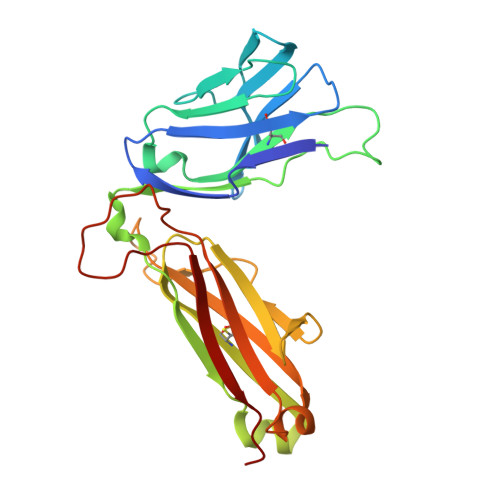
2AK4 | pdb_00002ak4

Crystal Structure of SB27 TCR in complex with HLA-B*3508-13mer peptide


Experimental Data Snapshot

  • Method: X-RAY DIFFRACTION
  • Resolution: 2.50 Å
  • R-Value Free: 
    0.278 (Depositor), 0.284 (DCC) 
  • R-Value Work: 
    0.246 (Depositor), 0.266 (DCC) 
  • R-Value Observed: 
    0.247 (Depositor) 

wwPDB Validation 3D Report Full Report

Validation slider image for 2AK4

This is version 1.3 of the entry. See complete history

Literature

T cell receptor recognition of a 'super-bulged' major histocompatibility complex class I-bound peptide

Tynan, F.E.Burrows, S.R.Buckle, A.M.Clements, C.S.Borg, N.A.Miles, J.J.Beddoe, T.Whisstock, J.C.Wilce, M.C.Silins, S.L.Burrows, J.M.Kjer-Nielsen, L.Kostenko, L.Purcell, A.W.McCluskey, J.Rossjohn, J.

(2005) Nat Immunol 6: 1114-1122

  • DOI: https://doi.org/10.1038/ni1257
  • Primary Citation Related Structures: 
    2AK4

  • PubMed Abstract: 

    Unusually long major histocompatibility complex (MHC) class I-restricted epitopes are important in immunity, but their 'bulged' conformation represents a potential obstacle to alphabeta T cell receptor (TCR)-MHC class I docking. To elucidate how such recognition is achieved while still preserving MHC restriction, we have determined here the structure of a TCR in complex with HLA-B(*)3508 presenting a peptide 13 amino acids in length. This complex was atypical of TCR-peptide-MHC class I interactions, being dominated at the interface by peptide-mediated interactions. The TCR assumed two distinct orientations, swiveling on top of the centrally bulged, rigid peptide such that only limited contacts were made with MHC class I. Although the TCR-peptide recognition resembled an antibody-antigen interaction, the TCR-MHC class I contacts defined a minimal 'generic footprint' of MHC-restriction. Thus our findings simultaneously demonstrate the considerable adaptability of the TCR and the 'shape' of MHC restriction.


  • Organizational Affiliation
    • The Protein Crystallography Unit, Department of Biochemistry and Molecular Biology, School of Biomedical Sciences, Monash University, Clayton, Victoria 3800, Australia.

Macromolecule Content 

  • Total Structure Weight: 390.03 kDa 
  • Atom Count: 26,609 
  • Modeled Residue Count: 3,329 
  • Deposited Residue Count: 3,376 
  • Unique protein chains: 5

Macromolecules

Find similar proteins by:|  3D Structure
Entity ID: 1
MoleculeChains  Sequence LengthOrganismDetailsImage
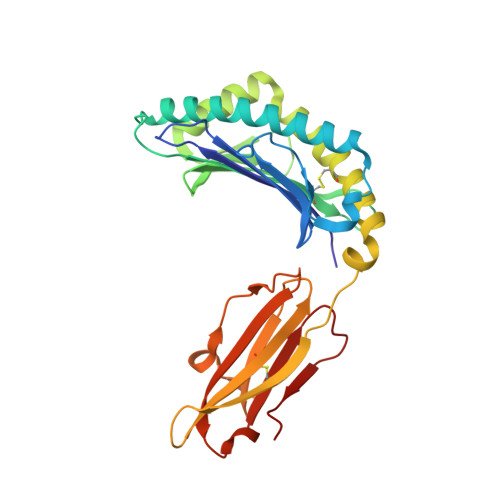
HLA-B35 variantA,
F,
K,
P [auth Q]
276Homo sapiensMutation(s): 0 
UniProt & NIH Common Fund Data Resources
Find proteins for P01889 (Homo sapiens)
Explore P01889 
Go to UniProtKB:  P01889
PHAROS:  P01889
GTEx:  ENSG00000234745 
Entity Groups
Sequence Clusters30% Identity50% Identity70% Identity90% Identity95% Identity100% Identity
UniProt GroupP01889
Sequence Annotations
Expand
Reference Sequence
Find similar proteins by:|  3D Structure
Entity ID: 2
MoleculeChains  Sequence LengthOrganismDetailsImage
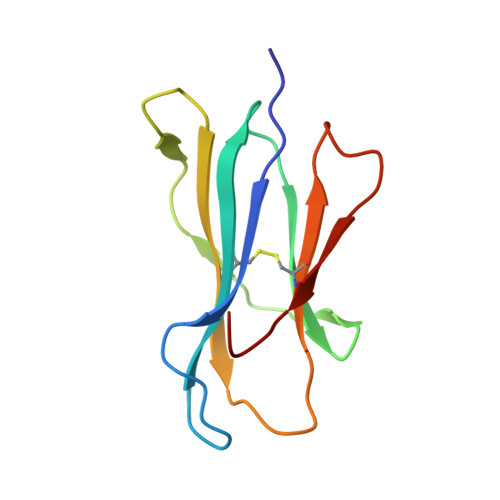
Beta-2-microglobulinB,
G,
L,
Q [auth R]
99Homo sapiensMutation(s): 0 
UniProt & NIH Common Fund Data Resources
Find proteins for P61769 (Homo sapiens)
Explore P61769 
Go to UniProtKB:  P61769
PHAROS:  P61769
GTEx:  ENSG00000166710 
Entity Groups
Sequence Clusters30% Identity50% Identity70% Identity90% Identity95% Identity100% Identity
UniProt GroupP61769
Sequence Annotations
Expand
Reference Sequence
Find similar proteins by:  Sequence   |   3D Structure  
Entity ID: 3
MoleculeChains  Sequence LengthOrganismDetailsImage
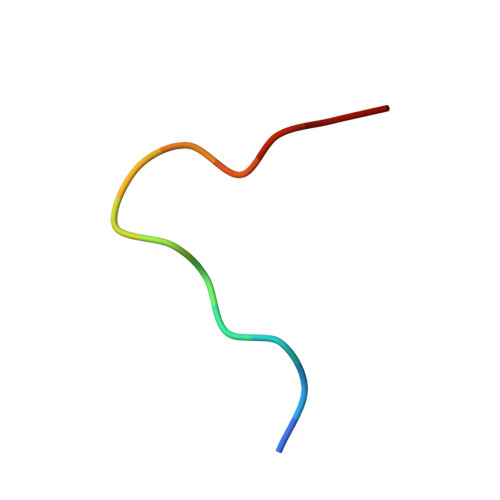
EBV peptide LPEPLPQGQLTAYC,
H,
M,
R [auth S]
13N/AMutation(s): 0 
UniProt
Find proteins for P03206 (Epstein-Barr virus (strain B95-8))
Explore P03206 
Go to UniProtKB:  P03206
Entity Groups
Sequence Clusters30% Identity50% Identity70% Identity90% Identity95% Identity100% Identity
UniProt GroupP03206
Sequence Annotations
Expand
Reference Sequence
Find similar proteins by:|  3D Structure
Entity ID: 4
MoleculeChains  Sequence LengthOrganismDetailsImage
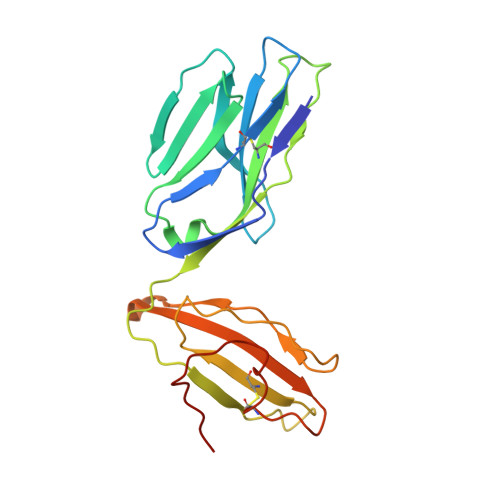
SB27 T cell receptor alpha chainD,
I,
N,
S [auth T]
211Homo sapiensMutation(s): 0 
UniProt & NIH Common Fund Data Resources
Find proteins for P01848 (Homo sapiens)
Explore P01848 
Go to UniProtKB:  P01848
PHAROS:  P01848
Entity Groups
Sequence Clusters30% Identity50% Identity70% Identity90% Identity95% Identity100% Identity
UniProt GroupP01848
Sequence Annotations
Expand
Reference Sequence
Find similar proteins by:|  3D Structure
Entity ID: 5
MoleculeChains  Sequence LengthOrganismDetailsImage
SB27 T cell receptor beta chainE,
J,
O [auth P],
T [auth U]
245Homo sapiensMutation(s): 0 
UniProt
Find proteins for P01850 (Homo sapiens)
Explore P01850 
Go to UniProtKB:  P01850
Entity Groups
Sequence Clusters30% Identity50% Identity70% Identity90% Identity95% Identity100% Identity
UniProt GroupP01850
Sequence Annotations
Expand
Reference Sequence

Small Molecules

Ligands 1 Unique
IDChains Name / Formula / InChI Key2D Diagram3D Interactions
IOD

Query on IOD


Download:Ideal Coordinates CCD File
AA [auth E]
BA [auth F]
CA [auth F]
DA [auth F]
EA [auth F]
AA [auth E],
BA [auth F],
CA [auth F],
DA [auth F],
EA [auth F],
FA [auth G],
GA [auth H],
HA [auth J],
IA [auth K],
JA [auth K],
KA [auth K],
LA [auth L],
MA [auth Q],
NA [auth Q],
OA [auth R],
PA [auth S],
U [auth A],
V [auth A],
W [auth A],
X [auth B],
Y [auth C],
Z [auth D]
IODIDE ION
I
XMBWDFGMSWQBCA-UHFFFAOYSA-M

Experimental Data & Validation

Experimental Data

  • Method: X-RAY DIFFRACTION
  • Resolution: 2.50 Å
  • R-Value Free:  0.278 (Depositor), 0.284 (DCC) 
  • R-Value Work:  0.246 (Depositor), 0.266 (DCC) 
  • R-Value Observed: 0.247 (Depositor) 
Space Group: P 1 21 1
Unit Cell:
Length ( Å )Angle ( ˚ )
a = 79.154α = 90
b = 213.282β = 89.94
c = 122.303γ = 90
Software Package:
Software NamePurpose
REFMACrefinement
PDB_EXTRACTdata extraction
HKL-2000data reduction
SCALEPACKdata scaling
PHASERphasing

Structure Validation

View Full Validation Report


Entry History 

Revision History  (Full details and data files)

  • Version 1.0: 2005-10-11
    Type: Initial release
  • Version 1.1: 2008-04-30
    Changes: Version format compliance
  • Version 1.2: 2011-07-13
    Changes: Version format compliance
  • Version 1.3: 2024-10-23
    Changes: Data collection, Database references, Derived calculations, Refinement description, Structure summary