2AHI | pdb_00002ahi

Structural Basis of DNA Recognition by p53 Tetramers (complex III)


Experimental Data Snapshot

  • Method: X-RAY DIFFRACTION
  • Resolution: 1.85 Å
  • R-Value Free: 
    0.225 (Depositor), 0.229 (DCC) 
  • R-Value Work: 
    0.162 (Depositor), 0.169 (DCC) 
  • R-Value Observed: 
    0.166 (Depositor) 

Starting Model: experimental
View more details

wwPDB Validation 3D Report Full Report

Validation slider image for 2AHI

This is version 1.4 of the entry. See complete history

Literature

Structural Basis of DNA Recognition by p53 Tetramers

Kitayner, M.Rozenberg, H.Kessler, N.Rabinovich, D.Shaulov, L.Haran, T.E.Shakked, Z.

(2006) Mol Cell 22: 741-753

  • DOI: https://doi.org/10.1016/j.molcel.2006.05.015
  • Primary Citation Related Structures: 
    2AC0, 2ADY, 2AHI, 2ATA

  • PubMed Abstract: 

    The tumor-suppressor protein p53 is among the most effective of the cell's natural defenses against cancer. In response to cellular stress, p53 binds as a tetramer to diverse DNA targets containing two decameric half-sites, thereby activating the expression of genes involved in cell-cycle arrest or apoptosis. Here we present high-resolution crystal structures of sequence-specific complexes between the core domain of human p53 and different DNA half-sites. In all structures, four p53 molecules self-assemble on two DNA half-sites to form a tetramer that is a dimer of dimers, stabilized by protein-protein and base-stacking interactions. The protein-DNA interface varies as a function of the specific base sequence in correlation with the measured binding affinities of the complexes. The new data establish a structural framework for understanding the mechanisms of specificity, affinity, and cooperativity of DNA binding by p53 and suggest a model for its regulation by regions outside the sequence-specific DNA binding domain.


  • Organizational Affiliation
    • Department of Structural Biology, Weizmann Institute of Science, Rehovot 76100.

Macromolecule Content 

  • Total Structure Weight: 104.94 kDa 
  • Atom Count: 8,058 
  • Modeled Residue Count: 831 
  • Deposited Residue Count: 848 
  • Unique protein chains: 1
  • Unique nucleic acid chains: 1

Macromolecules


Find similar proteins by:|  3D Structure
Entity ID: 2
MoleculeChains  Sequence LengthOrganismDetailsImage
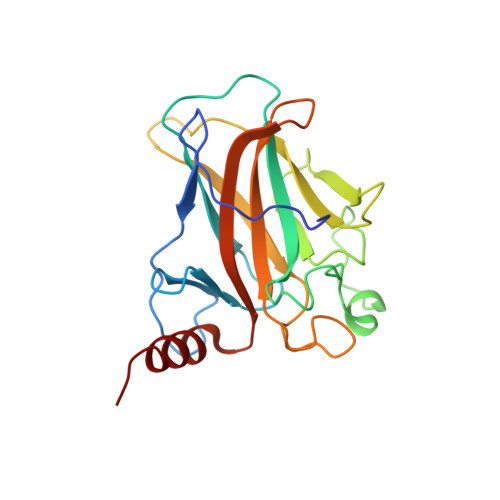
Cellular tumor antigen p53E [auth A],
F [auth B],
G [auth C],
H [auth D]
200Homo sapiensMutation(s): 0 
UniProt & NIH Common Fund Data Resources
Find proteins for P04637 (Homo sapiens)
Explore P04637 
Go to UniProtKB:  P04637
PHAROS:  P04637
GTEx:  ENSG00000141510 
Entity Groups
Sequence Clusters30% Identity50% Identity70% Identity90% Identity95% Identity100% Identity
UniProt GroupP04637
Sequence Annotations
Expand
Reference Sequence
Find similar nucleic acids by:  Sequence
Entity ID: 1
MoleculeChains LengthOrganismImage
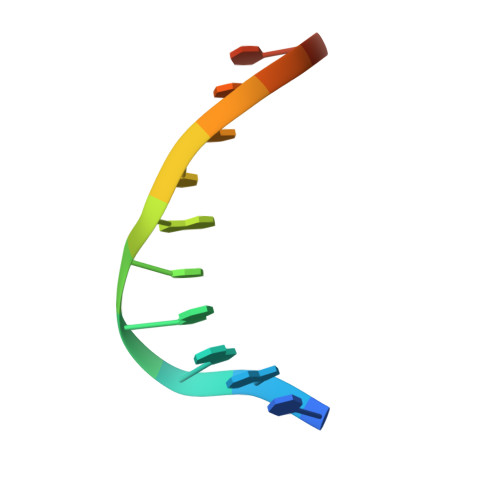
5'-D(*CP*GP*GP*AP*CP*AP*TP*GP*TP*CP*CP*G)-3'A [auth E],
B [auth F],
C [auth G],
D [auth H]
12N/A
Sequence Annotations
Expand
Reference Sequence

Experimental Data & Validation

Experimental Data

  • Method: X-RAY DIFFRACTION
  • Resolution: 1.85 Å
  • R-Value Free:  0.225 (Depositor), 0.229 (DCC) 
  • R-Value Work:  0.162 (Depositor), 0.169 (DCC) 
  • R-Value Observed: 0.166 (Depositor) 
Space Group: P 1
Unit Cell:
Length ( Å )Angle ( ˚ )
a = 54.552α = 83.08
b = 58.19β = 87.94
c = 77.545γ = 73.56
Software Package:
Software NamePurpose
DENZOdata reduction
SCALEPACKdata scaling
REFMACrefinement
PDB_EXTRACTdata extraction
CNSphasing

Structure Validation

View Full Validation Report


Entry History 

Deposition Data

Revision History  (Full details and data files)

  • Version 1.0: 2006-07-11
    Type: Initial release
  • Version 1.1: 2008-04-30
    Changes: Version format compliance
  • Version 1.2: 2011-07-13
    Changes: Version format compliance
  • Version 1.3: 2017-10-11
    Changes: Advisory, Refinement description
  • Version 1.4: 2023-10-25
    Changes: Data collection, Database references, Derived calculations, Refinement description