2A5B | pdb_00002a5b

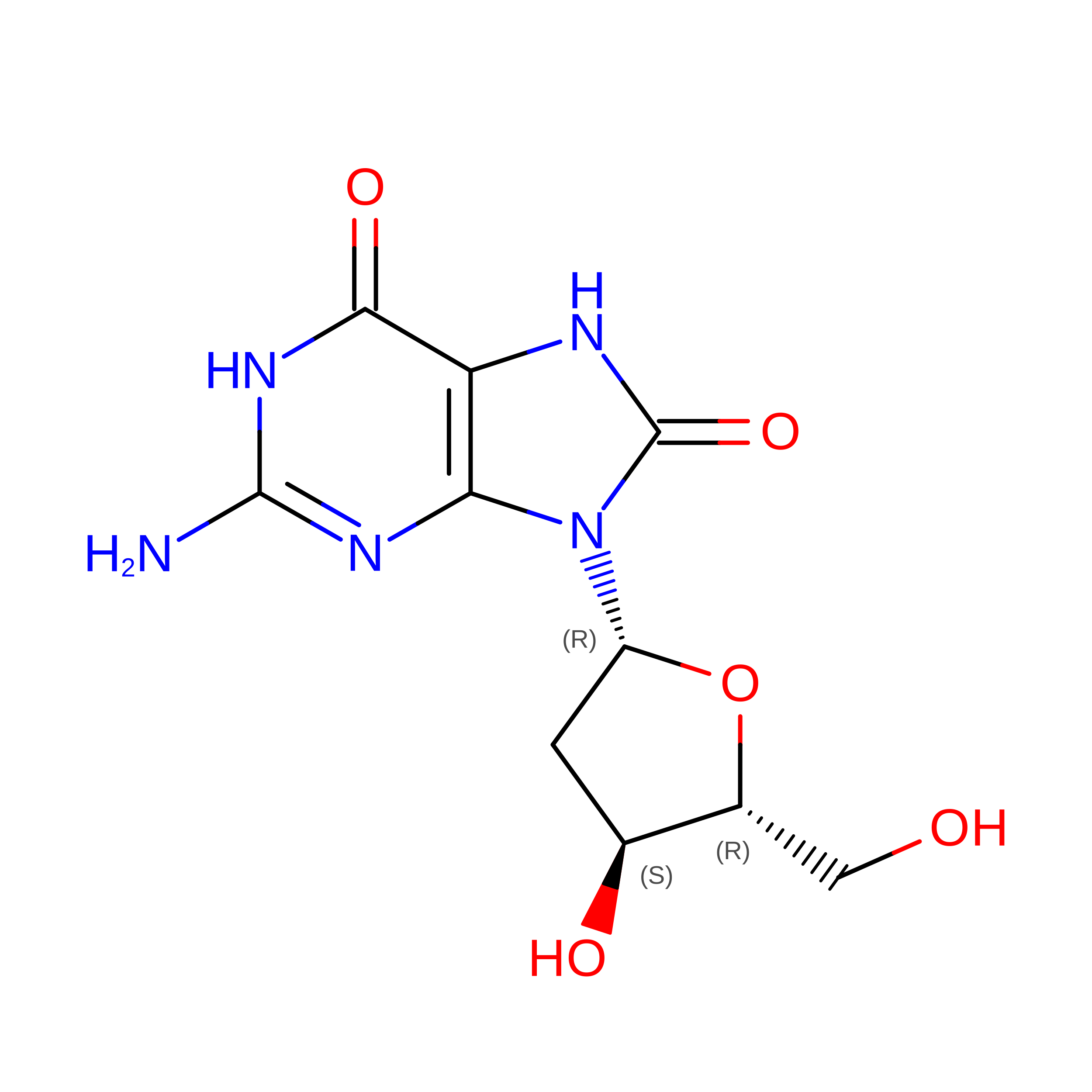
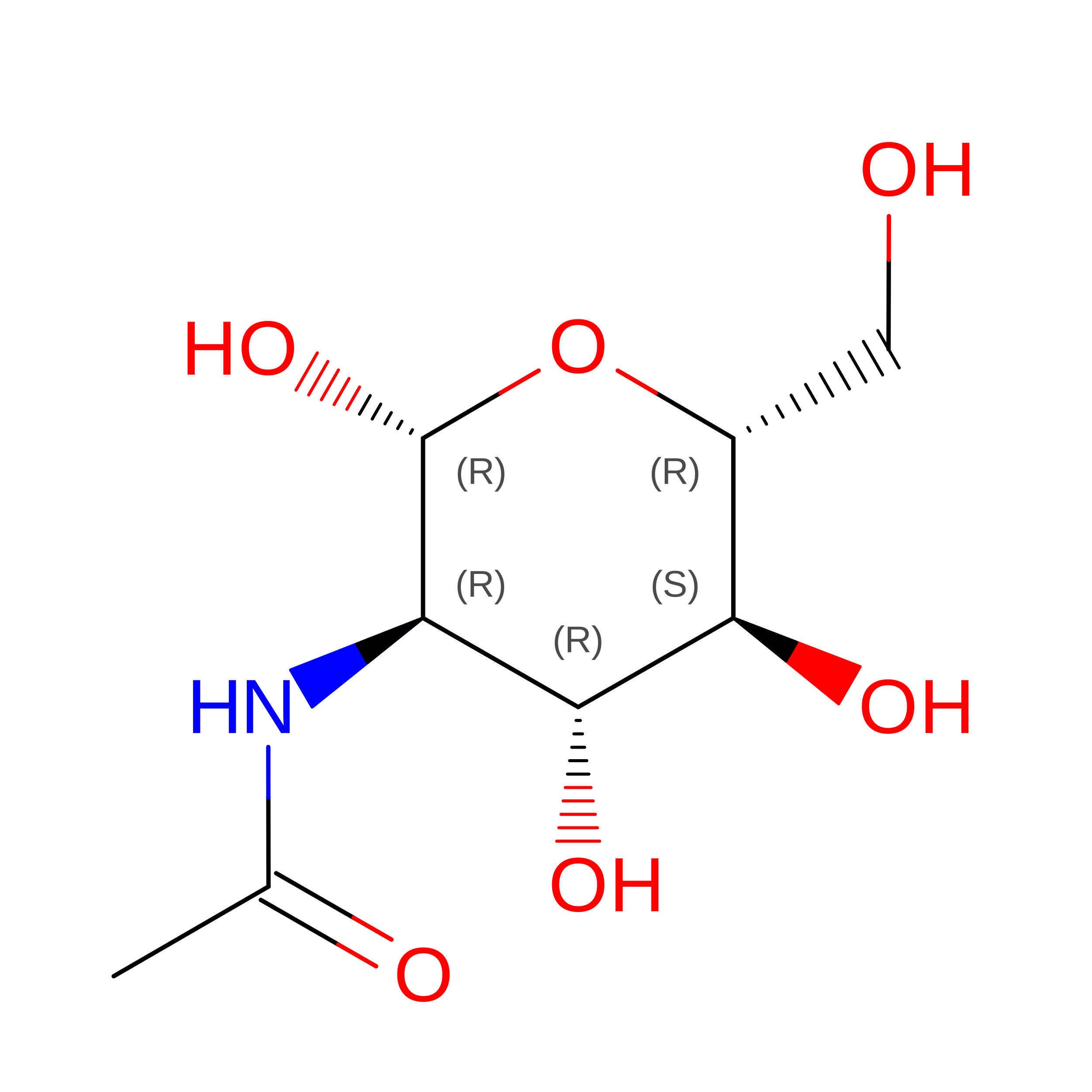
Avidin complexed with 8-oxodeoxyguanosine


Experimental Data Snapshot

  • Method: X-RAY DIFFRACTION
  • Resolution: 2.49 Å
  • R-Value Free: 
    0.310 (Depositor), 0.307 (DCC) 
  • R-Value Work: 
    0.219 (Depositor), 0.215 (DCC) 
  • R-Value Observed: 
    0.223 (Depositor) 

Starting Model: experimental
View more details

wwPDB Validation 3D Report Full Report

Validation slider image for 2A5B

Ligand Structure Quality Assessment 


This is version 1.5 of the entry. See complete history

Literature

Recognition of oxidatively modified bases within the biotin-binding site of avidin.

Conners, R.Hooley, E.Clarke, A.R.Thomas, S.Brady, R.L.

(2006) J Mol Biology 357: 263-274

  • DOI: https://doi.org/10.1016/j.jmb.2005.12.054
  • Primary Citation Related Structures: 
    2A5B, 2A5C, 2A8G

  • PubMed Abstract: 

    Oxidative damage of DNA results in the formation of many products, including 8-oxodeoxyguanosine, which has been used as a marker to quantify DNA damage. Earlier studies have demonstrated that avidin, a protein prevalent in egg-white and which has high affinity for the vitamin biotin, binds to 8-oxodeoxyguanosine and related bases. In this study, we have determined crystal structures of avidin in complex with 8-oxodeoxyguanosine and 8-oxodeoxyadenosine. In each case, the base is observed to bind within the biotin-binding site of avidin. However, the mode of association between the bases and the protein varies and, unlike in the avidin:biotin complex, complete ordering of the protein in this region does not accompany binding. Fluorescence studies indicate that in solution the individual bases, and a range of oligonucleotides, bind to avidin with micromolar affinity. Only one of the modes of binding observed is consistent with recognition of oxidised purines when incorporated within a DNA oligomer, and from this structure a model is proposed for the selective binding of avidin to DNA containing oxidatively damaged deoxyguanosine. These studies illustrate the molecular basis by which avidin might act as a marker of DNA damage, although the low levels of binding observed are inconsistent with the recognition of oxidised purines forming a major physiological role for avidin.


  • Organizational Affiliation
    • Department of Biochemistry, University of Bristol, Bristol BS8 1TD, UK.

Macromolecule Content 

  • Total Structure Weight: 28.45 kDa 
  • Atom Count: 2,040 
  • Modeled Residue Count: 248 
  • Deposited Residue Count: 248 
  • Unique protein chains: 1

Macromolecules

Find similar proteins by:|  3D Structure
Entity ID: 1
MoleculeChains  Sequence LengthOrganismDetailsImage
Avidin
A, B
124Gallus gallusMutation(s): 1 
UniProt
Find proteins for P02701 (Gallus gallus)
Explore P02701 
Go to UniProtKB:  P02701
Entity Groups
Sequence Clusters30% Identity50% Identity70% Identity90% Identity95% Identity100% Identity
UniProt GroupP02701
Glycosylation
Glycosylation Sites: 1
Sequence Annotations
Expand
Reference Sequence

Experimental Data & Validation

Experimental Data

  • Method: X-RAY DIFFRACTION
  • Resolution: 2.49 Å
  • R-Value Free:  0.310 (Depositor), 0.307 (DCC) 
  • R-Value Work:  0.219 (Depositor), 0.215 (DCC) 
  • R-Value Observed: 0.223 (Depositor) 
Space Group: P 21 21 2
Unit Cell:
Length ( Å )Angle ( ˚ )
a = 70.019α = 90
b = 79.487β = 90
c = 42.909γ = 90
Software Package:
Software NamePurpose
REFMACrefinement
PDB_EXTRACTdata extraction
HKL-2000data reduction
SCALEPACKdata scaling
AMoREphasing

Structure Validation

View Full Validation Report


Ligand Structure Quality Assessment 


Entry History 

Deposition Data

Revision History  (Full details and data files)

  • Version 1.0: 2006-05-23
    Type: Initial release
  • Version 1.1: 2008-04-30
    Changes: Version format compliance
  • Version 1.2: 2011-07-13
    Changes: Derived calculations, Version format compliance
  • Version 1.3: 2020-07-29
    Type: Remediation
    Reason: Carbohydrate remediation
    Changes: Advisory, Data collection, Database references, Derived calculations, Structure summary
  • Version 1.4: 2023-08-23
    Changes: Advisory, Data collection, Database references, Refinement description, Structure summary
  • Version 1.5: 2024-11-20
    Changes: Structure summary