1SFQ | pdb_00001sfq

Fast form of thrombin mutant R(77a)A bound to PPACK


Experimental Data Snapshot

  • Method: X-RAY DIFFRACTION
  • Resolution: 1.91 Å
  • R-Value Free: 
    0.221 (Depositor), 0.223 (DCC) 
  • R-Value Work: 
    0.191 (Depositor), 0.193 (DCC) 
  • R-Value Observed: 
    0.191 (Depositor) 

wwPDB Validation 3D Report Full Report

Validation slider image for 1SFQ

Ligand Structure Quality Assessment 


This is version 1.7 of the entry. See complete history

Literature

Molecular dissection of na+ binding to thrombin.

Pineda, A.O.Carrell, C.J.Bush, L.A.Prasad, S.Caccia, S.Chen, Z.W.Mathews, F.S.Di Cera, E.

(2004) J Biological Chem 279: 31842-31853

  • DOI: https://doi.org/10.1074/jbc.M401756200
  • Primary Citation Related Structures: 
    1SFQ, 1SG8, 1SGI, 1SHH

  • PubMed Abstract: 

    Na(+) binding near the primary specificity pocket of thrombin promotes the procoagulant, prothrombotic, and signaling functions of the enzyme. The effect is mediated allosterically by a communication between the Na(+) site and regions involved in substrate recognition. Using a panel of 78 Ala mutants of thrombin, we have mapped the allosteric core of residues that are energetically linked to Na(+) binding. These residues are Asp-189, Glu-217, Asp-222, and Tyr-225, all in close proximity to the bound Na(+). Among these residues, Asp-189 shares with Asp-221 the important function of transducing Na(+) binding into enhanced catalytic activity. None of the residues of exosite I, exosite II, or the 60-loop plays a significant role in Na(+) binding and allosteric transduction. X-ray crystal structures of the Na(+)-free (slow) and Na(+)-bound (fast) forms of thrombin, free or bound to the active site inhibitor H-d-Phe-Pro-Arg-chloromethyl-ketone, document the conformational changes induced by Na(+) binding. The slow --> fast transition results in formation of the Arg-187:Asp-222 ion pair, optimal orientation of Asp-189 and Ser-195 for substrate binding, and a significant shift of the side chain of Glu-192 linked to a rearrangement of the network of water molecules that connect the bound Na(+) to Ser-195 in the active site. The changes in the water network and the allosteric core explain the thermodynamic signatures linked to Na(+) binding and the mechanism of thrombin activation by Na(+). The role of the water network uncovered in this study establishes a new paradigm for the allosteric regulation of thrombin and other Na(+)-activated enzymes involved in blood coagulation and the immune response.


  • Organizational Affiliation
    • Department of Biochemistry and Molecular Biophysics, Washington University School of Medicine, St. Louis, Missouri 63110, USA.

Macromolecule Content 

  • Total Structure Weight: 68.98 kDa 
  • Atom Count: 4,951 
  • Modeled Residue Count: 559 
  • Deposited Residue Count: 590 
  • Unique protein chains: 2

Macromolecules

Find similar proteins by:|  3D Structure
Entity ID: 1
MoleculeChains  Sequence LengthOrganismDetailsImage
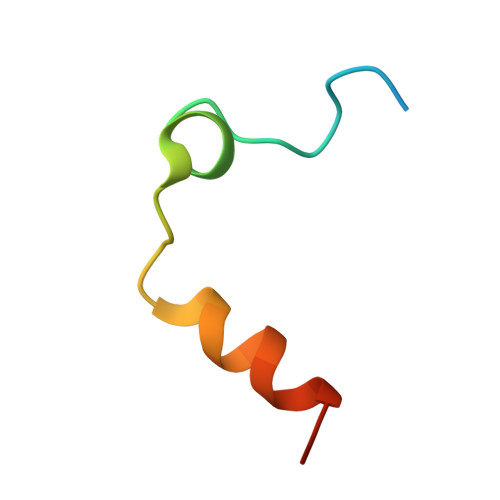
thrombinA,
C [auth D]
36Homo sapiensMutation(s): 0 
Gene Names: F2
EC: 3.4.21.5
UniProt & NIH Common Fund Data Resources
Find proteins for P00734 (Homo sapiens)
Explore P00734 
Go to UniProtKB:  P00734
PHAROS:  P00734
GTEx:  ENSG00000180210 
Entity Groups
Sequence Clusters30% Identity50% Identity70% Identity90% Identity95% Identity100% Identity
UniProt GroupP00734
Sequence Annotations
Expand
Reference Sequence
Find similar proteins by:|  3D Structure
Entity ID: 2
MoleculeChains  Sequence LengthOrganismDetailsImage
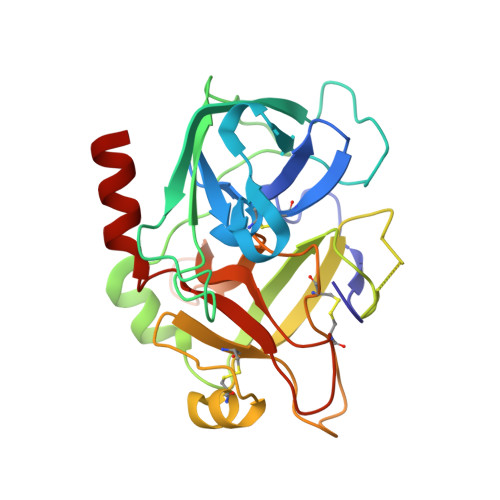
thrombinB,
D [auth E]
259Homo sapiensMutation(s): 1 
Gene Names: F2
EC: 3.4.21.5
UniProt & NIH Common Fund Data Resources
Find proteins for P00734 (Homo sapiens)
Explore P00734 
Go to UniProtKB:  P00734
PHAROS:  P00734
GTEx:  ENSG00000180210 
Entity Groups
Sequence Clusters30% Identity50% Identity70% Identity90% Identity95% Identity100% Identity
UniProt GroupP00734
Glycosylation
Glycosylation Sites: 1Go to GlyGen: P00734-1
Sequence Annotations
Expand
Reference Sequence

Small Molecules

Ligands 3 Unique
IDChains Name / Formula / InChI Key2D Diagram3D Interactions
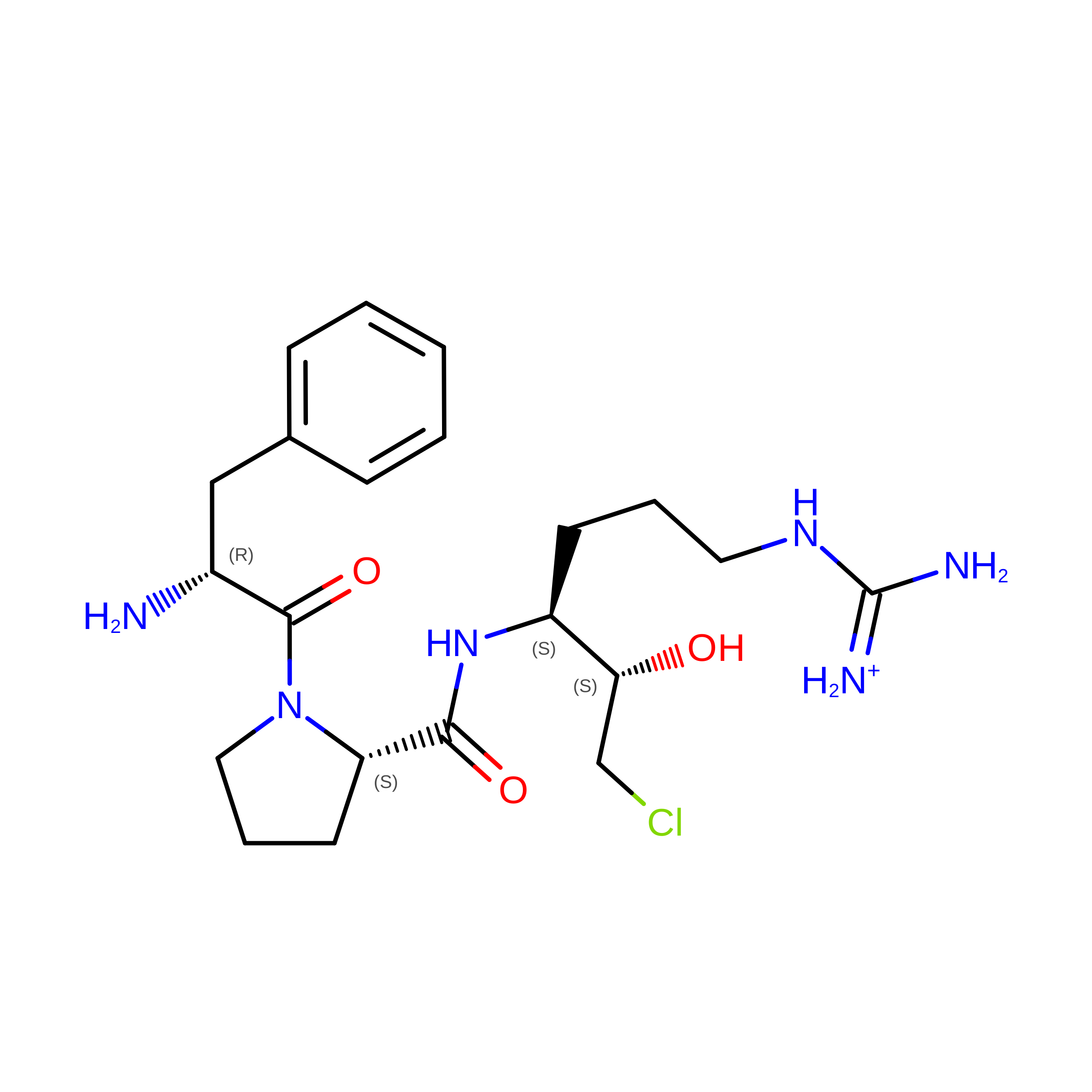
0G6

Query on 0G6


Download:Ideal Coordinates CCD File
E [auth B],
H [auth E]
D-phenylalanyl-N-[(2S,3S)-6-{[amino(iminio)methyl]amino}-1-chloro-2-hydroxyhexan-3-yl]-L-prolinamide
C21 H34 Cl N6 O3
DVFLYEYCMMLBTQ-VSZNYVQBSA-O
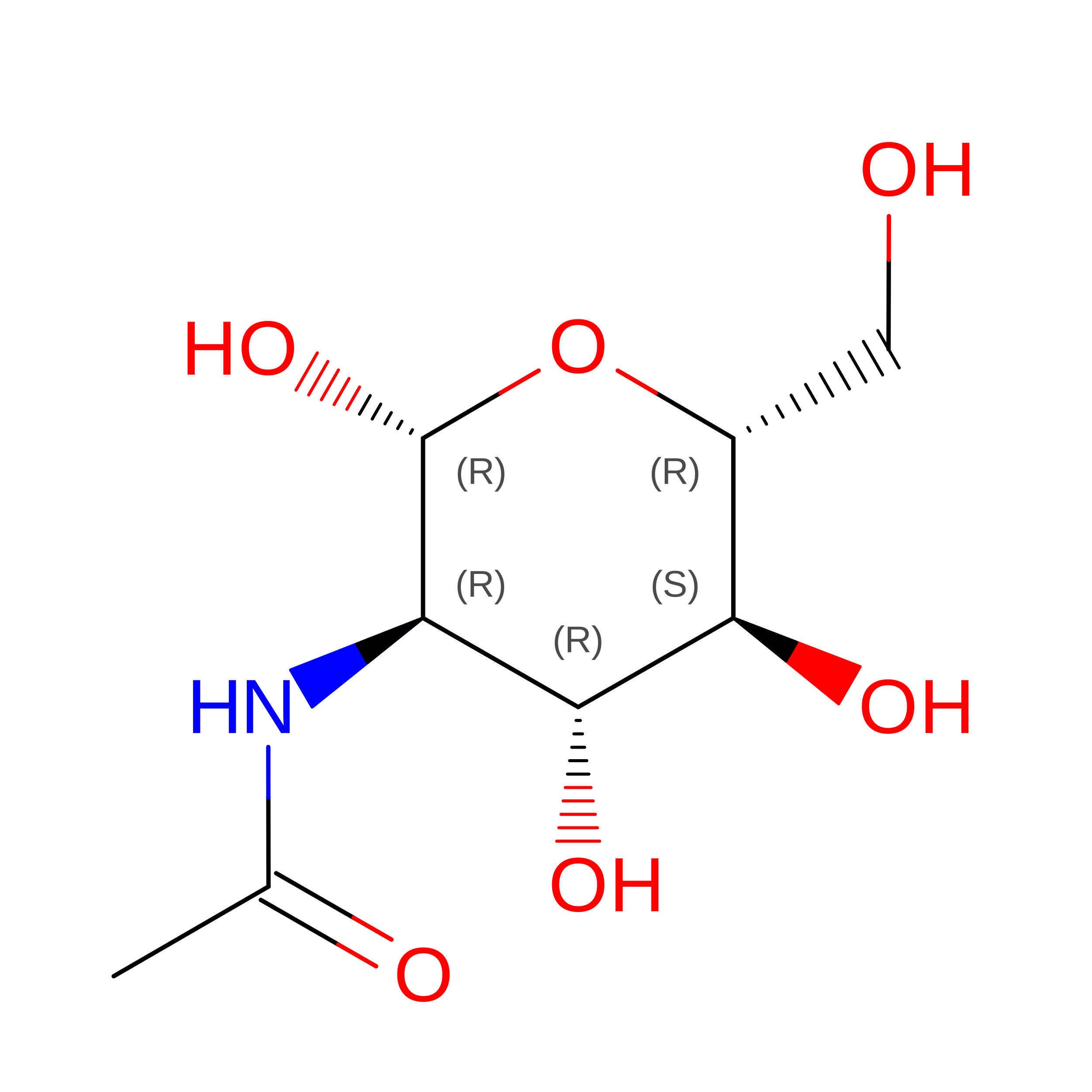
NAG

Query on NAG


Download:Ideal Coordinates CCD File
F [auth B],
I [auth E]
2-acetamido-2-deoxy-beta-D-glucopyranose
C8 H15 N O6
OVRNDRQMDRJTHS-FMDGEEDCSA-N
NA

Query on NA


Download:Ideal Coordinates CCD File
G [auth B],
J [auth E]
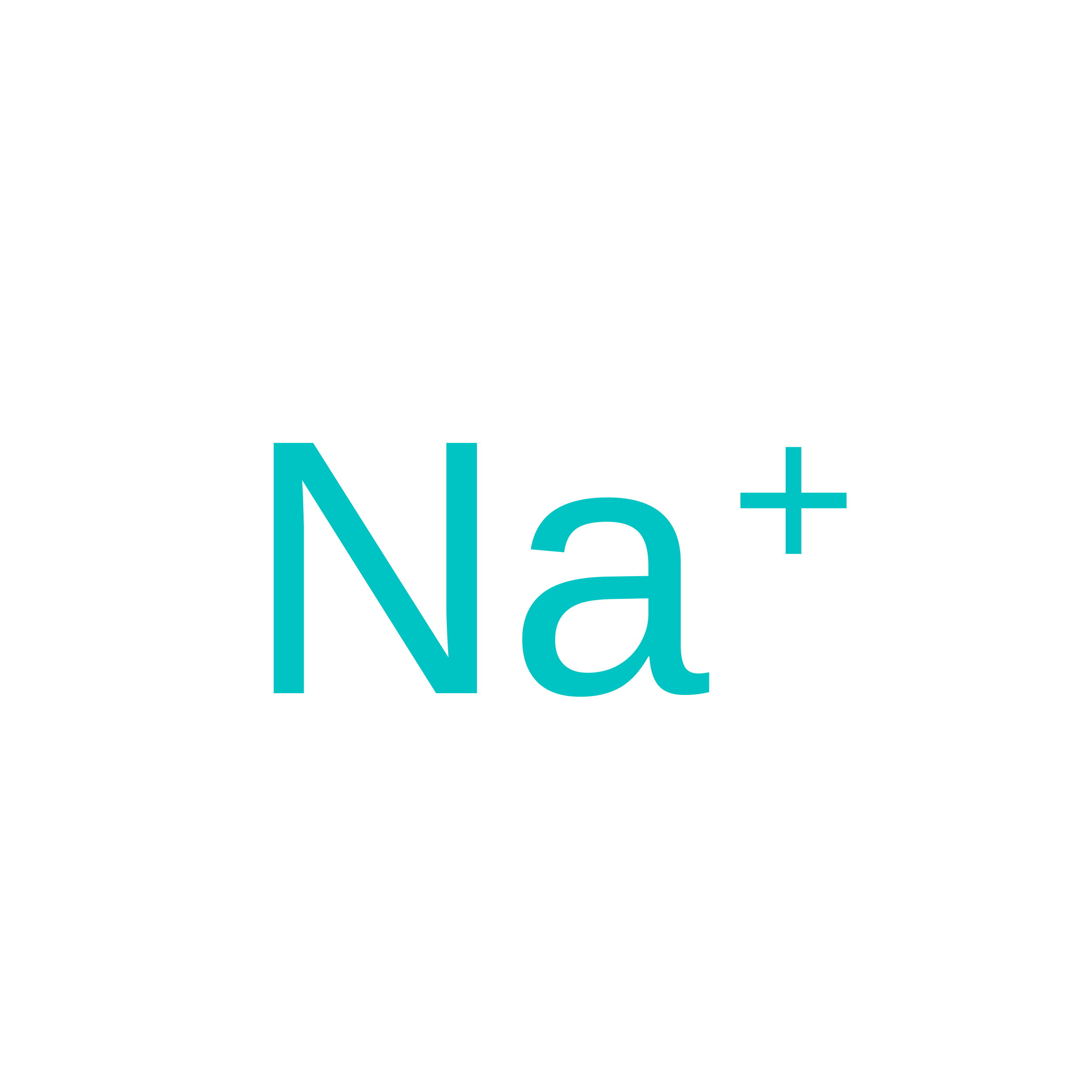
SODIUM ION
Na
FKNQFGJONOIPTF-UHFFFAOYSA-N

Biologically Interesting Molecules (External Reference) 

1 Unique

Experimental Data & Validation

Experimental Data

  • Method: X-RAY DIFFRACTION
  • Resolution: 1.91 Å
  • R-Value Free:  0.221 (Depositor), 0.223 (DCC) 
  • R-Value Work:  0.191 (Depositor), 0.193 (DCC) 
  • R-Value Observed: 0.191 (Depositor) 
Space Group: P 21 21 21
Unit Cell:
Length ( Å )Angle ( ˚ )
a = 61.34α = 90
b = 68.2β = 90
c = 162.93γ = 90
Software Package:
Software NamePurpose
CNSrefinement
DENZOdata reduction
SCALEPACKdata scaling
MOLREPphasing

Structure Validation

View Full Validation Report


Ligand Structure Quality Assessment 


Entry History 

Deposition Data

Revision History  (Full details and data files)

  • Version 1.0: 2004-06-08
    Type: Initial release
  • Version 1.1: 2008-04-29
    Changes: Version format compliance
  • Version 1.2: 2011-07-13
    Changes: Atomic model, Database references, Derived calculations, Non-polymer description, Structure summary, Version format compliance
  • Version 1.3: 2013-02-27
    Changes: Other
  • Version 1.4: 2020-07-29
    Type: Remediation
    Reason: Carbohydrate remediation
    Changes: Data collection, Derived calculations, Structure summary
  • Version 1.5: 2021-10-27
    Changes: Database references, Structure summary
  • Version 1.6: 2024-03-13
    Changes: Data collection, Source and taxonomy, Structure summary
  • Version 1.7: 2024-12-25
    Changes: Advisory, Derived calculations, Structure summary