Download Mendeley
Crystal Structure at 1.8 A Resolution of CDP-d-Glucose 4,6-Dehydratase from Yersinia pseudotuberculosis
Vogan, E.M., Bellamacina, C., He, X., Liu, H.W., Ringe, D., Petsko, G.A.(2004) Biochemistry 43: 3057-3067
- PubMed: 15023057 Search on PubMed
- DOI: https://doi.org/10.1021/bi035547f
- Primary Citation Related Structures:
1RKX - PubMed Abstract:
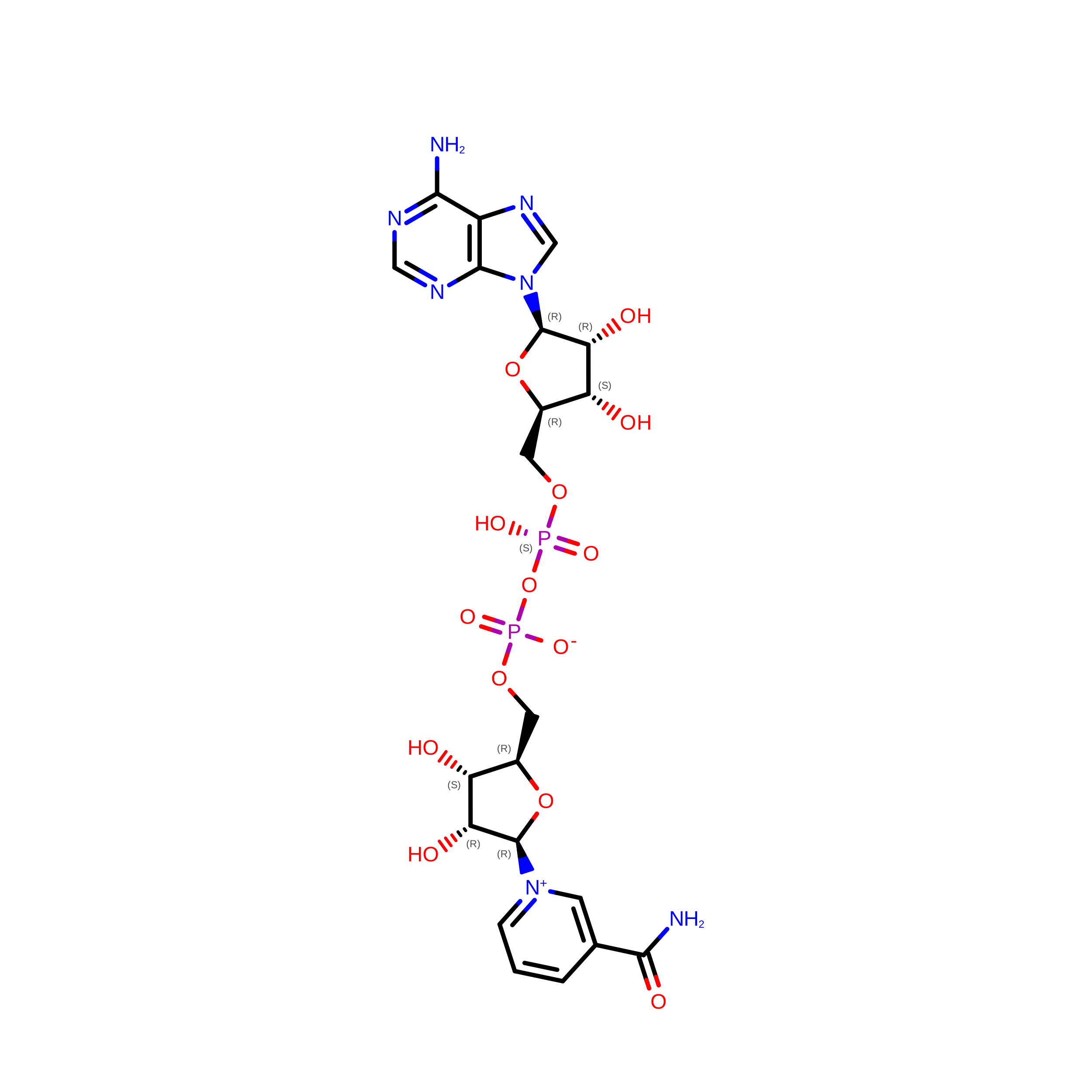
CDP-D-glucose 4,6-dehydratase catalyzes the conversion of CDP-D-glucose to CDP-4-keto-6-deoxyglucose in an NAD(+)-dependent manner. The product of this conversion is a building block for a variety of primary antigenic determinants in bacteria, possibly implicated directly in reactive arthritis. Here, we describe the solution of the high-resolution crystal structure of CDP-D-glucose 4,6-dehydratase from Yersinia pseudotuberculosis in the resting state. This structure represents the first CDP nucleotide utilizing dehydratase of the short-chain dehydrogenase/reductase (SDR) family to be determined, as well as the first tetrameric structure of the subfamily of SDR enzymes in which NAD(+) undergoes a full reaction cycle. On the basis of a comparison of this structure with structures of homologous enzymes, a chemical mechanism is proposed in which Tyr157 acts as the catalytic base, initiating hydride transfer by abstraction of the proton from the sugar 4'-hydroxyl. Concomitant with the removal of the proton from the 4'-hydroxyl oxygen, the sugar 4'-hydride is transferred to the B face of the NAD(+) cofactor, forming the reduced cofactor and a CDP-4-keto-d-glucose intermediate. A conserved Lys161 most likely acts to position the NAD(+) cofactor so that hydride transfer is favorable and/or to reduce the pK(a) of Tyr157. Following substrate oxidation, we propose that Lys134, acting as a base, would abstract the 5'-hydrogen of CDP-4-keto-D-glucose, priming the intermediate for the spontaneous loss of water. Finally, the resulting Delta(5,6)-glucoseen intermediate would be reduced suprafacially by the cofactor, and reprotonation at C-5' is likely mediated by Lys134.
- Department of Biochemistry, Rosenstiel Basic Medical Sciences Research Center, Brandeis University, Waltham, Massachusetts 02454-9110, USA. vogan@crystal.harvard.edu
Organizational Affiliation: